A Border Collie Living With Chickens
Border Collie instincts around chickens require understanding herding drives and training strategies for peaceful coexistence in backyards.

Border Collie instincts around chickens require understanding herding drives and training strategies for peaceful coexistence in backyards.

Border Collie herding instincts and modified prey drives explain why these dogs stalk, chase, and try to control cats at home.

Border Collie behavioral changes around a newborn involve stress, anxiety, barking, and resource guarding that require careful home management.

Border Collie herding instincts, intense stares, and nipping behaviors around babies and toddlers requiring careful household management.

Border Collie herding instincts trigger when children run, explaining how owners manage and redirect this innate behavior safely.

Border Collie herding instincts explain why these dogs circle running children, and safe methods redirect this behavior.
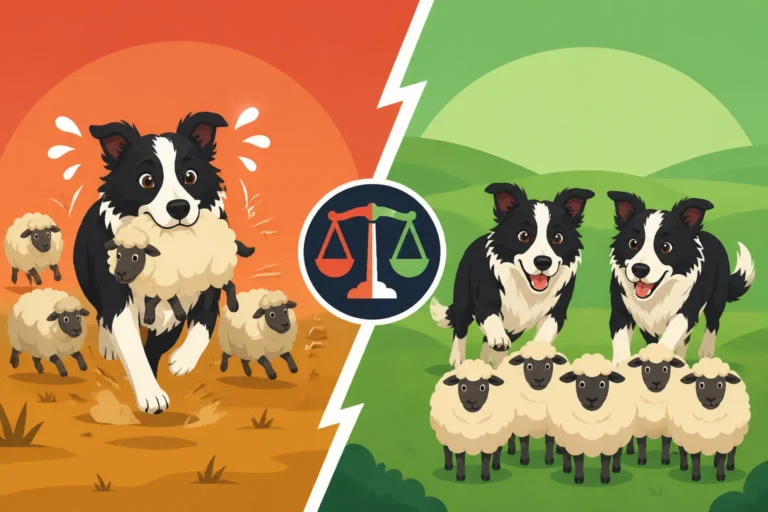
Two Border Collies often double your daily workload, training requirements, grooming tasks, and veterinary expenses rather than halving effort.

Keeping a Border Collie in an apartment requires structured daily routines, mental stimulation, and consistent training rather than large yards.

Border Collie acreage ownership rarely satisfies the energetic breed without structured physical activity and mental stimulation.

Border Collies barking at walls usually react to distant sounds, structural vibrations, boredom, and separation anxiety.