Retraining a Rescued Border Collie With No Rules
Retraining an unstructured rescue Border Collie establishes a predictable daily routine, clear communication, and positive reinforcement.

Retraining an unstructured rescue Border Collie establishes a predictable daily routine, clear communication, and positive reinforcement.

Border Collie traits, four hurdles, and a tennis box determine if this fast relay race suits your high drive dog.
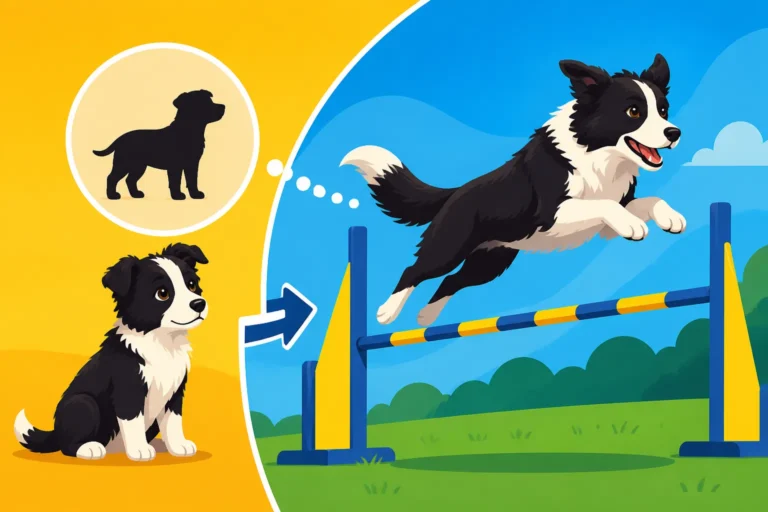
Border Collie jumping safety guidelines explain when puppies can start high impact activities without damaging open growth plates.

Pet Border Collie herding lessons help owners manage innate drives, address behavioral issues, and provide constructive outlets.
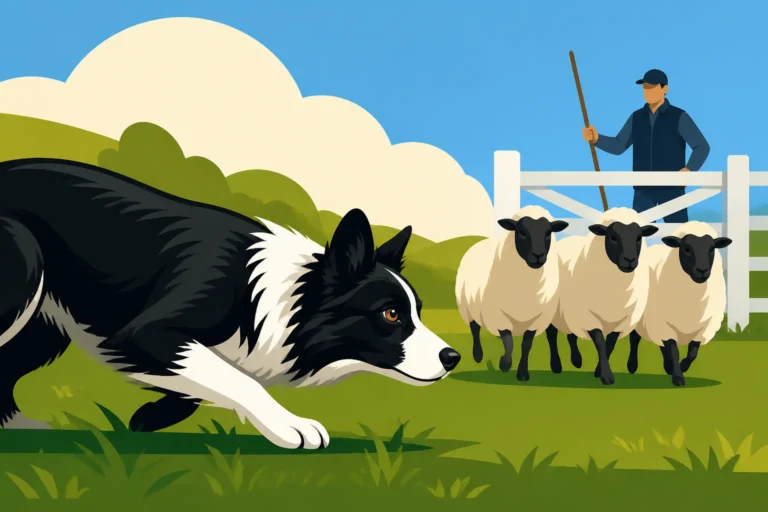
A border collie herding instinct test uses a small enclosed pen and calm sheep to evaluate a dog natural drive and focus.

Border Collie puppy development, socialization, and basic obedience training determine the correct age for introducing stock work.
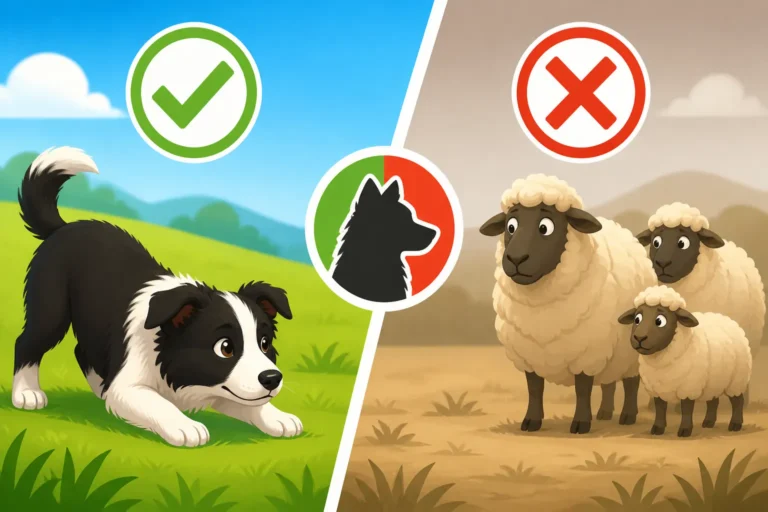
Border Collie puppy instinct tests and structured sheep introductions safely assess herding potential without creating bad habits.

Border Collie adolescence between six months and two years old triggers selective hearing, boundary testing, and sudden independence.

Border Collie puppy hand biting stems from natural exploration, teething, and herding instincts, explaining how to teach boundaries.
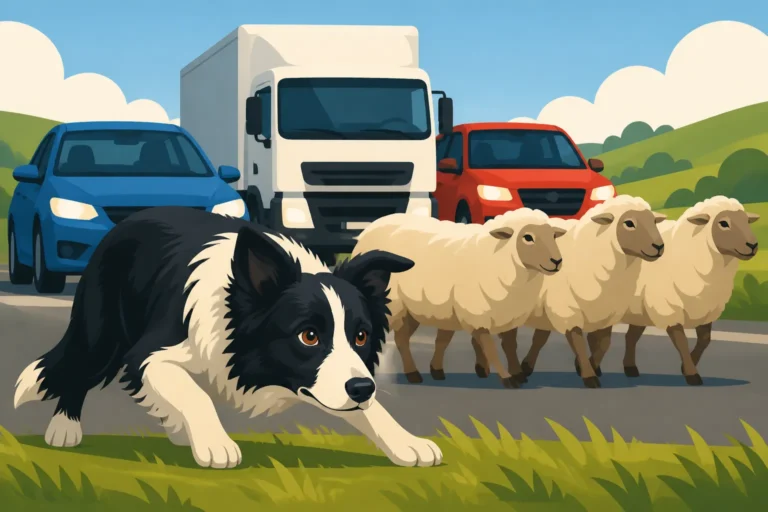
Border Collie herding instincts explain why young dogs fixate on traffic and livestock, requiring impulse control training.