Coloboma and Retinal Detachment in a Border Collie
It’s truly disheartening, and often frightening, when you notice something is off with your beloved Border Collie’s eyes, or receive a concerning diagnosis like coloboma. The worry about what it could mean for their future vision and quality of life, especially for a breed so renowned for its agility and keen senses, can be overwhelming. This guide aims to thoroughly explain what coloboma is, its critical connection to the potential for retinal detachment, and how you can best support and manage your Border Collie through these challenges.
Understanding Coloboma in Border Collies
When we talk about a coloboma in a Border Collie, we're delving into a developmental peculiarity of the eye that can range from a minor cosmetic blip to a significant threat to vision. It's not something that develops later in life; it’s present from birth, a result of an incomplete closure during the eye's formation in the womb.
What Exactly is a Coloboma?
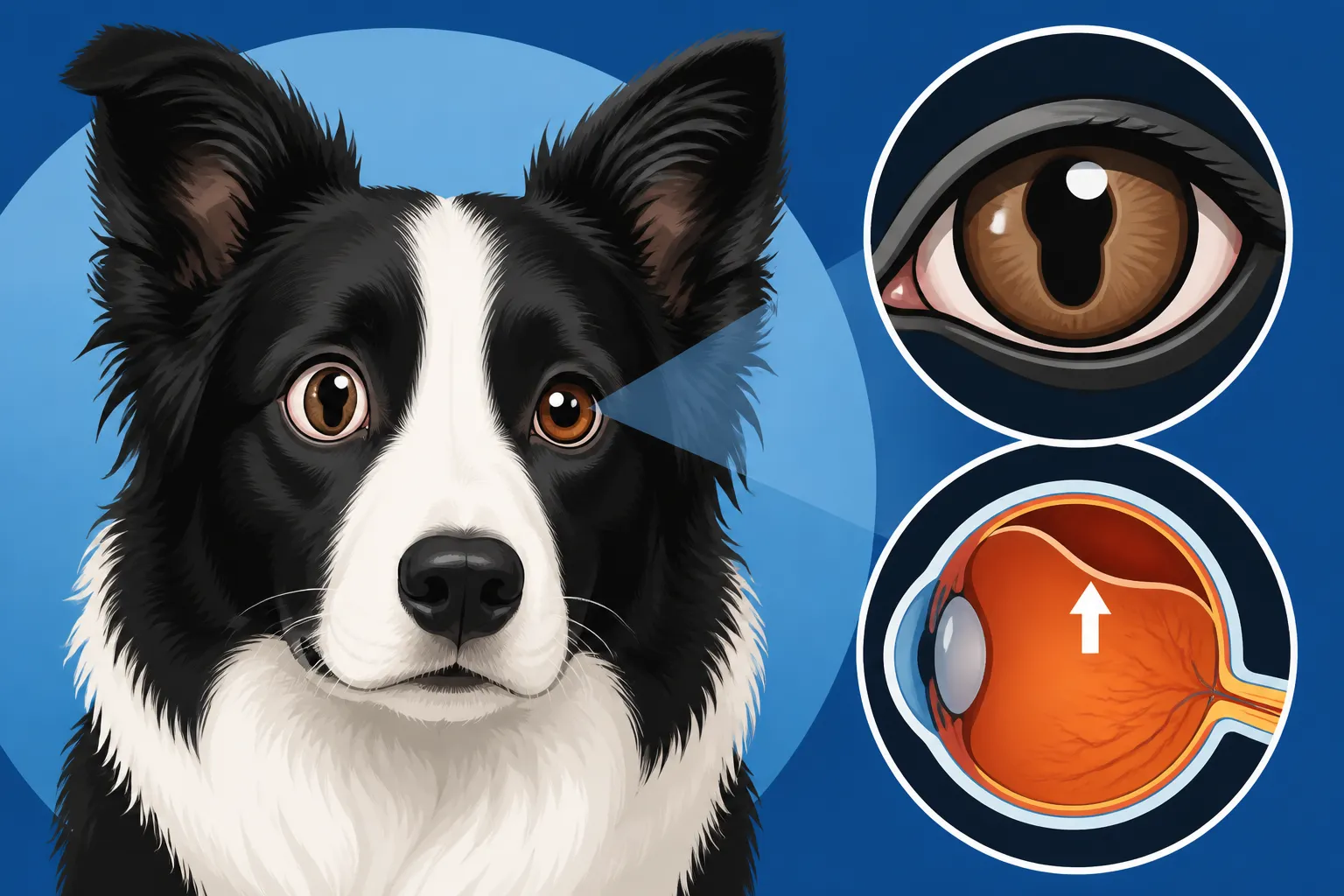
At its core, a coloboma is essentially a "hole," "cleft," or "gap" in one of the structures of the eye. While colobomas can theoretically occur in the iris (the colored part), the lens, or the eyelid, in Border Collies, the most common and clinically significant type is an optic disc coloboma. This means the malformation is located where the optic nerve meets the retina at the back of the eye. Imagine the optic nerve as the main cable transmitting visual information from the eye to the brain; the optic disc is its entry point. In a dog with an optic disc coloboma, this entry point hasn't formed quite right.
Instead of a smooth, well-defined circle, the optic disc might appear excavated, pitted, or strangely shaped. This abnormal development often means that the surrounding retinal tissue is also compromised or underdeveloped, which can have profound implications for your dog's sight. The severity can vary wildly, from a tiny, almost imperceptible pit that causes no visual impairment whatsoever, to a large, deep excavation that leaves the optic nerve and adjacent retina severely malformed. It's this variation in severity that makes early, precise diagnosis so important for understanding the potential long-term outlook for your dog.
The Genetic Connection: Collie Eye Anomaly (CEA)
You can't really talk about coloboma in Border Collies without mentioning its deeply rooted connection to Collie Eye Anomaly, or CEA. CEA is a hereditary ocular disease that affects various collie breeds, including our beloved Border Collies. It's an autosomal recessive condition, which means a puppy must inherit two copies of the faulty gene (one from each parent) to be affected by the disease. Dogs inheriting only one copy are carriers but won't typically show symptoms themselves.
Coloboma, particularly the optic disc type, is a significant and often visually impactful manifestation of CEA. Along with coloboma, CEA can also cause other eye abnormalities like choroidal hypoplasia (CH), which is an underdevelopment of the choroid—a layer of blood vessels and connective tissue that supplies blood to the retina. In more severe cases, retinal detachment and intraocular hemorrhages (bleeding within the eye) can also occur. The genetic test for CEA, often referred to as The NHEJ1 Test for Collie Eye Anomaly, is incredibly important because it allows breeders to identify affected and carrier dogs before breeding. This way, they can make informed decisions to avoid producing puppies with this condition, dramatically reducing the incidence of colobomas and the associated risks. A responsible breeder will always prioritize health testing their breeding stock.
How a Veterinarian Diagnoses Coloboma
Diagnosing a coloboma often begins with a routine eye examination, sometimes as early as a puppy's initial health check. Most commonly, this takes place during the specialized eye exam that a The Eye Exam a Border Collie Puppy Gets at Six Weeks undergoes before going to their new homes. This early screening is critical because conditions like CEA and coloboma can be identified long before they might cause noticeable symptoms to a casual observer.
During the examination, a veterinary ophthalmologist will typically dilate your Border Collie's pupils using special eye drops. This allows for a much clearer view of the back of the eye, including the retina and the optic disc. Using an ophthalmoscope, the vet will carefully examine these structures, looking for any abnormalities. A coloboma at the optic disc usually appears as a distinct pit, cavity, or irregular indentation. Its size and depth are meticulously noted, as these factors correlate directly with the potential impact on vision and the risk of complications. For a mild case, the vet might simply note a slightly anomalous optic disc, while a severe case will show a pronounced excavation. If a coloboma is found, the vet will also check for other signs of CEA, like choroidal hypoplasia, to give a complete picture of your dog's ocular health.
The Link Between Coloboma and Retinal Detachment
The diagnosis of a coloboma can be unsettling, but what truly heightens the concern for Border Collie owners is its potential, in some cases, to lead to a much more devastating outcome: retinal detachment.
Why Colobomas Can Lead to Retinal Issues
To understand this link, it helps to visualize the eye's structure. The retina is like the film in a camera, a thin layer of light-sensitive tissue at the back of the eye that captures images and sends them to the brain via the optic nerve. It's normally held in place by a slight suction and the pressure of the vitreous humor (the gel-like substance filling the eye). A coloboma, especially a large one involving the optic disc, represents a structural weakness or an area of abnormal development in the eye's delicate architecture.
This weakness can predispose the eye to problems. For instance, the abnormal tissue surrounding a deep coloboma might not be as securely attached to the underlying structures, making it more prone to tearing or pulling away. In some cases, the vitreous humor can gain access to the space behind the retina through the coloboma, causing fluid to accumulate and physically push the retina away from its nourishing blood supply. This is akin to wallpaper peeling off a wall – once it starts, it can quickly progress. The larger and deeper the coloboma, the greater the risk, because there’s more compromised tissue and a larger potential pathway for fluid ingress. While a The Mildly Affected Border Collie That Sees Normally might never experience a detachment, a dog with a severe, excavated coloboma carries a much higher lifetime risk.
Recognizing the Signs of Retinal Detachment
Spotting a retinal detachment early can be challenging, as Border Collies are incredibly stoic and adept at compensating for vision loss, especially if it happens gradually or in one eye first. However, a sudden, complete detachment is usually more obvious. If your Border Collie experiences retinal detachment, you might observe several concerning signs that warrant immediate veterinary attention.
The most critical symptom is a sudden and profound change in vision. Your dog might start bumping into furniture, walls, or doorways, particularly in unfamiliar environments or low light. They might become hesitant to jump, navigate stairs, or fetch toys they once easily retrieved. You might notice their pupils appear unusually dilated, and they may not constrict appropriately in response to light. This is because the retina isn't sending signals to the brain, which in turn doesn't signal the pupil to react. In some instances, if there's significant bleeding or inflammation associated with the detachment, you might even see a change in the overall appearance of the eye, such as cloudiness or a reddish tinge. Sometimes, owners describe their dog as generally disoriented, anxious, or unusually clingy, as their world has suddenly gone dark. Any of these signs should be a red flag prompting an emergency visit to your vet.
The Urgency of Veterinary Intervention
If you suspect your Border Collie has experienced a retinal detachment, time is of the essence. This isn't a "wait and see" situation; it's a genuine ophthalmic emergency. The longer the retina remains detached from its underlying choroid, the less likely it is that vision can be restored, even with intervention. The cells of the retina need that constant blood supply to function, and without it, they begin to die.
Upon examination, your primary veterinarian will likely perform a thorough eye exam, including ophthalmoscopy, and may recommend immediate referral to a veterinary ophthalmologist. The specialist will use advanced diagnostic tools, such as ocular ultrasound, to confirm the detachment, determine its extent, and look for any underlying causes like hemorrhage or inflammation. In some cases, prompt surgical intervention might be an option. Specialized procedures, often involving vitrectomy (removal of the vitreous humor) and laser reattachment of the retina, can be performed. However, these are highly specialized and costly procedures, and unfortunately, the success rates can vary depending on the severity and chronicity of the detachment. Even with successful reattachment, full vision may not always return, but the goal is to preserve as much functional vision as possible.
Living With and Managing Coloboma and Retinal Detachment
Receiving a diagnosis of coloboma, or worse, retinal detachment, can be incredibly daunting. But it's important to remember that with knowledge, care, and adaptation, your Border Collie can still lead a full and happy life.
Prognosis and Long-Term Care for Coloboma
For many Border Collies with mild coloboma, the prognosis is excellent. These dogs often live out their entire lives with perfect or near-perfect vision, showing no signs of impairment or progression. Their coloboma might just be a unique little feature that only a trained eye can spot. Regular, annual eye check-ups are still a good idea to monitor for any changes, but often, no specific ongoing treatment is needed.
However, for those with more severe colobomas, where the structural integrity of the eye is significantly compromised, a more proactive and vigilant approach to long-term care is essential. This often involves more frequent check-ups with a veterinary ophthalmologist to monitor the retina closely for any early signs of detachment. You'll need to be hyper-aware of your dog's behavior, noting any subtle changes in how they navigate their environment, especially at dusk or in unfamiliar places.
If your Border Collie does have some visual impairment due to their coloboma, adapting their home environment is key. Keep furniture in consistent locations, use consistent verbal cues for directions, and consider adding textured mats or scents near obstacles or stairs. Even Working Sheep With a Sight-Impaired Border Collie is possible with careful training and a strong bond, but it requires significant adaptation and understanding from the handler. Many dogs with mild visual impairment thrive and live completely normal, joyful lives, often relying more heavily on their other incredible senses of smell and hearing.
Managing a Border Collie with Retinal Detachment
If your Border Collie suffers a retinal detachment and loses significant or complete vision, your focus shifts to ensuring their quality of life remains high. This can be a tough adjustment for both you and your dog, as Border Collies are so active and engaged with their environment. The good news is that dogs are incredibly resilient and adapt remarkably well to blindness. Their sense of smell and hearing are extraordinarily keen and will become their primary guides.
Establishing and maintaining a consistent routine is paramount. Keep your home layout stable; avoid moving furniture, food bowls, or beds. Use clear verbal cues for everything: "step up," "watch out," "this way." Scent markers (like a drop of essential oil or a specific texture of rug) near doors or stairs can help them navigate. When outside, keep them on a leash in unfamiliar areas and use a harness to guide them safely. Many blind dogs enjoy familiar walks, playing scent games, and even continuing some forms of sport or training by relying on voice commands and touch. Support from a veterinary ophthalmologist or a specialized rehabilitation vet can be invaluable for guidance on enrichment and navigating daily life. Dealing with these specialized vet visits can be costly, but knowing that a comprehensive pet insurance plan, like those offered by Healthy Paws, can help cover eligible expenses can certainly ease the financial burden during such a challenging time.
Proactive Steps: Breeding and Screening
The most impactful proactive step an owner can take, whether they are a breeder or simply looking to acquire a Border Collie puppy, is to be incredibly diligent about genetic screening. For a hereditary condition like CEA, responsible breeding is the first line of defense against coloboma and its potential complications.
Breeders should absolutely run Which DNA Tests a Border Collie Breeder Should Have Run on all their breeding stock, including the NHEJ1 test for CEA. Knowing a dog's genetic status (clear, carrier, or affected) for CEA allows breeders to make informed decisions to avoid pairing two carriers, which risks producing affected puppies. While carriers themselves are usually not affected, breeding two carriers together statistically results in 25% affected puppies. You, as a prospective puppy owner, have every right to Asking a Border Collie Breeder for Test Results for both parents. Don't hesitate to ask for copies of the certifications, not just a verbal assurance. By choosing a puppy from parents who are both genetically clear of CEA, you significantly reduce the risk of your Border Collie ever developing a coloboma or related issues. This kind of upfront diligence can save you and your future dog a world of heartache and potentially massive veterinary bills down the line.
Financial Implications and Insurance Considerations
Dealing with any significant health issue in a pet always brings up the practical reality of financial costs. Eye conditions, especially those requiring specialist care or surgery, can quickly become substantial.
The Cost of Diagnosis and Treatment
The journey from initial suspicion to diagnosis and potential treatment for coloboma and retinal detachment involves several financial checkpoints that can add up rapidly. An initial comprehensive eye exam with your primary vet might be relatively affordable, but if a specialist is needed, a veterinary ophthalmologist consultation typically ranges from $150 to $300, and often more in major metropolitan areas. This initial visit might include specialized diagnostic tests like ocular ultrasound or electroretinography (ERG), which can each add hundreds of dollars to the bill.
If genetic testing for CEA hasn't been done (or if you’re doing it proactively), a What a Border Collie DNA Panel Costs, including the NHEJ1 test, usually falls between $70-$200, depending on the lab and the extent of the panel. Should a retinal detachment occur and surgery be deemed viable, the costs can be staggering. Retinal reattachment surgery is highly specialized and might range anywhere from $3,000 to $8,000 or even more per eye, often requiring overnight stays and intensive post-operative care. This doesn't even account for potential medications, follow-up appointments, or long-term management of blindness, which can also incur ongoing expenses. It's a significant financial commitment that many owners are simply not prepared for.
How Pet Insurance Can Help
This is where pet insurance can be a genuine lifesaver for Border Collie owners. Imagine facing a sudden $5,000 bill for emergency retinal surgery, or even hundreds of dollars in specialist consultations, while also worrying about your dog's vision. A good pet insurance policy, like those offered by Healthy Paws, can significantly alleviate this financial stress, allowing you to focus on your dog's health rather than your wallet.
However, the key is early enrollment. Pet insurance policies generally do not cover pre-existing conditions. This means if your Border Collie is diagnosed with a coloboma or CEA before you enroll them, any subsequent treatment for that condition or related issues like retinal detachment will likely not be covered. This is why it's so vital to consider pet insurance when your Border Collie is a puppy and completely healthy. Many plans, including Healthy Paws, will cover eligible unexpected illnesses or injuries, which could include the sudden onset of retinal detachment if the coloboma wasn't a pre-existing condition. When looking at policies, it's wise to specifically ask about coverage for hereditary and congenital conditions, as this can vary between providers. Understanding what is covered for conditions like these can make a huge difference, especially given Border Collies' predisposition to certain issues. Reviewing guides on topics like Insuring a Border Collie Against Epilepsy and Joints can provide broader insight into how pet insurance handles hereditary conditions.
Making Informed Decisions for Your Border Collie's Health
Ultimately, navigating a diagnosis of coloboma or retinal detachment in your Border Collie demands a combination of informed decision-making, proactive care, and often, significant emotional and financial resilience. It’s incredibly important to build a strong relationship with your veterinarian and, if needed, a veterinary ophthalmologist. They are your best resources for understanding the specifics of your dog’s condition, exploring treatment options, and developing a long-term management plan.
Being prepared, both with knowledge about the condition and potentially with the financial safety net of pet insurance, provides immense peace of mind. While a diagnosis can feel overwhelming, remember that dogs are incredibly adaptable. Many Border Collies with these conditions, even those with significant vision impairment, continue to live joyful, active lives filled with love and companionship. Proactive screening, careful monitoring, and a willingness to adapt your lifestyle to meet your dog's needs are the greatest gifts you can give them. Healthy Paws and similar insurers exist to help ensure that financial constraints don't dictate the level of care your beloved companion receives, allowing you to provide the best possible future for your exceptional Border Collie.
| Feature | Mild Optic Disc Coloboma (Often with mild CEA) | Severe Optic Disc Coloboma (Often with severe CEA) | Retinal Detachment (as a complication) |
|---|---|---|---|
| Appearance | Small pit/indentation in optic disc | Large, deep excavation of optic disc, often distorted | Retina lifted or torn from back of eye |
| Vision Impact | Often none, or very minor, unnoticeable | Mild to moderate visual impairment, blind spots | Partial to complete vision loss, often sudden |
| Progression Risk | Very low risk of progression or detachment | Moderate to high risk of progression/detachment | Requires immediate intervention to prevent total blindness |
| Diagnosis | Vet ophthalmologist exam (optic disc anomaly) | Vet ophthalmologist exam (pronounced anomaly) | Ophthalmoscopy, ocular ultrasound |
| Management | Annual monitoring; no specific treatment often needed | Regular monitoring, environmental adaptation if visually impaired | Emergency surgery (if viable), supportive care for blindness |
| Genetic Link | Strongly linked to CEA (NHEJ1 mutation) | Strongly linked to CEA (NHEJ1 mutation) | Can be a complication of severe CEA/coloboma |
Disclaimer
The information provided in this article is intended for general knowledge and informational purposes only, and does not constitute veterinary advice. Always consult with a qualified veterinarian or veterinary ophthalmologist for any health concerns or before making any decisions about your Border Collie's care.