How Old Hemp Worked Differently From Other Dogs
If you've ever watched a Border Collie work sheep, you’ve likely been mesmerized by their intense focus, quiet movements, and seemingly telepathic connection with their handler. But did you know that this iconic style of herding wasn't always the norm? For centuries, working dogs relied on different, often harsher, methods. This guide delves into the fascinating history of Old Hemp, the legendary Border Collie whose revolutionary working style changed everything, forever shaping the breed we know and love today.
Before Old Hemp: The Rough and Tumble Days of Herding
Before the late 19th century, the landscape of sheepdog work was quite varied and, frankly, a bit chaotic by modern standards. Shepherds relied on a diverse range of local collie-type dogs, each with their own unique approach to moving livestock. These dogs were certainly brave and dedicated, but their methods often lacked the refined control and quiet precision that we now associate with the Border Collie. It was a different era, where the primary goal was simply to gather and move sheep, sometimes with more force than finesse.
The "Grip and Drive" Approach
Many of the early collies employed what's often referred to as a "grip and drive" style. This meant they were much more prone to using their mouths, nipping at the heels or flanks of the sheep to move them. Imagine a dog constantly running into the flock, barking, and nipping to get them going. While effective for moving stubborn sheep, especially unruly hill flocks, it was far from ideal for handling more sensitive animals or for situations requiring delicate maneuvers. This could stress the sheep, making them scatter or even injure them. Handlers then had to constantly intervene, shouting commands and body blocking, making for a much more labor-intensive and less efficient process.
Lack of Consistency and Predictability
Another significant challenge with pre-Hemp collies was the sheer inconsistency in their working styles. You might have one dog that was fantastic at gathering, but terrible at driving, or vice versa. Some dogs were brilliant at close work but would lose control at a distance. There was no predictable, unified approach that could be reliably passed down through breeding. Each dog was a bit of a gamble, and training often involved breaking bad habits as much as it did teaching good ones. This meant that while individual dogs could be exceptional, the breed as a whole didn't yet possess a consistent set of highly desirable traits that made them universally superior herders. Breeders weren't intentionally selecting for the kind of "eye" and quiet control that would later define the Border Collie.
Old Hemp's Revolutionary Working Style
Born in Northumberland, England, in 1893, Old Hemp was a prodigy, a true game-changer in the world of sheepdog work. His unique approach to herding was so effective, so revolutionary, that it fundamentally altered the standard for what a working collie should be. Old Hemp, Born in Northumberland in 1893 His calm, intense manner contrasted sharply with the boisterous, often aggressive, methods of his contemporaries. It wasn't just about moving sheep; it was about moving them with unparalleled control and intelligence.
The Intense, Hypnotic "Eye"
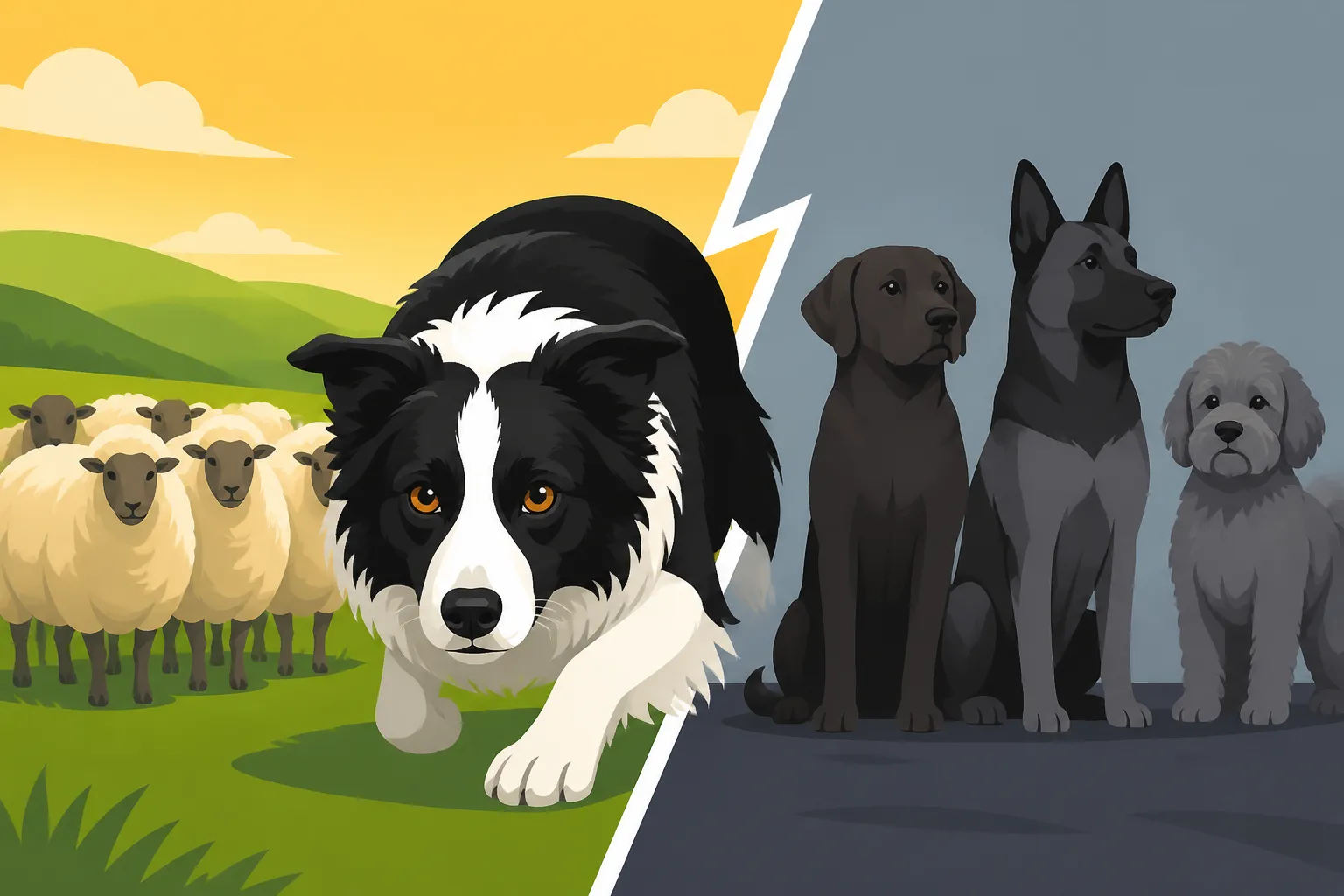
Perhaps the most defining characteristic of Old Hemp's style was his incredible "eye." This isn't just about looking at the sheep; it's an intense, focused gaze that can appear almost hypnotic to the sheep, compelling them to move without physical contact or excessive barking. Instead of rushing in, Hemp would drop into a crouch, fix his gaze, and slowly advance, using his presence alone to guide the flock. This quiet authority was a revelation. It allowed a single dog to exert immense influence over a large flock, keeping them together and moving them precisely where the shepherd intended. The Border Collie Stare and Where It Comes From This was a stark departure from the nipping and barking that characterized many earlier dogs, demonstrating a higher level of psychological control over the livestock.
Quiet Efficiency and Control
Old Hemp was the epitome of quiet efficiency. He rarely barked or nipped, preferring subtle body language and his powerful eye to communicate with the sheep. This meant less stress for the animals, fewer opportunities for them to scatter, and a much smoother, more controlled operation for the shepherd. He could gather a scattered flock and bring them to the handler with an almost effortless grace, a skill that was invaluable in the vast, often challenging terrains of the Anglo-Scottish border. This quiet control also meant that the sheep were less likely to bolt or injure themselves, preserving their welfare and the shepherd's profits. His ability to work quietly allowed handlers to communicate with him more effectively, even at long distances, fostering a partnership built on mutual understanding rather than brute force.
Natural Gathering Instinct
While many collies had some gathering instinct, Old Hemp possessed it to an extraordinary degree, combined with an innate ability to balance the flock. He naturally understood how to draw the sheep towards him, then push them forward, always maintaining a cohesive unit. This wasn't something handlers had to struggle to teach him; it was deeply ingrained. This meant he could be relied upon to bring a scattered flock together efficiently, even from a great distance, without over-running them or causing panic. This natural talent for gathering and driving, combined with his quiet approach, made him incredibly versatile and effective in various working scenarios, from large pastures to tight pens. It’s this instinct, refined over generations, that makes the Border Collie a standout among all herding breeds. You can even see traces of it in pet Border Collies who try to gather their families into one room or herd the cat.
The Lasting Impact of Old Hemp's Legacy
Old Hemp's impact was immediate and profound, setting a new benchmark for working sheepdogs. His progeny carried his exceptional traits, and discerning shepherds quickly sought out dogs descended from him. This widespread adoption of his working style became the foundation of what we now recognize as the modern Border Collie. Old Hemp and Every Border Collie Alive Today
Standardizing the Working Style
Before Old Hemp, there was no real consensus on the "best" way for a sheepdog to work. Each area, sometimes even each shepherd, had their own preferences. Hemp changed all that. His consistent, calm, and effective style became the gold standard. Breeders began to actively select for dogs that exhibited "Hemp-like" qualities – strong eye, quiet work, and natural gathering ability. This standardization was critical in establishing a clear breed type based on performance rather than just appearance. It meant that a shepherd acquiring a "collie" could increasingly expect a dog that worked with precision and intelligence, reducing the guesswork and training challenges that had been common previously. Today, when you visit a breeder, they often talk about the lineage and working style, tracing back to these foundational principles.
The Foundation of the Modern Border Collie
It's no exaggeration to say that Old Hemp is the patriarch of the Border Collie breed. The vast majority of Border Collies alive today can trace their lineage back to him. His genetic contribution, combined with the selective breeding efforts that followed, cemented the core characteristics that define the breed: intelligence, intense focus, biddability, and that unmistakable "eye." This commitment to working ability above all else is what truly distinguishes the Border Collie. The breed didn't develop purely on aesthetics or temperament for a pet home, but on an unparalleled capacity for complex stock work. For anyone considering owning one of these incredible dogs, understanding this heritage is key to appreciating their needs and potential. Resources like Chewy sometimes offer insights into breed-specific traits that underscore this working heritage, even for companion dogs.
Influence on Sheepdog Trials
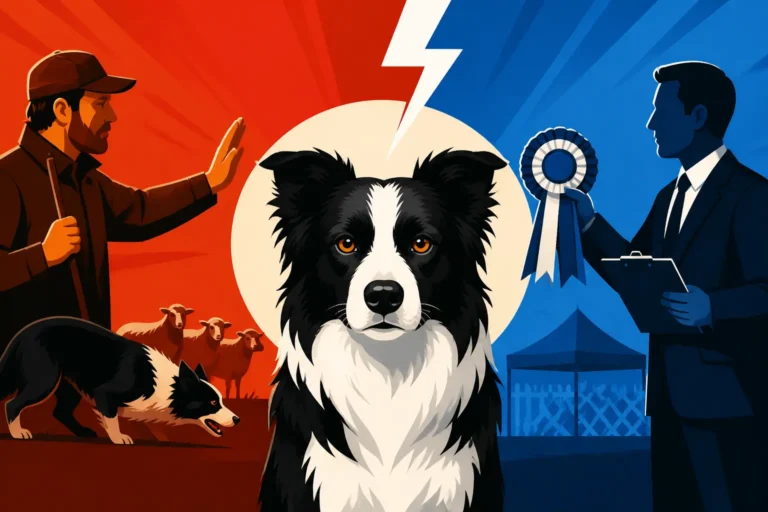
The burgeoning sport of sheepdog trials was heavily influenced by Old Hemp's success. These trials, which test a dog's ability to gather, drive, and pen sheep, naturally gravitated towards dogs that could perform with the quiet control and precision that Hemp exemplified. The qualities he brought to the field became the very criteria by which dogs were judged. The Border Collie in Sheepdog Trials His legacy is literally woven into the fabric of these competitions, shaping the rules, the expectations, and the ideal performance that handlers strive for. A dog that continually resorted to gripping or excessive barking would simply not succeed in the refined environment of a modern trial, a direct testament to the preference Old Hemp established.
How Old Hemp's Legacy Continues in Modern Training
Even a century later, the principles established by Old Hemp continue to guide Border Collie training and breeding. While not every Border Collie is destined for a life on the farm, their innate abilities and tendencies stem directly from this incredible heritage. Understanding this history helps us appreciate why they are the way they are and how best to work with them today, whether they're moving sheep or navigating an agility course.
Emphasizing "Eye" and Pressure
Modern herding trainers still place a huge emphasis on developing a dog's "eye" and teaching them how to use pressure effectively, rather than resorting to force. A good working Border Collie learns to control sheep using its presence, its gaze, and subtle shifts in its body, much like Old Hemp did. This means a lot of patience, careful observation, and building a deep understanding between dog and handler. Tools like a long line can help a young dog learn to manage its distance and pressure without overwhelming the sheep, a critical early step in harnessing that powerful instinct. Even for pet Border Collies, channeling that innate intensity into constructive activities like focus games or targeted obedience can be incredibly rewarding.
The Importance of a "Finished" Dog
Old Hemp's consistency paved the way for the concept of a "finished" sheepdog – a dog that can perform all aspects of herding work reliably and independently, responding to subtle commands from a handler at a distance. This involves everything from a wide outrun to a gentle shed. Teaching a Border Collie to Lie Down at Distance Achieving this level of partnership and precision is the ultimate goal in herding, and it's a direct continuation of the quiet, intelligent work that Hemp demonstrated. Breeders today still strive to produce puppies with the natural aptitude for this level of training, understanding that a strong foundation means less remedial work later on. Good food, like the high-energy formulas you might find on Chewy, helps these dedicated athletes perform at their peak through their demanding training.
Breed Preservation Through Working Traits
For many Border Collie enthusiasts and working breeders, preserving Old Hemp's working style is paramount. They believe that maintaining the breed's functional ability is crucial to its identity and health. This often means prioritizing proven working lines in breeding decisions, ensuring that the traits that made Old Hemp so special – intelligence, biddability, and that incredible herding instinct – continue for future generations. This focus helps prevent the breed from diverging too far from its original purpose, which can sometimes happen when breeds become popular solely for their looks or pet potential. Regular health checks, and a balanced diet (again, a good source like Chewy can help here), support these dogs in their active lives, ensuring they remain fit for their genetic destiny.
Working Styles Comparison: Before and After Old Hemp
To truly appreciate the transformation Old Hemp brought about, it's helpful to see a direct comparison of the typical working styles.
| Feature | Pre-Old Hemp Colliework | Old Hemp's Revolutionary Style & Legacy |
|---|---|---|
| Primary Method | Nipping, barking, driving with force, physical contact | "Eye," psychological pressure, subtle body language, quiet control |
| Control Level | Often inconsistent, required more handler intervention | High, precise control even at a distance, reduced handler shouting |
| Sheep Response | Stressed, prone to scattering, fear-driven | Calm, responsive, less stressed, respectful of the dog's presence |
| Efficiency | Varied, sometimes slow or chaotic, relied on brute force | Highly efficient, fluid, smooth movements, saved time and effort |
| Consistency | Highly individualistic, difficult to predict or breed for | Consistent, predictable, trainable, became the standard for the breed |
| Impact on Breed | Dogs selected largely for general working ability and bravery | Defined the Border Collie breed's core working traits and temperament |
Old Hemp didn't just move sheep; he redefined the partnership between human and dog, transforming a practical necessity into an art form. His calm, intelligent approach proved that control didn't require force, and that an astute mind could be far more effective than brute strength. His legacy continues to inspire those who work with Border Collies today, ensuring that the spirit of that remarkable dog lives on in every graceful gather and precise shed. How Old Hemp's Style Became the Standard
Disclaimer
This article is for general informational purposes only and does not constitute professional advice. Laws, prices and regulations vary by location and change over time. Consult a qualified professional for guidance on your specific situation.