The Eye That Sets a Border Collie Apart
Many people are utterly captivated by the intense gaze of a Border Collie, that almost hypnotic stare they fix on objects, people, or, traditionally, livestock. It’s more than just looking; it’s a deep, focused concentration that can sometimes feel overwhelming to new owners. This guide will delve into what "the eye" truly means for this remarkable breed, how it manifests, what it signifies for their behavior, and how you can best understand and work with this defining trait.
Understanding the Border Collie Eye
When we talk about "the eye" in a Border Collie, it's about far more than the physical appearance of their ocular organs. It's a behavioral trait, a hallmark of their herding prowess that has been refined over generations. This isn't just a pretty look; it's a functional tool that sets them apart.
What "The Eye" Actually Means
"The eye" refers to the Border Collie's ability to fix a concentrated, unblinking stare on something, using it to exert control and influence. Imagine a shepherd on a windswept hill, communicating with their dog not just through whistles and shouts, but through the subtle shift in their dog's gaze. This intense focus is their primary method of controlling livestock. It’s an almost predatory, but non-aggressive, posture that tells the sheep, "I'm here, I'm watching, and you're going to move where I want you to." For many, this is the very essence of the breed, a direct link to their ancestral calling.
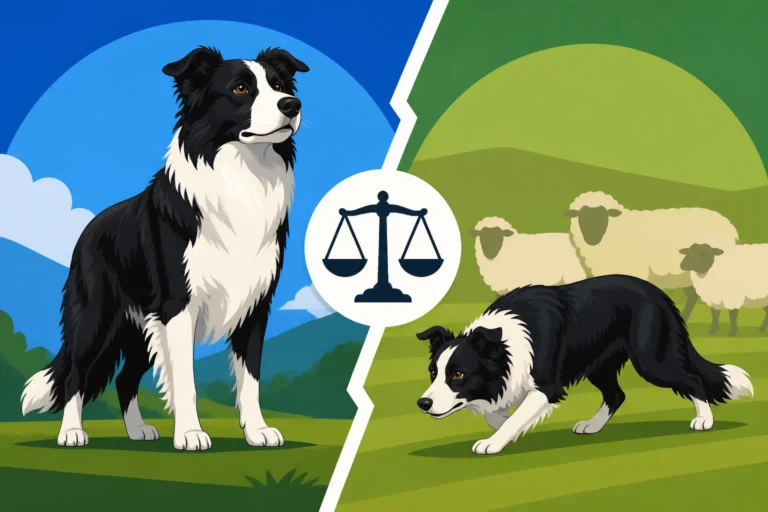
This isn't merely curiosity; it's an innate drive to gather and control. A Border Collie with strong eye will often drop its head, lower its body, and move slowly and deliberately, fixing its gaze. This stillness, combined with the penetrating stare, can be incredibly effective at guiding a flock. It’s an inherited trait, one that working breeders specifically select for, as it's fundamental to the breed's ability to work sheep. Without it, a Border Collie might chase erratically, but wouldn't possess the subtle, psychological manipulation that makes them such effective herders.
The Genetic Roots of the Stare
The Border Collie's intense stare isn't a learned trick; it's deeply ingrained in their genetic makeup, passed down through lines specifically bred for working ability. The most famous example is often traced back to Old Hemp, a dog born in 1893 in Northumberland, whose gentle yet powerful "eye" revolutionized sheepdog trials. Instead of the rough, barking approach of many older herding dogs, Hemp used his silent, intense gaze to move sheep with unprecedented efficiency. This style quickly became desirable, leading to the selective breeding that amplified the trait we see today.
This genetic predisposition means that even a Border Collie who has never seen a sheep might display aspects of "the eye" towards other moving objects – children, bicycles, squirrels, or even the vacuum cleaner. It's a testament to thousands of years of selective breeding for a specific function. Breeders continue to evaluate puppies for the presence and quality of their eye, understanding that it's a critical indicator of their potential as a working dog. It's not just about what the dog does, but how it thinks and interacts with its environment on a fundamental, instinctual level. The International Sheep Dog Society, Founded 1906 was established partly to recognize and promote this kind of working excellence.
Distinguishing "Eye" from Aggression
It’s easy for new Border Collie owners, or those unfamiliar with the breed, to misinterpret the intense stare as aggression or dominance. However, in its purest form, "the eye" is not aggressive. It's a controlling, focusing behavior rooted in the herding instinct, not an intent to harm. A working Border Collie uses its eye to move and gather livestock, not to attack it.
When a Border Collie exhibits "the eye," their body language typically involves a lowered head, a crouched or stalking posture, and a stillness that belies the intense mental activity. There's often a lack of barking and a deliberate, almost balletic, movement. An aggressive dog, by contrast, might display stiff body language, raised hackles, growling, or direct lunging with an intent to bite. Understanding this distinction is crucial for safe interaction and appropriate training. If you see Why a Border Collie Crouches and Stares, it's typically a sign of their herding instinct kicking in, not an immediate threat.
The Mechanics of the Border Collie Stare
The Border Collie's eye isn't a static phenomenon; it's part of a dynamic communication system, deeply intertwined with their physical movements and mental processes. It's a dance of intensity and control.
Body Language That Accompanies the Eye
The eye is rarely used in isolation. It's almost always accompanied by a specific set of body language signals that enhance its effectiveness. A classic example is the low, belly-to-the-ground crouch, sometimes called "the Border Collie drop." This posture makes them appear less threatening to the stock while maximizing their perceived control. Their tails might be low and still, or exhibit a slight, slow wag that's different from a happy greeting wag. The ears might be pricked forward, indicating intense focus, or flattened slightly if they are trying to appear less imposing.
This combination of stillness, low posture, and fixed gaze creates an almost invisible force field around the stock. It's a highly sophisticated form of non-verbal communication. Think of it like a mime – every subtle shift in their posture and gaze communicates intent without a single sound. Handlers learn to read these subtle cues just as instinctively as the dogs do, knowing when their dog is about to shift position or if the stock is about to break. It's a quiet, powerful language.
Why They Use "The Eye"
At its core, a Border Collie uses "the eye" to gather and control. Their purpose is not to scatter sheep, but to bring them together and move them as a unit. The eye serves as a psychological pressure point. When a dog fixes its stare on a sheep, that sheep feels watched, pressured, and often moves away from the source of the pressure. This allows the dog to effectively steer the flock without physical contact or excessive barking, preserving the calm of the sheep.
It's about subtle manipulation rather than brute force. They are reading the sheep's movements, anticipating their direction, and using their gaze to gently, yet firmly, influence them. This explains why a Border Collie will often try to "gather" family members, especially children, in a room, or stalk the vacuum cleaner – it's their natural instinct to put things where they "belong" and keep them there. For them, it’s not a game; it’s fulfilling a deeply embedded purpose.
The Power of the Gaze on Livestock
The Border Collie's gaze has a profound effect on livestock. Sheep, being prey animals, are acutely sensitive to pressure and the presence of a predator. While the Border Collie is not a predator in the traditional sense, their intense stare taps into that primal fear response. The sheep perceive the fixed gaze as an unblinking threat, prompting them to move away from it. This allows the dog to apply pressure from behind to move the flock forward, or from the side to turn them.
This "psychological grip" means that a Border Collie can often move a large group of stubborn sheep with minimal physical effort. It's a much more efficient and less stressful method for both dog and sheep than constant nipping or barking. An experienced working dog knows just how much eye to apply, adjusting the intensity based on the temperament of the stock and the situation at hand. It's an incredible display of canine intelligence and instinct working in perfect harmony. How Old Hemp Worked Differently From Other Dogs illustrates how this particular approach changed the face of sheepdog trials.
Variations in Eye and Gaze
Not all Border Collies utilize "the eye" in the same way, nor do they all possess the same intensity. Breeders and handlers recognize nuances in how this trait manifests, categorizing them based on their working style.
Strong Eye vs. Loose Eye
In the world of working Border Collies, "strong eye" and "loose eye" describe different approaches to herding. A dog with strong eye uses an intense, fixed stare for prolonged periods, relying heavily on its gaze to control stock. These dogs often work closer to the sheep, dropping low and maintaining a powerful presence. They might appear more deliberate and calculated in their movements, almost as if every step is a precise part of their strategy. What Strong Eye Means in a Border Collie is a quality highly valued in certain types of herding work, particularly when delicate handling is required.
Conversely, a dog with loose eye uses its gaze more intermittently. They tend to stand taller, move more freely, and incorporate more barking and physical presence to move stock. These dogs might be better suited for covering larger areas or working more headstrong animals, as their more active style can be very persuasive. Neither is inherently "better" than the other; the ideal depends on the specific job, the terrain, and the type of stock being worked. Many exceptional working dogs have a balance of both, knowing when to apply the pressure of the eye and when to use more active methods.
| Trait Aspect | Strong Eye | Loose Eye |
|---|---|---|
| Gaze Intensity | Intense, fixed, prolonged stare | Intermittent, less sustained gaze |
| Body Posture | Low crouch, head lowered, deliberate movements | Taller stance, more upright movements |
| Working Distance | Often works closer to stock | May work further from stock, covering more ground |
| Vocalization | Minimal barking, quiet working style | May use more barking and vocal cues |
| Control Method | Psychological pressure, subtle influence | Physical presence, more active herding |
| Best Suited For | Delicate handling, easily pressured stock | Covering large areas, more headstrong stock |
Physical Characteristics: Eye Color and Expression
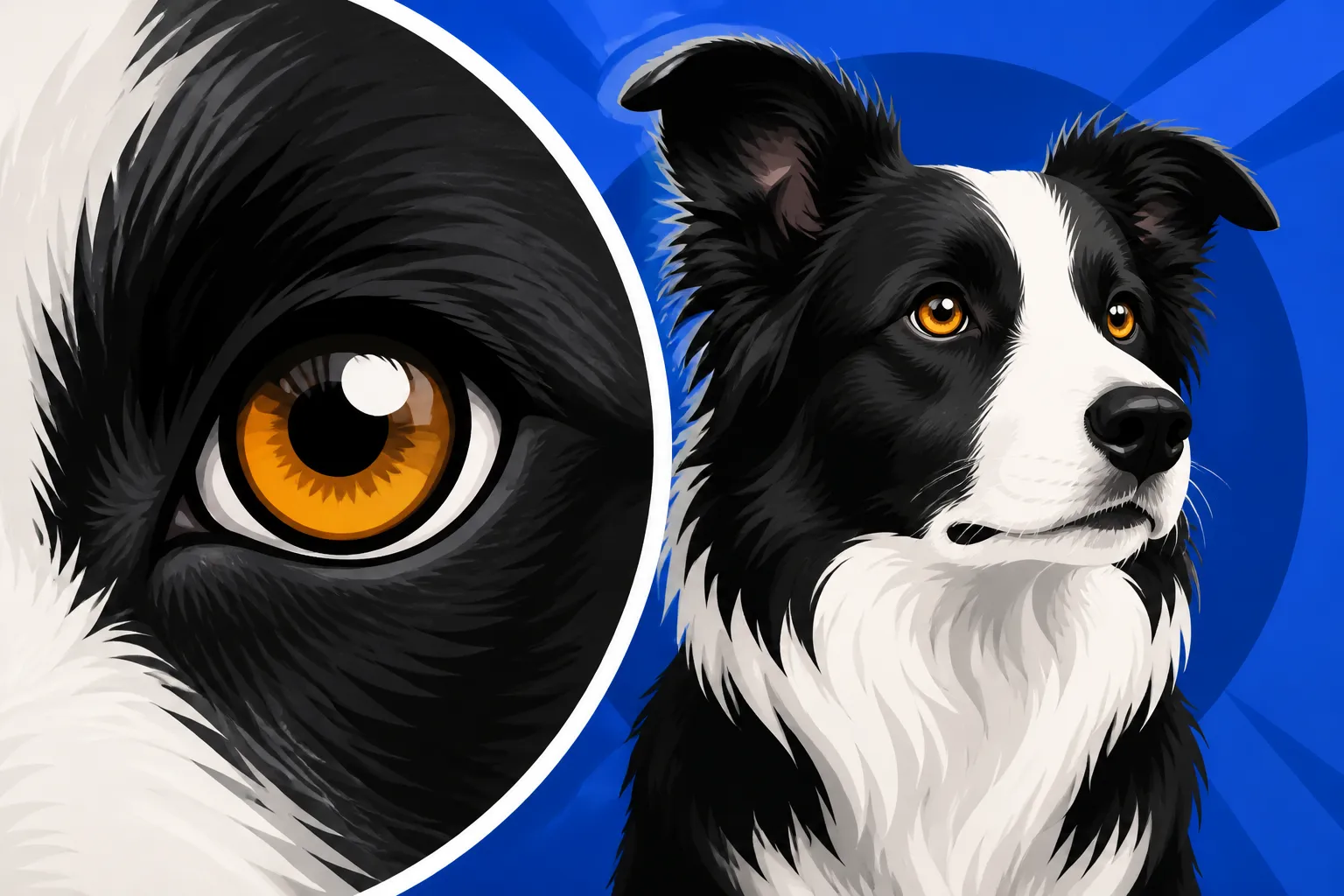
While "the eye" is primarily a behavioral trait, the physical characteristics of a Border Collie's eyes can certainly enhance or detract from its perceived intensity. Dark, almond-shaped eyes are common and often contribute to that deep, soulful, yet penetrating look. However, Border Collies can have a variety of eye colors, including brown, blue, or even heterochromia (one blue, one brown eye), especially in merle patterns. These variations do not diminish their working ability.
The expression around the eye is perhaps more important than the color itself. A Border Collie's face, with its mobile brows and expressive muzzle, can convey a range of emotions and intentions. When "the eye" is on, their forehead might be slightly furrowed, their pupils dilated, and their overall facial muscles tense with concentration. This contributes to the impression of being utterly absorbed in their task, a quality that is universally recognized by anyone who has observed a Border Collie at work.
Development of Eye in a Puppy
The presence of "the eye" is largely innate, meaning it begins to manifest at a surprisingly young age, though it matures with experience and training. Border Collie puppies often start showing hints of their herding instinct, and thus their eye, between 8 to 16 weeks old. You might see them stalking toys, household objects, or even other puppies, dropping into that characteristic crouch and fixing a stare. They might try to gather siblings or humans into a group.
This early display is a critical indicator for breeders assessing a puppy's working potential. A breeder might introduce them to small, calm groups of sheep or ducks to observe their natural instincts. However, it's important not to push a young puppy too hard. The eye needs to be nurtured and channeled through appropriate training as the dog matures. Over-exciting or over-stimulating a young pup's herding instinct can lead to obsessive behaviors later on. The natural development of the instinct should be encouraged without putting undue pressure on the growing pup.
Living with a Border Collie's Intense Gaze
For pet owners, understanding "the eye" is paramount, as this powerful instinct doesn't just switch off because there are no sheep around. It needs redirection and management to ensure a well-adjusted companion.
Managing the Eye in a Pet Home
In a pet home, managing "the eye" means acknowledging this innate drive and providing appropriate, constructive outlets for it. If not managed, this intense focus can easily translate into unwanted behaviors like herding children, bicycles, cars, or even shadows and light. A Border Collie isn't being "naughty" when it stalks the vacuum cleaner; it's simply trying to fulfill its genetic purpose. A Border Collie That Stalks the Vacuum or other inanimate objects is a common sight in homes without livestock.
The key is redirection and channeling. Instead of allowing them to fixate on inappropriate targets, engage them in activities that use their brain and body in a similar way. This could include structured games of fetch (with rules about dropping the ball!), agility, obedience, rally, or scent work. Puzzle toys and enrichment activities found on sites like Chewy can also provide mental stimulation, mimicking the problem-solving aspects of herding without engaging the intense, sometimes obsessive, stare. The goal isn't to suppress the instinct, but to guide it towards acceptable and healthy expressions.
When the Eye Becomes a Problem
While "the eye" is a valuable working trait, unmanaged or overstimulated, it can easily morph into obsessive or compulsive behaviors in a pet setting. A Border Collie who is constantly fixated on shadows, reflections, or even imaginary specks of dust might be developing a compulsive disorder. This isn't just annoying; it can be incredibly stressful for the dog, leading to anxiety, destructive behaviors, and difficulty relaxing.
This can manifest as endless spinning, tail chasing, or staring at walls. Such behaviors are often a sign that the dog is not getting enough appropriate mental and physical stimulation, or that their environment is inadvertently reinforcing these fixations. It’s a common frustration for owners who get a Border Collie without fully understanding the depth of their instincts. If you notice your dog becoming overly fixated, it’s crucial to step in and interrupt the behavior, then redirect their energy to a positive outlet. Consulting with a professional dog trainer or behaviorist is highly recommended in these situations to prevent the issue from escalating.
Training to Channel the Instinct
Training is absolutely essential for channeling a Border Collie's intense herding instinct into productive and appropriate activities. Early socialization and exposure to various environments are important, but structured training takes it a step further. Instead of letting them develop their own "eye" habits, you teach them when and where to use that focus. This often involves teaching a solid "out" or "that'll do" command to disengage from a task, and a strong recall to break their focus on a perceived "flock." Redirecting a Border Collie's Eye Onto a Toy can be an effective way to manage this.
For those interested in dog sports, activities like agility, obedience, disc dog, or flyball can be wonderful ways to channel their drive. These sports require immense focus, quick thinking, and physical exertion, all of which satisfy the Border Collie's innate need to work. Even if you don't pursue competitive sports, regular training sessions that challenge their mind and body are crucial. Consider trying scent work or advanced trick training; these kinds of mental exercises can tire a Border Collie more effectively than simple physical exercise alone, helping them use that intense focus constructively. Remember, a mentally stimulated Border Collie is a happy Border Collie.
The Eye in Health and Breeding
Beyond behavior, the Border Collie's eyes are also subject to specific health considerations, making responsible breeding practices and regular veterinary checks vital for the well-being of the breed.
Eye Health Concerns Unique to Border Collies
Unfortunately, the same eyes that bestow such incredible working ability can also be susceptible to certain genetic health conditions. Two of the most notable are Collie Eye Anomaly (CEA) and Progressive Retinal Atrophy (PRA). Collie Eye Anomaly is a congenital, inherited condition that affects the development of the eye, often leading to choroidal hypoplasia (underdevelopment of the choroid). In severe cases, it can lead to coloboma or even retinal detachment, though many affected dogs have mild forms and live with normal vision. Collie Eye Anomaly in a Border Collie Puppy is typically diagnosed with an eye exam at six to eight weeks of age.
Progressive Retinal Atrophy (PRA) is another inherited eye disease, but it typically manifests later in life, causing gradual degeneration of the retina. This eventually leads to blindness. Unlike CEA, which is structural, PRA is degenerative, meaning it worsens over time. Understanding these conditions is crucial for any Border Collie owner, as early detection or knowledge of genetic predisposition can influence management and breeding decisions. Progressive Retinal Atrophy in an Older Border Collie can be heartbreaking, but genetic testing helps breeders reduce its incidence.
Ethical Breeding and Eye Screening
Responsible breeding for Border Collies absolutely necessitates thorough eye screening and genetic testing. Breeders should have their breeding dogs screened for both CEA and PRA. DNA tests are available for both conditions, which can identify carriers as well as affected individuals. This allows breeders to make informed decisions, ensuring they do not breed two carriers together, which could produce affected puppies. The Border Collie Genetic Panel and What It Screens should always include these crucial eye tests.
Puppies from responsible breeders will often come with a certificate of a clear eye exam conducted by a veterinary ophthalmologist at around six to eight weeks of age, specifically checking for CEA before the choroid becomes pigmented, obscuring the view. The Eye Exam a Border Collie Puppy Gets at Six Weeks is a standard procedure. This commitment to health screening is a hallmark of an ethical breeder and helps to protect the future health of the breed, ensuring that the remarkable "eye" remains a symbol of talent and vitality, not a source of preventable suffering. If you are ever in doubt about eye health, a visit to your vet or a specialized ophthalmologist is always the best course of action. Supplements to support general eye health can be found at retailers like Chewy, but always consult your vet for specific conditions.
Disclaimer
This article is for general informational purposes only and does not constitute professional advice. Laws, prices and regulations vary by location and change over time. Consult a qualified professional for guidance on your specific situation.