Salt and Grit on a Border Collie’s Feet
For any Border Collie owner, watching your intelligent, energetic companion slow down or limp can be truly heartbreaking. One common, yet often overlooked, source of discomfort, especially during colder months or after walks on rough urban terrain, is the insidious combination of salt and grit that gets trapped in their paw pads. This guide will walk you through understanding why these common environmental factors pose such a threat to your Border Collie's delicate feet, how to recognize the signs of irritation, and most importantly, how to prevent and treat these painful issues to keep your dog happy and on the move.
The Invisible Threat: Why Salt and Grit Are Such a Problem for Border Collies
It’s easy to think of a Border Collie as a hardy working dog, capable of handling all sorts of terrain. And for the most part, that’s true when they're working sheep on soft pasture or running through the woods. However, the artificial landscapes we've created, especially in towns and cities, present unique challenges for their paws. The materials used to make human life easier often become a real menace for our canine friends, leading to dryness, cracks, and outright pain that can impact their willingness to exercise.
The Chemicals in De-icing Salts
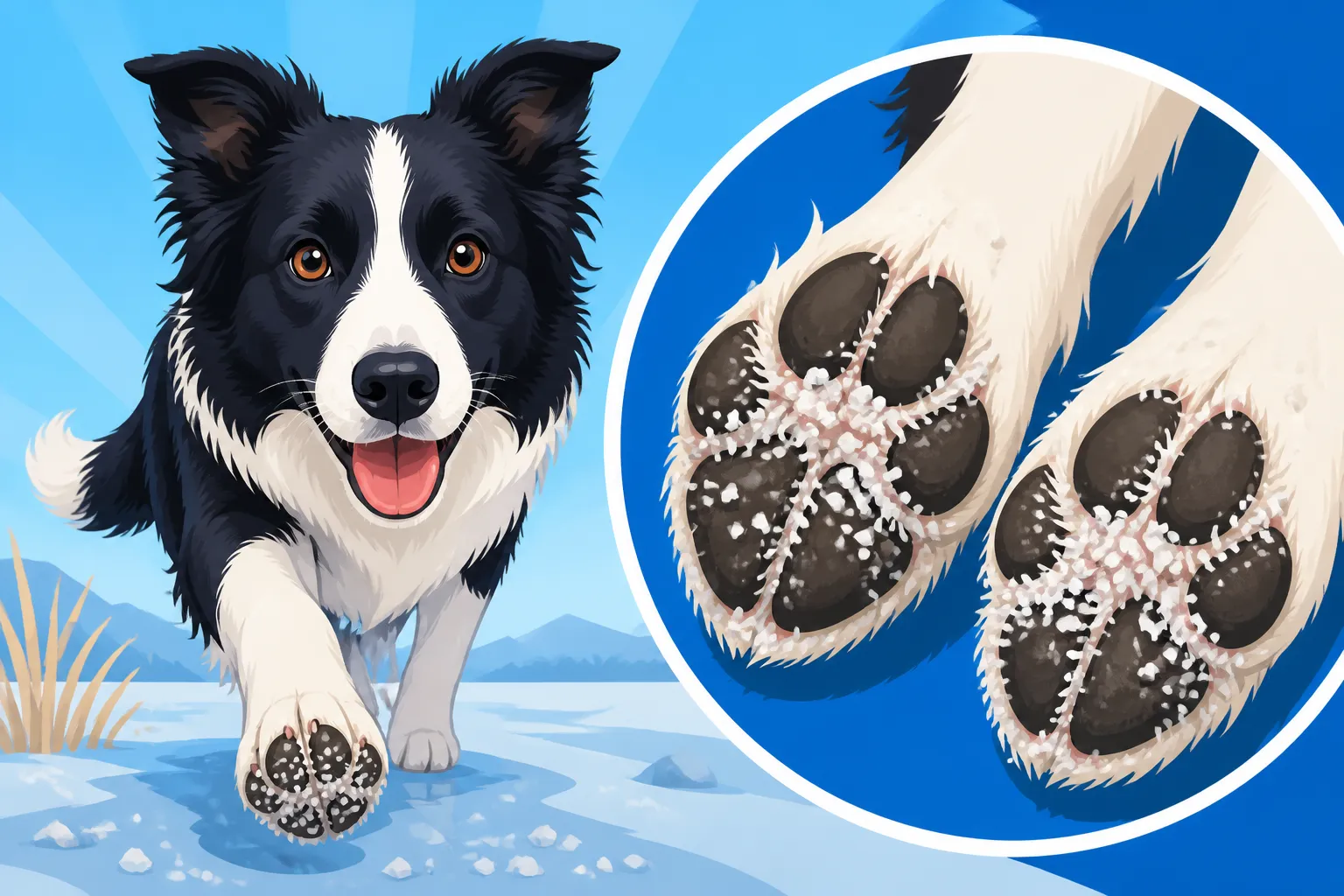
Winter brings with it a specific set of challenges for dog paws. When ice and snow blanket our streets and sidewalks, we rely heavily on de-icing salts to make surfaces safe for walking and driving. What many don't realize is that these aren't just benign 'salts' in the culinary sense; they're often a cocktail of harsh chemicals, each with its own unpleasant effect on canine paw pads. Sodium chloride, the most common rock salt, is highly dehydrating. Imagine walking barefoot on a salty beach all day – it dries out your skin, right? For a dog, this effect is magnified, leading to cracked, brittle paw pads that are prone to injury.
Then there are magnesium chloride and calcium chloride, often used because they work at lower temperatures. While effective at melting ice, these compounds are even more corrosive and irritating than plain sodium chloride. They can cause chemical burns, inflammation, and deep soreness, particularly in the sensitive skin between a Border Collie's toes. When your dog walks through these chemicals, they stick to the pads and fur, and if not removed promptly, can be ingested when your dog licks their paws, leading to gastrointestinal upset. It's a double whammy of external irritation and potential internal issues that can leave a Border Collie feeling miserable.
The Physical Damage from Grit and Abrasives
Beyond the chemical assault of de-icing salts, there's the equally problematic physical assault of grit and other abrasive materials. Cities and even rural roads often use sand, crushed gravel, or tiny sharp stones to improve traction on icy or slippery surfaces. While this helps our tires, it's a nightmare for dog paws. As a Border Collie strides and trots, these sharp particles can easily become lodged in the soft fur and skin between their paw pads. The constant pressure of walking with grit embedded in their feet can cause painful abrasions, tiny cuts, and even deeper lacerations.
Think about the intense drive of a Border Collie; they aren't usually ones to tiptoe around. They run, they pivot, they push off hard, especially if they catch a scent or see something interesting. This vigorous movement can force grit deeper into the paw, or worse, tear existing minor wounds wider. Moreover, the rough edges of these materials can act like sandpaper on already dried-out or sensitive paw pads, exacerbating any existing dryness or cracking caused by salts. Owners of working Border Collies know that issues like Pad Damage on a Border Collie Working Stubble are common in agricultural settings, and urban grit can present a similar type of wear and tear, making their paws tender and vulnerable.
Recognizing the Signs of Paw Irritation
Our Border Collies are often so eager to please and to work that they might try to mask discomfort, especially if it means interrupting an activity they love. However, their bodies and behaviors will always give clues. Being observant is key to catching paw irritation early before it develops into a more serious infection or chronic problem. It’s about understanding their silent language and knowing what subtle shifts in their routine or demeanor might signify trouble brewing underfoot.
Behavioral Cues to Watch For
A change in your Border Collie's gait or activity level is often the first red flag. If your usually enthusiastic dog is suddenly reluctant to go for a walk, or seems hesitant to put weight on a particular paw, pay close attention. You might notice a slight limp, or they may start favoring one paw, perhaps holding it up for a moment or shaking it as if trying to dislodge something. During a walk, they might stop more frequently, sitting down or licking their feet. Once indoors, the licking and chewing can become relentless, sometimes accompanied by frantic scratching at the affected paw. This self-grooming is their attempt to alleviate discomfort, but it can quickly escalate, turning minor irritation into raw, inflamed skin.
It's also worth noting if they're less keen on playing fetch, or seem a bit more subdued than usual. Sometimes, a Border Collie in pain might become a little withdrawn or even slightly irritable if their paws are handled. They are, after all, stoic creatures by nature, and sometimes the signs are incredibly subtle. We’ve written about Signs an Old Border Collie Is in Pain, and while paw irritation is different, the principle of watching for subtle behavioral shifts remains the same for dogs of any age. Keeping a close eye on these shifts can help you intervene quickly and prevent further discomfort.
Visual Indicators of Damage
Beyond the behavioral cues, a physical inspection of your Border Collie's paws will often reveal the direct evidence of salt and grit damage. Start by gently spreading their toes and examining the paw pads thoroughly. Look for any redness, swelling, or obvious cuts and scrapes. The skin between the pads might appear inflamed or even raw, especially if your dog has been licking excessively. You might see cracks in the paw pads themselves, which can range from tiny fissures to deep, painful splits. These cracks are not only uncomfortable but also provide an entry point for bacteria, leading to secondary infections.
Another clear indicator is the presence of dried-out or peeling skin on the paw pads. This is a classic sign of chemical irritation and dehydration from de-icing salts. Sometimes, you'll actually find tiny pieces of grit, sand, or even small ice balls (if you’re in winter conditions) lodged deep within the fur between the toes or stuck to the pads. A general guideline for owners is to perform The Weekly Once-Over a Working Border Collie Gets, but after walks in salty or gritty environments, a daily, thorough paw check is absolutely essential. Don't forget to check the nails too, as sometimes underlying issues can contribute to a dog's reluctance to walk.
Proactive Prevention Strategies
When it comes to paw care, prevention is always better than cure. Given the active lifestyle of most Border Collies, protecting their feet from the elements they encounter on walks and during work is paramount. A little effort upfront can save your dog a lot of pain and save you a lot of vet bills down the line. It's about creating a routine and choosing the right tools to minimize exposure and maximize protection.
Protective Gear: Boots and Balms
Dog boots might seem like a bit of a fashion statement to some, but for protecting a Border Collie's paws from salt and grit, they can be incredibly effective. The challenge with Border Collies, of course, is finding boots that stay on during their energetic runs and don't interfere with their natural gait. Look for boots designed for active dogs, often with a good grip and secure fastening straps. Some brands offer flexible, rubberized options that are less bulky and more comfortable for long-term wear. While it might take some time and positive reinforcement to get your Border Collie used to wearing them, the protection they offer against chemical burns, cuts, and embedded debris is invaluable, especially in severe winter conditions or on particularly harsh terrain. Our article on Whether Boots Work on a Border Collie offers more insights into selecting and introducing paw protection.
Alternatively, or in conjunction with boots, paw balms and waxes are excellent protective barriers. These products create a breathable, yet protective, layer over your dog's paw pads, shielding them from direct contact with irritating salts, chemicals, and hot pavements. Ingredients like beeswax, shea butter, and various oils are commonly used to create a semi-permeable barrier that moisturizes the pads while repelling harsh elements. Applying a thin layer before each walk and after cleaning can significantly reduce irritation. You can find a wide range of these balms at reputable pet supply stores or online retailers like Chewy and Amazon, many of which are formulated specifically for dog paws. They are easy to apply and less intrusive than boots for dogs who truly refuse footwear.
Grooming and Maintenance
Regular grooming, particularly focusing on the feet, plays a crucial role in preventing salt and grit problems. For Border Collies, especially those with rougher coats, the hair between their paw pads can grow quite long. This longer hair acts like a magnet for salt crystals, tiny stones, stickers, and even ice balls in snowy conditions. Trimming this hair flush with the paw pads helps prevent accumulation and makes it easier to clean their feet thoroughly after walks. A small, blunt-nosed pair of scissors or a dedicated paw trimmer can make this task much safer and simpler. Just be sure to go slowly and carefully to avoid nicking the delicate skin. We often discuss Why a Border Collie's Toe Hair Collects Snow as a related issue, and the solution for both is similar: keep that fur trimmed!
Beyond hair trimming, maintaining appropriate nail length is also vital for overall paw health. Overgrown nails can throw off a Border Collie's natural foot alignment, making them walk on the sides of their pads instead of the bottom. This unnatural gait can lead to increased friction, greater susceptibility to injury, and makes their pads more prone to cracking when exposed to harsh elements. Regular nail trims – ideally every 3-4 weeks, or as needed – ensure your dog's paws make proper contact with the ground, reducing strain and improving overall comfort. Our guide on Nail Length and How a Border Collie Turns delves deeper into the importance of this often-overlooked aspect of paw care. Incorporating these grooming practices into your routine will go a long way in fortifying your Border Collie's feet against external stressors.
Aftercare and Treatment for Irritated Paws
Even with the best preventative measures, sometimes a Border Collie's paws will still get irritated. Whether it's an unexpected patch of heavily salted pavement or particularly sharp gravel on a trail, knowing how to provide immediate aftercare and when to seek professional help is essential. Prompt and proper treatment can prevent minor irritations from escalating into more serious problems like infections.
Immediate Cleaning and Rinsing
The absolute first step after any walk on potentially irritating surfaces is a thorough paw cleaning. Don't wait until later; the longer salt and chemicals sit on their paws, the more damage they can do. Keep a shallow basin or a dedicated paw washer by your door, along with a soft towel. Use lukewarm water – never hot – to rinse their paws thoroughly. Pay special attention to the areas between the toes, where grit and salt love to hide. You can gently massage their paws under the running water to ensure all residue is removed. Some owners even use a mild, dog-specific soap for an extra clean, but plain water is usually sufficient for routine rinsing.
After rinsing, gently pat their paws completely dry, again making sure to get into all the nooks and crannies between the toes. Moisture left behind can lead to fungal or bacterial growth, especially when combined with existing irritation. This ritual takes just a few minutes, but it's incredibly effective at flushing away irritants and soothing any immediate discomfort. It’s part of the comprehensive inspection you might do as part of Checking a Border Collie Over After Field Work, but adapted for daily urban challenges.
Soothing and Healing Solutions
Once the paws are clean and dry, you can apply soothing agents to help them heal. For mild dryness or redness, a good quality paw balm (like those mentioned earlier from Chewy or Amazon) can work wonders, providing moisture and a protective layer. Products containing ingredients like calendula, coconut oil, or aloe vera can offer natural anti-inflammatory and healing properties. If your Border Collie has cracked pads, look for balms specifically formulated for deep conditioning and repair. For slightly more inflamed areas, a dilute antiseptic solution (like chlorhexidine or povidone-iodine diluted according to veterinary instructions) can be dabbed on to prevent infection.
For deeper cuts, persistent limping, or signs of infection (such as pus, severe swelling, heat, or a foul odor), it's crucial to consult your veterinarian. They can properly assess the injury, clean and dress wounds, and prescribe antibiotics or anti-inflammatory medication if necessary. Don't try to self-diagnose or treat severe paw injuries, as what seems minor could quickly worsen without proper medical attention. Sometimes, what looks like a simple cut could be a deeply embedded foreign object, requiring professional removal. Always err on the side of caution when your Border Collie's comfort and health are at stake.
Here’s a quick overview of common paw irritants and how to address them:
| Irritant Type | Common Source | Effect on Paws | Quick Solution | When to See a Vet |
|---|---|---|---|---|
| De-icing Salts | Treated sidewalks, roads, driveways | Dryness, cracking, chemical burns, irritation between toes | Immediate warm water rinse, pat dry, apply paw balm | Persistent redness, swelling, open sores, lameness |
| Grit/Sharp Gravel | Roadways, unpaved paths, construction sites | Cuts, abrasions, embedded particles, soreness | Thorough rinse, check between toes for debris, apply antiseptic/balm | Deep cuts, unable to remove debris, signs of infection |
| Hot Pavement | Asphalt/concrete on sunny days | Blisters, burns, raw pads | Immediately move to grass/shade, cool paws with water, apply soothing gel | Blistering, deep burns, severe pain, large areas affected |
| Allergens | Grasses, pollens, household chemicals | Itching, redness, excessive licking/chewing | Wash paws frequently, topical anti-itch spray, identify allergen | Persistent itching, skin infection, hair loss |
Remember, a Border Collie's paws are their primary tool for interaction with the world, whether it's working stock, running an agility course, or simply enjoying a long hike. Taking the time to protect them from everyday hazards like salt and grit is an essential part of responsible ownership and ensures your active companion can continue to thrive.
Disclaimer
This article is for general informational purposes only and does not constitute professional advice. Laws, prices and regulations vary by location and change over time. Consult a qualified professional for guidance on your specific situation.