Whether a Border Collie Can Count Sheep
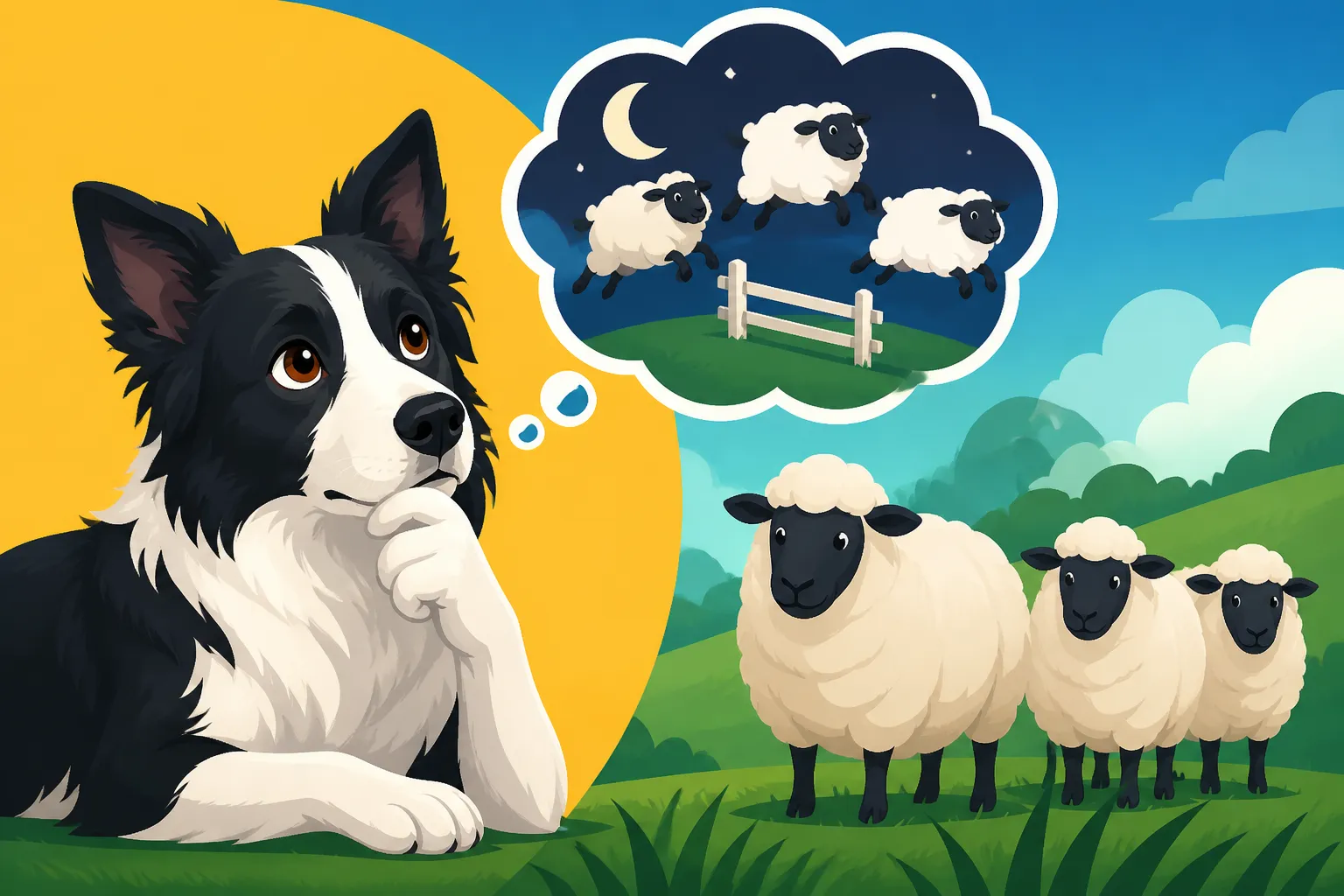
A Border Collie can keep track of sheep remarkably well, but that does not mean it is counting them one by one like a person doing arithmetic. Their skill comes from watching movement, responding to a handler, and learning familiar routines. This guide explains what a Border Collie may understand about flock size, what it cannot reliably tell you, and why the distinction matters in real farm work.
Can a Border Collie really count sheep
What people mean when they say a dog can count
When someone says a Border Collie “counted the sheep,” they may mean the dog noticed that an animal was missing, separated one sheep from a group, or brought a flock through a gate in an orderly way. Those are impressive abilities, but they do not necessarily involve counting each animal as a distinct number.
A working dog reads a busy scene in real time. It watches where sheep are moving, notices when one turns away from the group, and responds to cues from the handler. If the dog has worked the same flock and route repeatedly, it may also recognize familiar patterns: which animals tend to lag, where the flock usually bunches, or how many sheep normally emerge from a pen.
Those skills can look like arithmetic from the outside. Imagine a handler moving a small group from one field to another. The dog keeps the flock together, spots a ewe lingering at the gate, and circles back to move her along. The dog has solved a practical problem, but the behavior is better explained by attention, learning, and herding behavior than by a precise internal tally.
This is part of what makes Border Collies seem almost uncanny. Their intelligence is closely tied to reading movement and responding to a person, not simply to abstract puzzles. For more on that distinction, see What Border Collie Intelligence Actually Measures and The Eye That Sets a Border Collie Apart.
What we know about exact numbers
There is no good reason to assume a Border Collie can reliably count a flock in the human sense. A dog may distinguish between a few objects or notice that a familiar scene has changed, but that is different from assigning each sheep a number and checking that a total matches a written count.
A dog might notice that a group looks smaller than usual, or that one sheep has not followed the others. It could also respond to a handler’s subtle change in posture or voice when an animal is missing. None of those observations proves the dog has counted the sheep. It may be reacting to movement, spacing, sound, smell, learned routines, or a cue from the person.
That difference matters when livestock records or animal welfare are at stake. A dog can help gather and move sheep, but the handler should still use a dependable counting method when confirming a flock total. If a sheep is unaccounted for, check the field, shelter, fencing, and neighboring areas rather than relying on the dog’s apparent confidence.
| What the dog does | What it may show | What it does not prove |
|---|---|---|
| Keeps a group moving together | Attention to flock movement and herding behavior | Exact counting |
| Returns for an animal left behind | Response to separation or a learned routine | Knowing the flock’s total |
| Finds a familiar sheep | Recognition or learned association | Ability to identify every sheep by number |
| Notices a change in a familiar group | Sensitivity to a changed scene | Reliable arithmetic |
Why Border Collies are so good at managing a flock
Movement, attention, and the herding instinct
Herding is not the same as counting. A Border Collie’s job is to influence the direction and pace of livestock, often by positioning itself where it can control the group’s movement. The dog watches how sheep respond and adjusts its approach. A quiet step in the right direction may shift the flock more effectively than rushing in.
That work can involve a remarkable amount of attention. Sheep may split around a gate, bunch together, or drift toward a corner. The dog has to react to what is happening now, not follow a fixed route as if the field were a simple diagram. A handler gives cues, but the dog also has to judge the flock’s movement and change position when the first plan is not working.
This is why skilled stock work can look like the dog is “doing the math.” In reality, the dog may be keeping the group cohesive and responding to its shape and motion. The Border Collie’s characteristic focus and sensitivity to movement are central to the job. You can see how those abilities fit into the wider working context in The Border Collie in Sheepdog Trials.
A trial makes those skills easier to observe. A dog may be asked to gather sheep from a distance, bring them toward a handler, guide them through obstacles, and help sort or pen them. The task rewards control, responsiveness, and calm decisions, not a demonstrated ability to announce the flock’s numerical total. What Happens at a Sheepdog Trial With a Border Collie gives more context on what those runs involve.
Learning a flock’s patterns
Experience changes what a dog can do. A Border Collie that works regularly with the same sheep may learn where they tend to gather, which animals are reluctant to move, and how the flock responds to pressure. If a particular ewe often pauses near a gate, the dog may begin to anticipate that pause and position itself accordingly.
A dog can also learn a sequence. For example, it may understand that after the gate opens, it should hold back while sheep pass through, then move around to bring along stragglers. That is sophisticated learning, but it is still different from keeping a numerical ledger. Dogs are excellent at linking actions with consequences; a familiar work routine gives them a great deal of useful information without requiring exact counting.
The handler contributes information too. A person may look toward the missing animal, change the timing of a cue, or pause when the group seems incomplete. A highly attentive dog can pick up on these small signals. This can make it seem as if the dog independently detected the missing sheep, when the person’s behavior may have helped guide the response.
How to tell observation from a counting trick
Why informal demonstrations can mislead
A casual demonstration may look convincing: place several sheep behind a barrier, remove one, and watch the dog react. But the dog might notice a change in movement or sound, see the handler watching the gap, or respond to a familiar routine. If the dog has been rewarded for looking toward a certain place, it may repeat that behavior even when it has not identified a number.
The same issue arises with toys or household objects. A dog trained to fetch named toys may be learning labels and associations, not counting the toys in a pile. The famous Border Collie Chaser is often discussed in relation to word learning, but knowing object names is not the same mental task as tracking a changing number of sheep. The topic of breed intelligence is explored further in Why the Border Collie Is Called the Smartest Breed.
A stronger test would need to rule out accidental cues. The handler would have to avoid signaling the answer, vary the layout and order, and repeat trials under different conditions. Even then, a dog’s response might show approximate quantity discrimination or recognition of a changed scene rather than exact counting. At home or on a farm, there is rarely a practical need to conduct such a test. It is more useful to understand what the dog can safely contribute.
What a careful test might look like
If you are curious about your dog’s ability, keep the activity low-pressure and do not use live sheep unless you are working with an experienced stock handler. You can start with familiar objects in a secure setting. Change the number and arrangement, avoid pointing or looking toward the expected answer, and record what the dog does before rewarding it.
A dog that consistently responds differently when a small group changes may be noticing quantity, but that still does not establish reliable counting. The change could be caused by the object arrangement, scent, sound, or a learned cue. If the dog performs well once and not another time, that is not a failure; it may simply mean the task is unfamiliar or the cues have changed.
For training, reward calm attention and safe choices rather than trying to prove a clever result. A clicker or small treats can help mark a behavior, but keep food rewards modest and included in the dog’s overall daily ration. If you are gathering supplies for basic training, Chewy may be one place to compare treat pouches, clickers, or puzzle feeders. The important part is not the brand of equipment; it is using a clear, consistent reward and setting the dog up to succeed.
What a Border Collie can safely do around sheep
A useful working partner, not a flock ledger
A well-trained Border Collie can be a valuable partner in moving sheep. It can help gather animals, keep a group together, respond to directional cues, and bring back individuals that have drifted away. Those tasks require control and practice, especially around gates, roads, young lambs, or stressed livestock.
That does not make every Border Collie ready to work stock. A dog with strong chase behavior but little training can frighten or injure animals, and an enthusiastic pet may not understand how to stop when asked. Anyone considering stock work should seek guidance from a knowledgeable trainer or handler and introduce the dog gradually. Teaching a Border Collie the Herding Commands explains the basics of giving clear working cues, while Whether a Pet Border Collie Should Learn to Herd explores whether stock work is a suitable fit for a companion dog.
It is also important to watch the dog’s condition. Working in heat, on rough ground, or for longer than the dog is prepared for can create risks. Give the dog breaks, water, and a safe place to rest, and do not assume enthusiasm means it can keep going indefinitely. A Border Collie may be eager to continue long after it would benefit from stopping.
If your dog does not have access to sheep
A Border Collie does not need livestock in the backyard to have a satisfying life. But the breed often benefits from activities that give its focus and energy a constructive outlet. Short training games, scentwork, obedience, and structured play can provide challenge without encouraging the dog to chase real animals or vehicles.
For a dog that likes to gather or control movement, choose games with clear starts and finishes. You might teach a toy’s name, practice a simple search, or ask the dog to bring an object to a mat. Some owners use food puzzles for quiet enrichment; Chewy is another place to browse those types of supplies, though a puzzle should match the individual dog’s skill and frustration tolerance. Rotate activities rather than relying on endless ball throwing, which can leave a dog more wound up than settled.
If your Border Collie fixates on moving children, bicycles, or livestock, manage the environment and teach alternative behaviors with qualified help. Giving the dog a safe, structured outlet can be useful; it is not a substitute for preventing unsafe chasing. For more ideas, see Giving a Border Collie Something to Gather. Whether the activity involves a toy, scent trail, or trained stock work, the goal is a dog that can focus, respond to its handler, and relax afterward.
Disclaimer
This article is for general informational purposes only and does not constitute professional advice. Laws, prices and regulations vary by location and change over time. Consult a qualified professional for guidance on your specific situation.