Whether an American Border Collie Trial Differs
An American Border Collie trial may look different from a sheepdog trial in Britain, even though both test the same partnership between dog, handler, and livestock. Differences can show up in course layout, sheep, classes, judging, and the pace of the event. This guide explains what American handlers and visitors can expect, and why the rules for one trial may not apply to another.
What an American Border Collie trial is designed to test
The shared foundation of sheepdog trials
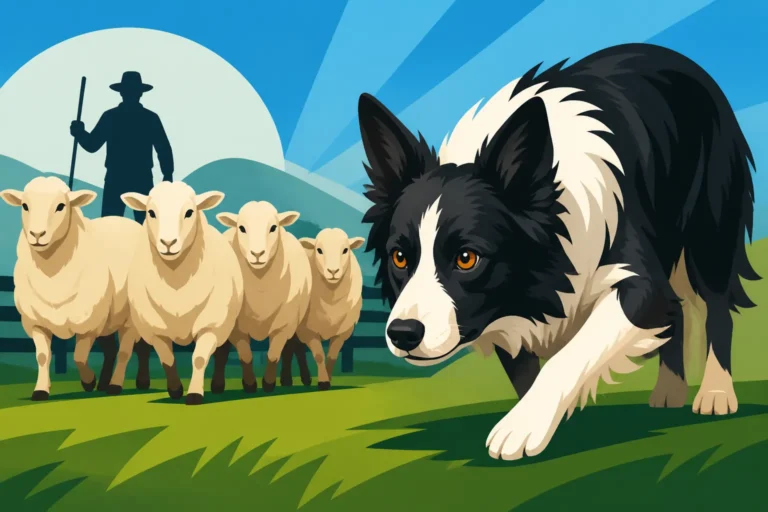
Whether a trial is held in the United States or elsewhere, the central test is familiar: can the dog move livestock in a controlled way, respond to the handler, and help complete a practical course? A Border Collie is not simply being asked to run fast or chase sheep. Judges are watching whether the dog can balance pressure, maintain control, and work with purpose.
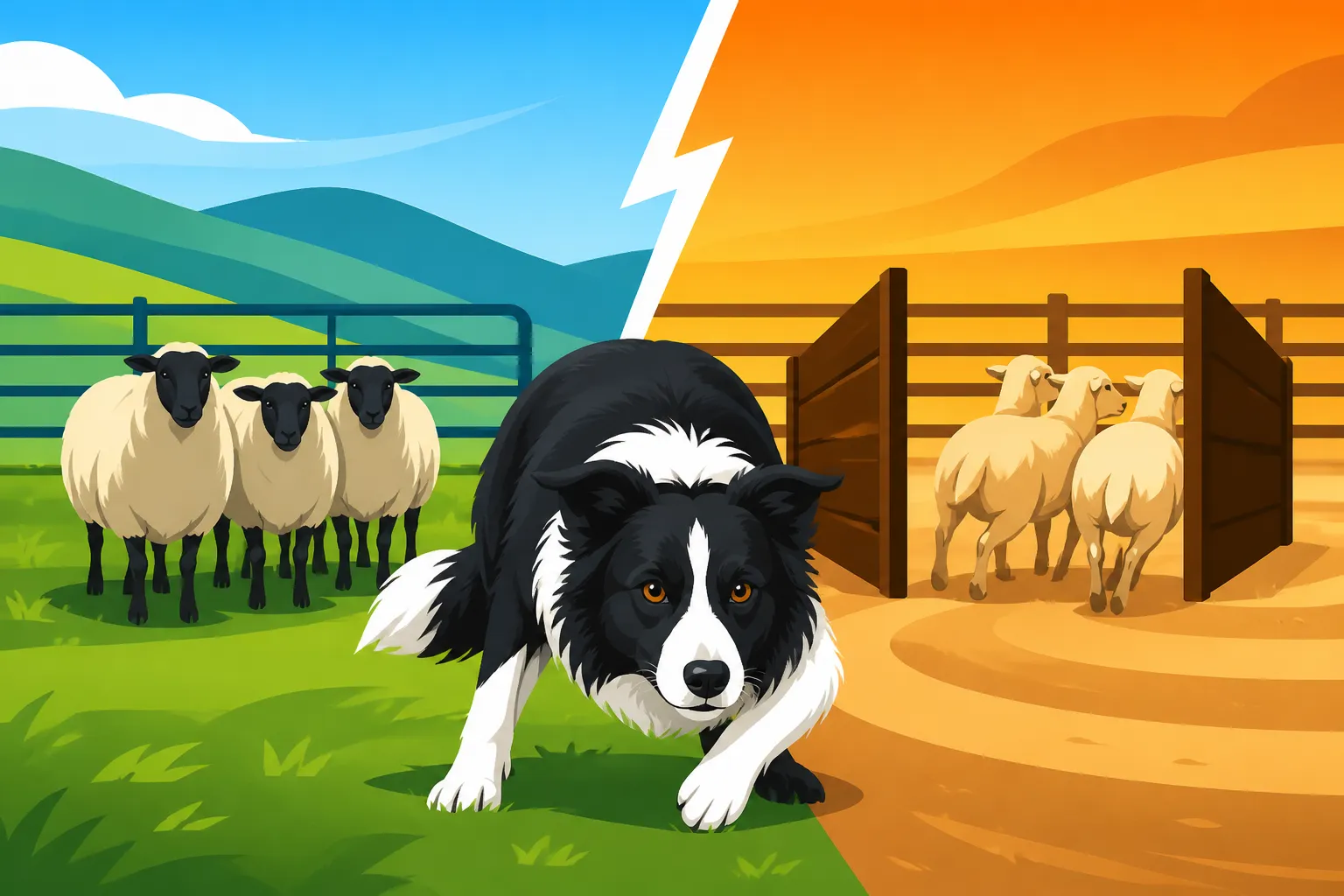
A typical course may ask the dog to leave the handler, approach the sheep in a controlled outrun, lift them from their starting point, and bring them toward the handler. The dog may then need to drive the sheep away, guide them through obstacles, separate some from the group, or help pen them. The exact elements depend on the event and its class.
That basic structure gives visitors a useful starting point, but it does not mean all trials are interchangeable. A dog that performs well on one course may face a different challenge at the next event because the terrain, sheep, obstacles, and course design have changed. The handler must adjust rather than rely on a memorized route.
What makes the American setting distinctive
In the United States, sheepdog trials take place across a huge range of landscapes and working conditions. A course in open country may test a dog’s ability to cover distance and hold sheep together, while a smaller field can make precise turns and close control more important. Weather, footing, visibility, and the behavior of the livestock all affect how the run unfolds.
The sheep themselves matter enormously. Some may be accustomed to dogs and move readily; others may be less settled or more difficult to bring through a course. Their response can change the feel of a run, even when the handler and dog make similar choices. That is one reason a clean performance cannot be judged by speed alone.
American trials also have their own organizations, traditions, and event formats. The United States Border Collie Handlers’ Association, commonly known as USBCHA, is a prominent organization in American sheepdog trialing. Its events and classes are part of a broader scene that also includes local and regional competitions. For a broader look at how trial runs work, see What Happens at a Sheepdog Trial With a Border Collie.
How American trials may differ from trials elsewhere
Course design and the distances involved
One of the most noticeable differences for a visitor can be the scale of the course. Some American trials use open fields where the dog’s outrun and the movement of the sheep happen at considerable distance from the handler. The dog may need to work largely from whistles and subtle signals rather than close-up voice commands.
However, it would be misleading to say that every American trial is large or that every British or international trial is compact. Course design varies within countries, and individual organizers work with the land and livestock available. The course notes or event information are more reliable than assumptions based on a country’s trialing style.
Distance changes the handler’s job. A handler may need to give a command early, wait for the dog to respond, and avoid adding unnecessary signals that could distract it. From the spectator’s perspective, a long-distance run can seem quiet or slow, even when the dog is making careful decisions at the far end of the field. The key action may be a small change in the sheep’s line rather than a dramatic sprint.
The distances and stages of a course are often described as an outrun, lift, fetch, and drive, though a specific event may use its own wording or layout. The Outrun a Border Collie Runs at a Trial explains the first stage in more detail, while The Shed and Pen at the End of a Border Collie's Run covers two technical tasks that may appear later in a course.
Classes, rules, and event formats
American events can include different classes for handlers and dogs at different stages of experience. A local trial may offer an entry-level class alongside more challenging competition, while a major event may have its own qualification and championship structure. The label on a class does not always tell you everything about its difficulty, so handlers should read the event’s rules and course details carefully.
Rules can differ in ways that affect how a run is scored. The number and placement of obstacles, the time allowed, the tasks required, and the way points are allocated may vary. Even terminology can differ from one organizer or region to another. The trial’s current program or rulebook is the best place to confirm what a competitor must do.
Here is a practical comparison of factors that may vary between American events and between American and overseas trials:
| Feature | What may be different | What a handler should check |
|---|---|---|
| Course size | Open distance, compact field, or a layout between the two | Course map and starting arrangement |
| Livestock | Sheep may differ in temperament, familiarity with dogs, and flock behavior | Whether practice or a briefing is available |
| Classes | Entry levels and class names can vary by organizer | Eligibility, experience level, and class rules |
| Obstacles | Gates, panels, pens, or other tasks may be arranged differently | Required route and scoring for each task |
| Judging | Point deductions and task emphasis can vary | Event rules and judging criteria |
| Event format | A local trial may differ from a championship or qualifying event | Run order, qualification rules, and event schedule |
If you are entering for the first time, do not assume a familiar course format means familiar rules. Ask the organizer which rule set applies and whether there are any local instructions. A short conversation before the event can prevent a frustrating surprise at the post.
For context on the American trial scene, The International Sheep Dog Society, Founded 1906 and The ABCA and Its Working Registry explain organizations associated with the wider history and registration of working Border Collies. Those topics are related to the trialing world, but registration and trial rules are not the same thing: confirm what a particular event requires rather than assuming one organization’s paperwork determines eligibility everywhere.
What handlers and spectators should expect on trial day
The rhythm of a run
A trial run is usually a sequence of decisions, not a continuous display of speed. The dog may begin far from the sheep, approach them in a wide arc, and settle into position before moving them. If the sheep drift away from the intended line, the handler may need to redirect the dog. If the dog presses too hard, the sheep may scatter or rush; if it applies too little pressure, they may stop or turn away.
For a spectator, the handler’s pauses can be just as meaningful as the commands. A handler may wait for a dog to complete an outrun, allow the sheep to settle, or give the dog time to correct its position. Calling repeatedly can interfere with the dog’s work, so a quiet run may reflect good handling rather than a lack of involvement.
The run’s flow can also be interrupted by the livestock. A sheep that breaks away, refuses a gate, or turns toward the handler creates a new problem for the team. Good work is not always perfectly smooth. Judges are looking at how the dog and handler manage the task, not just whether the sheep travel along the intended route without a wobble.
If you are attending as a spectator, stand where the organizers direct you and keep children and pets well away from the working area. Sudden movement, shouting, or an off-leash dog can distract the competitors and unsettle livestock. For a sense of what judges may evaluate in the early part of a run, read What Judges Score on a Border Collie's Lift.
Preparing a dog and handler for an unfamiliar event
Preparation starts before arriving at the field. Read the event information, confirm check-in arrangements, and find out what equipment is allowed or expected. A handler who knows the course format can plan a strategy; one who assumes every event follows the same layout may discover too late that an obstacle or rule changes the whole approach.
Travel preparation is practical too. Pack water, familiar food, a leash, cleanup supplies, and a secure way to rest the dog between runs. Some handlers source routine travel and care supplies through retailers such as Chewy, while others use a local pet shop or their usual veterinary clinic. The important point is to bring familiar items rather than experimenting with a new food or piece of equipment on trial day.
Give the dog time to settle after arrival. A busy event can include barking dogs, livestock, vehicles, announcements, and long periods of waiting. A dog that is overstimulated before its run may struggle to focus, even if it has trained well at home. Keep the dog safely contained, provide water and shade as conditions require, and use a calm routine that helps it rest between activities.
Handlers should also be realistic about experience. A novice dog may benefit from a class suited to its stage of training rather than being entered in the most demanding event available. If you are choosing an activity or class, The Nursery Class a Young Border Collie Starts In offers useful context on how younger dogs may begin their trial careers. And if your dog has not worked sheep before, a trial is not a substitute for a controlled introduction; The First Time a Border Collie Meets Sheep explores that first experience.
How to tell whether a trial is right for your dog
Match the event to training and temperament
A Border Collie’s interest in movement does not automatically mean it is ready for trial work. Trialing asks for more than instinct: the dog needs to respond to the handler, cope with pressure, and work around livestock without becoming uncontrollable. Training should build these skills gradually, with a qualified stockdog instructor who can assess both the dog and the sheep.
Temperament matters as much as raw drive. A dog that becomes frantic around livestock may need careful foundational work before entering a competition. A dog that is cautious or uncertain may need time to gain confidence. Neither reaction is a reason to force the dog through a trial; it is a cue to slow down and choose an appropriate training plan.
The handler’s experience matters as well. A beginner may find it difficult to understand the dog’s position, read the sheep, and make timely decisions at once. Watching experienced teams and asking questions can help, but trial rules and course plans should still be checked directly with the organizer. A local clinic or lesson may be a better first step than an entry at a large event.
Avoid assuming one trial represents them all
A poor run at one event does not prove that a dog cannot trial, and a strong run does not guarantee the next one will be easy. Different sheep, terrain, weather, and course demands can expose different strengths and weaknesses. A dog that handles familiar sheep beautifully may need more practice when the flock behaves differently.
Keep notes after each event. Record what the course asked of the team, how the dog responded, where communication broke down, and what went well. If you have access to a video, review it later when the pressure of the run has passed. A useful note might be that the dog needed a wider approach, that the handler gave a command too late, or that the sheep were difficult to settle at a particular obstacle.
Finally, treat the event’s written rules as authoritative for that event. American Border Collie trials share a common purpose with sheepdog competitions elsewhere, but local formats and judging details can differ. Understanding those differences helps handlers enter the right class, prepare responsibly, and enjoy the trial for what it is: a test of teamwork under changing conditions.
Disclaimer
This article is for general informational purposes only and does not constitute professional advice. Laws, prices and regulations vary by location and change over time. Consult a qualified professional for guidance on your specific situation.