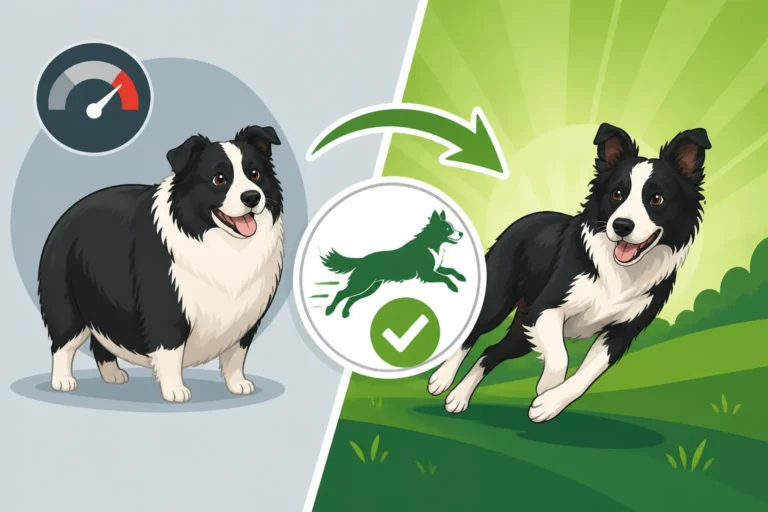
Whether a Border Collie Loses Weight on Work or Food
It’s a common scenario for many Border Collie owners: you see your dog tearing around the yard, chasing a frisbee for what feels like hours, or working stock with relentless energy. You might think, "Wow, with all that activity, they must just burn off everything they eat!" And while it’s true that Border Collies are canine athletes, assuming their exercise alone dictates their weight can lead to some real nutritional imbalances. This guide will help you understand the delicate dance between work and food, ensuring your Border Collie maintains a healthy, strong physique for their entire life.
The Border Collie's Metabolism: A High-Octane Engine
Let's be real, Border Collies aren't exactly known for their couch potato tendencies. Their very nature is geared towards high output, whether that's gathering sheep, excelling in agility, or simply orchestrating the chaos of your living room. This inherent drive gives them a metabolism that’s often compared to a finely tuned sports car.
Understanding Their Energy Demands
It's easy to look at a Border Collie and see a blur of motion, assuming that means they're burning an incredible amount of calories. And they are! But it's crucial to differentiate between general activity and sustained, high-intensity work. A Border Collie trotting around the yard for an hour is different from one performing complex herding patterns or completing an agility course multiple times. The latter requires bursts of speed, quick changes in direction, and intense mental focus, all of which demand significantly more energy.
When your Border Collie is truly engaged in their "job," whether it's competitive dog sports or actual farm work, their body shifts into a higher gear. Their muscles are constantly firing, their brain is working overtime, and their cardiovascular system is pushed. This is where their energy demands skyrocket. Owners often underestimate The Calorie Load a Working Border Collie Burns and just how much fuel this kind of consistent performance requires. It's not just about tiring them out; it's about providing the sustained energy they need without burning through their reserves or, conversely, letting them get soft.
Genetic Predisposition to Leanness
Think about the ancestral role of the Border Collie. They were bred to cover vast distances, often over rugged terrain, working tirelessly alongside shepherds. A bulky, overweight dog would simply not have been efficient or durable enough for this demanding lifestyle. Their lean, athletic build is a hallmark of the breed, a direct result of generations of selective breeding for performance.
This genetic predisposition means that most Border Collies naturally carry less body fat than many other breeds. They're built for speed and endurance, with a body structure that emphasizes muscle and agility. This is why you should generally be able to feel their ribs easily, but not see them prominently. Their waist should be evident, and they should have a clear "tuck-up" from their chest to their abdomen. While this natural leanness is desirable, it also means that if their nutritional needs aren't met, they can quickly become underweight, which is just as detrimental to their health and performance as being overweight. A good breeder will talk about this body type and what it takes to maintain it.
The Critical Role of Diet in Weight Management
While exercise is non-negotiable for a Border Collie, diet is arguably the single most important factor in their weight management. You can work your dog for hours, but if their food isn't right, you'll still struggle to achieve or maintain that ideal body condition.
Calorie Intake vs. Calorie Output
It truly boils down to a simple equation: calories consumed versus calories expended. If your Border Collie is consistently burning more calories than they're taking in, they will lose weight. Conversely, if they're consuming more than they're expending, they will gain weight. The challenge comes in accurately estimating both sides of that equation, which can be surprisingly tricky!
Many owners, even those with highly active dogs, sometimes fall into the trap of thinking their Border Collie's endless energy makes them immune to weight gain. But even a working dog can become overweight if their diet isn't balanced. Factors like age, metabolism shifts, and even periods of reduced activity (due to injury or seasonal changes) can throw off this delicate balance. Simply "working more" might increase their energy output, but if their foundational nutrition isn't providing the right kind of fuel, they might just be running on empty, risking injury or burnout, rather than effectively losing fat. This is why understanding Feeding a Border Collie That Works Two Hours a Day is so vital, especially when those two hours are intense.
Choosing the Right Food for an Active Border Collie
Not all dog food is created equal, especially when you're fueling a Border Collie. These dogs need a diet rich in high-quality protein to support muscle maintenance and repair, and appropriate levels of fat for sustained energy. Carbohydrates also play a role, providing quick energy and fiber, but the source and quality matter.
For a truly active or working Border Collie, you'll often look for "performance" or "active breed" formulas. These typically have higher protein and fat content than standard adult maintenance foods. For fresh food options, services like Ollie are becoming popular, offering customized meals that can be adjusted for activity levels, which can be fantastic for precise calorie control. If you're sticking to kibble, which many working dog owners do for convenience and cost, focus on brands that list a named meat source as the first ingredient and have a reputable track record. You can find many high-quality performance foods on sites like Chewy or Amazon, where you can compare ingredients, guaranteed analysis, and read reviews from other active dog owners. Always check the ingredient list, and if you're unsure, places like Chewy offer detailed product descriptions and reviews that can help you make an informed choice. It’s also important to consider Protein a Border Collie Needs to Hold Muscle to ensure their diet is truly supporting their athletic build.
Recognizing and Adjusting Your Border Collie's Body Condition
The best way to manage your Border Collie's weight isn't just to rely on the numbers on a scale, but to regularly assess their body condition. This involves both visual inspection and hands-on palpation.
The Body Condition Score (BCS)
The Body Condition Score (BCS) is a standardized way to assess an animal's fat reserves. Most vets use a 9-point scale, where 1 is emaciated and 9 is morbidly obese, with 4-5 being ideal. For a Border Collie, that ideal 4-5 means they are lean, but not bony.
Here's what to look for and feel for:
- Ribs: You should be able to easily feel your Border Collie's ribs without pressing hard. They should feel like they have a thin layer of fat and skin over them, not like they're directly under the skin (too thin) or completely hidden by a thick padding (too heavy).
- Waist: When looking down at your dog from above, you should see a clear "tuck-in" behind their ribs, creating a distinct waistline.
- Abdominal Tuck: From the side, their abdomen should rise up from the bottom of their rib cage towards their hind legs, not hang low or be straight across.
- Spine and Hip Bones: You should be able to feel their spine and hip bones with gentle pressure, but they shouldn't be sharply protruding or visible without touching.
The ideal The Body Condition a Sport Border Collie Carries is often a point leaner than what many pet owners might consider "normal," precisely because of their athletic demands. Regularly performing this quick check will become second nature and is far more informative than just watching the scales.
| Body Condition | Visual Appearance | What You Feel | Action Needed |
|---|---|---|---|
| Too Thin | Ribs, spine, hip bones visible; severe waist tuck | No fat cover; bones sharp and prominent | Increase high-quality food, consult vet |
| Ideal | Ribs easily felt; clear waist and abdominal tuck | Thin fat cover over ribs; smooth bone feel | Maintain current feeding and exercise |
| Overweight | Waist barely visible; abdomen less tucked | Ribs harder to feel; noticeable fat padding | Reduce calories, increase specific exercise, consult vet |
| Obese | No waist; abdomen bulging; fat deposits | Ribs difficult to feel; heavy fat padding, rolls | Significant dietary changes, structured exercise, vet guidance |
When to Adjust Food, Not Just Exercise
When you notice your Border Collie's body condition shifting, your first thought might be, "I need to work them more!" And while increasing appropriate activity can be part of the solution, especially if they've been less active, the food bowl is often where the most impactful changes can be made.
If your Border Collie is looking a bit thin, especially during periods of high work or stress, simply feeding more of their existing food might be the answer. But sometimes, it's not just about quantity, but quality. Are they getting enough highly digestible protein and healthy fats? If they're struggling to hold weight despite eating a good amount, it might be time to switch to a higher-calorie, more nutrient-dense food. Conversely, if they're starting to carry a little extra padding, resist the urge to drastically cut their food or ramp up their exercise to an unsafe level. Instead, gradually reduce their portion sizes, re-evaluate their treats (those calories add up quickly!), and ensure their current exercise regimen is consistent and effective. Adjusting a Border Collie's Food in the Off Season is a classic example of when food, not just work, must be deliberately managed. Always remember that any significant dietary change should be done slowly to avoid digestive upset, and consulting your veterinarian is always a wise step, especially if you're seeing unexplained weight fluctuations.
Common Pitfalls in Border Collie Weight Management
Even the most dedicated Border Collie owners can sometimes fall into common traps when it comes to weight management. These intelligent, high-energy dogs require a nuanced approach.
Overestimating Exercise, Underestimating Calories
It's a tale as old as time for Border Collie owners: "My dog runs for miles every day!" And while that might be true, it's crucial to distinguish between unstructured running around and truly impactful, calorie-burning exercise. A dog running zoomies in the yard, while fun, might not be as calorically demanding as a focused herding session or a challenging agility class. Furthermore, even if the exercise is substantial, the caloric intake might still be disproportionately high.
The biggest culprit here is often treats and extra snacks. A handful of training treats throughout the day, a piece of cheese here, a bite of human food there – these calories add up incredibly fast. For a Border Collie that’s actively working, these can be part of their daily allowance, but for one who’s just living in a pet home with regular walks, they can easily push them into an unhealthy weight range. Many owners find The First Year of Border Collie Spending surprising due to food costs, and this can lead to seeking cheaper, less nutrient-dense foods that don't support their dog's metabolism. It's vital to factor all calories into their daily intake, not just what's in their main meal.
The Impact of Age and Activity Level Changes
A Border Collie isn't a static creature; their energy needs and metabolism change throughout their life. A growing puppy needs specific nutrition to support bone and muscle development without growing too quickly or carrying excess weight. Owners often ask How Much a Border Collie Puppy Should Weigh at various stages, highlighting the concern for proper growth. As they enter their prime working years, their caloric demands peak. However, as they age and inevitably start to slow down, their metabolism also changes, and their activity levels might decrease due to natural aging or developing conditions like Osteoarthritis in a Border Collie by Eight.
This means that a feeding regimen that worked perfectly for a 4-year-old Border Collie in peak condition will likely be too much for an 8-year-old who is still active but perhaps not as intensely as before. Similarly, if your Border Collie has to take a break from their usual activities due to an injury, their caloric needs will drop significantly, even if they're still mentally stimulated. The Age a Border Collie Starts to Slow varies, but proactive adjustment of their diet is essential to prevent weight gain and support their overall health in their later years. Regular vet check-ups, including The Annual Exam a Border Collie Needs, are invaluable for monitoring these changes and getting professional advice on dietary adjustments.
Disclaimer
This article is for general informational purposes only and does not constitute professional advice. Laws, prices and regulations vary by location and change over time. Consult a qualified professional for guidance on your specific situation.