Whether a Border Collie Is Right for a Farm
A Border Collie can look like the perfect farm dog: bright, athletic, and bred to work stock. But a farm setting alone does not guarantee a good fit. The right match depends on the dog’s temperament, the work available, your experience, and how safely you can manage livestock, traffic, and off-duty time. This guide helps you weigh those realities before bringing one home.
What makes a Border Collie suited to farm life
Their instincts can be useful, but they are not automatic training
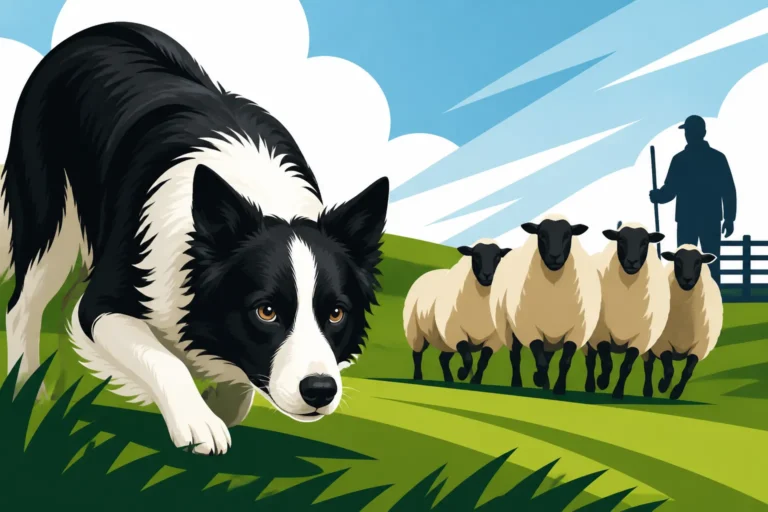
Border Collies were developed to work livestock in partnership with a handler. That heritage can make a well-trained dog valuable when moving sheep or other stock: the dog may respond to direction at a distance, adjust its approach, and help gather animals without constant physical contact. But instinct is only a starting point. A young dog may chase, rush, or grip animals rather than move them calmly, and even a dog with natural ability needs guidance.
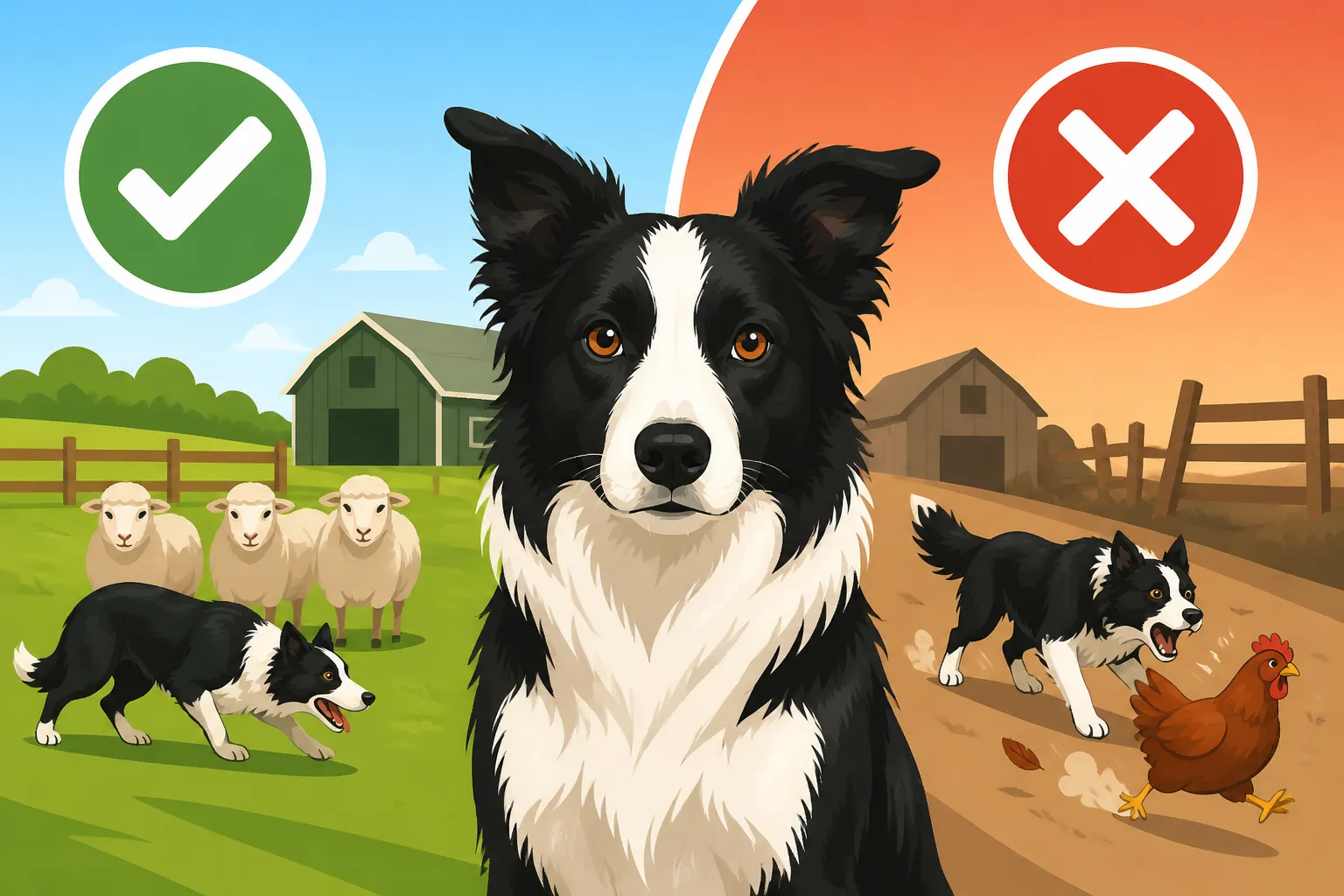
A farm dog also has to learn that not every animal is there to be herded. Chickens, cats, calves, and livestock in a pen can all attract attention, especially when they move or scatter. A dog that has not been introduced carefully may cause stress or injury, even if it is not trying to harm anything. For advice on managing a dog around different household and farm animals, see A Border Collie Working the Household's Other Animals.
Before expecting a dog to work, make sure you have access to an experienced stock-dog trainer or handler. Starting with livestock without supervision can teach habits that are hard to undo, and it can put both dog and animals at risk. A formal instinct test can offer clues about a young dog’s interest and style, but it does not guarantee future skill or suitability. What Happens at a Border Collie Instinct Test explains what such an assessment can and cannot tell you.
A farm is not the same as a job
A Border Collie may live on a farm and never work livestock. That can be a perfectly responsible arrangement, provided the dog has appropriate activity, training, companionship, and rest. Conversely, a dog that works stock every day still needs thoughtful care away from the field. Farm chores are not automatically exercise or enrichment for the dog, particularly if it spends much of the day confined or follows a person without a chance to engage safely.
Think about the dog’s ordinary Tuesday, not just the busy days. Will it accompany you on chores? Where will it wait while you use machinery, handle medication, or move animals? Is there a secure place to rest away from open gates and livestock? A realistic daily routine often includes short training sessions, walks or other controlled activity, and time to settle indoors or in a safe resting area. The broader picture is covered in The Kind of Home a Border Collie Settles In.
It also helps to separate “having room” from “having a plan.” A large acreage may provide space to roam, but it does not teach recall, stop livestock chasing, or prevent a dog from reaching a road. If your idea of farm life involves letting a puppy follow you everywhere, consider how you will keep it safe when you are busy, distracted, or working with animals.
Farm realities to assess before choosing a dog
Livestock, hazards, and boundaries need active management
Walk through your property as if you were a curious young dog. Identify open gates, unfenced lanes, ponds, equipment, feed stores, chemical storage, and places where livestock can be cornered. Consider whether a dog could get into a pasture without you noticing or reach a road while pursuing a moving animal. Farm environments change throughout the day, so a fence that works for one chore may not protect the dog during another.
A Border Collie can be quick to notice motion and may react to running animals, bicycles, vehicles, or wildlife. Reliable recall takes deliberate practice and may not be dependable around every distraction, particularly during adolescence or when the dog is excited. Until you have strong, carefully tested control, use secure barriers or a long line where appropriate, and do not assume that a familiar dog will ignore livestock when unsupervised. See A Border Collie That Cuts Off a Passing Cyclist for an example of how movement can trigger chasing behavior away from stock.
The dog also needs a safe place during tasks that demand your attention. A secure kennel run, a properly introduced crate, or a dog-proof room can prevent a puppy from wandering beneath equipment or entering a work area. Choose containment based on the dog, the property, and local conditions; no single fence or setup suits every farm. For planning and supervision around livestock, Off-Leash Rules for a Border Collie Near Stock is a useful related read.
Weather and physical work are part of the decision
Farm work can mean heat, cold, mud, rough ground, and long stretches outdoors. A dog may keep trying to work even when tired or uncomfortable, so the handler has to provide water, shade, rest, and a way to stop activity. On hot days, move demanding exercise to cooler hours and watch for excessive panting, weakness, confusion, vomiting, or collapse. Those signs need prompt veterinary attention.
Do not assume that an energetic breed can safely handle unlimited running or hard work. Fitness should build gradually, and puppies need age-appropriate activity rather than repeated high-impact work. Adult dogs can also develop injuries from sharp turns, slips, and repetitive activity. If a dog begins limping, slowing down, or seeming reluctant to jump or turn, stop the work and seek veterinary guidance instead of asking it to push through. Cooling and Watering a Border Collie in Summer and Feet, Pads and Legs on a Working Border Collie cover practical care considerations.
Farm work may also involve exposure to ticks, burrs, grass seeds, mud, or agricultural products. Check paws, ears, coat, and skin after time in fields or brush. Store pesticides, fertilizers, medications, and other hazardous materials where the dog cannot reach them, and ask your veterinarian what prevention and first-aid supplies make sense for your location. Basic equipment such as a lead, collar, grooming tools, and a secure water bowl can be found through general pet retailers such as Chewy, but health decisions should be made with a veterinary professional.
| Farm situation | Potential benefit | Main concern | Helpful preparation |
|---|---|---|---|
| The dog will work sheep with you | A trained dog can help gather and move stock | Inexperienced chasing or rushing can injure animals | Work with an experienced trainer and begin in controlled conditions |
| The dog will live on the farm but not herd | The setting may offer room for supervised activity | Space alone does not provide training or mental engagement | Plan daily interaction, boundaries, and safe activities |
| The farm has poultry or small animals | A dog may learn calm routines around them | Sudden movement can trigger pursuit | Use barriers and close supervision during introductions |
| The property is near a road | A dog can accompany you during chores when controlled | Chasing or roaming can lead to a collision | Secure gates, practice recall, and use a lead when needed |
| Work takes place in heat or rough terrain | The dog may join some outdoor tasks | Overheating and paw injuries can develop quickly | Adjust activity, provide rest and water, and check the dog afterward |
Matching the dog to your farm and household
Your experience matters as much as your land
A first-time dog owner can succeed with a Border Collie, but it helps to be honest about how much time and structure the dog will need. If you have never trained a dog around livestock, do not count on the dog’s breed traits to fill that gap. Find a knowledgeable trainer before the dog arrives, and ask what foundation skills to teach before introducing stock. A working breeder or rescue may also help you judge whether an individual dog’s temperament and history fit your plans.
Consider whether you want a dog for actual livestock work, companionship, sport, or some combination. A dog selected for working ability may be intense, persistent, and highly responsive to movement. Those qualities can be useful on a farm and challenging in a household where the dog is expected to spend long periods without direction. A quieter individual may fit a companion role better, but temperament varies from dog to dog; breed labels are not a substitute for meeting the animal and discussing its needs.
A farm household also needs shared rules. Decide who is responsible for feeding, training, supervision, and veterinary care. Make sure everyone knows which gates must stay closed and where the dog is allowed to go. If children are present, they should not be expected to manage a strong, excited dog around livestock on their own. For a wider look at the breed’s demands, What a Border Collie Takes Out of Your Week can help you assess whether the day-to-day commitment fits your household.
Choosing a puppy or adult dog
With a puppy, you can build routines from the beginning, but you will also need to manage house training, biting, chewing, sleep, and gradual exposure to farm sounds and sights. Keep early experiences controlled: a puppy should not be loose among livestock simply because it seems curious or friendly. Reward calm behavior, provide safe rest, and introduce new situations in small steps.
An adult dog may already have useful training or a known history around livestock, but ask specific questions rather than relying on a broad description such as “farm dog.” Has the dog worked stock under supervision? How does it respond to poultry, cats, gates, vehicles, and unfamiliar animals? Can it settle when not working? If you are considering a rescue, ask what has been observed in a foster home and what remains uncertain. A careful transition matters for the dog as well as your animals.
Whichever route you choose, make the first weeks predictable. Set up a secure resting area, establish a consistent lead and gate routine, and supervise every interaction with livestock. Keep training sessions short enough that the dog can succeed, and end before excitement becomes difficult to manage. Chewy may be one place to look for everyday supplies such as leads, brushes, and enrichment toys; choose gear that fits your dog and the conditions you actually face.
How to decide whether a Border Collie is right for your farm
Before committing, answer these questions plainly:
- What role will the dog have? Write down whether you want a working stock dog, a companion, or both. “A dog to come along” is not a complete plan.
- Who will train and supervise it? Identify the person responsible for daily training and the experienced help available for livestock work.
- Where can the dog be safely contained? Check fences, gates, resting areas, and vehicle access before bringing the dog home.
- What happens when you are busy? Plan for chores that involve machinery, livestock treatment, visitors, or anything else that makes active supervision difficult.
- Can you provide a satisfying life without stock work? If the dog will not herd, plan other suitable activities and calm routines rather than assuming acreage will meet its needs.
- Are all household members prepared? Everyone should understand the rules for gates, feeding, handling, and interactions with animals.
A Border Collie is more likely to suit your farm when you can offer purposeful training, safe boundaries, close supervision, and a clear role that matches the individual dog. If you mainly want a dog that can roam freely while you work, or you do not have time to teach and manage it, the breed may be a frustrating and risky choice. If you have a realistic plan and access to knowledgeable support, a Border Collie can become a capable partner—but the relationship is built through training and daily management, not land size alone.
For more on getting a young dog started thoughtfully, see The Age to Start a Border Collie on Stock. If you are still comparing breeds or lifestyles, What New Border Collie Owners Get Wrong About Energy offers another perspective on what living with this breed can involve.
Disclaimer
This article is for general informational purposes only and does not constitute professional advice. Laws, prices and regulations vary by location and change over time. Consult a qualified professional for guidance on your specific situation.