Telling a Smooth Border Collie From a Rough Puppy
Bringing a new Border Collie puppy home is such an exciting time, but if you're like many new owners, you might be scratching your head trying to figure out if that adorable ball of fluff will grow up to be a sleek, smooth-coated dog or a majestic, long-haired beauty. It's a common puzzle, especially since puppy coats can be quite deceptive! This comprehensive guide will walk you through the subtle (and sometimes not-so-subtle) clues to help you confidently determine whether your Border Collie puppy is destined for a smooth or rough coat, preparing you for their unique grooming and care needs.
Understanding Border Collie Coat Types From the Outset
Before we dive into the specifics of puppy identification, it's really helpful to have a solid grasp of what the two main Border Collie coat types look like in adulthood and what drives those differences. It’s not just about aesthetics; coat type impacts everything from grooming frequency to how much mud they track in!
The Genetic Basics of Coat Length
The difference between a smooth-coated and a rough-coated Border Collie primarily comes down to genetics. It's usually controlled by a single gene, with the long coat (rough) being a recessive trait. This means a puppy needs two copies of the "long coat" gene to express it. If a puppy inherits even one copy of the "short coat" gene, it will have a smooth coat, though it might carry the gene for longer hair and pass it on. This genetic reality means that two smooth-coated parents can actually produce rough-coated puppies if both carry the recessive long-coat gene. Conversely, two rough-coated parents will always produce rough-coated puppies. Understanding this can sometimes offer a clue if you know the parents' backgrounds, but often, with puppies, we're relying on visual cues.
You might be thinking, "But my puppy is just a fluff-ball right now, how can I tell?" And that's exactly the challenge! Many puppies, regardless of their adult coat type, go through a fluffy phase. The key is learning to differentiate between puppy fluff and the actual beginnings of a longer, rough coat. It's all about observing growth patterns and texture closely as they mature. You'll find that there are often subtle differences in density and length even in very young pups.
Why Early Identification Matters for Future Care
Knowing your puppy's eventual coat type isn't just for bragging rights; it genuinely impacts how you'll care for them. A rough-coated Border Collie, with its dense undercoat and longer guard hairs, requires significantly more grooming to prevent matting, especially in areas like behind the ears, armpits, and on their "trousers" (the feathering on their hind legs). They'll need regular brushing, perhaps daily during shedding seasons, and more attention to burrs and debris if they spend time outdoors. Grooming a Rough-Coated Border Collie can be quite a commitment!
On the other hand, a smooth-coated Border Collie is often considered lower maintenance, often jokingly called "wash-and-wear." Their shorter, coarser coat sheds dirt more easily and is less prone to matting. While they still shed, sometimes quite a lot, their grooming routine is typically quicker. Think about it: a smooth coat won't pick up nearly as many burrs after a romp in the fields. This knowledge can help you prepare your grooming kit and set realistic expectations for the time you'll spend maintaining their beautiful coat. For instance, you might want to stock up on different kinds of brushes or de-shedding tools depending on their coat type, which you can easily find on sites like Amazon or Chewy.
Decoding the Smooth-Coated Border Collie Puppy
When you first look at a Border Collie puppy, especially a very young one, they often all seem like little bundles of soft fur. But with a keen eye, you can start to pick out the tell-tale signs that point towards a smooth coat. It's not always obvious, but there are distinct characteristics to observe.
The "Wash-and-Wear" Look: Early Indicators
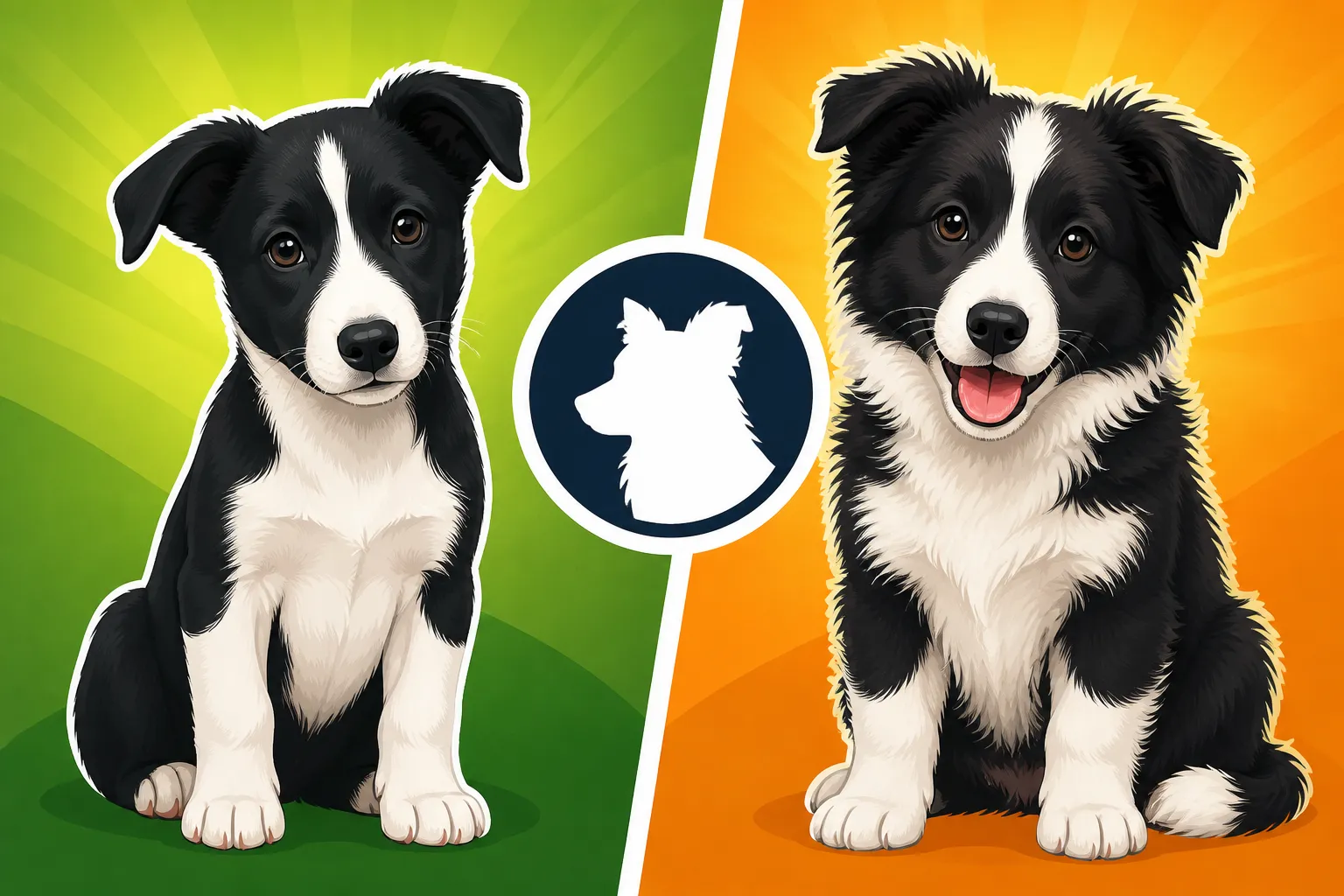
A smooth-coated Border Collie puppy will typically have a noticeably shorter and coarser coat from a very young age. Even at 6-8 weeks old, their fur will lie flatter against their body compared to their rough-coated littermates. You might notice that the hair on their legs, belly, and tail appears quite short and sleek, without any hint of longer "feathering" starting to develop. Think of it as a uniform, dense layer of fur rather than varying lengths across their body. The overall impression is one of neatness and compactness.
They often have a definite "sleek" quality, even as puppies. The hair on their head and face will be very short, framing their intelligent eyes sharply. There won't be much, if any, fluff around their ears or on their muzzle that suggests a longer coat. As they move, their coat won't ripple or flow in the same way a rough-coated pup's might. This isn't to say they don't have any hair; it's just a different density and length. They'll have a soft puppy coat, of course, but it will lack the dramatic longer strands you see on rough coats. This "no fuss" appearance is one of the charming traits of the smooth coat, and it's something you can often spot early on.
Texture and Feel: More Than Just Appearance
Beyond what you can see, what you feel when you run your hand over a smooth-coated Border Collie puppy can be a strong indicator. Their coat will feel relatively uniform in texture – dense and firm, rather than soft and wispy like a rough coat might be at the same age. You'll notice that their fur springs back quickly when you ruffle it. It won't have the same plushness or volume. The individual hairs, while still fine because they are puppies, will feel shorter and less prone to tangling.
Imagine petting a velvet cushion versus a shaggy rug; the difference in feel is somewhat analogous. Even in a young pup, the underlying texture gives a hint. As they mature, this coarseness becomes more pronounced. This dense, smooth coat is what makes them so practical for working dogs, as it sheds water and dirt more efficiently. You can run your fingers through their fur quite easily without encountering any resistance from budding feathering or a thick undercoat, even on their tail. If you're pondering The Smooth-Coated Border Collie and What Its Coat Needs, the answer is usually less extensive brushing, but a good quality shampoo and conditioner are still important for skin health.
Growth Patterns: How a Smooth Coat Develops
A smooth coat's growth pattern is fairly straightforward. From puppyhood, the hair stays relatively short and close to the body across their entire frame. You won't see dramatic changes in length or density as they get older, beyond the puppy coat transitioning to an adult coat. They won't develop noticeable feathering on their legs, chest, or tail. Coat Length Between Rough and Smooth Border Collies is starkly different, with the smooth coat retaining its short, uniform length throughout the dog's life.
What you will notice is a filling out of the undercoat, which becomes denser to provide insulation. This undercoat is often quite fine and soft. While a smooth coat is often perceived to shed less, they do shed, and sometimes quite significantly. Whether a Smooth Border Collie Sheds Less is a common question, and while it might not be as visible as shedding a rough coat's long hairs, they certainly do. You might find shorter, denser hairs around your home, especially during seasonal shedding periods. Regular grooming with a de-shedding tool can help manage this, ensuring those short hairs don't end up on your furniture and clothes.
Spotting the Future Rough-Coated Border Collie Puppy
The rough-coated Border Collie is perhaps what most people picture when they think of the breed: long, flowing fur, a plume for a tail, and distinct feathering. Identifying this coat type in a puppy requires looking for signs of that future lushness.
The Fluff Factor: Initial Signs of a Longer Coat
Rough-coated Border Collie puppies, even at a young age, will often appear noticeably fluffier than their smooth-coated counterparts. Their fur will stand out more from their body, especially on their back and sides. While all puppies have soft coats, a rough-coated pup's will have a distinctly "airy" quality, with individual hairs seeming longer and less tightly packed against the skin. You might observe a slight tendency for the fur on their ears to be a bit longer or to have a fringe, or for a more noticeable fluffiness on their neck and chest.
Pay close attention to the extremities – the tail, legs, and ears. Even young rough-coated puppies might show a subtle hint of longer hair developing on the backs of their front legs, around their hocks, or on the underside of their tail. This is the earliest indication of feathering to come. It won't be dramatic, but it will be distinct from the uniform, short hair of a smooth pup. This "fluff factor" is more than just puppy softness; it’s the nascent stage of their adult coat. This initial appearance can be deceiving because all pups are fluffy, but a rough-coated pup's fluff has more substance and length.
Observing Feathering and Density in Young Pups
As rough-coated puppies grow, usually by around 8-12 weeks, the feathering starts to become more evident. Look for longer strands of hair forming on the backs of their front legs (their "feathering"), a more pronounced "skirt" around their belly, and especially on their tail, which will begin to look like a developing plume rather than a sleek appendage. The hair around their ears might also appear longer and fuller. Their overall coat density will also be quite remarkable, suggesting a thick undercoat that will develop further.
When you feel their coat, it might feel softer and more plush, with a distinct layering. You can often feel the finer, softer undercoat beneath the coarser guard hairs, even if both are still relatively short. This layering gives their coat more volume and body. If you gently part the hair on their back, you'll see how deep the fur goes. This is crucial for distinguishing genuine rough coat potential from just a fluffy smooth coat. Remember, even puppies develop an undercoat, but in a rough-coated pup, it will contribute to that overall voluminous feel. For owners contemplating this coat type, choosing the right grooming tools, perhaps from a selection on Chewy or Amazon, is paramount. Which Brush Suits a Rough Border Collie's Coat is a common question, and it's usually a combination of tools for the undercoat and the longer guard hairs.
Anticipating the "Blow" and Full Coat Development
A characteristic of the rough coat is its tendency to "blow" its puppy coat around 4-6 months, sometimes later, followed by the development of the full adult rough coat. This can be a messy process! The adult rough coat will be double-layered, with a soft, dense undercoat for insulation and a longer, coarser outer coat that provides protection from the elements. This is where the distinct feathering on the legs, chest, and tail truly comes into its own. The longer hair will also be noticeable around the neck, forming a slight mane or ruff.
This is a gradual process, and the full glorious coat might not be completely developed until they are 18 months to 2 years old. Patience is key! During this time, you might notice varying lengths of hair and a somewhat scraggly appearance as the new adult coat pushes out the old puppy fur. This is a normal part of their development. Understanding this trajectory helps in anticipating grooming needs. For instance, you'll need to be particularly vigilant for matting in the denser areas as the adult coat grows in. Many new owners are surprised by the sheer amount of hair during this phase and question Whether a Rough Coat Is More Common in Border Collies due to its prevalence in images.
Common Misconceptions and What to Watch For
Even with all the guidelines, sometimes telling the difference isn't a straightforward black and white scenario. There are nuances and factors that can make identification a bit tricky, and it's good to be aware of them.
The "In-Between" Puppy: It Happens
It's entirely possible to encounter a Border Collie puppy that seems "in-between" – not quite as sleek as a typical smooth coat, but not showing the dramatic fluff or feathering of a classic rough coat. These dogs often have what's sometimes called a "medium" or "broken" coat. Their fur might be longer than a true smooth, with some minor feathering, but it won't be as extensive or plush as a rough coat. This can be a result of their genetic makeup, perhaps inheriting a mix of genes that don't produce a clear-cut smooth or rough expression.
If you're looking at a puppy like this, the best approach is to consider the general trend. Does the hair mostly lie flat, or does it have a tendency to stand out? Is there any feathering on the legs and tail, even if sparse? Usually, if there's any significant feathering at all, they will lean more towards the rough-coated side, even if it's a less extreme version. Don't be too disheartened if it's not immediately obvious; sometimes you just need a little more time to see how their coat develops. Observing the parents, if possible, can also provide a clue as to what the puppies might grow into. Sometimes, Whether Both Coats Appear in One Border Collie Litter can happen, making this visual identification even more important.
Coat Changes and Maturation
It's important to remember that a puppy's coat isn't static. It will change as they grow, transitioning from their baby fur to their adult coat. This can sometimes lead to confusion. A smooth-coated puppy might seem a bit fluffier in its earliest weeks due to its soft puppy fur, only to become sleek and short later on. Conversely, a rough-coated puppy might not show its full potential until it's much older. The "fluffiest" stage for a rough-coated Border Collie often happens during puppyhood, then the coat settles, and the longer guard hairs and feathering develop more distinctly as they reach adolescence.
For instance, you might notice that while the initial puppy fluff is shed, the emerging adult coat in a rough-coated dog is even thicker and longer than you anticipated. This transition phase is when regular grooming routines should be established for rough coats to prevent matting. It's also worth noting that factors like nutrition can influence coat health and appearance. A high-quality diet, perhaps like some options from Ollie, can contribute to a shiny, healthy coat, regardless of its type. Just remember that the initial appearance is a starting point, and maturation will define the final look.
Practical Implications for Grooming and Lifestyle
Understanding your Border Collie puppy's coat type from an early age has very practical implications for their future grooming, care, and even how they interact with their environment. A rough-coated dog will inevitably need more time spent on brushing and dematting, especially if they are frequently working outdoors or exploring brushy areas. You'll need specific tools, like a slicker brush, an undercoat rake, and a metal comb, to keep their double coat in good condition.
| Feature | Smooth-Coated Border Collie Puppy | Rough-Coated Border Collie Puppy |
|---|---|---|
| Overall Look | Sleek, short hair close to the body, neat appearance | Fluffier, hair stands out more, often appears more voluminous |
| Hair Length | Uniformly short across the body, little to no feathering | Longer hair on body, subtle hints of feathering on legs/tail/ears |
| Texture (Touch) | Dense, firm, coarser feel, springs back easily | Softer, more plush, layered feel, individual hairs feel longer |
| Feathering | Absent or extremely minimal on legs, chest, tail | Early signs of longer hair on backs of legs, tail underside, ears |
| Growth Pattern | Stays short, develops dense undercoat, minimal length change | Grows into full double coat with prominent feathering, dramatic "blow" |
| Grooming Needs | Lower maintenance, less prone to matting, regular brushing for shedding | Higher maintenance, prone to matting, regular brushing (daily in shedding) |
Consider how their coat will hold up to various activities. Whether a Smooth Border Collie Suits Rough Country is a valid concern, as their shorter coat might offer less protection from thorns or harsh weather compared to a rough coat. Conversely, a rough coat might be more prone to collecting burrs and debris. Regardless of coat type, never shave a Border Collie unless medically necessary. Why a Clipped Border Collie's Coat Grows Back Wrong is a real issue, as it can damage the protective double coat and make future grooming harder. Embrace the coat your Border Collie has, and arm yourself with the right knowledge and tools to keep it healthy and beautiful throughout their life.
Disclaimer
This article is for general informational purposes only and does not constitute professional advice. Laws, prices and regulations vary by location and change over time. Consult a qualified professional for guidance on your specific situation.