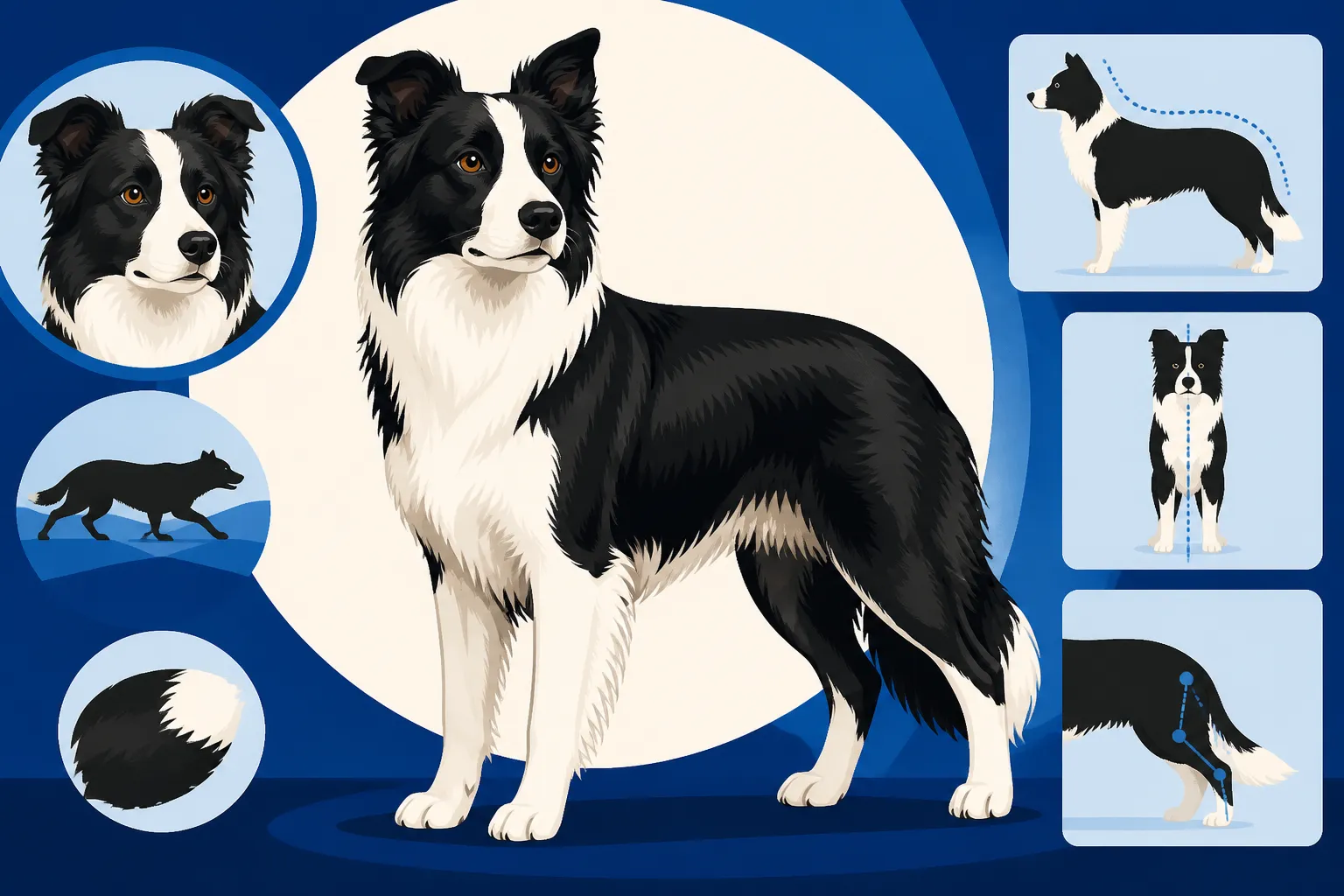
The Athletic Build a Border Collie Standard Describes
It’s easy to look at a Border Collie flying across a field, rounding up sheep, or weaving through an agility course and just see "energy." But what often gets overlooked is the incredible, precise athletic build underpinning all that drive. This isn't just a fast dog; it's a meticulously designed canine athlete, and understanding the nuances of their physical structure, as outlined by breed standards, helps us appreciate their capabilities and ensure we care for them properly. This guide will explore the specific physical attributes that make the Border Collie the supreme herding dog we know and love.
Skeletal Foundation: The Backbone of Performance
The skeletal structure of a Border Collie isn't just about holding the dog up; it's the carefully engineered framework that allows for explosive starts, tight turns, and sustained endurance. Think of it as the chassis of a high-performance vehicle, where every joint and bone is placed for optimal function. Without this robust and flexible foundation, the powerful muscles would be unable to translate their force into the agile, ground-covering movement Border Collies are renowned for.
The Importance of Bone Structure for Endurance
A Border Collie's bones are dense but not overly heavy, striking a perfect balance between strength and agility. This allows them to withstand the constant impact of running, jumping, and sudden changes in direction without being weighed down. Their frame is built for resilience over long periods, whether it’s a full day of working stock or a challenging advanced agility course. You often hear about "good bone," and for a Border Collie, that means a sturdy yet refined structure that can take a beating and keep going. It's a key factor in The Border Collie That Stays Sound Into Its Teens.
When you feel a Border Collie, you'll notice they aren't bulky or coarse-boned. Instead, there's a lean, hard feel to them, reflecting the efficient design. This skeletal efficiency is paramount for endurance; a heavier-boned dog would expend far more energy carrying its own weight, ultimately fatiguing faster. It's a common misconception that more bone equals more strength, but for a Border Collie, it's about the right kind of bone – sturdy enough to be durable, light enough to be agile. This balance is a marvel of natural selection and careful breeding for specific work.
Well-Angled Shoulders and Hips for Reach and Drive
The angulation of a Border Collie's shoulders and hips is critical for their distinctive gait and powerful movement. Well-laid-back shoulders allow for a long, free front reach, enabling them to cover ground effortlessly and efficiently. Combined with correctly angled hindquarters, this provides incredible driving power, propelling them forward and allowing them to spring into action or brake suddenly. Imagine a coiled spring; those angles provide the leverage for such explosive movement.
For a working Border Collie, these angles aren't just for show; they directly impact their ability to perform. Flat shoulders restrict movement and can lead to short, choppy strides, while overly steep hindquarters can reduce drive and increase the risk of injury. This is why breeders pay such close attention to conformation and why discussions around Hip and Elbow Scores in a Border Collie are so vital. Proper angulation also helps distribute impact forces evenly, protecting joints over a lifetime of intense activity. This isn't about looking pretty; it's about anatomical engineering for peak performance.
Paws Built for Grip and Durability
A Border Collie's paws are not delicate; they are compact, well-knuckled, and often described as "cat-like." This tight, arched structure provides excellent support and shock absorption, crucial for impact on various terrains. The pads themselves are thick and tough, designed to withstand hours of running over fields, rocky pastures, and varied surfaces without breaking down. Between the toes, you'll often find dense hair, which can offer protection from debris and cold, though it sometimes traps burrs or ice balls.
The nails are strong and preferably kept short, providing extra traction, especially during quick turns or uphill sprints. A Border Collie needs to be able to stop on a dime, pivot, and accelerate with immense precision, and their paws are the primary interface with the ground. Their compact nature also reduces the surface area susceptible to injury, while the deep, well-cushioned pads act like natural shock absorbers. Regular paw inspections, perhaps with a quick clean and check of the pads after a long day of work, are vital to maintaining these critical tools. Chewy offers a range of paw balms and protective waxes that can help keep those pads in top condition, especially for dogs working on challenging surfaces.
Musculature and Movement: Powering the Work
Beyond the skeletal framework, a Border Collie's musculature is a finely tuned engine, built for both explosive speed and sustained effort. Their muscles are lean, powerful, and incredibly elastic, allowing for the wide range of motion and quick reflexes essential to their work. This isn't the bulky muscle of a weightlifter, but the sinewy strength of a marathon runner and a sprinter combined.
Lean Muscle for Speed and Agility
Border Collies possess a lean, athletic musculature that is evident in their well-defined, yet not exaggerated, physique. You won't find excessive bulk on a Border Collie; instead, their muscles are taut and efficient, designed for quick contractions and rapid recovery. This lean build is critical for their incredible speed and agility, allowing them to accelerate from a standstill to top speed in mere seconds and change direction with astonishing precision. It's this type of muscle that allows them to cut off a flock of sheep or make a lightning-fast adjustment on an agility course.
Their powerful hindquarters are particularly well-muscled, providing the drive for their characteristic bursts of speed and their impressive jumping ability. The forequarters are equally strong, supporting their weight during turns and sudden stops. This balanced development ensures that no single part of the body is overstressed during their intense activities. To maintain this lean muscle, a working Border Collie often requires a high-quality, protein-rich diet, as discussed in Feeding a Border Collie That Works Two Hours a Day.
The Border Collie's Signature Gait and Stride
The Border Collie's gait is truly a thing of beauty, often described as flowing and effortless. It’s a ground-covering trot that appears tireless, allowing them to move with incredible efficiency. This gait is a direct result of their correct angulation and well-developed musculature, allowing for maximum reach and drive with minimal wasted energy. They move with purpose, their heads often carried low in the classic "Border Collie stare," a testament to their focus and intensity.
When a Border Collie is truly working, you'll see a characteristic low, creeping stalk, followed by explosive bursts of speed. This isn't just natural instinct; it’s a physical manifestation of their carefully evolved form. The ability to switch seamlessly from a controlled, almost predatory creep to a flat-out sprint requires incredible coordination, flexibility, and muscle control. Observing The Border Collie Gait a Judge Watches gives you a deeper appreciation for the mechanics involved in their movement. Every stride is an economic use of energy, vital for a dog expected to work all day.
Core Strength and Flexibility for Maneuvering
A Border Collie’s impressive agility isn't just about strong legs; it's profoundly rooted in their incredible core strength and spinal flexibility. Their strong, supple back and powerful abdominal muscles act as the central hub for all movement, allowing them to twist, turn, and maintain balance at high speeds. Whether they are making a tight turn around a stubborn ewe or navigating complex obstacles in flyball, their core provides the stability and power needed for such dynamic maneuvers.
This core strength is also crucial for preventing injuries, particularly to the back and joints. A weak core can lead to instability and increased strain on the limbs, making a dog more susceptible to issues like Shoulder Injuries in an Agility Border Collie or even more severe problems. Regular exercise that engages their whole body, like varied terrain running or even targeted conditioning work, helps maintain this essential flexibility and strength. Think of them as canine gymnasts, where every part of the body works in harmony, originating from a powerful, flexible core.
Coat and Conditioning: Protection and Endurance
The Border Collie's coat isn't just about aesthetics; it's a vital part of their athletic build, providing protection and temperature regulation essential for a working dog. Combined with proper conditioning, it allows them to perform in a wide range of environments and weather conditions.
The Double Coat: Insulation and Weatherproofing
Most Border Collies possess a dense, weather-resistant double coat, a testament to their heritage in the rugged Anglo-Scottish Borders. This coat consists of a soft, insulating undercoat and a coarser, water-repellent outer coat. The rough-coated variety has longer hair, often with feathering on the legs, chest, and tail, while the smooth-coated variety has a shorter, denser coat. Both types, however, provide crucial protection against the elements, keeping them warm in cold, damp weather and offering some insulation from the sun's heat.
This natural protection is invaluable for a dog that spends hours outdoors, whether working stock or engaging in demanding sports. It helps regulate body temperature, preventing rapid heat loss in winter and offering a barrier against sunburn in summer. However, this protective coat requires regular care. A rough-coated Border Collie, for example, needs consistent brushing to prevent matting and ensure the undercoat can do its job effectively, as outlined in Grooming a Rough-Coated Border Collie. Neglecting grooming can compromise the coat's function, making the dog less comfortable and potentially leading to skin issues. You can find excellent grooming tools, from slicker brushes to de-shedding rakes, on sites like Chewy to keep their coat in prime condition.
Skin Health and Its Role in an Active Life
Often overlooked, healthy skin is fundamental to a Border Collie's overall well-being and athletic performance. The skin acts as the first line of defense against external irritants, infections, and injuries. A dog with dry, flaky, or irritated skin will be uncomfortable, distracted, and potentially prone to secondary infections, all of which can hinder their ability to focus and perform. A healthy coat grows from healthy skin, so paying attention to what's underneath is crucial.
Proper nutrition, including essential fatty acids, plays a significant role in maintaining skin elasticity and a vibrant coat. Hydration is also key. For a dog that's constantly active, scrapes and minor abrasions are common. Healthy skin heals faster and is more resilient to these everyday occurrences. If you notice persistent itching, redness, or hair loss, it's worth consulting your vet, as it could indicate allergies or another issue that impacts their comfort and performance. Just like a finely tuned engine needs the right oil, a working Border Collie needs a healthy internal system to support their external defenses.
Maintaining Peak Physical Condition
Beyond genetics and careful breeding, maintaining a Border Collie's peak physical condition is an ongoing commitment for any owner. This involves a careful balance of appropriate nutrition, consistent exercise, and regular health checks. Their diet needs to support their high energy demands, providing sufficient protein for muscle repair and fat for sustained energy, especially for dogs who are truly active, as covered in topics like Feeding a Border Collie on a Performance Diet.
Regular veterinary check-ups are essential to catch any nascent issues before they become debilitating. This includes monitoring for common joint problems like those discussed in Hip and Elbow Scores in a Border Collie or watching for early signs of other health conditions. Conditioning isn't just about physical exertion; it's about gradual, progressive training that builds stamina, strength, and flexibility, while also allowing for adequate rest and recovery. Owners often find themselves adjusting routines and diets seasonally, ensuring their dog remains fit and ready for whatever work or sport they excel at. Keeping a Border Collie in top shape is an art form, a constant dance between challenging them and nurturing them.
Balance and Proportions: The Blueprint of Agility
The overall balance and proportions of a Border Collie are not random; they are a blueprint for agility, speed, and endurance. Every aspect of their build contributes to a harmonious whole that allows them to perform their demanding tasks with grace and power. It's about how all the pieces fit together to create a supremely functional athlete.
Overall Symmetry and Harmony
A well-bred Border Collie exhibits remarkable symmetry and harmony in its build. There are no exaggerated features that might impede movement or cause undue stress on other parts of the body. Their head is proportionate to their body, their neck flows smoothly into well-laid shoulders, and their body is neither too long nor too short. This overall balance ensures that weight is distributed evenly, allowing for fluid movement and reducing the risk of musculoskeletal strain.
Think of an architect designing a building for stability and functionality. A Border Collie's body is designed similarly. If one part is out of proportion – perhaps an overly long back or excessively heavy forequarters – it can throw off their center of gravity, making turns harder, increasing the chance of injury like Cruciate Tears in a Border Collie, and generally reducing their efficiency. The breed standard calls for this symmetry because it’s inherently tied to their ability to work effectively and remain sound over a lifetime. It's a key aspect of What the AKC Standard Says a Border Collie Is.
Length of Body to Height Ratio
The breed standard typically describes a Border Collie as slightly longer than tall, meaning their body length (from breastbone to point of buttock) is a bit greater than their height at the withers. This specific proportion contributes significantly to their agility and flexibility. A body that is slightly longer provides greater spinal flexibility, which is crucial for quick changes in direction, tight turns, and the ability to coil and spring forward.
This isn't an arbitrary measurement; it’s directly linked to their working style. Imagine a dog trying to make a sharp pivot with a very short, square body; it would be more prone to losing balance or putting undue strain on its joints. Conversely, an excessively long body could lead to a weaker back and less efficient movement. The ideal ratio gives them the leverage and flexibility needed for their characteristic herding movements, allowing them to bend, twist, and extend with remarkable ease, whether it's flanking wide or gathering sheep close.
Tail Carriage as a Balance Aid
A Border Collie's tail, often considered just an aesthetic feature, actually plays a significant role in their athletic capabilities, acting as a crucial balance aid. When a Border Collie is running at top speed and suddenly needs to make a sharp turn, its tail often acts as a counterbalance, swinging in the opposite direction of the turn to maintain equilibrium. This is particularly noticeable in high-speed sports like agility or during rapid directional changes while working stock.
The tail is typically set low and carried low when the dog is relaxed or concentrating, usually not curled over the back. When excited or working intensely, it may be carried a little higher, forming a slight curve. This flexible, moderately long tail allows for precise adjustments to their center of gravity, helping them to maintain their footing and prevent falls. It's a natural rudder, helping steer and stabilize their body, much like the tail of a cheetah. Without this dynamic balance mechanism, their incredible agility would be severely compromised.
Functional Versus Aesthetic: Understanding the 'Standard'
The Border Collie breed standard is a fascinating document because it attempts to codify the ideal form of a dog whose primary purpose is intensely functional. While some breed standards might lean heavily into aesthetics for the show ring, the Border Collie standard remains deeply rooted in the requirements of a working sheepdog.
The Breed Standard as a Guide for Working Ability
For Border Collies, the breed standard isn't just a list of physical traits for a beauty contest; it's a blueprint for efficiency and capability in the field. Every described feature, from the placement of the eyes to the angle of the hindquarters, is ideally meant to contribute to their ability to herd livestock effectively. A strong, flexible back, well-angulated limbs, compact feet, and a keen, intelligent expression all speak to the qualities needed for sustained, intelligent work.
Historically, Border Collies were bred purely for their working prowess, with appearance being a secondary consideration, if considered at all. The standard, whether from the ABCA or the AKC, endeavors to describe a dog whose conformation supports that supreme working instinct. For instance, the "moderate bone" ensures agility without sacrificing durability, and the "alert, intelligent expression" points to the mental acuity required to understand and execute complex commands. It’s a standard where function largely dictates form, reflecting What Separates a Border Collie From Every Other Herder.
How Show Rings Interpret Athleticism
When Border Collies entered the show ring, there was an inevitable shift in emphasis. While judges still value the athletic build, the interpretation of the standard can sometimes lean towards visual perfection over proven working capability. A dog might look perfectly proportioned and move beautifully in a controlled trot around a ring, but that doesn't always translate to the stamina and gritty resilience needed for a long day on the open fell.
This is where the debate between working lines and show lines often arises. Show lines sometimes develop a slightly different emphasis, perhaps favoring a heavier coat or a slightly different head shape that appeals to current judging trends, potentially moving away from the absolute raw functionality. However, responsible show breeders still strive to maintain the inherent athleticism and health that the standard dictates. They understand that even a show dog should embody the spirit and physical capability of its working ancestors, ensuring that the elegant trot seen in the ring is a reflection of true underlying strength.
Real-World Athleticism Beyond the Written Word
Ultimately, the true test of a Border Collie's athletic build comes not from a written standard or a judge's appraisal, but from their performance in the real world. A dog herding sheep in challenging terrain, competing in high-level agility trials, or excelling in other demanding dog sports like flyball or disc dog, demonstrates the practical application of their physical attributes. This isn't just about looking the part; it's about actually doing the job, day in and day out, remaining sound and capable for years.
Many owners can attest to the sheer resilience of their Border Collies. Even without a formal "job" on a farm, a well-structured Border Collie in a sport home needs that same athletic foundation to prevent injuries and maintain health during their demanding training and competition schedules. Their ability to recover quickly from intense exertion, their natural coordination, and their seemingly boundless energy are all direct outcomes of an athletic build that is truly fit for purpose. It’s a breed designed for intense, intelligent work, and every part of their body is geared towards that remarkable capability.
| Physical Feature | Description in Standard | Functional Purpose |
|---|---|---|
| Overall Build | Slightly longer than tall, athletic, harmonious | Flexibility, balance, endurance, agility |
| Bone Structure | Moderate, neither too heavy nor too fine | Strength, shock absorption, agility |
| Shoulder Angulation | Well laid back | Long, efficient stride, reach, injury prevention |
| Hindquarters | Broad, muscular, well-angulated | Powerful drive, propulsion, jumping ability |
| Paws | Compact, oval, well-knuckled, thick pads | Grip, traction, durability, shock absorption |
| Musculature | Lean, well-developed, not coarse | Speed, agility, quick reflexes, sustained effort |
| Tail Carriage | Moderately long, set low, acts as a rudder | Balance aid during turns, stabilization |
| Coat | Double coat (rough or smooth), weather-resistant | Insulation, weather protection, temperature regulation |
| Movement | Free, smooth, tireless, ground-covering | Efficiency, stamina, rapid acceleration and deceleration |
Disclaimer
This article is for general informational purposes only and does not constitute professional advice. Laws, prices and regulations vary by location and change over time. Consult a qualified professional for guidance on your specific situation.