Shoulder Injuries in an Agility Border Collie
There’s nothing quite like the sight of a Border Collie flying over an agility course, every muscle coiled, every turn precise, eyes locked onto their handler. It’s a marvel of athleticism and partnership. But the flip side of this intense drive and physical prowess is the heartbreaking reality of injuries, especially those affecting the crucial shoulder joint. When your dynamic canine athlete suddenly starts slowing down, refusing jumps, or showing a subtle limp after a hard run, it's not just a physical problem—it’s an emotional gut punch. This guide is here to walk you through understanding, identifying, treating, and preventing shoulder injuries in your agility Border Collie, helping you get them back to their joyful, high-flying selves, or at least managing their health effectively.
Understanding the Agility Border Collie's Shoulder
The Border Collie's body is a finely tuned machine, built for speed, agility, and endurance. Their shoulders, in particular, bear an immense load during the explosive movements demanded by agility sports. It’s not just about running; it's about quick acceleration, sudden stops, tight turns, leaping, and landing. Each of these actions places unique and often extreme stresses on the muscles, tendons, ligaments, and bones of the shoulder.
Anatomy of a Working Shoulder
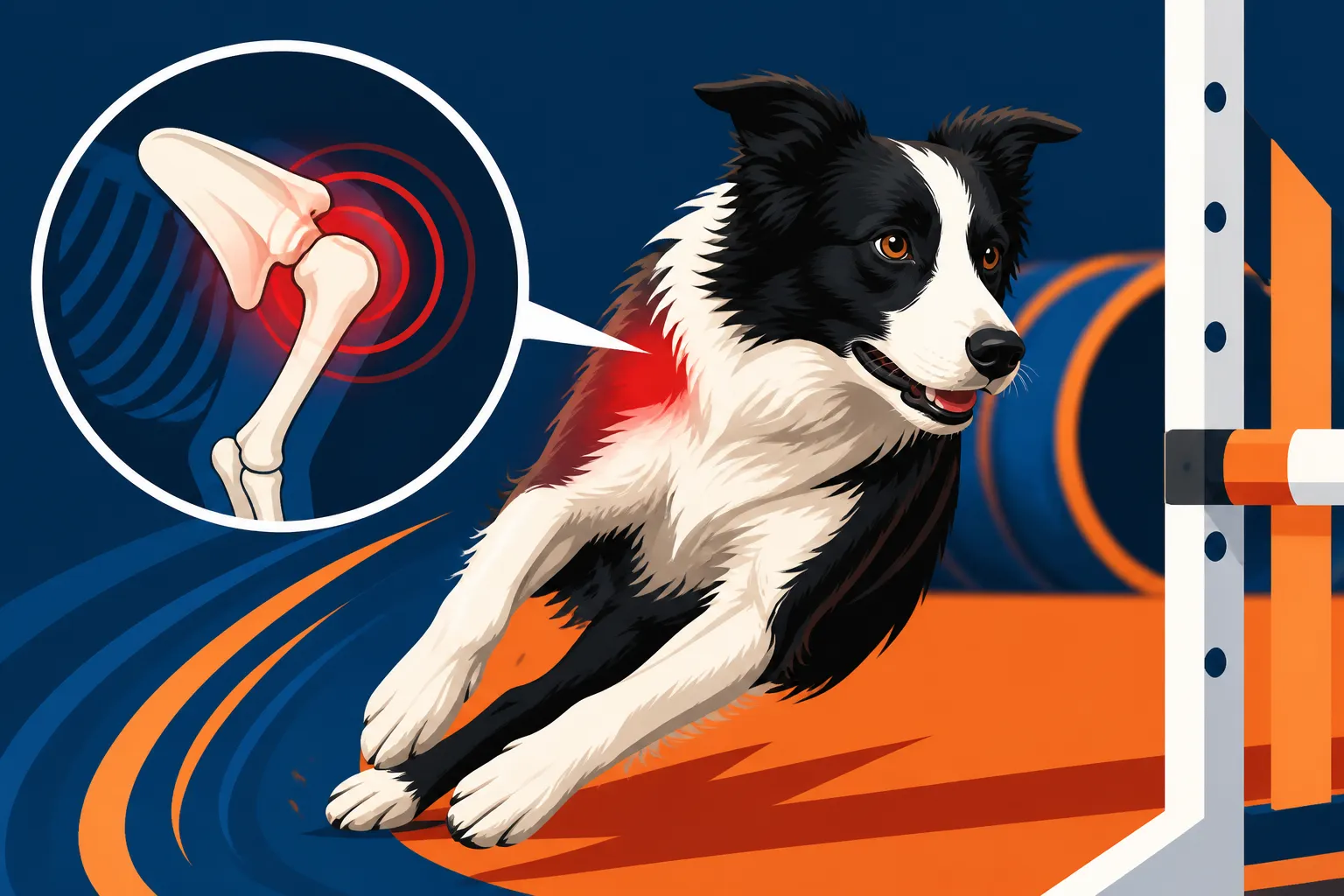
Unlike humans, dogs don't have a collarbone directly connecting their shoulder to their skeletal frame. Instead, the canine shoulder girdle is primarily held in place by a complex network of muscles, tendons, and ligaments. This design offers incredible flexibility and range of motion, which is fantastic for a herding dog weaving through sheep or an agility dog navigating a course. However, this muscular attachment also means that all the shock absorption and stabilization during impact falls heavily on these soft tissues. The shoulder joint itself is a ball-and-socket joint, formed by the scapula (shoulder blade) and the humerus (upper arm bone). Surrounding this joint are the biceps tendon, supraspinatus tendon, infraspinatus tendon, and a myriad of other muscles and connective tissues that work in harmony to allow for powerful yet controlled movement. Any imbalance, weakness, or sudden trauma to this intricate system can lead to significant problems.
High-Impact Movements in Agility
Think about the sheer force involved in an agility run. A Border Collie launching over a jump, absorbing the landing impact, then immediately pivoting for a tight tunnel entry, or extending fully to weave poles at top speed. These are not natural movements in the same way that chasing a squirrel might be. They are explosive, repetitive, and often asymmetrical. When a dog lands from a jump, for instance, a significant portion of its body weight, sometimes amplified by momentum, is absorbed by the front limbs, particularly the shoulders. Rapid changes in direction, like those required to navigate around a jump or into a tunnel, can put shearing forces on the joint, while weaving places enormous strain on the muscles and tendons as the dog continually shifts its weight and propulsion from side to side. Over time, or with one wrong step, these high-impact and demanding movements can lead to micro-traumas or acute injuries that manifest as lameness or pain.
Common Shoulder Injuries in Agility Border Collies
When your agility Border Collie starts showing signs of lameness or discomfort in their front end, the shoulder is often a prime suspect. Several specific conditions frequently crop up in these highly athletic dogs, each with its own set of characteristics and challenges. Understanding these common culprits can help you communicate more effectively with your vet and advocate for your dog's best care. You might also want to read about other Sport Injuries a Border Collie Picks Up that can affect their performance and well-being.
Bicipital Tenosynovitis
This is one of the more frequently diagnosed shoulder issues in active dogs. The biceps tendon, which runs along the front of the shoulder joint, is crucial for extending the shoulder and flexing the elbow. Bicipital tenosynovitis occurs when this tendon, or its protective sheath, becomes inflamed. It's often the result of chronic overuse, repetitive micro-trauma, or sometimes an acute injury from a strenuous activity like jumping or a hard landing. Dogs suffering from this typically exhibit a persistent, subtle lameness that often worsens with exercise and improves with rest. You might notice they're hesitant to put full weight on the affected limb, especially when reaching forward or extending. Palpating the tendon (gently pressing on it) often elicits pain, and they may show stiffness or a shortened stride. This condition can be incredibly frustrating because it can wax and wane, making it hard to pinpoint.
Supraspinatus Tendinopathy
Another common tendinopathy affecting the shoulder is supraspinatus tendinopathy. The supraspinatus muscle and its tendon are located on top of the shoulder blade and are vital for extending the shoulder and stabilizing the joint. Injury to this tendon usually involves a strain or tear, leading to inflammation and sometimes calcification over time. Like bicipital tenosynovitis, it's often an overuse injury that develops gradually from the repetitive actions in agility. Dogs with supraspinatus tendinopathy might show a lameness that is more pronounced after periods of rest or in cold weather. They may be reluctant to engage in activities that require full shoulder extension, such as reaching for a retrieve or stretching their front leg out. A distinctive feature can be pain when the shoulder is extended and rotated externally, and sometimes a crunchy feeling when the joint is moved, if calcification has occurred.
Shoulder Osteochondritis Dissecans (OCD)
Unlike the tendinopathies which are typically acquired through activity, Osteochondritis Dissecans (OCD) is a developmental orthopedic disease that primarily affects young, rapidly growing dogs, including Border Collies. It occurs when cartilage in the joint doesn't properly mature into bone, leading to a flap of cartilage (an OCD lesion) that can detach and cause pain, inflammation, and lameness. While it's often seen in larger breeds, athletic Border Collies are not immune, especially if they have a genetic predisposition. The lameness associated with shoulder OCD can be intermittent or constant and often becomes more noticeable after exercise. It typically presents in dogs between 5 and 10 months of age, though it can sometimes be diagnosed later if the symptoms were mild or overlooked initially. If your young Border Collie is showing signs of front limb lameness, particularly after intense growth spurts or early impact work, OCD should definitely be on the differential list. This is why many breeders advise against Impact Work Before a Border Collie Turns Two.
Medial Shoulder Instability (MSI)
Medial shoulder instability (MSI) is a significant and often challenging diagnosis in agility dogs. This condition involves weakness or damage to the medial (inner) supporting structures of the shoulder joint, particularly the glenohumeral ligaments. These ligaments are crucial for stabilizing the shoulder, especially during weight-bearing and propulsion. When they become stretched or torn, the shoulder joint can become excessively mobile, leading to instability, pain, and degenerative changes over time. MSI is a classic overuse injury in agility dogs, stemming from the repetitive impact, twists, and turns that constantly stress the inner aspect of the shoulder. Dogs with MSI often present with a subtle, insidious lameness that might worsen with specific activities like tight turns or weaving, and improve somewhat with rest, only to return. They might have a characteristic "shudder" or "shiver" in the affected limb, or an inability to properly bear weight when turning. The instability may not be easily palpable, requiring dynamic assessment or even advanced imaging to confirm. This condition can severely impact an agility dog's career and requires careful management. For specific examples, sometimes you'll notice Shoulder Lameness in a Border Collie That Weaves, which is a hallmark sign of MSI or other shoulder issues.
Recognizing the Signs and Symptoms
Catching a shoulder injury early in a Border Collie can make a huge difference in their prognosis and recovery. These dogs are stoic by nature, bred to work through discomfort, so they might not cry out or overtly limp until an injury is quite advanced. As their primary caregiver and partner, you are in the best position to notice subtle shifts in their behavior, movement, and performance. Pay close attention to any deviation from their normal enthusiastic drive.
Subtle Changes in Gait and Performance
It's rare for an agility Border Collie to suddenly become three-legged unless there's an acute, severe trauma. More often, shoulder issues begin with very subtle changes that only a keen eye will pick up. You might notice a slight shortening of their stride on one front leg, or perhaps a less powerful push-off. They might not jump quite as high or as cleanly as before, occasionally knocking bars they used to clear effortlessly. During weaving, they might be slower, or their footwork might seem less precise, sometimes even avoiding certain weave poles. After an intense training session or competition, their lameness might be more evident, but then seemingly disappear after a day of rest, leading owners to believe it was just a temporary strain. Keep a training log; sometimes tracking repetitions or specific exercises can reveal a pattern where lameness consistently appears after certain movements. Any hesitation to offer a paw, reach for a treat, or stretch after waking could also be a clue.
Observable Pain and Discomfort
While Border Collies are tough, pain is pain, and it will eventually manifest in more obvious ways. If you suspect a shoulder issue, gently run your hands over your dog's shoulders, feeling for any heat, swelling, or tensing of muscles. Compare both sides. When you gently manipulate the affected leg, extending it forward, backward, or rotating the shoulder joint, does your dog flinch, pull away, or even offer a low growl? Watch their expression—dilated pupils, flattened ears, or a tight mouth can all signal discomfort. They might shift their weight differently when standing, favoring one leg, or find it uncomfortable to lie down with their weight on the affected shoulder. Some dogs will constantly lick or chew at the area, even if there's no visible skin irritation, as a way to self-soothe. Ignoring these signs can lead to chronic issues, and eventually, Osteoarthritis in a Border Collie by Eight or earlier, could become a harsh reality.
Behavioral Indicators
Beyond the physical signs, shoulder pain can manifest in behavioral changes. An agility Border Collie lives for their sport; it's their purpose and joy. If they suddenly seem less enthusiastic about training, or downright refuse to engage in activities they once loved, this should raise a red flag. They might be reluctant to get in the car for training, avoid eye contact when you pick up their leash, or simply seem "off." Increased irritability, a lower tolerance for handling, or even snapping when touched in a certain area are all serious indicators of pain. Some dogs might become withdrawn, spending more time sleeping or isolated, while others might become restless, unable to find a comfortable position. Remember, a change in behavior, especially a reduction in their typical high drive, is often your dog's most desperate plea for help.
Diagnosis and Veterinary Intervention
Once you've noticed the subtle (or not-so-subtle) signs of a potential shoulder injury, the next critical step is getting an accurate diagnosis. This isn't always straightforward, as the shoulder is a complex joint, and many conditions can present with similar symptoms. You'll need a vet who understands the unique demands on an athletic dog, or even better, a veterinary sports medicine specialist. This might feel like a big step, but it’s essential for a proper treatment plan. You may wonder Whether a Border Collie Needs a Sports Vet – and for complex issues like shoulder injuries in agility dogs, the answer is often a resounding yes.
Physical Examination and Palpation
Your regular veterinarian will start with a thorough physical examination. This includes observing your Border Collie's gait at a walk, trot, and sometimes a canter, often on different surfaces. They'll likely perform a lameness exam, checking for range of motion in all joints, and carefully palpating the muscles, tendons, and ligaments around the shoulder. This part of the exam is crucial for identifying specific areas of pain, swelling, or muscle atrophy. Your vet might perform specific orthopedic tests, such as the biceps compression test or tests for shoulder instability, to try and localize the pain. Be prepared to provide a detailed history: when did you first notice symptoms? What activities make it worse or better? Has there been any acute trauma? Every detail helps build a complete picture.
Imaging Techniques: X-rays, Ultrasound, MRI
While a physical exam can point the way, imaging is often necessary to confirm a diagnosis and rule out other issues.
- Radiographs (X-rays): These are usually the first line of imaging. X-rays are excellent for evaluating bone structure, looking for fractures, bone spurs, or signs of osteoarthritis. They can also reveal calcification within tendons, which can be indicative of chronic tendinopathy. However, X-rays aren't great for visualizing soft tissues like tendons, ligaments, and cartilage directly.
- Ultrasound: Musculoskeletal ultrasound has become an invaluable tool for diagnosing soft tissue injuries in the shoulder. A skilled ultrasonographer can directly visualize the biceps tendon, supraspinatus tendon, and other soft tissues, assessing for inflammation, tears, fluid accumulation, or changes in tendon structure. It's non-invasive and can often be done conscious or with light sedation.
- Magnetic Resonance Imaging (MRI): For the most detailed assessment of soft tissue injuries, an MRI is often the gold standard. MRI provides high-resolution images of tendons, ligaments, cartilage, and bone marrow, allowing vets to identify subtle tears, inflammation, or degenerative changes that might be missed on other imaging. The downside is that MRI requires general anesthesia, making it a more involved and costly procedure. Given the expense, which can quickly add up, it's wise to consider pet insurance from providers like Healthy Paws to help manage these unexpected but necessary diagnostic costs.
Referral to a Sports Medicine Specialist
If your primary vet suspects a complex shoulder injury, or if initial treatments aren't yielding results, they may recommend a referral to a veterinary orthopedic surgeon or a certified veterinary rehabilitation specialist. These specialists have advanced training and equipment to handle intricate cases. They can perform more advanced diagnostic procedures, interpret complex imaging, and offer surgical options if necessary. Don't view a referral as your regular vet giving up; it's them ensuring your Border Collie receives the most specialized and advanced care possible, which is truly in your dog's best interest for a full recovery and return to activity.
Treatment Options for Shoulder Injuries
Once a shoulder injury has been diagnosed, the next step is developing a comprehensive treatment plan. This plan will vary greatly depending on the specific injury, its severity, and your Border Collie's age and overall health. Generally, treatment approaches fall into two main categories: conservative management and surgical intervention, often followed by extensive rehabilitation. The journey to recovery can be long, so patience and consistency are key.
Conservative Management: Rest, Medication, Physical Therapy
Many shoulder injuries, particularly tendinopathies and mild strains, can be successfully managed without surgery.
- Rest: This is perhaps the most crucial, yet often the most challenging, part of conservative management for a high-drive Border Collie. Strict rest means no running, jumping, agility work, or even enthusiastic fetching. Leash walks for bathroom breaks are usually the extent of permitted activity. Depending on the injury, rest periods can range from several weeks to a few months. This can be incredibly frustrating for both you and your dog, as a Border Collie's default setting is "on." However, allowing the injured tissues to heal without further aggravation is non-negotiable.
- Medication: Anti-inflammatory medications are commonly prescribed to reduce pain and swelling. Non-steroidal anti-inflammatory drugs (NSAIDs) like carprofen (Rimadyl), meloxicam (Metacam), or firocoxib (Previcox) are often used. Your vet might also prescribe pain relievers. In some cases, joint supplements containing glucosamine, chondroitin, and MSM can be beneficial for long-term joint health and support, reducing inflammation and supporting cartilage. Your vet might also discuss injections, such as corticosteroids or platelet-rich plasma (PRP), directly into the joint or around the injured tendon, though these treatments are often reserved for specific cases.
- Physical Therapy (Rehabilitation): Once the initial acute pain and inflammation are under control, physical therapy becomes vital. This is not just about "exercise"; it's a structured program designed to restore range of motion, strengthen supporting muscles, improve balance, and prevent future injuries. A certified canine rehabilitation therapist can guide you through exercises like passive range of motion, therapeutic exercises on unstable surfaces, hydrotherapy (swimming or underwater treadmill), and targeted strengthening drills. They can also use modalities such as therapeutic laser, therapeutic ultrasound, and electrical stimulation to promote healing and reduce pain. The dedication to a thorough rehabilitation program will directly impact your Border Collie's ability to return to their former activities. The Physiotherapy Costs for a Sport Border Collie can be substantial, so it's another area where good pet insurance like Healthy Paws can truly help alleviate financial strain.
Surgical Interventions
For some severe shoulder injuries, or those that don't respond to conservative management, surgery may be the best or only option.
- Arthroscopy: This minimally invasive surgical technique uses a small camera to visualize the inside of the joint. It's often used to diagnose and treat conditions like OCD, where a cartilage flap needs to be removed, or to debride (clean up) damaged tendon tissue. Arthroscopy can also be used to assess the extent of ligament damage in cases of medial shoulder instability.
- Open Surgery: More extensive injuries, such as significant tendon tears, severe ligament damage, or complex fractures, may require open surgery. For bicipital tenosynovitis, a bicipital tenodesis (releasing and reattaching the tendon) might be performed. For medial shoulder instability, various stabilization techniques, including imbrication (tightening) of the joint capsule and ligaments or even prosthetic ligament placement, might be considered. The goal of surgery is to restore stability and function to the joint, often allowing for a better long-term outcome than conservative management alone for certain conditions.
Rehabilitation and Long-Term Care
Regardless of whether the treatment is conservative or surgical, a dedicated rehabilitation program is essential. This often starts very gently, focusing on pain management and maintaining muscle mass, and gradually progresses to strengthening, balance, and controlled return to activity. It’s a marathon, not a sprint. The rehab journey might involve regular visits to a specialized facility, as well as daily homework exercises you perform at home.
Long-term care involves ongoing monitoring, potentially continuing joint supplements, and being mindful of your dog's activity levels. Even after recovery, it's wise to implement a lifelong warm-up and cool-down routine for any strenuous activity. Regular check-ups with your vet or rehab specialist can help catch any recurrence or new issues early. It’s about managing your dog's athletic career with an emphasis on longevity and comfort. Owners often ask How Long a Border Collie Takes to Come Right Again, and the answer for shoulder injuries is typically several months, sometimes longer, demanding significant commitment.
Prevention Strategies for Agility Dogs
Preventing shoulder injuries in your agility Border Collie is always preferable to treating them. While you can't eliminate all risks, especially in a sport as demanding as agility, you can significantly reduce the likelihood of injury through smart training, proper conditioning, and attentive care. Think of it as investing in your dog's athletic longevity so they can continue to be The Border Collie That Stays Sound Into Its Teens.
Proper Conditioning and Warm-up Routines
A Border Collie coming straight off the couch and onto the agility course is an injury waiting to happen. Just like human athletes, dogs need a progressive conditioning program that builds strength, endurance, and flexibility.
- Gradual Progression: Don't ask your young or out-of-shape Border Collie to perform advanced agility moves or long sequences right away. Build up duration and intensity gradually. Focus on foundational strength and body awareness exercises before introducing high-impact or complex movements.
- Cross-Training: Incorporate a variety of activities that work different muscle groups. This could include swimming, hiking on varied terrain, trotting on a long leash, or specific conditioning exercises like cavaletti poles, core strengthening exercises, and balance work on unstable surfaces. A well-rounded athlete is a resilient athlete.
- Warm-up and Cool-down: This is non-negotiable. Before any intense activity, perform a 10-15 minute warm-up. This should include a brisk walk, gentle stretches (passive range of motion), and some dynamic movements like leg circles or playful trotting. This increases blood flow, warms up muscles, and improves joint lubrication. After activity, a cool-down of walking and gentle stretches helps to flush out metabolic waste products and promote muscle recovery.
Nutrition and Joint Support
A healthy diet provides the building blocks for strong muscles, bones, and connective tissues.
- High-Quality Diet: Feed a premium dog food formulated for active dogs. Ensure it provides adequate protein for muscle repair and maintenance, and a balanced array of vitamins and minerals.
- Weight Management: Keeping your Border Collie at an ideal body weight is paramount. Excess weight puts additional strain on all joints, including the shoulders, increasing the risk of injury. A lean, athletic physique is crucial for an agility dog. Regularly check your dog's body condition score.
- Joint Supplements: Consider incorporating joint supplements proactively, especially for agility dogs who put constant stress on their joints. Supplements containing glucosamine, chondroitin, MSM, and omega-3 fatty acids can help support cartilage health, reduce inflammation, and improve joint lubrication. Brands often recommended by vets might include products with high-quality ingredients, though specific product names should be discussed with your veterinarian. This ties into the discussion about Joint Supplements for a Border Collie Doing Agility.
Structured Training and Rest
How you train and schedule rest days significantly impacts injury prevention.
- Proper Technique: Work with experienced agility instructors who emphasize correct dog mechanics and handling techniques. Poor form, whether from the dog or handler, can lead to undue stress on joints. For instance, ensuring your dog takes appropriate take-off and landing points for jumps, or maintaining smooth turns rather than jerky pivots.
- Listen to Your Dog: Pay attention to your dog's cues. If they seem tired, reluctant, or "off," give them a break. Pushing through fatigue dramatically increases injury risk. Border Collies have incredible drive, but it's your job to be their advocate and know when to call it a day, even if they want to keep going.
- Scheduled Rest Days: Incorporate true rest days into your Border Collie's weekly schedule. This doesn't mean just light walks; it means genuine downtime where their body can recover and repair. Overtraining is a major contributor to overuse injuries. A good balance might be 2-3 intense training days, 2-3 active recovery days (leash walks, sniffaris), and 1-2 full rest days per week.
- Regular Veterinary Check-ups: Routine veterinary exams, ideally with a vet knowledgeable in sports medicine, can catch subtle issues before they escalate. They can assess gait, muscle symmetry, and joint health, offering guidance on conditioning and injury prevention. And remember, having pet insurance like Healthy Paws in place before any issues arise can make managing future veterinary costs much less stressful.
Injury Comparison Table: Common Shoulder Conditions
To help summarize, here's a quick comparison of the common shoulder injuries we've discussed:
| Injury Type | Common Onset & Cause | Key Symptoms | Typical Diagnosis | General Treatment Approach |
|---|---|---|---|---|
| Bicipital Tenosynovitis | Overuse, repetitive strain, acute trauma | Persistent lameness, worse with exercise, pain on tendon palpation, reluctance to extend shoulder | Physical exam, ultrasound (often diagnostic), MRI | Rest, NSAIDs, rehab, sometimes injections or surgery |
| Supraspinatus Tendinopathy | Overuse, repetitive strain, sometimes calcification | Lameness, worse after rest/cold, pain on shoulder extension, reluctance to reach forward | Physical exam, X-rays (for calcification), ultrasound, MRI | Rest, NSAIDs, rehab, sometimes injections |
| Shoulder OCD | Developmental (young, growing dogs), genetic | Intermittent or constant lameness (5-10 months old), worse after exercise, joint effusion | Physical exam, X-rays, arthroscopy (confirmatory & therapeutic) | Conservative (if mild), surgery (flap removal), rehab |
| Medial Shoulder Instability (MSI) | Chronic overuse, repetitive stress/microtrauma | Subtle, insidious lameness, worse with tight turns/weaves, instability | Physical exam, dynamic ultrasound, MRI, arthroscopy | Rest, NSAIDs, rehab, often surgical stabilization |
Disclaimer
The information provided in this article is for general informational purposes only and is not a substitute for professional veterinary advice, diagnosis, or treatment. Always seek the advice of your veterinarian or other qualified animal health provider with any questions you may have regarding a medical condition or treatment for your Border Collie. Never disregard professional veterinary advice or delay in seeking it because of something you have read in this article.