The Cruciate Tear an Agility Border Collie Gets
For any Border Collie owner, especially those involved in agility, few phrases strike more fear into the heart than "cruciate tear." It's a devastating injury that can sideline even the most enthusiastic and driven dog, leaving both canine and handler heartbroken and facing a long, often expensive, road to recovery. The sudden lameness, the agonizing decision about treatment, and the uncertainty of a full return to sport are very real frustrations. This guide aims to thoroughly explain what a cruciate tear entails for an agility Border Collie, how to recognize it, the available treatment options, and the critical rehabilitation process needed to get your athletic companion back on their paws.
Understanding Cruciate Ligament Tears in Agile Border Collies
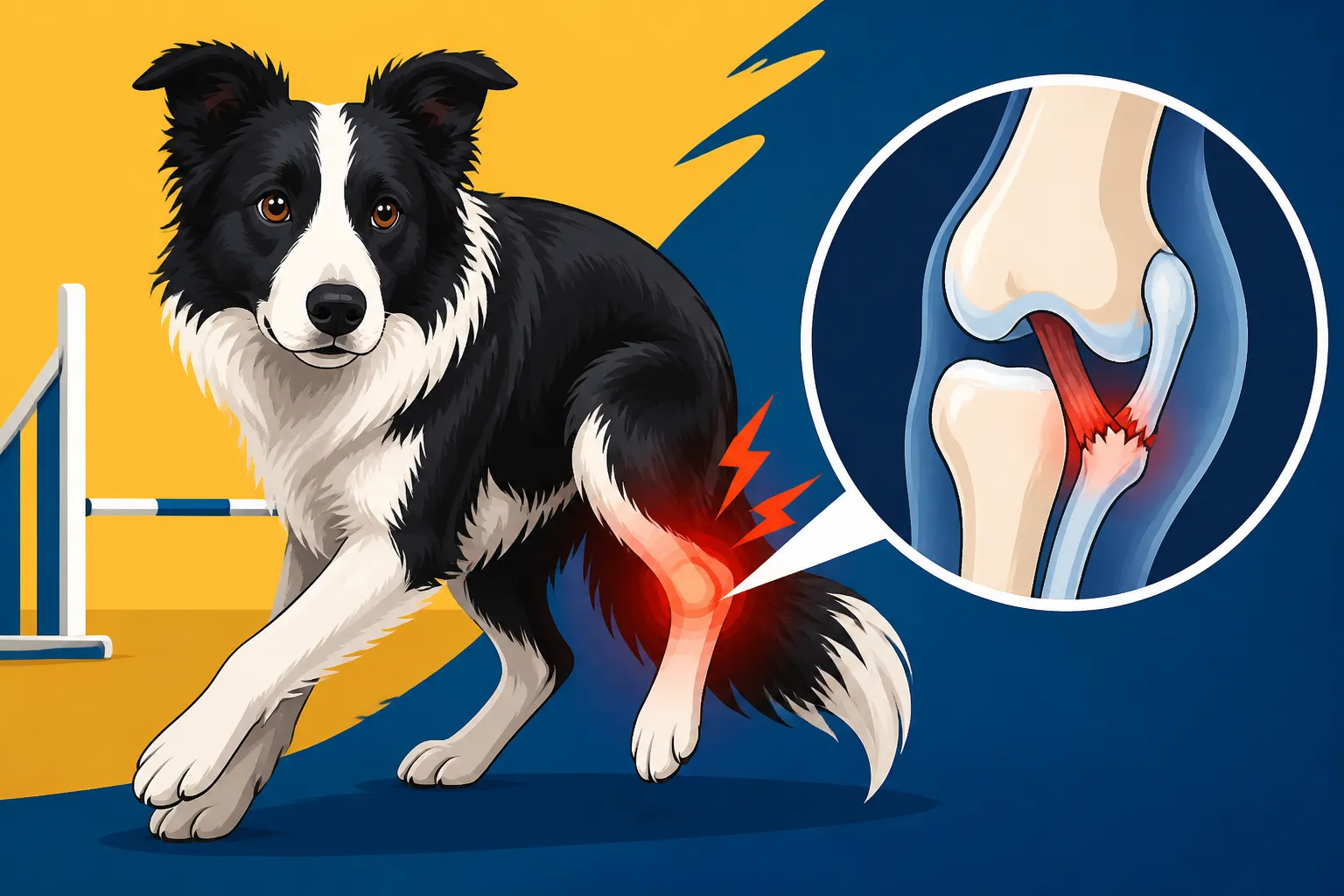
The cranial cruciate ligament (CrCL) in a dog's knee is the equivalent of the anterior cruciate ligament (ACL) in humans. It's a vital structure that provides stability to the knee joint, preventing the tibia (shin bone) from sliding forward relative to the femur (thigh bone), and also limiting internal rotation and hyperextension. When this ligament tears, that stability is compromised, leading to pain, inflammation, and degenerative changes in the joint.
What is a Cruciate Ligament and How Does It Tear?
The CrCL is one of two cruciate ligaments within the canine stifle (knee) joint, crossing over each other (hence "cruciate," meaning cross-shaped). It's primarily responsible for holding the tibia in place relative to the femur. Unlike human ACL tears, which are often acute, traumatic events, canine CrCL tears are frequently the result of a gradual degeneration over time. Imagine a fraying rope that eventually snaps. This degeneration can be exacerbated by activity, but the underlying issue is often chronic.
However, in an agility Border Collie, a sudden, acute tear can absolutely occur. This usually happens during specific, high-stress movements. Think about a dog planting hard to make a sharp turn around a jump, landing awkwardly from a contact obstacle like an A-frame or dog walk, or twisting mid-air. The rapid deceleration combined with a powerful rotation or hyperextension can put immense strain on an already stressed ligament, leading to a partial or complete tear. It’s a moment of explosive energy meeting a vulnerable joint, and the outcome can be devastating for the dog.
Why Agility Border Collies Are Particularly Susceptible
Border Collies are born athletes, designed for speed, agility, and intense bursts of activity. Their natural drive means they give their all, often pushing past what might be comfortable or safe for a less driven dog. This incredible athleticism, while perfect for sports like agility, also unfortunately puts them at higher risk for certain injuries. Just like human athletes, their dedication can be a double-edged sword.
Agility, by its very nature, demands a lot from a dog's joints, especially their stifles. The sport involves:
- Rapid acceleration and deceleration: Bursting off the start line, slamming on the brakes before a tunnel.
- Tight turns and pivots: Weaving poles, banking around jumps, often on varying surfaces that can provide too much or too little grip.
- High-impact landings: Jumping over hurdles, launching off dog walks, and landing with all their weight.
- Repetitive stress: Performing these same demanding movements multiple times a day, week after week.
These movements place incredible torque and shearing forces on the CrCL. A Border Collie's inherent desire to please and their high prey drive mean they rarely "hold back," even when their body might be screaming for a break. This relentless drive, combined with the sport's physical demands, makes them particularly vulnerable to injuries like a cruciate tear. We’ve seen many dogs suffer various Sport Injuries a Border Collie Picks Up over the years, and cruciate tears are sadly high on that list. Sometimes, these dogs also experience other issues like an Iliopsoas Strain in a Border Collie, which can sometimes be confused with or contribute to stifle instability.
Recognizing the Signs and Getting a Diagnosis
Catching a cruciate injury early, or at least understanding what to look for, can make a difference in your dog's comfort and eventual prognosis. It’s not always a dramatic, sudden event. Sometimes, the signs are subtle and easily missed until the injury becomes more severe.
Subtle Clues Before a Full Tear
Many cruciate tears start as a partial tear, or as a slow, degenerative process. Your Border Collie might not suddenly become three-legged lame. Instead, you might notice more subtle changes that, when pieced together, point to a developing problem. Keep a close eye on your dog, especially if they are actively competing or training in agility.
- Intermittent Lameness: Perhaps a slight limp after a particularly intense training session or a long walk, which then seems to resolve with rest, only to reappear. It might look like stiffness, especially after lying down for a while, often described as a "cold lameness."
- Reluctance to Perform: Your dog might hesitate before jumping into the car, ascending stairs, or even getting onto the sofa, movements they once did with ease. On the agility course, they might clear a jump but land awkwardly, or slow down on weaves that were once effortless.
- Changes in Gait: Observe them walking. Is there a subtle head bob when they put weight on a certain leg? Are they shifting weight more onto their front end, or do they hold the affected leg slightly tucked when standing? They might also exhibit a "toe-touching" gait, barely putting weight on the injured leg.
- Muscle Atrophy: Over time, if the leg isn't being used properly, you might notice the muscles in the affected thigh starting to thin compared to the healthy leg. This can be hard to spot in rough-coated Border Collies, but a careful feel can reveal differences.
- Behavioral Changes: A highly driven Border Collie who suddenly seems a bit "off," less enthusiastic, or even a little grumpy, could be trying to tell you something. They might avoid play that involves running or jumping.
If you notice any of these signs, don't dismiss them. A visit to your vet for a thorough orthopedic exam is crucial. Early intervention can sometimes delay or mitigate a full tear.
The Acute Injury: What It Looks Like
When a full, acute cruciate tear occurs, the signs are usually much more dramatic and unmistakable. This is typically when owners realize something is seriously wrong and often seek immediate veterinary attention.
- Sudden, Severe Lameness: Your dog will likely stop using the affected leg almost entirely. They might carry it up, or if they do try to put weight on it, it will be a painful "toe-touching" lameness. They often appear to be "three-legged."
- Pain and Swelling: The knee joint may be visibly swollen and warm to the touch. Your dog will likely react strongly to any manipulation of the joint, showing signs of pain or guarding the leg.
- Sitting with the Leg Out: A classic sign of a cruciate tear is a dog sitting with the injured leg extended out to the side, rather than tucked neatly underneath them. This is an attempt to avoid painful flexion of the stifle.
- Audible Pop or Yelp: While not always present, some owners report hearing a distinct "pop" or their dog yelping loudly at the moment of injury, especially during intense activity.
Upon examination, your veterinarian will typically perform a "cranial drawer" test or a "tibial compression" test. These tests assess the stability of the knee joint by attempting to move the tibia forward relative to the femur. If the ligament is torn, there will be abnormal movement (the "drawer sign"), confirming the instability. They might also palpate for fluid in the joint and assess the range of motion. X-rays are often taken not to diagnose the tear itself (ligaments don't show up on standard X-rays), but to rule out other bone injuries, assess for early signs of osteoarthritis, and plan for potential surgery.
Treatment Options for a Torn Cruciate
Once a cruciate tear is confirmed, you'll be faced with decisions about treatment. For agility Border Collies, who have high demands placed on their bodies, surgical intervention is almost always the recommended path for the best long-term outcome and a potential return to sport. However, understanding all options is key.
Surgical Interventions: TPLO and TTA
Surgical repair is generally considered the gold standard for cruciate tears, especially in active, medium to large breed dogs like Border Collies. The goal of surgery is to stabilize the knee joint. Two of the most common and successful surgical techniques are Tibial Plateau Leveling Osteotomy (TPLO) and Tibial Tuberosity Advancement (TTA).
Tibial Plateau Leveling Osteotomy (TPLO)
The TPLO surgery fundamentally changes the biomechanics of the knee. Instead of trying to repair the torn ligament directly (which is often unsuccessful due to poor blood supply and the constant stress on the joint), the surgeon cuts and rotates the top part of the tibia (the tibial plateau) so that it slopes less steeply. This effectively neutralizes the cranial tibial thrust, making the torn CrCL less critical for stability. A bone plate and screws are then used to hold the bone in its new position until it heals.
Pros of TPLO:
- Excellent long-term stability: TPLO consistently provides very stable knees, which is crucial for high-performance dogs.
- Good return to function: Many dogs, including agility Border Collies, can return to full activity, often including competition, after a successful TPLO and thorough rehabilitation. This is often the preferred surgery if you're hoping for your dog to resume an athletic career.
- Faster weight-bearing: Dogs often start putting weight on the leg sooner post-op compared to some other techniques, though full recovery is still a journey.
Cons of TPLO:
- Invasive: It's a significant orthopedic surgery involving cutting bone (osteotomy).
- Higher cost: TPLO is typically more expensive due to its complexity and specialized equipment.
- Potential complications: As with any surgery, there are risks, including infection, plate/screw issues, or meniscal tears (which are often addressed during the TPLO itself if present).
- Long recovery: While weight-bearing may be faster, the bone takes 8-12 weeks to heal, and full athletic conditioning takes 4-6 months, sometimes longer.
Tibial Tuberosity Advancement (TTA)
TTA is another bone-cutting surgery that aims to stabilize the knee by changing the angle of the patellar tendon. In this procedure, a cut is made in the front part of the tibia (the tibial tuberosity), and this section is advanced forward. A titanium cage and screws are then used to hold it in place. This advancement changes the pull of the quadriceps muscle, making it so the patellar tendon effectively counteracts the cranial tibial thrust, thus stabilizing the joint without needing an intact CrCL.
Pros of TTA:
- Good stability: Like TPLO, TTA provides excellent stability to the knee.
- Less invasive than TPLO (arguably): Some surgeons consider it slightly less invasive because the main weight-bearing surface of the tibia is not altered, potentially leading to a slightly different recovery profile for some dogs.
- Good return to function: Many dogs also achieve a good return to athletic function after TTA.
Cons of TTA:
- Still invasive: It's still a major bone surgery with associated risks.
- Cost: Similar to TPLO, it's a specialized and relatively expensive procedure.
- Potential complications: Risks include infection, implant failure, or meniscal injury (though often addressed during surgery).
- Long recovery: A dedicated rehabilitation program is essential, with full return to strenuous activity taking months.
Here’s a quick comparison of these two popular surgical options:
| Feature | TPLO (Tibial Plateau Leveling Osteotomy) | TTA (Tibial Tuberosity Advancement) |
|---|---|---|
| Mechanism | Changes tibial plateau angle to neutralize thrust | Advances tibial tuberosity to alter patellar tendon pull |
| Invasiveness | High (bone cut and rotation) | High (bone cut and advancement) |
| Cost | Generally higher | Generally high |
| Stability Achieved | Excellent | Excellent |
| Return to Function | High success rate for athletic dogs, including agility | High success rate for athletic dogs, including agility |
| Typical Recovery Time | 4-6 months for full athletic return | 4-6 months for full athletic return |
| Primary Advantage | Highly consistent stability, well-suited for high-energy breeds | Good stability, sometimes preferred for certain anatomies |
Remember, the choice between TPLO and TTA, or even other techniques, should be made in consultation with a board-certified veterinary surgeon who has evaluated your specific dog, their anatomy, and your goals for their activity level. For an agility Border Collie, a surgeon experienced with sports medicine cases is highly recommended. Many owners find that having comprehensive pet insurance, like a plan from Healthy Paws, is invaluable in covering the significant costs associated with these complex surgeries and subsequent rehabilitation. It's often worth looking into Insuring a Border Collie Against Epilepsy and Joints well before such an injury occurs.
Conservative Management: When It's an Option
While surgery is generally recommended for agility Border Collies, conservative management (non-surgical treatment) is sometimes considered, though less frequently for high-drive, athletic dogs. It involves strict rest, anti-inflammatory medications, pain management, and physical rehabilitation, without surgical intervention.
When Conservative Management Might Be Considered:
- Very small, sedentary dogs: In smaller breeds (under 20-25 lbs) or dogs with very low activity levels, the forces on the knee are less, and some may stabilize over time with scar tissue. This is rarely the case for a Border Collie.
- Partial tears: If the tear is very minor and stability is largely maintained, a trial of conservative management might be attempted, but with careful monitoring.
- Financial constraints: When surgery is truly not an option due to cost, conservative management becomes the only choice, but it’s crucial to understand its limitations.
- Medical contraindications: If a dog has other serious health conditions that make anesthesia or surgery too risky.
Limitations and Challenges for an Agility Border Collie:
- Poor prognosis for active dogs: For a Border Collie, especially one involved in agility, conservative management typically leads to a less stable joint, ongoing pain, and a very high likelihood of developing severe osteoarthritis. It's highly unlikely they would ever return to agility or even high-level activity.
- Meniscal damage: Many dogs with CrCL tears also suffer secondary meniscal tears (cartilage damage in the knee). Conservative management does nothing to address this, and an untreated meniscal tear can cause significant pain and further joint damage.
- Long-term implications: Even if some stability is achieved, the joint will almost certainly continue to degenerate, leading to chronic pain and reduced quality of life, often impacting their ability to even enjoy walks. The cost of lifelong pain medication and palliative care can sometimes approach or exceed the cost of surgery in the long run.
- Owner commitment: Conservative management requires extremely strict adherence to rest protocols, often for months, which can be incredibly challenging with a high-energy Border Collie.
Given the breed's nature and the demands of agility, conservative management for a cruciate tear in a Border Collie is rarely ideal if the goal is a comfortable, active life, let alone a return to sport. The best outcome almost always involves surgical stabilization followed by dedicated rehabilitation.
Rehabilitation and Long-Term Management for an Agility Dog
Surgery is only half the battle when it comes to a cruciate tear. The rehabilitation process that follows is equally, if not more, critical for ensuring a successful outcome, minimizing complications, and giving your Border Collie the best chance of returning to their active lifestyle. This phase requires immense dedication and patience from the owner.
The Road to Recovery: Post-Surgery Rehabilitation
Rehabilitation typically begins almost immediately after surgery, often with passive range of motion exercises performed by the vet or a certified canine physical therapist. The recovery journey is a marathon, not a sprint, usually spanning several months.
- Strict Confinement (Weeks 1-6/8): The initial phase involves very strict rest and controlled movement. This means crate rest, short leash walks only for potty breaks, and absolutely no running, jumping, stairs, or off-leash activity. This period is vital for bone healing after TPLO or TTA.
- Passive Range of Motion (PROM) and Massage: Gently flexing and extending the knee helps prevent stiffness and maintains joint mobility. Massage can help reduce swelling and improve circulation.
- Gradual Increase in Controlled Exercise (Weeks 8-16): As healing progresses, a physical therapist will introduce carefully controlled exercises. This might include longer leash walks, balance exercises on wobble boards or physio-balls, cavaletti poles (low obstacles to encourage higher limb flexion), and gentle inclines/declines. Hydrotherapy, such as underwater treadmill work, is often a game-changer during this phase. The buoyancy reduces weight-bearing stress while allowing for muscle strengthening and gait retraining.
- Strengthening and Conditioning (Months 4-6+): Once bone healing is confirmed and initial strength returns, the focus shifts to advanced strengthening, proprioception (body awareness), and building endurance. This is where agility-specific exercises might slowly be reintroduced, but under strict guidance. This entire process is about gradually rebuilding strength and confidence. Many people wonder about Returning a Border Collie to Agility After TPLO, and it is absolutely possible with proper rehabilitation and clearance from the vet and physical therapist.
- Professional Guidance: Working with a certified canine rehabilitation therapist (CCRT or CCRP) is highly recommended. They can design a tailored program, guide you through the exercises, and ensure your dog is progressing safely. Trying to rush the process or doing too much too soon is the quickest way to cause a setback or re-injury. Remember that costs associated with this critical care, including something like Physiotherapy Costs for a Sport Border Collie, are often covered by pet insurance like Healthy Paws.
Throughout this entire process, regular check-ups with your veterinarian and surgeon will monitor progress and ensure there are no complications. It’s also important to manage your Border Collie’s mental state during this confinement. They are used to being active, and boredom can lead to destructive behaviors or frustration. Mental enrichment with puzzle toys and short training sessions that don't involve physical strain can be very helpful.
Preventing Future Injuries and Managing Arthritis
Even after a successful surgery and rehabilitation, vigilance remains key. A dog that has torn one cruciate ligament has a significantly higher risk (up to 50%!) of tearing the other one, often within a few years. Additionally, some level of osteoarthritis will inevitably develop in the injured knee over time, as any joint trauma can predispose to it. Managing this proactively is part of long-term care. We often see Osteoarthritis in a Border Collie by Eight or even younger in these cases.
- Ongoing Conditioning: A well-conditioned dog with strong core muscles and balanced limb strength is less prone to injury. Regular, appropriate exercise, not just bursts of intense activity, is crucial. This means maintaining good muscle mass and flexibility in both hind limbs.
- Proper Warm-ups and Cool-downs: Just like human athletes, Border Collies need proper warm-ups before intense activity and cool-downs afterward. A 10-15 minute walk or trot before agility, followed by gentle stretching, can prepare muscles and joints. A similar cool-down helps prevent stiffness and aids recovery.
- Surface Awareness: Be mindful of the surfaces your dog works on. Slippery floors, uneven ground, or overly sticky turf can contribute to joint stress.
- Weight Management: Keeping your Border Collie at a healthy, lean weight is paramount. Excess weight puts additional strain on all joints, including the knees, increasing the risk of both initial injury and re-injury. Knowing what The Body Condition a Sport Border Collie Carries looks like is essential.
- Joint Supplements: Many vets recommend joint supplements containing ingredients like glucosamine, chondroitin, MSM, and omega-3 fatty acids to support joint health and help manage the symptoms of osteoarthritis. While they can't prevent a tear, they can aid in long-term joint comfort. Explore Joint Supplements for a Border Collie Doing Agility with your vet.
- Regular Veterinary Check-ups: Annual or bi-annual check-ups allow your vet to monitor joint health, assess for early signs of osteoarthritis, and adjust management strategies as needed.
- Consider Impact Work Guidelines: Be mindful of the guidelines for Impact Work Before a Border Collie Turns Two, as early intense impact can predispose dogs to joint issues.
- Pet Insurance: Maintaining a good pet insurance policy, such as one from Healthy Paws, is a smart long-term strategy. While pre-existing conditions won't be covered, a good policy can help with the costs of care for the other cruciate ligament if it tears, as well as ongoing management of arthritis or other new injuries. Be sure to understand the terms, as sometimes questions arise like whether agility injuries void a Border Collie's cover.
Living with an agility Border Collie means accepting that injuries are a possibility. However, with prompt diagnosis, appropriate treatment, and dedicated long-term care, many of these incredible dogs can continue to enjoy active, fulfilling lives, even if their competitive career looks a little different than originally planned.
Disclaimer
The information provided in this guide is for general informational purposes only and does not constitute veterinary advice. Always consult with a qualified veterinarian or veterinary specialist for any health concerns or before making any decisions about your dog's medical care.