Redirecting a Border Collie’s Eye Onto a Toy
Anyone who lives with a Border Collie knows the intense, focused "eye" that comes with the breed. It's a hallmark of their herding ancestry, but when that powerful stare fixates on inappropriate targets—like your toddler, the vacuum cleaner, or even flickering shadows—it can become a real source of frustration and even danger. This guide is here to help you understand this unique behavior and equip you with practical strategies to effectively redirect your Border Collie's intense focus onto an appropriate outlet: a toy.
Understanding the Border Collie's Intense Stare (The Eye)
The Border Collie is renowned for its intelligence and its incredible herding ability, and at the heart of that ability lies what handlers affectionately call "the eye." This isn't just about looking at something; it's a profound, unwavering focus that can be both mesmerizing and, in the wrong context, incredibly challenging. Understanding the roots of this behavior is the first step toward managing it effectively.
The Instinct Behind the Stare
"The eye" is a critical component of a Border Collie's herding instinct, a genetic blueprint deeply ingrained over centuries of working livestock. It's that intense, unblinking gaze a dog locks onto a sheep, using its presence and body language to exert control and move the flock without needing to bark or nip. This isn't just about seeing; it's about intent, a silent communication that says, "I'm watching you, and I can move you." It's a powerful tool, allowing them to dictate the movement of animals much larger than themselves.
While incredibly useful on a working farm, this innate trait doesn't simply vanish when a Border Collie lives as a companion animal in a suburban home or an apartment. Instead, that powerful instinct looks for an outlet, and if sheep aren't available, anything that moves in a way that mimics prey can become a target. This could be a cat slinking across the floor, a child chasing a ball, or even a dust bunny skittering under a table. Your Border Collie isn't being disobedient; they are quite literally doing what they were bred to do, interpreting their environment through the lens of a highly skilled herding dog.
Why it's Hard to Break the Fixation
Once a Border Collie locks onto a target with its eye, breaking that fixation can feel almost impossible. This isn't because your dog is stubborn or trying to defy you; it's because they are operating on a deeply satisfying instinctual loop. The act of stalking, focusing, and controlling is intrinsically rewarding for them. Their brain releases feel-good chemicals when they engage in these behaviors, reinforcing the urge to continue.
For an owner, this can be incredibly frustrating. You might call their name repeatedly, only to be met with deafening silence and an unblinking stare directed elsewhere. It feels like they're completely ignoring you, but in reality, their focus is so absolute, so primal, that your attempts to interrupt often don't even register. They are literally in their own world, driven by a powerful internal imperative. This deep-seated drive makes a simple "No!" or a gentle tug on the collar feel utterly insufficient in the face of such intense, focused energy.
The Dangers of Misdirected Eye
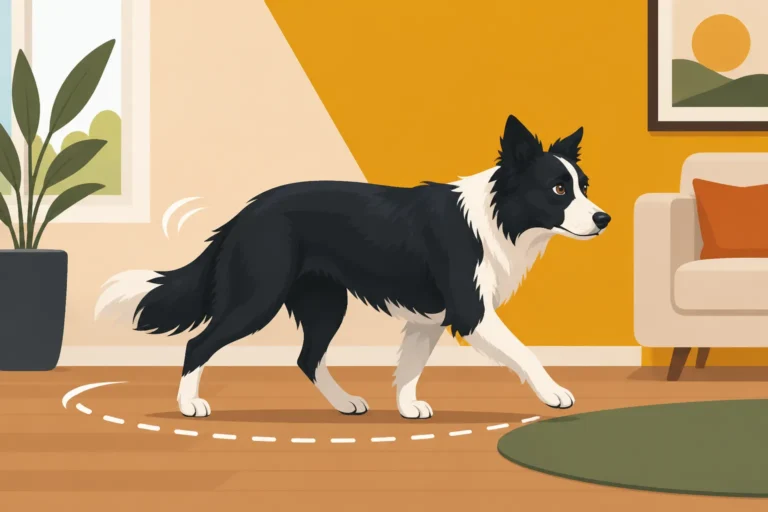
While fascinating to observe, a Border Collie's misdirected eye can lead to several problematic, and even dangerous, situations. When their herding instinct latches onto people, particularly small children, it can manifest as circling, blocking, and even nipping at heels or clothes in an attempt to "gather" them. Imagine a child running in the yard, laughing, only to have your Border Collie suddenly drop into a low crouch, stare intently, and then begin to stalk and nip at their ankles. This isn't malicious, but it's certainly terrifying for the child and potentially harmful. We've all seen videos of Border Collies circling children in the yard, but it's not always a benign game. This behavior can escalate, leading to fear and resentment in both the child and, if not managed, the dog. For more on this, you might find A Border Collie Circling Children in the Yard helpful.
Beyond people, Border Collies can fixate on other household pets, turning the family cat into a constant target of intense observation and low-crouch stalking. They might "herd" the vacuum cleaner, bark furiously at bicycles passing by the window, or even develop compulsive behaviors like chasing shadows and reflections, which can be incredibly difficult to extinguish once established. These behaviors can cause immense stress for the dog, create an anxious household environment, and in some cases, lead to physical harm if the dog attempts to "herd" a moving car or other dangerous objects.
Recognizing When Redirection is Needed
Catching your Border Collie before they're fully immersed in an inappropriate fixation is crucial for successful redirection. Learning to read their body language and understanding the subtle cues that signal an impending "herding" episode can give you the advantage you need to intervene effectively and shift their focus to something positive.
Early Signs of Fixation
A Border Collie about to engage its herding instinct often displays a characteristic set of body language signals. The most telling sign is that intense, unblinking stare – often referred to simply as "the eye." Their body will likely drop into a low crouch, sometimes almost belly-to-the-ground, with their head lowered. Their movements will become slow, deliberate, and stealthy, like a predator stalking its prey. You might notice their ears are swiveled forward, acutely tuned to their target, and their tail might be held low or even tucked slightly.
There's usually a profound quietness that precedes the actual "pounce" or "gather." They become utterly still, all external stimuli momentarily forgotten except for the object of their gaze. If you see your dog displaying this kind of focused, intense stillness directed at something inappropriate, like the family cat exploring the living room or a child playing with a toy, that's your cue to intervene immediately. This early recognition gives you the best chance to redirect their attention before the instinctual drive becomes too powerful to easily break. You might notice this same behavior when they are stalking the vacuum cleaner, which is a common scenario for many Border Collie owners. The Border Collie That Stalks the Vacuum goes into more detail on this specific challenge.
Identifying Inappropriate Targets
Knowing what constitutes an "inappropriate" target for your Border Collie's herding instinct is key to proactive management. While some objects might seem harmless, their potential for escalating the dog's drive or causing issues means they should be avoided. Common inappropriate targets include children, especially those who run, squeal, or move unpredictably, as their movements can strongly mimic the erratic behavior of sheep. Other household pets, like cats, smaller dogs, or even guinea pigs, often become targets, leading to stress for the other animals and potential conflicts.
Beyond living creatures, inanimate objects can also trigger the herding drive. Shadows dancing on walls, reflections from watches or phones, and even the beams of flashlights or laser pointers are particularly notorious for engaging a Border Collie's eye, often leading to obsessive and compulsive behaviors. Fast-moving objects outside the window, such as cars, bicycles, or joggers, are also high-trigger scenarios, as they tap directly into the chase aspect of the herding sequence. Redirecting from these targets is not about punishing the dog, but about preventing the development of undesirable and potentially harmful fixations.
The Difference Between Play and Predation
Understanding the distinction between true herding instinct (a modified predatory sequence) and general playful stalking is vital for correct intervention. Herding, at its core, is a highly refined and incomplete predatory sequence: observe, stalk, chase, gather, but without the kill. When your Border Collie is in "herding mode," their body language will reflect this intense, focused intent—low, deliberate, quiet, with that unwavering eye. It's serious business to them, even if the "prey" is a dust bunny.
Playful stalking, on the other hand, typically involves more exaggerated, loose body language. You might see a play bow, a bouncy gait, or a tail wagging loosely. The "eye" may still be present, but it's often softer, broken up by glances at you, and less rigid. The dog is looking for an invitation to interact, not to control. When your Border Collie stalks a toy in a playful manner, they might still crouch, but it’s usually followed by a pounce, a shake, and then bringing the toy back for more interaction. If your dog is engaging in the former, the predatory sequence, your intervention needs to be swift and calm redirection. If it's the latter, playful stalking, then lean into it and make it a fun, interactive game with rules.
Strategies for Effective Redirection
Once you've spotted the early signs of your Border Collie's intense fixation on an inappropriate target, the next step is to intervene effectively and redirect that powerful energy. This isn't about punishment, but about smoothly shifting their focus from something problematic to an acceptable and stimulating alternative.
Interrupting the Stare Gently
The goal when interrupting a Border Collie's stare is to break their focus without causing alarm, fear, or escalating their intensity. A harsh, loud correction can sometimes make a Border Collie even more agitated or cause them to shut down. Instead, aim for a calm, consistent verbal cue. A sharp "Enough" or "Leave it" spoken clearly and firmly, but not yelled, can be very effective. This command acts as an auditory "pattern interrupt," momentarily jarring them out of their intense focus. It should be a word they associate with stopping an undesirable behavior, taught consistently in various contexts. Having an The Emergency Word a Border Collie Must Know can be incredibly valuable in these situations.
Sometimes, a verbal cue isn't enough, especially if the dog is deeply locked on. In these instances, a gentle physical interruption can be necessary. If your dog is on a leash, a light, consistent pressure on the leash, coupled with your verbal cue, can help guide their attention away. If they're off-leash and close by, you can calmly step between your dog and the target, using your body to physically block their view and gently break their line of sight. The key is never to push or grab aggressively, but to calmly and confidently assert your presence and redirect their physical orientation away from the trigger. The moment their eyes shift away, even slightly, that's your window to immediately offer a high-value alternative.
Introducing High-Value Toys
Not all toys are created equal in the eyes of a Border Collie. To successfully redirect their intense focus from a moving child or a flickering shadow, you need a toy that can compete with, and ideally surpass, that natural drive. High-value toys for a Border Collie are typically those that offer movement, interaction, and a sense of challenge, mimicking the thrill of the chase and the satisfaction of "working" something. Think about what truly captivates their attention.
Flirt poles are fantastic for engaging their predatory sequence in a controlled way, allowing them to stalk, chase, and "catch" a lure. Tug toys, especially those made from durable fleece or rope, provide an outlet for their mouthiness and allow for interactive play. Squeaky balls or those with unpredictable bounces can also be highly motivating. The novelty factor is also crucial; rotate toys to keep them exciting, and some toys should only come out for specific redirection training. You can find a vast array of engaging options on Amazon, ensuring you have a varied selection to keep your Border Collie interested. The interactive nature of these toys, paired with your enthusiastic engagement, is what elevates them above a stale chew toy.
Techniques for Toy-Based Redirection
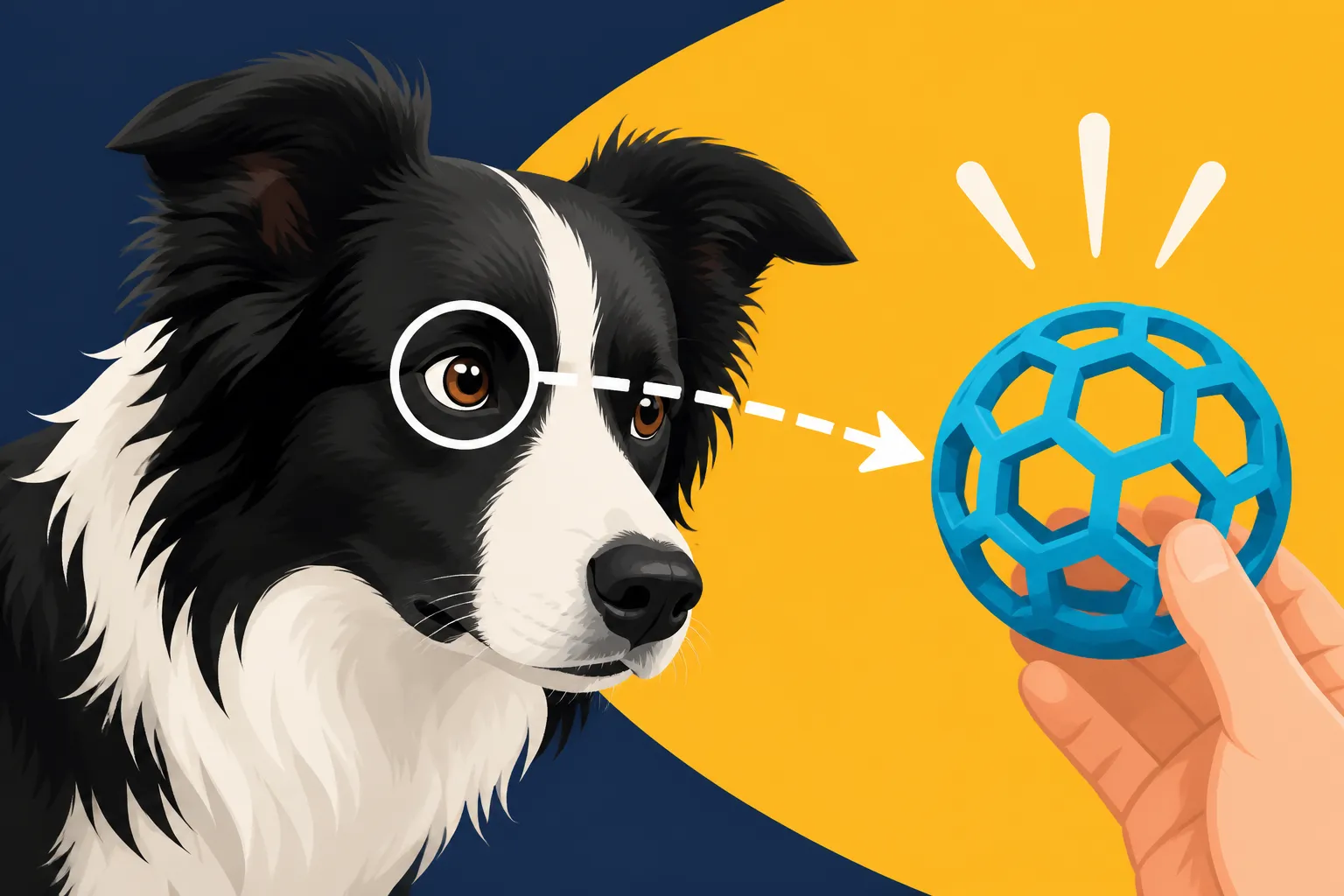
Once you've interrupted your Border Collie's unwanted stare, the crucial next step is to immediately present a high-value toy with enthusiasm. The "switch" command is a powerful technique here: as soon as your dog shows even a momentary break from their original target, immediately produce the toy and engage them with an exciting, active motion. For instance, if your dog is staring at a child, you might say "Leave it," and the moment they glance at you, you excitedly squeak a ball or drag a flirt pole across the floor, inviting them to chase it instead.
The key is to make the toy more interesting and more rewarding than the original target. Use your voice, your body language, and the movement of the toy to make it irresistible. Mimic prey by dragging a rope toy across the floor, making it dart and hide. Roll a ball away from them, encouraging a chase. The instant your Border Collie shifts their intense eye onto the toy and engages with it, shower them with praise and excitement. This positive reinforcement teaches them that redirecting their focus to you and a toy is a highly rewarding alternative to stalking the sofa cushion. Remember, playing endless fetch isn't always the answer, as Weaning a Border Collie Off Endless Fetch suggests, but structured play that teaches redirection is invaluable.
Management and Environmental Control
Even with excellent redirection techniques, prevention is often the most effective tool. Managing your Border Collie's environment to reduce opportunities for inappropriate fixation is paramount, especially during the learning phase. Think like your dog: what triggers their eye? If it's movement outside a window, close the blinds or use frosted window film. If it's children playing rambunctiously, use baby gates or a secure playpen to create a safe separation zone for your dog.
Crate training can be a lifesaver, providing a safe, quiet space where your Border Collie can relax and not feel compelled to "work" the household. This is particularly useful during busy times or when potential triggers (like visitors or energetic children) are present. Furthermore, ensure your Border Collie has plenty of appropriate outlets for their energy and intelligence before problems arise. A tired, mentally stimulated Border Collie is less likely to seek out inappropriate targets for their herding drive. This means providing ample exercise, training, and mental enrichment throughout their day. This holistic approach ensures that redirecting their gaze to a toy is just one piece of a larger, well-managed lifestyle. For a deeper dive into their daily needs, check out What a Border Collie Does With Its Whole Day.
Building a Stronger "Off Switch" and Focus
The ultimate goal of redirection isn't just to interrupt an unwanted behavior, but to cultivate a Border Collie who can disengage from distractions and choose to focus on you and appropriate activities. This involves consistent training, mental enrichment, and clear communication to build a reliable "off switch" for their intense drive.
Training Core Obedience Commands
Foundational obedience commands are the bedrock of reliable redirection. Commands like "Look at me," "Sit," "Stay," and "Come" are not just about manners; they are about establishing a strong communication channel between you and your Border Collie. A solid "Look at me" teaches your dog to break focus from distractions and willingly offer you their attention. When practiced consistently, this command becomes your go-to tool for breaking an unwanted stare before it escalates.
Start practicing these commands in low-distraction environments, rewarding heavily for success. As your dog becomes more proficient, gradually introduce distractions, always setting them up for success. For example, practice "Look at me" with a toy in your hand, then with a person walking by in the distance, slowly increasing the challenge. These commands build a habit of checking in with you and responding to your cues, making redirection a much smoother process. Resources like BAXTER & Bella offer comprehensive online puppy and dog training programs that emphasize these foundational skills, providing structured lessons to help you build a strong bond and reliable obedience. Understanding Why a Border Collie Is Taught to Lie Down First can also offer insights into their training philosophy and how to build control.
Incorporating Mental Stimulation and Puzzle Play
Border Collies are renowned for their intellect, and physical exercise alone will rarely satisfy their immense mental capacity. Without adequate mental stimulation, their sharp minds will find their own "work," often by fixating on and trying to control things in their environment. Incorporating regular mental enrichment and puzzle play is crucial for redirecting their drive constructively.
Scent work, such as hide-and-seek with treats or advanced nose work games, taps directly into their natural abilities and provides a deep mental workout. Trick training, where they learn a variety of complex behaviors, challenges their problem-solving skills and strengthens your bond. Puzzle feeders that require manipulation to release food not only slow down their eating but also force them to engage their brains. These activities channel their intense focus and problem-solving drive into appropriate, engaging tasks, reducing the likelihood they'll seek out inappropriate targets out of sheer boredom or under-stimulation. Investing in Puzzle Feeders That Hold a Border Collie can be a great starting point for this type of mental enrichment.
Structured Play Sessions with Rules
Playtime with a Border Collie should be more than just tossing a ball repeatedly. Structured play sessions incorporate rules and commands, turning a simple game into a powerful training opportunity for focus, impulse control, and redirection. Teach commands like "Take it" and "Out" (or "Drop it") during games of tug or fetch. This teaches your dog that you control the game and the high-value toys, and that responding to your cues leads to more fun.
For instance, during a game of fetch, ask your Border Collie to "Sit" or "Down" before you throw the ball. This builds impulse control, teaching them to wait for permission rather than bolting. Introduce an "Out" command during tug: when you say the word, the game stops, they release the toy, and then you might immediately reward them with another round of tug or a different toy. This process reinforces that releasing one object leads to another reward, making redirection much easier when it's needed in real-life situations. These structured interactions help prevent obsessive toy behavior and solidify your role as the benevolent leader of the game.
Addressing Specific Fixations
While the general principles of redirection apply across the board, some specific fixations common to Border Collies benefit from tailored approaches and a deeper understanding of their unique challenges.
Shadows, Reflections, and Light Chasing
One of the most challenging and frustrating fixations for many Border Collie owners is the chasing of shadows, reflections, and light spots. This behavior often starts innocently, perhaps with a laser pointer or sunlight glinting off a watch, but can quickly escalate into a compulsive, anxiety-driven habit. The unpredictability and elusive nature of light make it an incredibly strong, self-reinforcing trigger for a Border Collie's predatory chase drive. The dog never "catches" the light, leading to endless, unfulfilled pursuit that can become incredibly stressful and mentally exhausting for them. The Border Collie That Chases the Sun Off Walls is a prime example of this struggle.
Addressing this requires a multi-pronged approach:
First, management is paramount. Eliminate all known triggers: close blinds when the sun is bright, avoid using laser pointers (they are highly detrimental to a Border Collie's mental well-being for this reason), and be mindful of reflective surfaces.
Second, redirect to a predictable toy. When you see them begin to fixate, immediately interrupt and present a physical toy that they can catch and mouth, like a soft frisbee or a squeaky ball. The key is to fulfill the predatory sequence with a tangible object.
Third, increase mental stimulation. A Border Collie that is sufficiently challenged with scent work, puzzle toys, and structured training is less likely to create its own, unhealthy mental stimulation by chasing light. This is about replacing an unfulfilling obsession with fulfilling, enriching activities.
Children and Other Pets
When a Border Collie's herding instinct targets children or other household pets, it demands careful management and training due to the potential for injury or chronic stress. The quick, erratic movements and often high-pitched sounds of children can mimic the behavior of flock animals, triggering the herding impulse to gather and control. Similarly, cats or smaller dogs can become constant targets for stalking and "eye."
Supervision is non-negotiable. Never leave your Border Collie unsupervised with young children or vulnerable pets. Use baby gates, crates, or leashes to create physical barriers and enforce quiet "off-duty" times for your dog. Teach children how to interact calmly with the dog, avoiding running or sudden movements that could trigger a chase. For the dog, focus on rewarding calm behavior around children and pets. Use a long leash indoors to gently guide them away if they start to fixate, immediately redirecting to a high-value toy or a "place" command. Gradual, positive desensitization, where the dog is rewarded for simply being calm in the presence of the trigger, is key. For more on managing interactions with other animals, refer to A Border Collie Working the Household's Other Animals.
Moving Objects Outdoors
The sight of cars, bicycles, joggers, or even wildlife can ignite a Border Collie's chase instinct, turning an otherwise pleasant walk into a stressful event. This fixation can be dangerous, potentially leading to the dog pulling you into traffic or darting after a moving object. While their intelligence means they learn quickly, their hardwired drive means they also learn that chasing is incredibly rewarding.
Reliable leash training is the absolute foundation here. Your Border Collie needs to understand that you are in control when outdoors. Practice a strong "Leave it" command repeatedly in various environments, starting with low distractions and gradually increasing them. When a trigger appears, give your "Leave it" command, immediately followed by praise and a high-value treat or a quick game with a small, accessible toy when they comply. A solid recall is also critical; for insights on building a strong recall, especially against moving things, see Building a Border Collie Recall Against Moving Things. Work in controlled environments, such as a fenced park or a quiet street, slowly building their tolerance to distractions. Consistent, positive reinforcement for choosing you over the moving target is the only way to build a reliable response.
| Toy Type | Benefits for Redirection | Considerations | Examples |
|---|---|---|---|
| Flirt Pole | Mimics prey movement, allows full chase sequence | Requires handler interaction, not for solo play | Outward Hound Tail Teaser, Squishy Face Studio Flirt Pole |
| Tug Toys | Outlet for mouthiness, interactive, builds bond | Needs rules (drop it), can encourage guarding | Fleece tug braids, sturdy rope toys |
| Squeaky Balls | Auditory stimulation, unpredictable bounce (some) | Can be obsessive, some dogs destroy quickly | Kong SqueakAir, Chuckit! Max Glow Ball |
| Puzzle Toys | Mental engagement, slow release of food/treats | Requires problem-solving, not for intense physical redirect | Kong Wobbler, Snuffle Mat, KONG Classic |
| Frisbees/Discs | Excellent for chase and retrieve, good exercise | Requires open space, can be hard on joints if overdone | Hyperflite Jawz Disc, Aerobie Dogobie |
Disclaimer
This article is for general informational purposes only and does not constitute professional advice. Laws, prices and regulations vary by location and change over time. Consult a qualified professional for guidance on your specific situation.