Getting a Border Collie to Stop at Two Hundred Yards
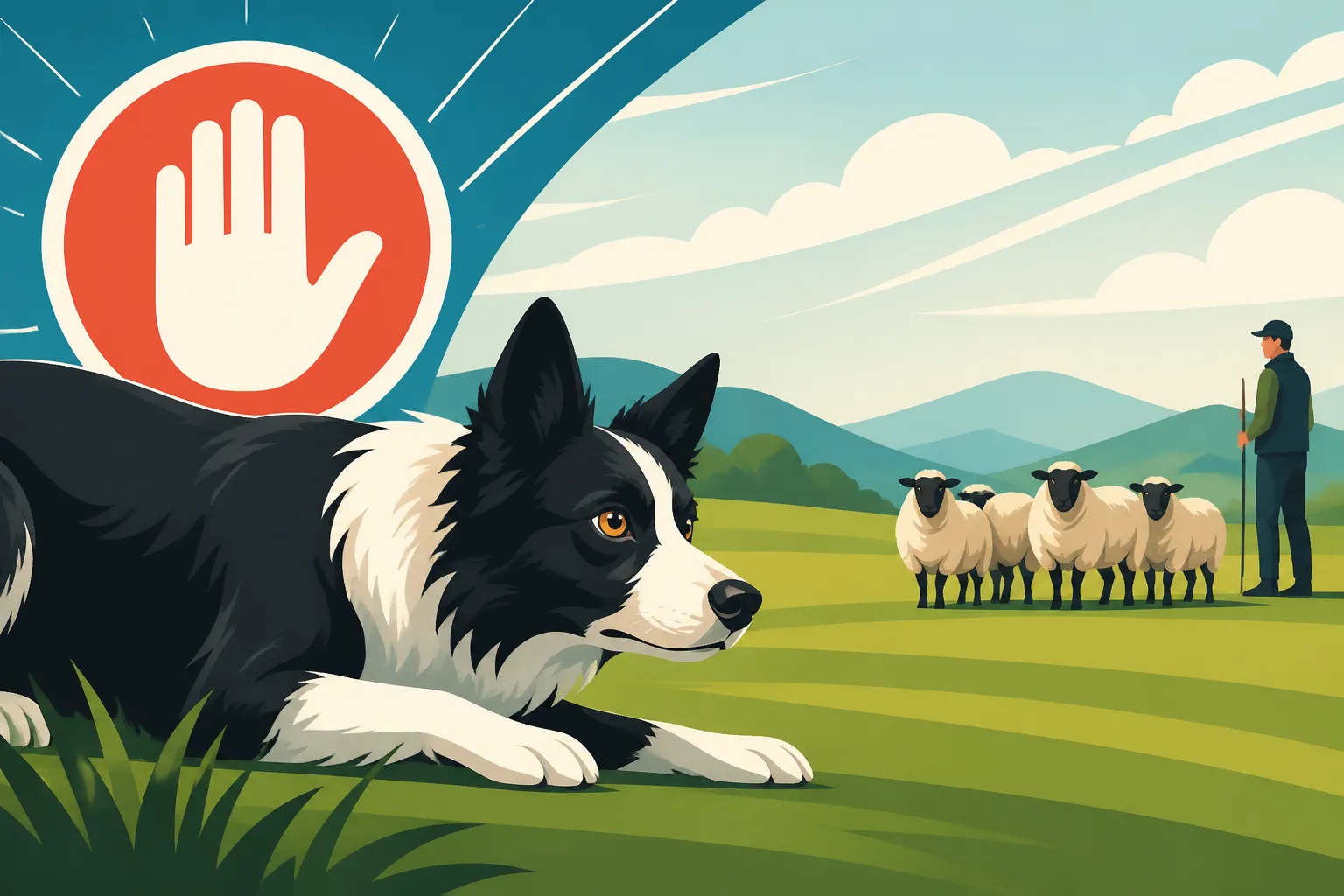
Getting a Border Collie to stop at a distance, especially something as impressive as two hundred yards, feels like the pinnacle of training, doesn't it? It's the dream for anyone with these intelligent, driven dogs – that moment when they're locked onto a frisbee, a flock of sheep, or even just sprinting across a field, and with a quiet word or a sharp whistle, they drop instantly, waiting for your next instruction. But let's be real, many of us struggle just to get a reliable 'stop' or 'down' right next to us, let alone across a football field with distractions. This guide is all about breaking down the journey to achieving that seemingly impossible distance control, one careful step at a time.
Laying the Essential Foundation: The 'Stop' Command Up Close
Before we can even dream of two hundred yards, we have to absolutely nail the 'stop' command at arm's length. This isn't just about getting your Border Collie to sit or lie down; it's about instilling a profound understanding that when you give that command, all forward motion ceases, and they await further instruction. This is where patience, consistency, and understanding your dog's immense drive truly come into play.
Mastering the Basic 'Down' or 'Halt'
Every great distance stop begins with a rock-solid, immediate "down" or "halt" at your feet. For many Border Collie owners, this is easier said than done because these dogs are practically wired for motion. They want to be doing something, not stopping. So, we start small, in a quiet environment, with high-value rewards. Think about what truly motivates your dog – is it a special squeaky toy, a piece of chicken, or perhaps the chance to chase a ball after the 'down'?
Begin by luring your dog into a down position right in front of you. As their elbows touch the ground, give your chosen command clearly and calmly – whether it's "down," "stop," "halt," or "lie." Immediately follow with the reward. The key here is repetition and speed. The moment they hit the ground, they get the reward. We're building a strong association: command equals action equals reward. As they get quicker, you can start to phase out the lure, using only your verbal cue and a hand signal. Practice this in multiple short bursts throughout the day, ensuring success every single time. It's not about how long they stay down at this stage, but how quickly and reliably they get into the position. If you're struggling with the absolute basics, resources like BAXTER & Bella can offer structured online courses that walk you through these foundational steps with video tutorials and support.
Adding Duration and Distractions
Once your Border Collie is reliably dropping on command right at your feet, it's time to introduce two critical elements: duration and distractions. A 'stop' isn't just about dropping; it's about staying dropped until released. Start by asking for a 'down,' rewarding immediately, and then introducing a tiny pause – literally one second – before giving another reward and a release cue like "okay" or "free." Slowly, incrementally, extend this duration. A few seconds, then five, then ten. Celebrate every successful hold, even the short ones. If they break, calmly reset them without scolding and try again for a shorter duration.
Next, weave in distractions. Start with low-level distractions, like you moving a foot, then taking a step, then walking a small circle around them. Gradually increase the intensity: a family member walking by, a gentle bounce of a ball, another dog walking past at a distance. The goal is for your Border Collie to understand that "stop" means "stop and stay, no matter what." This stage is crucial because it builds the mental fortitude and impulse control necessary for future distance work. Remember, their intense focus, often referred to as The Border Collie Stare and Where It Comes From, can sometimes make them too fixated to respond to you if not properly channeled. So, teaching them to break that intense focus on an external stimulus and re-engage with your command is paramount.
Stretching the Leash: Gradually Increasing Distance
With a solid, reliable 'stop' at close range, you're ready to start putting some real estate between you and your Border Collie. This phase is all about methodical progression, ensuring your dog understands that the command means the same thing, regardless of how far away you are.
The Role of the Long Line and Controlled Space
The long line is your absolute best friend when teaching distance commands. We're talking 15-foot, 30-foot, even 50-foot lines, not just a standard six-foot leash. These allow your Border Collie to experience moving away from you while you still maintain control and the ability to reinforce the command physically if needed. You can find a good variety of long lines on Amazon, made from different materials like nylon or biothane.
Start in a large, open, and safe area – your securely fenced yard is ideal, or a private field. Attach the long line, let your Border Collie wander a few feet away, then give your "stop" command. If they hesitate, gently apply tension on the line and repeat the command, guiding them into the down. The moment they comply, even if you had to physically prompt them, rush in and reward them enthusiastically. Gradually increase the distance you allow them to move before giving the command. Always walk to your dog to reward them when they perform correctly at a distance. This reinforces that staying put brings you closer and delivers the good stuff. Never call them to you to reward a 'stay' or 'down' at this stage, as it can inadvertently teach them that the command means "come here eventually" rather than "stop where you are." Think about it this way: if you're trying to perfect The Thirty-Foot Line a Border Collie Recall Needs, you're working on the inverse of this skill, but the principle of using the long line for control is identical.
Introducing the Whistle and Hand Signals
As you extend the distance, your voice can become less effective, especially in windy conditions or noisy environments. This is where a whistle becomes an invaluable tool. Whistles carry further and offer a consistent, distinct sound that isn't influenced by your emotional state. Before you use it for distance, introduce the whistle at close range. Pair a short, sharp blast (or whatever specific whistle command you've chosen for 'stop') with your verbal "stop" command. Blow the whistle, say "stop," and then immediately reward. Do this repeatedly until your Border Collie associates the whistle with the 'stop' action. Then, you can gradually fade out the verbal cue, using only the whistle. Whistle Commands for a Border Collie can provide more detailed guidance on establishing these crucial non-verbal cues.
Hand signals are another fantastic addition. Many Border Collies, particularly working lines, are incredibly adept at reading body language. A clear, distinct hand signal (like raising an open palm) can often be seen at a greater distance than your voice can be heard. Just like with the whistle, introduce the hand signal alongside your verbal command at close range, then practice fading the verbal cue. The combination of a whistle and a hand signal provides powerful redundancy, making your 'stop' command understandable in almost any situation.
Proofing for Real-World Success (and 200 Yards!)
Reaching 200 yards isn't just about distance; it's about the dog stopping in the face of immense temptation. This is where the real grit of a Border Collie handler shines through – the dedication to proofing the command under every conceivable circumstance.
Overcoming High-Value Distractions
This is often the hardest part. Your Border Collie might drop perfectly in an empty field, but what about when a rabbit bolts across their path? Or when they're mid-chase with their favorite frisbee? High-value distractions are what separate a 'stop' from a 'stop under pressure.'
Start by identifying your Border Collie's biggest motivators. For many, it's movement – balls, frisbees, other animals. Begin proofing with these distractions at a distance, far enough away that your dog notices but isn't completely overwhelmed. Ask for the 'stop' command. If they comply, reward them hugely. If they break, don't get frustrated. This isn't a failure; it's information. It tells you you've introduced the distraction too intensely or too close. Scale back, create more distance from the distraction, and build up again. Think of it like a ladder: you only move up to the next rung (closer distraction) once the current rung is completely solid.
Consider incorporating a helper who can introduce these distractions on cue, allowing you to control the timing and intensity. For a Border Collie, The Border Collie That Will Not Drop the Ball is a common challenge that highlights their intense focus, which can also be a significant distraction to a stop command. The goal is to make the act of stopping on your command more rewarding, or at least as rewarding, as chasing the distraction itself. This requires persistence and making sure your rewards are truly outstanding when they perform correctly.
| Command Type | Pros | Cons | Ideal Use Case |
|---|---|---|---|
| Verbal | Natural, easy to start with | Limited range, affected by ambient noise/wind, can vary in tone | Close-range, initial training, reinforcing other cues |
| Whistle | Excellent range, consistent tone, cuts through noise | Requires practice to learn distinct commands, not always audible indoors | Mid to long-range, outdoor work, herding, sports |
| Hand Signal | Visible at great distances, silent, useful for deaf dogs | Can be obscured by terrain/objects, less effective in low light | Long-range, noisy environments, subtle communication |
| E-collar (when used ethically) | Instant feedback at any distance, attention-getting | Requires extensive ethical training, can be misused, legal restrictions | Advanced distance control, off-leash safety, only after other methods fail |
Note on E-collars: While mentioned, remember that e-collars are a controversial tool and should only be used by experienced trainers, ethically, and as a last resort, after all positive reinforcement methods have been exhausted. Their use requires significant understanding and proper technique to avoid fear or discomfort in the dog. Always prioritize positive, force-free methods first.
Consistency, Patience, and the Art of Fading Lures
Achieving a 200-yard stop is not a weekend project. It requires unwavering consistency from you. Every time you give the command, you must follow through. If you give the command and your dog ignores it without consequence, you've just taught them that the command is optional. This is harder than it sounds, especially when they are revved up. Recall on a Border Collie That Has Locked On presents a similar challenge, where their focus on a target overrides your command.
Patience is also paramount. There will be days when your Border Collie seems to have forgotten everything. Don't get discouraged. Revert to shorter distances, lower distractions, and build back up. Every successful repetition cements the behavior. The 'art of fading lures' refers to gradually removing any aids you've used (like food in your hand, body movements) until the command itself, whether verbal or whistle, is the only cue. This creates a truly reliable, independent response. Keep training sessions short, positive, and end on a high note. A Border Collie's mental well-being is intrinsically linked to their physical and mental exercise; understanding Exercise, Work and What Actually Settles a Border Collie will help you ensure they are in the right state of mind for focused training.
Common Pitfalls and Troubleshooting Your Distance Stop
Even with the best intentions and consistent effort, you'll inevitably hit some snags. Border Collies are incredibly smart, but that intelligence can sometimes work against us if we're not careful.
When Your Border Collie Ignores You
This is perhaps the most frustrating scenario: you give the whistle, you shout the command, and your Border Collie just keeps going. Why does this happen? Usually, it boils down to a few core reasons:
- Lack of Proofing: You've asked for too much too soon. The distance or distraction level was simply beyond what your dog had reliably learned. They haven't generalized the command to this specific situation yet.
- Insufficient Reinforcement History: Your 'stop' command might be reliable at 10 feet because you've rewarded it a thousand times, but at 100 feet with a squirrel, the payoff for not stopping (the chase) is far greater than the imagined reward for stopping. You need a deeper history of success and high-value rewards at distance.
- Command Contamination: If you've given the command many times without enforcing it, your dog has learned it's optional. Every ignored command weakens its power.
- Environmental Factors: Wind carrying your voice away, a loud noise masking your whistle, or simply being out of sight can all contribute. This is where strong whistle and hand signals become critical.
Troubleshooting Steps:
- Go back to basics: If they ignore you at 200 yards, practice at 50, then 20, then 10 yards, ensuring 100% compliance before increasing distance again.
- Increase reward value: What's better than a treat? A quick game of fetch after they stop? For a Border Collie, often the reward isn't just food, but the opportunity to work or play. Consider Training Treats Inside a Border Collie's Ration for high-value rewards.
- Use the long line: If they ignore you, the long line is your immediate backup. Give the command, if they hesitate, a gentle pop on the line, and guide them into the down. Rush in and reward. This ensures the command is always followed.
- Change your training environment: Practice in different locations with varying levels of distraction to help your dog generalize the command.
- Seek professional help: An experienced Border Collie trainer or a specialist in working dog behavior can offer personalized guidance and identify specific weaknesses in your approach.
Maintaining the Command as They Age or Lose Focus
A good 'stop' command isn't a one-and-done deal; it's something you maintain throughout your Border Collie's life. Like any skill, if not practiced, it can dull. As dogs age, their hearing might diminish, their eyesight might change, or their overall drive might lessen, impacting their responsiveness. Similarly, a young, exuberant Border Collie might "test" you as they mature, particularly around the age when The Age a Border Collie Starts Testing You often occurs.
Strategies for Maintenance:
- Regular, short proofing sessions: Don't just practice when you need the command. Incorporate short, fun 'stop' drills into your regular walks or play sessions. Ask for a stop at 50 yards, reward, then release them to continue playing. This keeps the command fresh and reinforcing.
- Vary the rewards: Keep your Border Collie engaged by occasionally surprising them with an extra-special reward for a perfect stop. This could be a novel toy, a piece of cooked meat, or even access to a favorite activity.
- Monitor physical health: If your Border Collie suddenly seems less responsive, rule out any underlying health issues with your vet. Stiffness, pain, or changes in hearing/sight could be impacting their ability to perform. Signs an Old Border Collie Is in Pain are important to recognize, as discomfort can absolutely affect their willingness or ability to comply.
- Keep it fun: For a Border Collie, work is fun. Frame your 'stop' command not as an interruption to their joy, but as part of the game. A reliable stop allows for more freedom and more advanced play. After all, a Border Collie that still wants to gather in its old age can keep The Old Border Collie That Still Wants to Gather active and engaged, and a strong 'stop' command helps manage that drive safely.
Mastering the 200-yard stop with your Border Collie is a journey, not a destination. It's a testament to your patience, understanding of your dog's incredible capabilities, and your commitment to consistent, positive training.
Disclaimer
This article is for general informational purposes only and does not constitute professional advice. Laws, prices and regulations vary by location and change over time. Consult a qualified professional for guidance on your specific situation.