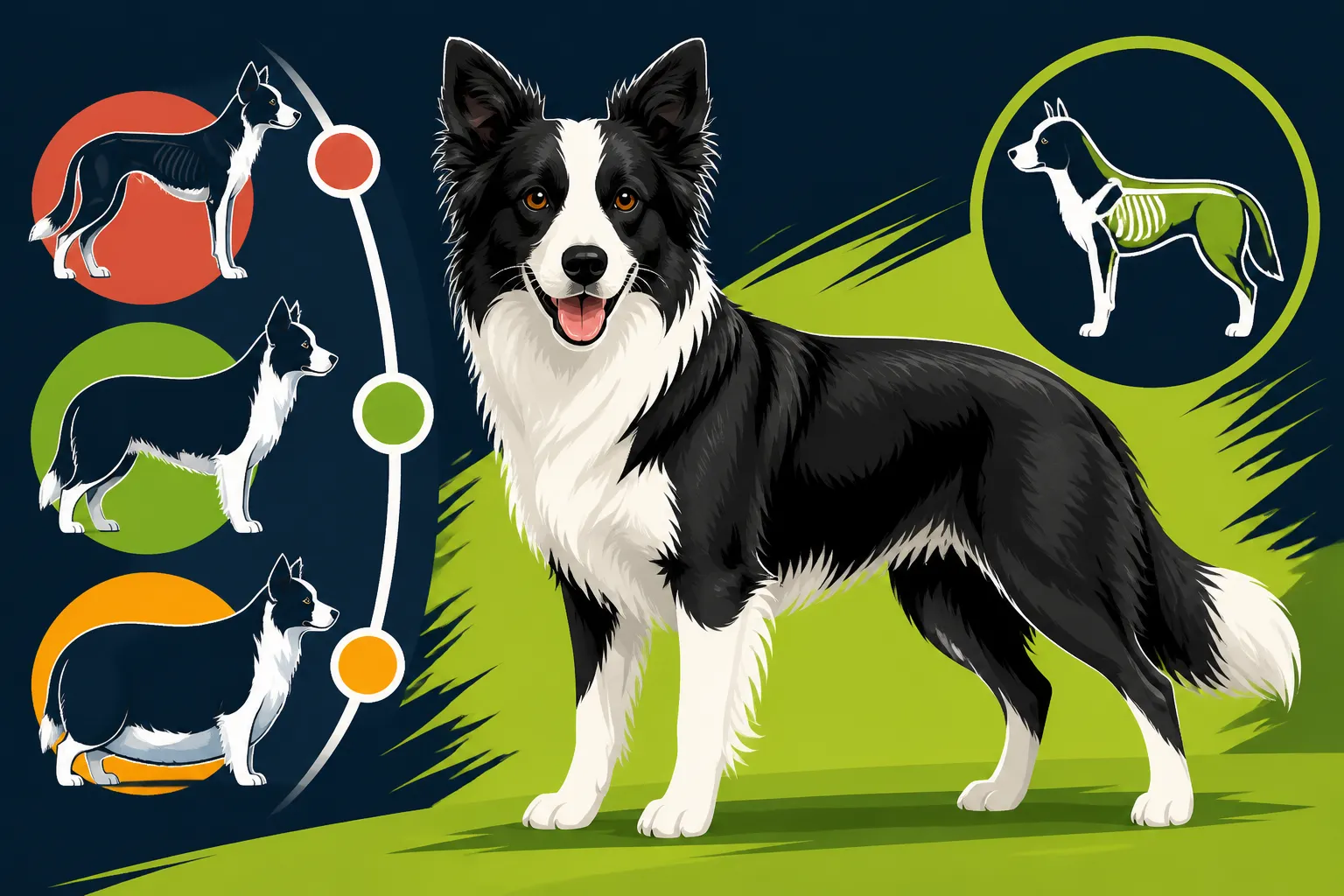
The Body Condition a Sport Border Collie Carries
It's a common struggle for Border Collie owners, especially those with active or sport-minded dogs: how do you know if your canine athlete is truly in peak physical condition? It’s not just about them being "thin" or "fit" in a general sense. There's a specific, optimal body condition that allows these highly driven dogs to perform at their best, reducing injury risk and maximizing their incredible abilities. This guide will walk you through what that ideal condition looks like, how to accurately assess your Border Collie, and how to maintain that perfect balance for a long, healthy, and successful sporting life.
Understanding "Sport Condition" for a Border Collie
When we talk about a Border Collie in sport condition, we're not just aiming for a dog that looks slim. We're looking for a finely tuned athlete, a powerhouse of muscle and agility, carrying exactly the right amount of lean mass to excel in demanding activities like herding, agility, flyball, or canicross. It’s a delicate balance that significantly impacts their overall health and performance.
More Than Just "Thin" – The Athletic Build
A Border Collie in optimal sport condition possesses an athletic, streamlined build. This isn't the same as being underweight, which would mean a lack of muscle mass and potentially visible hip bones, vertebrae, or ribs without any effort. Instead, an athletic Border Collie should have clearly defined musculature, particularly across their shoulders, hindquarters, and abdomen. When you look at them, you should see power and efficiency, not fragility.
Their silhouette should be elegant, with a distinct waist and an abdominal tuck that rises up from their ribcage to their hind legs. The bones of their pelvis and shoulders should be well-covered but still palpable. This lean, muscular frame is what allows them to move with such incredible speed, precision, and endurance. Think of a long-distance runner or a gymnast – powerful, yet lean, with every pound serving a purpose. Achieving this means every part of their body is ready to work, reducing unnecessary strain on their joints and ligaments.
Why Optimal Body Condition is Crucial for Performance
The difference between a Border Collie at an ideal weight and one carrying just a few extra pounds, or even a few too few, can be monumental in their performance and longevity. For a breed that often lives to work, even recreational sport dogs need to be ready for action.
Firstly, optimal body condition directly impacts their speed, agility, and endurance. Every extra pound a dog carries puts additional stress on their joints, especially during high-impact activities like jumping in agility or sharp turns while herding. This can slow them down, reduce their jump height, and tire them out more quickly. Conversely, being underweight can mean a lack of energy reserves, inadequate muscle mass for powerful movements, and a decreased ability to recover from strenuous exercise. Imagine a marathon runner trying to compete while carrying a backpack, or without enough fuel in their tank. It’s simply not going to work efficiently.
Secondly, and perhaps most critically, maintaining the correct body condition significantly reduces the risk of injury. A dog with strong, lean muscles provides better support for their joints, ligaments, and tendons. Fat, on the other hand, is simply dead weight that exacerbates the impact forces on these structures. Conditions like Hip Dysplasia in a Border Collie That Runs All Day or Cruciate Tears in a Border Collie can be made worse or even triggered by carrying excess weight. Even an injury as common as an Iliopsoas Strain in a Border Collie can be influenced by how efficiently their body is moving. A healthy weight means less strain, better shock absorption, and a greater capacity for their body to handle the demands of their chosen sport, ultimately extending their working life and keeping them sound for longer.
How to Assess Your Border Collie's Body Condition
It's easy to look at a dog and think they "look fine," but visual assessment alone can be deceiving, especially with the varied coat types of Border Collies. A fluffy, rough-coated dog can hide a multitude of sins, and even a smooth coat can sometimes mask subtle changes. That's why a combination of visual cues and hands-on examination is crucial. We want to aim for what handlers often call "trial weight" or "working condition."
The Rib Test: A Hands-On Approach
The rib test is one of the most reliable methods for gauging your Border Collie's body fat. It's a simple, hands-on technique you can do regularly. Gently run your fingers along your dog's side, over their ribcage.
What you should feel in an ideally conditioned sport Border Collie is a distinct sensation of each individual rib, much like feeling the knuckles on your hand. You should be able to feel them easily, without pressing hard, but they shouldn't be sharply protruding or overly prominent to the eye. There should be a thin layer of muscle and skin covering them, but no significant padding of fat. If you have to press firmly to locate the ribs, your dog is likely carrying too much weight. If the ribs are visibly prominent and feel like they're just under the skin with no cushioning, your dog might be underweight. This feeling is a clear indicator that helps differentiate between a truly lean, athletic dog and one that is simply thin. This is a critical check for ensuring your dog is Keeping a Border Collie Lean Enough to Work.
The Waistline and Abdominal Tuck
Beyond the ribs, the shape of your Border Collie's body, particularly their waist and abdominal tuck, provides vital visual clues. This is where the breed's natural athleticism really shows.
When you view your Border Collie from above, they should have a clear, hourglass shape. Their waist should taper in significantly behind their ribcage, before flaring slightly over their hips. If they look like a straight line or have a rounded, barrel-like appearance, they're likely carrying too much weight. From the side, observe their abdominal tuck. This is the upward slope of their belly from the bottom of their ribcage to their hind legs. A well-conditioned Border Collie will have a noticeable tuck, showing that their abdomen is lean and free of excess fat. If their belly hangs low or is relatively flat, there's a good chance they could benefit from losing a few pounds. This distinct The Tuck a Fit Border Collie Should Show is a hallmark of a fit working dog.
Visual Cues: Topline, Muscle Definition, and Coat
Once you've done your hands-on check, step back and take a good look at your Border Collie's overall physique. The musculature should be well-defined, not just a vague outline.
Pay attention to their topline – the line of their back. It should be firm and level, with strong, developed muscles along either side of their spine. You should see muscle definition, especially in their hindquarters, which should appear powerful and well-rounded, not saggy or weak. The muscles on their shoulders and front legs should also be clearly evident, indicating good overall strength. A healthy, shiny coat is often a secondary indicator of good nutrition and overall health, though it can also mask or reveal condition depending on its texture and fullness. For a rough-coated Border Collie, you might need to part the fur to see the muscle definition beneath, but a sleek, well-maintained coat generally suggests good internal health. If you're concerned about Whether a Rough Coat Hides a Fat Border Collie, remember to combine visual checks with the rib test.
Factors Influencing a Sport Border Collie's Body Condition
Maintaining ideal body condition in a sport Border Collie is a dynamic process, influenced by several key factors. It's not a set-it-and-forget-it deal; you'll need to be observant and willing to adjust their routine to keep them in prime shape.
The Role of Diet: Fueling an Athlete
Diet is, without a doubt, the cornerstone of maintaining a sport Border Collie's optimal body condition. These dogs are high-octane athletes, and their bodies demand fuel that matches their output. You can't expect peak performance on a diet designed for a sedentary pet.
A high-quality diet for an active Border Collie should be rich in easily digestible protein, which is essential for muscle repair and growth after strenuous exercise. It should also contain appropriate levels of healthy fats, providing concentrated energy without adding unnecessary bulk, and complex carbohydrates for sustained energy release. Many owners opt for performance-specific dog foods that are formulated with higher calorie densities and nutrient profiles to meet these intense demands. Companies like Ollie, for instance, offer fresh food options that can be tailored to an individual dog's activity level, providing nutrient-dense meals that support lean muscle and energy. Similarly, larger retailers like Chewy carry a wide range of performance-oriented kibbles and wet foods from various brands, allowing owners to choose what best suits their dog's needs and their budget. Understanding The Calorie Load a Working Border Collie Burns can help you select the right food. It's not just about quantity, but the quality and balance of macronutrients. Remember that Feeding a Border Collie on a Performance Diet means more than just a big bowl of kibble; it's a science.
Exercise Regimen and Its Impact
It goes without saying that exercise plays a massive role in shaping a Border Collie's physique. But it's not just about running them until they drop; it's about a balanced and appropriate regimen.
An effective exercise program for a sport Border Collie involves a mix of activities. This includes cardiovascular exercise for endurance (like long runs or swimming), strength training to build and maintain muscle mass (think hill work or specific conditioning exercises), and plenty of mental stimulation. What a Border Collie Does With Its Whole Day will tell you that it's a demanding schedule. Over-exercising without adequate recovery can lead to muscle breakdown and injury, while under-exercising, even on a perfectly balanced diet, will lead to muscle loss and fat gain. The key is consistency and progression. As your Border Collie's fitness improves, so too should the intensity and duration of their workouts. This helps them build the lean, defined musculature that is characteristic of a healthy sport dog. Also, remember to factor in appropriate warm-ups and cool-downs to protect those hard-working muscles and joints.
Age, Genetics, and Individual Metabolism
While diet and exercise are largely within our control, we also need to acknowledge the inherent factors that influence a Border Collie's body condition: age, genetics, and individual metabolism.
Genetics play a significant role. Some Border Collies are naturally leaner, with a higher metabolism, while others tend to carry a bit more weight, even with similar diets and exercise. This is where knowing your dog's lines, if possible, can be helpful. Age also brings changes; puppies need different nutritional support to grow strong bones and muscles without putting stress on their Holding a Border Collie Puppy Back Before a Year. As they mature, their metabolism might stabilize, and then as they reach their senior years, their activity levels naturally decline, potentially requiring adjustments to prevent unwanted weight gain. The Age a Border Collie Starts to Slow is different for every dog, but it's a good benchmark to start monitoring more closely. Every dog is an individual, and while breed standards give us a general idea, your dog's unique metabolic rate will dictate how efficiently they process food and burn calories. This means that what works perfectly for one Border Collie might need tweaking for another, even if they're from the same litter and doing the same amount of work. It’s all about finding that sweet spot for your dog.
Common Pitfalls and How to Avoid Them
Even with the best intentions, it's easy to fall into common traps when trying to keep a sport Border Collie in optimal condition. Being aware of these pitfalls can help you steer clear and ensure your dog remains healthy and ready for action.
Mistaking "Thin" for "Fit" or "Fat" for "Healthy"
One of the most frequent mistakes is misinterpreting what "fit" truly means for a Border Collie. Many people associate "fit" with simply being thin, and while lean is good, excessively thin is not. An underweight Border Collie will lack the muscle mass, energy reserves, and overall robustness needed for sustained athletic performance. Their ribs might be sharply visible, their hip bones protruding, and their energy levels could suffer. This isn't just about aesthetics; it's about the ability to withstand the physical demands of their sport.
Conversely, some owners might mistakenly believe a slightly plump dog looks "healthier" or "happier." While a little extra padding might not seem like a big deal, even a few pounds of excess weight can put undue strain on joints and organs, increasing the risk of injuries and long-term health issues. The Body Condition a Sport Border Collie Carries is about balance, not extremes. It's critical to consistently apply the hands-on rib test and visual assessment techniques to ensure you're objectively evaluating your dog's condition, rather than relying on subjective feelings.
Over-Supplementation vs. Balanced Nutrition
The desire to give our sport Border Collies every advantage can sometimes lead to over-supplementation. There's a vast market for joint supplements, coat enhancers, digestive aids, and energy boosters, and it's tempting to think that "more is better." However, for a dog on a high-quality, balanced performance diet, many supplements are often unnecessary and, in some cases, can even create imbalances or stomach upset.
The focus should always be on providing a complete and balanced diet first. A well-formulated performance dog food (like those found on Amazon or Chewy, for example) should already contain all the essential vitamins, minerals, proteins, and fats your active Border Collie needs. If you're concerned about a specific area, such as joint health, a targeted supplement like a glucosamine or chondroitin product might be beneficial, especially for older dogs or those with a history of joint issues. However, always consult with your veterinarian before adding any new supplements, as they can advise on whether it's truly needed and recommend appropriate dosages. Joint Supplements for a Border Collie Doing Agility might be relevant, but only under vet guidance.
Ignoring Subtle Changes in Condition
Border Collies are incredibly resilient and often stoic, sometimes masking discomfort or changes in their physical condition until an issue becomes more pronounced. This means that as owners, we need to be vigilant and pay attention to subtle shifts in their weight, muscle tone, or energy levels.
Regularly performing the rib test and visual assessment is essential, ideally on a weekly or bi-weekly basis, especially during periods of changing activity or diet. A slight reduction in muscle definition, a bit more "squish" over the ribs, or a subtle change in their abdominal tuck could be early indicators that their diet or exercise needs adjusting. Ignoring these minor changes can allow them to escalate into more significant problems, making it harder to correct later. Keep a mental (or even written) log of your dog's condition, much like you might track your own fitness. This proactive approach allows you to catch issues early, before they impact your dog's performance or health. This is part of The Weekly Once-Over a Working Border Collie Gets and it's incredibly important.
Maintaining Optimal Condition Year-Round
Keeping a sport Border Collie in peak condition isn't a one-time achievement; it's an ongoing commitment that requires flexibility and attention throughout the year, especially with seasonal changes and varying activity levels.
Seasonal Adjustments and Activity Levels
For many sport Border Collies, activity levels fluctuate throughout the year. There might be an intense trial season in the spring and summer, followed by a period of reduced activity in the off-season. Your dog's diet and exercise regimen need to adapt to these changes to prevent unwanted weight gain or loss.
During periods of high activity, such as competitive trial weekends or intense training blocks, your Border Collie will naturally burn a higher The Calorie Load a Working Border Collie Burns and require more nutrient-dense food. You might need to increase their food portion sizes or switch to a higher-calorie performance formula to ensure they have enough fuel to sustain their energy and recover properly. Conversely, during the off-season or periods of rest, their caloric needs will decrease. Continuing to feed the same amount of high-performance food can quickly lead to excess weight gain, which is detrimental to their joints and overall health. This is when you might slightly reduce portions or opt for a less calorie-dense food, while still ensuring it's nutritionally complete. This thoughtful adjustment prevents Adjusting a Border Collie's Food in the Off Season and helps keep them lean and ready to ramp up again when the season begins.
Working with Your Vet and Trainers
You don't have to navigate your Border Collie's health and fitness journey alone. Your veterinarian and experienced trainers are invaluable resources, offering professional guidance that can make all the difference.
Regular veterinary check-ups, including Yearly Bloodwork for a Border Collie, are crucial to monitor their overall health, detect any underlying issues, and ensure their diet is meeting their specific needs. Your vet can provide objective assessments of body condition, advise on appropriate food choices or supplements, and help you address any concerns about weight management or potential health problems. They can also offer guidance on injury prevention and recovery, which is vital for any active dog. Experienced Border Collie trainers, especially those involved in performance sports, can also offer practical advice on conditioning exercises, spotting subtle signs of fatigue or lameness, and structuring training to build strength and endurance without overdoing it. Many working dog owners will even turn to a Whether a Border Collie Needs a Sports Vet for specialized guidance on athletic conditioning and injury management. Building a team of trusted professionals around your Border Collie will provide comprehensive support for their well-being.
Monitoring Progress and Adapting as Needed
Maintaining optimal body condition is an ongoing process of observation, assessment, and adjustment. What works perfectly for a few months might need tweaking down the line as your Border Collie ages, their activity levels change, or even as their metabolism subtly shifts.
Consider keeping a simple log of your dog's weight, body condition score (based on the rib test and visual cues), and activity levels. Taking monthly photos from the side and top can also be incredibly useful for tracking changes over time, as it's often easier to spot gradual shifts when you compare images. Don't be afraid to make small, incremental changes to their food portions or exercise routine and then monitor the results. If your Border Collie starts to feel a bit "softer" over the ribs, perhaps a slight reduction in their daily food intake is needed. If they look a little too lean, a small increase might be appropriate. The key is flexibility and responsiveness. Your Border Collie's body will tell you what it needs, and your job is to listen and adapt accordingly, ensuring they remain in peak athletic condition for all their exciting adventures.
| Body Condition Score (BCS) | Visual Assessment (Side & Top) | Palpation (Ribs & Spine) | Implications for Performance |
|---|---|---|---|
| 1: Emaciated | Ribs, spine, pelvic bones very prominent, no fat | Ribs, spine, pelvic bones easily seen/felt, no muscle | Severe muscle loss, very poor energy, high injury risk |
| 2: Very Thin | Ribs, spine, pelvic bones prominent, minimal fat | Ribs, spine, pelvic bones easily felt, minimal muscle | Low energy reserves, increased injury risk, poor stamina |
| 3: Ideal / Lean | Ribs easily felt but not seen, distinct waist & tuck | Ribs easily felt, minimal fat, good muscle definition | Optimal for sport, good energy, lower injury risk |
| 4: Overweight | Ribs difficult to feel, waist less distinct, no tuck | Ribs felt with pressure, moderate fat, muscle less defined | Reduced agility, higher injury risk, decreased stamina |
| 5: Obese | Ribs very difficult to feel, no waist/tuck, fat pads | Ribs covered by thick fat, significant muscle obscured | Serious health risks, very poor performance, high injury risk |
Disclaimer
This article is for general informational purposes only and does not constitute professional advice. Laws, prices and regulations vary by location and change over time. Consult a qualified professional for guidance on your specific situation.