Stairs and a Growing Border Collie Puppy
Bringing a new Border Collie puppy home is an exhilarating journey, but it comes with a unique set of worries, especially when you start looking around your house and realize that everyday obstacles, like a flight of stairs, can seem like Mount Everest for a tiny, uncoordinated pup. Many of us fret about whether letting our energetic youngsters navigate stairs too early could be setting them up for joint problems down the road. This guide is here to alleviate those fears, offering practical advice on how to safely introduce your Border Collie puppy to stairs and protect their precious growing joints.
Understanding Puppy Development and Joint Health Risks
It's completely normal to feel a bit overwhelmed by all the advice out there regarding a Border Collie puppy's physical development. They're such active, intelligent dogs, and we want to encourage their natural athleticism, but without causing harm. The truth is, during their first year to year-and-a-half, Border Collies are undergoing significant physical changes, and their bones and joints are particularly vulnerable.
The Critical Period of Bone and Joint Growth
Imagine a house being built – you wouldn't put the roof on before the foundation is solid, right? It's much the same with a puppy's skeleton. Their bones aren't fully ossified (hardened) yet, and they have what are called "growth plates" at the ends of their long bones. These growth plates are areas of cartilage that are actively producing new bone, allowing the puppy to grow in length. They remain open and soft until the puppy reaches skeletal maturity, which can be anywhere from 12 to 18 months for a Border Collie, sometimes even a bit longer for larger individuals.
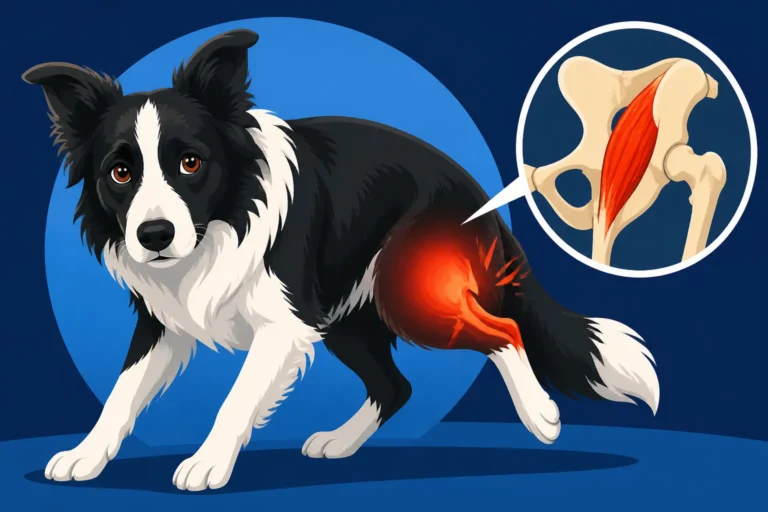
Because these growth plates are still soft, they are incredibly susceptible to injury. Too much repetitive impact, sudden twists, or even just awkward movements can damage these delicate structures, potentially leading to long-term issues. When a growth plate is injured, it can close prematurely, or grow unevenly, leading to bone deformities, pain, and sometimes even permanent lameness. This is why high-impact activities, such as jumping from heights, intense agility work, or even excessive running on hard surfaces, are usually discouraged for young puppies. We want those plates to close naturally and uniformly, giving them the best possible start for a long, active life.
Common Orthopedic Issues in Border Collies
Border Collies, like many active breeds, are predisposed to certain orthopedic conditions. Hip dysplasia and elbow dysplasia are probably the most well-known. Hip dysplasia is a condition where the hip joint doesn't form correctly, leading to a loose joint that can eventually cause debilitating osteoarthritis. Elbow dysplasia is a similar condition affecting the elbow joint, often leading to pain and lameness. While genetics play a significant role – this is why reputable breeders perform thorough health screenings like those covered in The Border Collie Genetic Panel and What It Screens – environmental factors during growth can absolutely exacerbate or even trigger these conditions in a genetically predisposed dog.
Think of a puppy with a genetic predisposition to hip dysplasia. If that puppy is constantly put in situations that stress its developing hip joints, such as frequently jumping up and down stairs, sliding on slippery floors, or engaging in intense, uncontrolled exercise, the likelihood and severity of the dysplasia can increase. Conversely, a puppy with a mild genetic predisposition, but raised with careful management of its physical activity, proper nutrition, and appropriate weight, might lead a much more comfortable life. The key is to manage the controllable factors – and stairs are certainly one of them. Regular veterinary check-ups are paramount, and your vet might recommend specific assessments, such as The Age a Border Collie Should Be Hip-Scored, to monitor joint development.
Why Stairs Pose a Challenge for Young Border Collies
Observing a tiny Border Collie puppy attempting to conquer a flight of stairs can be both comical and concerning. Their gangly legs, developing coordination, and boundless enthusiasm often mean they tackle them with more gusto than grace, which is precisely where the trouble can start.
The Mechanics of Stair Climbing for Puppies
When a very young Border Collie puppy tries to climb stairs, it's not a smooth, fluid motion like an adult dog. Instead, you'll often see them taking multiple short, jerky steps for each tread, or even trying to jump from one step to the next. Going down is even harder; they often stumble, slide, or awkwardly "plop" down each step, using their front legs to absorb much of the impact. This kind of movement puts undue stress on their developing joints and muscles.
Their bodies are still disproportionate, with relatively large paws and heads compared to their bodies, making balance a challenge. Their muscles and ligaments are not yet strong enough to support the repetitive jarring motion of stair climbing, especially when descending. Each jump or hard landing sends shockwaves through their joints, particularly their elbows, shoulders, hips, and knees. Over time, this cumulative stress can contribute to inflammation, micro-traumas, and potentially accelerate the onset or severity of conditions like hip and elbow dysplasia. Imagine doing squats with improper form and too much weight; that's essentially what a puppy is doing every time it struggles with stairs.
Risk of Accidents and Falls
Beyond the chronic stress on joints, there's the immediate danger of accidents. Stairs, by their very nature, present a fall risk for anyone, let alone an uncoordinated puppy. A misstep, a paw slipping, or losing balance can send a puppy tumbling. The injuries from such falls can range from mild sprains and bruises to more severe issues like broken bones, concussions, or even internal injuries. A puppy tumbling down a wooden staircase could easily suffer a fracture that requires extensive veterinary care and potentially changes their quality of life forever.
The type of stairs matters, too. Smooth, polished wooden stairs can be incredibly slippery, offering little grip for a puppy's paws, especially if they're still growing their confidence. Open-backed stairs can be disorienting and scary for puppies, as they can see through the gaps. Carpeted stairs offer more traction, but even then, a trip or tumble is still a possibility. For owners with young Border Collies, limiting their access to stairs is often a proactive step to prevent these kinds of traumatic injuries. Many owners find that a good pet insurance policy, like those offered by Healthy Paws, gives them peace of mind for unexpected accidents or the potential development of these orthopedic conditions later in life, covering a significant portion of vet bills for diagnostics and treatment.
Safe Stair Navigation: Prevention and Training Strategies
It might seem daunting to navigate this particular challenge with such a high-energy breed, but with a thoughtful approach, you can ensure your Border Collie puppy learns to handle stairs safely, or avoids them altogether until they're ready.
When to Introduce Stairs Safely
The general consensus among veterinarians and experienced Border Collie breeders is to delay unsupervised or frequent stair climbing until your puppy has reached a significant level of skeletal maturity. This typically means waiting until they are at least 4 to 6 months old for supervised introduction, and ideally closer to 12-18 months for unrestricted access, especially if you have a multi-story home or very steep stairs.
Before even thinking about introducing stairs, observe your puppy's general coordination and strength. Can they navigate uneven terrain outside without stumbling? Do they have good body awareness? If your puppy is still clumsy, constantly tripping over their own feet, or has noticeable growth spurts making them awkward, it's definitely too early. Their muscles need time to develop, and their growth plates need to close as much as possible before being subjected to the repetitive strain of stairs. Until then, continue to carry your puppy up and down, or block access entirely. Remember, patience now can prevent significant problems later in their How Long a Border Collie Lives.
Step-by-Step Stair Training for Puppies
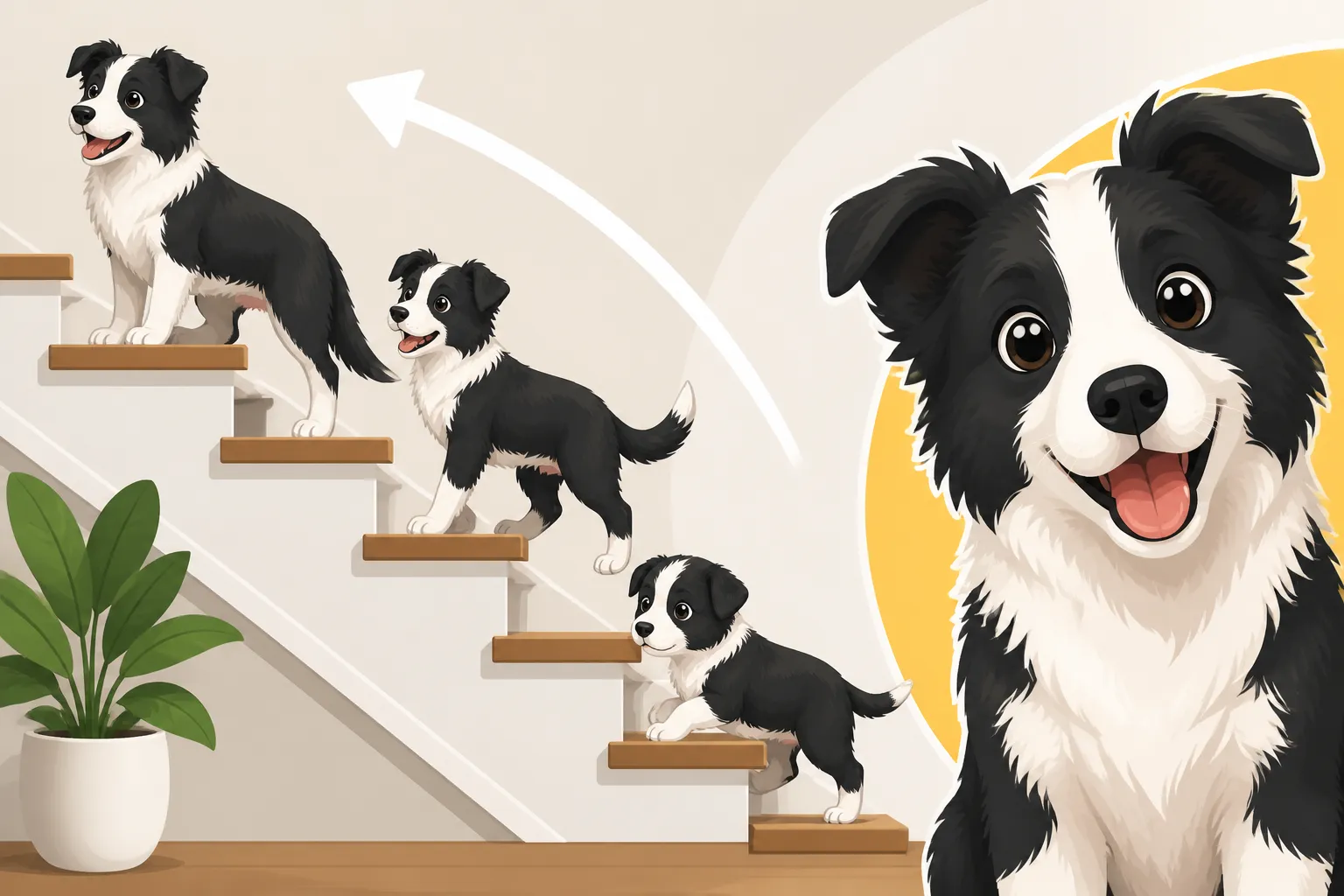
Once your Border Collie puppy is around 4-6 months old, showing good coordination, and you’ve decided it’s time to start, a slow, positive, and supervised training approach is crucial. Never force your puppy.
Here's a step-by-step guide:
- Start with a single step: Begin with just one or two steps, perhaps the bottom ones of your main staircase, or even a single step outside. Place a high-value treat on the first step and encourage your puppy to put their front paws on it. Reward immediately when they do.
- Encourage forward motion: Once they're comfortable with placing their front paws on the first step, lure them up with another treat, encouraging them to bring their back legs up. If they manage to get both front and back paws on the step, celebrate with praise and more treats. Keep these sessions very short – just a few repetitions.
- Mastering one or two steps: Once they can confidently go up one step, start practicing going down the same one or two steps. This is often harder for puppies. Stand below them, offering a treat, and coax them gently. Many puppies prefer to turn around and "scooch" down backward at first, which is perfectly fine.
- Gradual progression: As your puppy gains confidence and strength, slowly add more steps. Don't rush it. It might take days or even weeks to add just a few more steps. Always keep the training positive, with lots of praise and treats. A leash can also be helpful for gentle guidance, but never use it to pull them up or down forcefully.
- Focus on controlled movements: The goal isn't speed, but controlled, deliberate movements. If your puppy starts to rush or get sloppy, slow them down or end the session. Remember, the idea is to build muscle memory for safe navigation, not to encourage a frantic dash.
| Puppy Age | Recommended Stair Activity | Notes |
|---|---|---|
| 8-16 Weeks | Carry up and down all stairs. Block access completely if possible. | Growth plates are extremely vulnerable. High risk of injury. Focus on socialization and basic obedience on flat ground. |
| 4-6 Months | Supervised introduction to 1-2 steps. Use positive reinforcement. | Begin gentle training. Focus on controlled movements, not speed. Still carry for full flights of stairs or frequent trips. |
| 6-12 Months | Gradual, supervised increase in steps. Continue carrying for frequent use. | Building strength and coordination. Still avoid high-impact activities. Ensure proper nutrition and weight. |
| 12-18 Months+ | Unrestricted, self-regulated use, with caution. | Most growth plates are closed. Monitor for signs of discomfort. Continue to encourage safe, controlled movements. Avoid running up/down at full speed initially. |
Management and Alternative Solutions
For those times when training isn't feasible, or your puppy is simply too young for stairs, effective management is key. Baby gates are your best friend here. Install sturdy gates at the top and bottom of any staircases to prevent unsupervised access. This simple measure can save your puppy from a potentially serious fall or repetitive strain injury.
Another common strategy, particularly for younger puppies, is simply carrying them up and down the stairs. While they might get heavy quickly, it's a small effort that pays off in joint health. If you have a two-story home and spend a lot of time upstairs, consider setting up a comfortable, safe area for your puppy on each floor, minimizing the need for them to travel between levels.
For some homes, especially those with particularly challenging stair designs or for dogs with confirmed joint issues, ramps can be an excellent alternative. Ramps allow for a smooth, even incline that eliminates the impact of stairs, making them much safer for developing joints. You can purchase ready-made dog ramps or even build your own. This is a strategy often seen in homes with dogs that have conditions like Hip Dysplasia in a Border Collie That Runs All Day or for senior dogs to ease discomfort.
Long-Term Joint Health and Preventative Care
Caring for a Border Collie's joints extends far beyond their puppy days and stairs. It's a lifelong commitment to ensure they remain as active and comfortable as possible into their golden years.
The Role of Proper Nutrition and Weight Management
What you feed your Border Collie, especially during their growth phase, plays a critical role in joint development. High-quality puppy food formulated for large or active breeds provides the right balance of calcium, phosphorus, and other essential nutrients for healthy bone growth. Resist the temptation to overfeed your puppy, even if they seem perpetually hungry. Rapid growth fueled by excessive calories can put enormous strain on developing joints, increasing the risk of orthopedic issues. We often hear about puppies getting too big too fast, which can actually be detrimental. Instead, focus on slow, steady growth, aiming to keep your Border Collie at a lean, healthy weight throughout their life.
A lean physique means less stress on all their joints. Even as adults, a few extra pounds can significantly worsen conditions like arthritis or exacerbate the pain from existing dysplasia. Learning to identify the ideal body condition for your Border Collie, where you can easily feel but not necessarily see their ribs, is crucial. This helps ensure they maintain that athletic build necessary for a working dog, rather than putting unnecessary pressure on their hips and elbows.
Regular Veterinary Check-ups and Early Detection
Regular veterinary visits are paramount, not just for vaccinations and parasite prevention, but for monitoring your Border Collie's overall health, including their joint development. Your vet can assess their gait, feel their joints for any signs of discomfort or instability, and discuss any concerns you might have. Early detection of any emerging orthopedic issues can lead to proactive management strategies, potentially slowing progression and improving your dog's quality of life.
Sometimes, your vet might recommend specific screenings, such as X-rays for Hip and Elbow Scores in a Border Collie, especially if you plan to use your Border Collie for breeding or high-impact sports like agility. These scores provide valuable insight into the health of their joints. Should an issue arise, having pet insurance like Healthy Paws can be incredibly beneficial. Their comprehensive plans can help cover the costs of diagnostics, medications, physical therapy, and even surgery for conditions such as cruciate tears or dysplasia, easing the financial burden during stressful times. Knowing you have that safety net can make a world of difference when making critical health decisions for your beloved companion.
The Importance of a Balanced Exercise Regimen
Border Collies are renowned for their incredible energy and drive, which can sometimes lead owners to believe they need endless, high-impact exercise from a very young age. This is a common misconception that can actually be detrimental to their long-term joint health. While mental stimulation and appropriate exercise are absolutely vital for a Border Collie, the type of exercise needs to be carefully managed during their growth period.
For young puppies, forced exercise, such as long runs, intense ball-chasing sessions, or agility training with jumps and weaves, should be avoided. Instead, focus on controlled play, short walks on varied but soft terrain, and plenty of mental games. Allowing your puppy to explore at their own pace and Letting a Border Collie Puppy Set Its Own Pace is far more beneficial than pushing them to keep up with an adult dog's routine. Think about incorporating activities like scent work or puzzle toys, which engage their brilliant minds without putting stress on their growing bodies.
As they mature and their growth plates close (typically after 12-18 months), you can gradually introduce more vigorous activities. Even then, moderation is key. A balanced routine that includes varied activities – combining walks, controlled running, mental games, and perhaps swimming – is ideal. Avoid repetitive, high-impact activities on hard surfaces for extended periods, such as endlessly throwing a ball on asphalt, which can be hard on joints even for a mature dog. Always warm up before intense exercise and cool down afterward. Remember, you're building an athlete for life, and a strong, sound foundation is the most important part of that journey. Thinking about when to start more intense activities is crucial, and reading about Holding a Border Collie Puppy Back Before a Year can offer further insights into this crucial stage of development.
Disclaimer
The information provided in this article is for general informational purposes only and is not a substitute for professional veterinary advice. Always consult with a qualified veterinarian for any health concerns or before making any decisions about your pet's health or treatment plan.