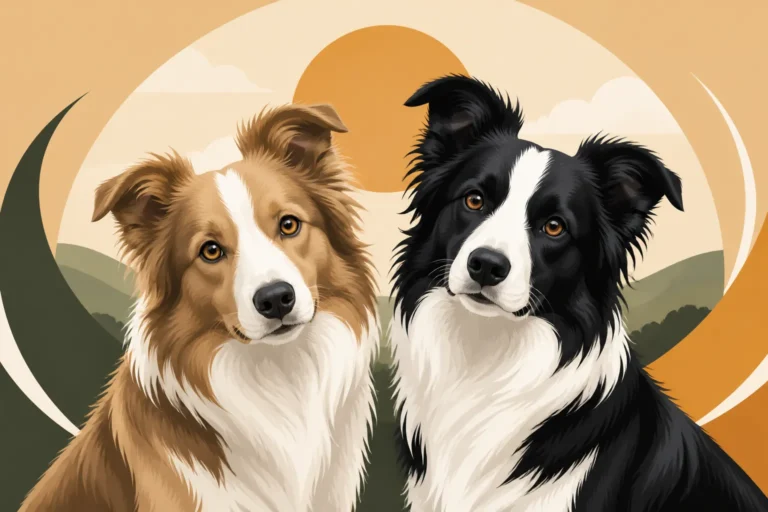
What Happened When the AKC Recognized the Border Collie
For years, a cloud of confusion has hung over the Border Collie world, particularly for those new to the breed or looking to understand its rich history. When the American Kennel Club (AKC) recognized the Border Collie, it created a rift that still impacts breeders, owners, and the dogs themselves. This guide will delve into the history, the heartfelt concerns, and the lasting implications of that pivotal decision, helping you understand the complex landscape of the Border Collie today.
The Historical Divide: Working Lines Versus Conformation
To truly grasp the impact of AKC recognition, we first have to journey back to the very roots of the Border Collie. This isn't just any dog; it's a living piece of history, shaped by centuries of rigorous selection for a singular purpose.
A Breed Forged in Work
The Border Collie, as we know it, wasn't developed in fancy kennels or for leisurely strolls in the park. Its origins are firmly rooted in the rugged, windswept landscapes of The Border Country That Produced the Border Collie between Scotland and England. These were dogs bred for function above all else – their keen intelligence, intense "eye," and unparalleled stamina were essential tools for shepherds managing vast flocks. Every trait, every instinct, was honed to gather, drive, and control sheep with incredible precision and efficiency. Early breeders, like those who championed Old Hemp and Every Border Collie Alive Today, were looking for the best working dog, not the prettiest. They prioritized merit, demonstrable skill on the field, and an innate ability to understand and execute commands. Performance in actual sheepdog trials became the benchmark, a tradition upheld by organizations like the International Sheep Dog Society (ISDS) and, later, the American Border Collie Association (ABCA), which focused entirely on preserving these working qualities.
The Rise of Conformation Showing
In stark contrast to the Border Collie's utilitarian beginnings, the world of conformation showing developed along entirely different lines for many other breeds. Conformation, or "dog shows," evaluates dogs against a written breed standard, which meticulously describes the ideal physical appearance, gait, and temperament for that particular breed. Judges assess how closely a dog conforms to this standard, looking for specific proportions, coat types, ear sets, tail carriage, and overall presentation. While these standards originally aimed to preserve traits believed to be important for a breed's original function, over time, many show breeds evolved to prioritize aesthetics and showmanship, sometimes at the expense of their original working drive or physical resilience. This emphasis on form rather than function is where the fundamental philosophical clash with the Border Collie's heritage began.
The AKC's Decision and the Controversy It Sparked
The move to bring the Border Collie into the AKC fold was not a quiet affair; it ignited a passionate debate that deeply divided the breed's community. The stakes, for many, felt incredibly high, touching the very identity of their beloved dogs.
The Push for AKC Recognition
So, why would anyone want the Border Collie, a breed so defined by its work, to be recognized by a registry primarily known for conformation shows? For some, the appeal was clear. AKC recognition offered wider public visibility, access to a vast array of AKC-sanctioned events beyond herding, such as obedience, agility, rally, and even junior showmanship. It also opened doors for breeders to market their dogs to a broader audience, potentially increasing the breed's popularity and accessibility. Before full recognition, the Border Collie spent some time in The Miscellaneous Class a Border Collie Sat In, a sort of probationary period where a breed could participate in certain events while being evaluated for full acceptance. This interim status built anticipation and argument from both sides, laying the groundwork for the eventual, controversial decision.
The Working Community's Strong Opposition
The traditional working Border Collie community, however, viewed AKC recognition with profound alarm and staunch opposition. Organizations like the ABCA were created precisely to safeguard the Border Collie's working heritage. Their fears were deeply rooted in historical observations of what had happened to other working breeds once they became popular in the show ring. The primary concern was that prioritizing physical traits outlined in an AKC breed standard would inevitably lead to breeding choices that favored appearance over working ability. Why Working Breeders Fought AKC Recognition stemmed from a fear that dogs would be bred for a certain ear set or coat length, rather than for the intense "eye," stamina, and biddability crucial for herding.
Imagine a scenario where a perfectly sound, talented working dog might be overlooked because its markings weren't "correct" by show standards, or an exaggerated coat, desirable in the ring, would become a burden in the field, collecting burrs and overheating the dog. This fundamental divergence in breeding goals was seen as a direct threat to the essence of the Border Collie. The ABCA's core tenet has always been to register dogs based on proven working ability and a verifiable working pedigree, actively opposing any system that would compromise this focus. This is What the ABCA Objects to Conformation Showing, seeing it as a path to diluting the very traits that make a Border Collie a Border Collie.
The Impact on the Border Collie Breed
The AKC's decision to recognize the Border Collie in 1995 undeniably created a bifurcated reality for the breed, leading to distinct lines and ongoing discussions among enthusiasts.
The Emergence of "Show" Border Collies
Following AKC recognition, breeders interested in conformation showing began to breed specifically for the written AKC breed standard. This meant an emphasis on certain physical traits that might not have been prioritized, or even noticed, by working breeders. Suddenly, features like specific coat lengths, color patterns, and structural conformity became paramount. This led to the emergence of what many refer to as "show" Border Collies. While still intelligent and athletic, these dogs might exhibit a different build, a fuller coat, or a less intense "eye" than their working counterparts, simply because those were the traits rewarded in the show ring.
The focus shifted from "does this dog work sheep effectively?" to "does this dog perfectly match the description in What the AKC Standard Says a Border Collie Is?" This often meant that Whether a Working Border Collie Would Win in the Ring became a distant secondary thought, as the criteria for success were entirely different. While a working dog might excel in its field, its appearance might not conform to the precise aesthetics valued by show judges. This isn't to say that show Border Collies don't have jobs or aren't intelligent—many excel in performance sports like agility and obedience—but their foundational breeding priorities diverged significantly from the traditional working lines.
Maintaining the Working Legacy
In response to the AKC's move, the working Border Collie community dug in its heels, reaffirming its commitment to preserving the breed's original form and function. Organizations like the ABCA doubled down on their mission, continuing to register dogs based solely on verifiable working ability and pedigrees that trace back to proven working stock. For these breeders, the integrity of the breed lay in its capacity to herd sheep, and any deviation from that purpose was seen as a betrayal of its heritage. They continued to emphasize the rigorous testing and proving of dogs in sheepdog trials, where a dog's intelligence, instinct, and trainability are undeniable.
They understood that the very essence of the Border Collie, its unparalleled drive and focus, could be inadvertently bred out if appearance became the primary goal. The ongoing dedication of these working lines ensures that the raw talent and centuries of selective breeding remain vibrant. It's why many still feel strongly that Whether the AKC Border Collie Is a Different Dog is not just a rhetorical question but a tangible reality, with distinct differences in appearance, temperament, and, most importantly, working instinct.
Challenges for New Owners
For individuals dreaming of bringing a Border Collie into their home, this historical split can be incredibly confusing. You might see a beautiful, fluffy Border Collie at an AKC event and then hear dire warnings from working enthusiasts about the breed's intense needs. The challenge lies in understanding that not all Border Collies are bred with the same goals, and therefore, not all will have the same temperament or energy levels.
Prospective owners must become detectives, asking pointed questions about a puppy's lineage. "Are the parents working dogs or show dogs?" "What are the breeder's goals for their breeding program?" "What kind of exercise and mental stimulation do the adult dogs receive?" It's crucial to understand the temperament and drive of the parents to predict what kind of dog a puppy will grow into. A good breeder, whether they focus on working or show lines, will be transparent about their program and guide you towards a puppy that matches your lifestyle. For example, a high-drive working line Border Collie might be overwhelming for a family looking for a casual companion, while a show-bred Border Collie might still possess significant energy and intelligence, requiring ample mental and physical engagement. For any Border Collie, ensuring they have appropriate food and enrichment is key, and many dedicated owners turn to trusted retailers like Chewy for their wide selection of breed-appropriate nutrition and stimulating toys.
Navigating the Modern Border Collie Landscape
Understanding the historical context is just the first step. For current and prospective Border Collie owners, navigating the present-day landscape requires informed choices and a commitment to responsible ownership.
Understanding Registration Bodies
When you're looking at a Border Collie, its registration papers can tell you a lot about its lineage and the priorities of its breeders.
- American Kennel Club (AKC): An AKC registration signifies that a dog conforms to the AKC's breed standard and can participate in a wide range of AKC events, including conformation shows, obedience, agility, and herding trials (under AKC rules). It indicates a focus on specific physical appearance alongside performance. The AKC Registration Fee for a Border Collie covers the costs associated with maintaining pedigrees and supporting AKC events.
- American Border Collie Association (ABCA): The ABCA is dedicated solely to preserving the working Border Collie. Their registration requires proof of working ability (either the dog's or its parents') and a verifiable working pedigree. It explicitly aims to keep the breed true to its historical purpose as a stock dog. The ABCA Registration Fees for a Border Collie reflect this mission to maintain a working registry.
- International Sheep Dog Society (ISDS): Based in the UK, the ISDS is the original registry for working Border Collies worldwide. Many working Border Collies in North America have ISDS ancestry. Whether ISDS Papers Transfer With a Border Collie to registries like the ABCA is generally possible, provided all requirements are met, linking American working lines directly back to the breed's heartland.
Here's a quick comparison:
| Feature | AKC Registered Border Collie | ABCA Registered Border Collie |
|---|---|---|
| Primary Focus | Conformation (appearance) & Performance | Working Ability (herding instinct & skill) |
| Registration Basis | Pedigree conforming to AKC standard | Proven working ability/working pedigree |
| Activities | Conformation, Agility, Obedience, Herding | Herding Trials, Working Stock, Performance |
| Breed Standard | Detailed physical description | Primarily focuses on working temperament |
Responsible Breeding Practices
Regardless of whether a breeder focuses on AKC or ABCA lines, responsible practices are paramount. A good breeder will prioritize the health and temperament of their dogs above all else. This means conducting comprehensive health testing to screen for common Border Collie ailments. For instance, reputable breeders will run The Border Collie Genetic Panel and What It Screens, looking for issues like Collie Eye Anomaly (CEA), Neuronal Ceroid Lipofuscinosis (NCL), and Trapped Neutrophil Syndrome (TNS). They should also screen for hip and elbow dysplasia.
Beyond health, a responsible breeder will be able to articulate their goals clearly. Are they breeding for top-level sheepdog trial competitors? For agility champions? Or for well-adjusted, active family companions? They should be transparent about their dogs' temperaments, the living conditions of their breeding stock, and how they socialize their puppies. Don't be shy about asking Which Test Results a Border Collie Breeder Should Show for both parents. Furthermore, a good breeder will send their puppies home with a head start, often having them on a high-quality puppy food from brands you can easily find at places like Chewy, along with a schedule for their first vaccinations and worming.
Living with a Border Collie
Ultimately, owning a Border Collie is a commitment, irrespective of its registration. These are incredibly intelligent, sensitive, and high-energy dogs that require significant mental and physical engagement. Whether your Border Collie is from a long line of working champions or a beautiful show dog, they will still possess a strong drive and a need for a "job." Understanding this fundamental need is key to a happy life together.
Ignoring these needs can lead to behavioral issues like incessant barking, destructive chewing (especially on furniture), or obsessive behaviors. Providing a balance of structured exercise, like regular runs or active games, alongside mental stimulation through training, puzzle toys, and enrichment activities, is crucial. Internal links like Exercise, Work and What Actually Settles a Border Collie offer deeper dives into how to truly satisfy this breed. Don't underestimate their need for interaction and learning; they thrive on being partners in activities. Equipping yourself with appropriate training gear, durable toys, and quality nutrition, often sourced from pet retailers like Chewy, will be essential for managing and enriching the life of your Border Collie. Their sharp minds and athletic bodies are their greatest assets, and it's our responsibility as owners to ensure these traits are channeled constructively.
Disclaimer
This article is for general informational purposes only and does not constitute professional advice. Laws, prices and regulations vary by location and change over time. Consult a qualified professional for guidance on your specific situation.