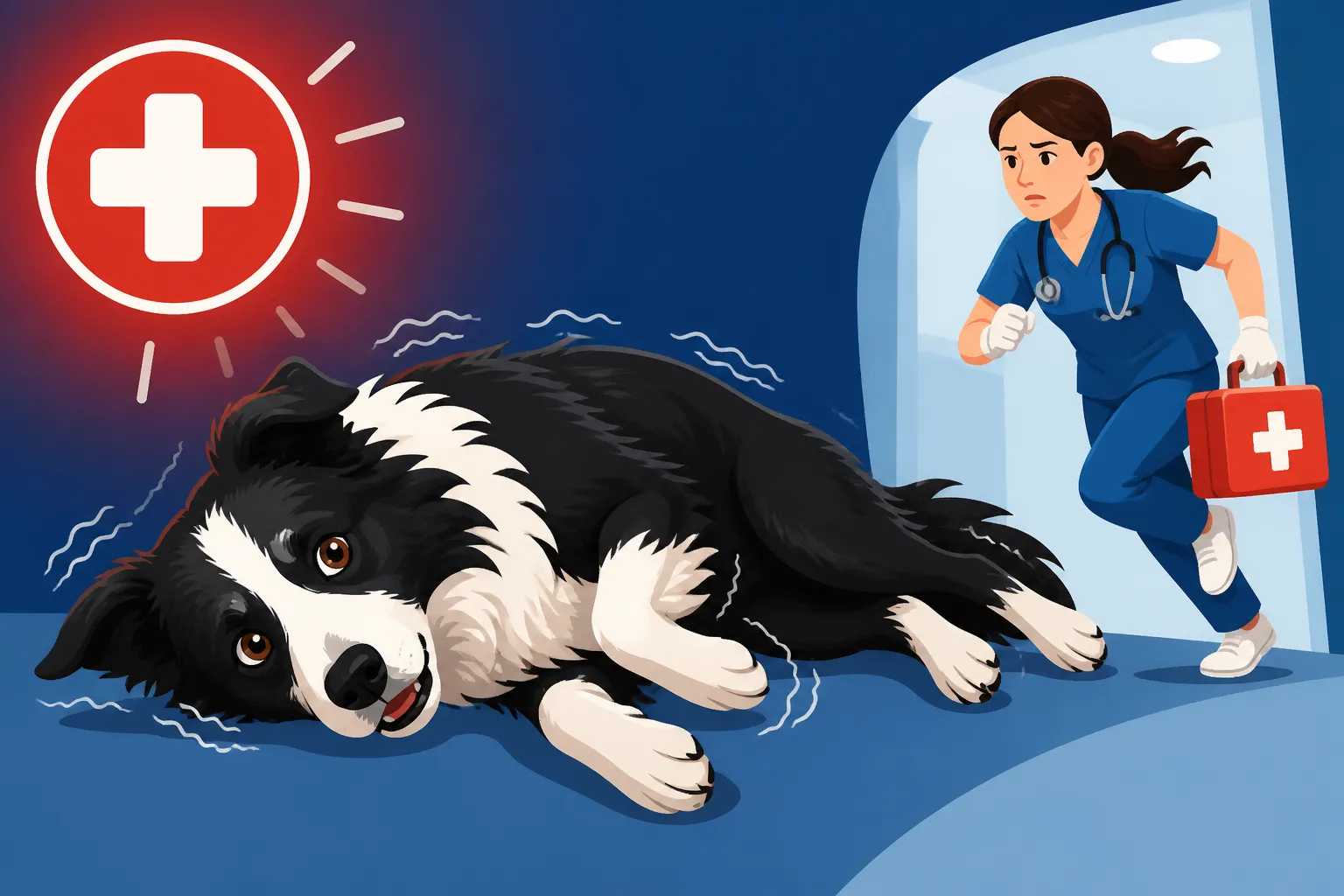
When a Seizing Border Collie Needs Emergency Care
There are few things as terrifying for a Border Collie owner as watching your brilliant, energetic dog suddenly lose control, shaking uncontrollably, and seemingly unresponsive. The immediate panic that sets in often leaves us frozen, wondering if we should rush to the vet or if it's something that will pass. This guide is here to cut through that fear, offering clear, actionable advice on recognizing a seizure in your Border Collie and, crucially, knowing precisely when it demands immediate emergency veterinary care.
Recognizing a Seizure: Beyond the Shakes
A seizure isn't always the dramatic, full-body convulsion most people imagine. Especially with a high-drive breed like a Border Collie, whose intensity can sometimes make odd behaviors seem normal, it's vital to understand the nuances. Knowing what to look for, and the various forms a seizure can take, is the first step in being prepared.
The Different Faces of a Border Collie Seizure
When we think of a seizure, our minds often jump to what veterinarians call a "grand mal" or generalized seizure. This is the classic presentation: your Border Collie falls to its side, becomes stiff, paddles its legs, salivates heavily, and often loses bladder or bowel control. Their eyes might dart or roll back, and they are completely unconscious of their surroundings. It's a truly upsetting sight, and it can feel like an eternity even if it only lasts a minute.
However, seizures can manifest in more subtle ways too, known as focal or partial seizures. These might be harder to spot, especially in an active Border Collie. A focal seizure could involve twitching in just one part of the body, like a leg or one side of the face. Your dog might seem dazed, unresponsive, or engage in repetitive behaviors like fly-biting, snapping at imaginary objects, or frantic chewing. Sometimes, these more subtle events can precede a generalized seizure, escalating from a focal point to affect the whole brain.
With Border Collies, their intense focus and propensity for repetitive behaviors – think obsessive ball chasing or shadow chasing – can sometimes make it difficult to differentiate between a truly compulsive behavior and a very mild focal seizure. The key difference usually lies in the dog's level of consciousness and responsiveness. During a seizure, even a focal one, your Border Collie will typically be unresponsive to its name, commands, or even touch. If you're observing unusual, repetitive behaviors that seem out of character and your dog isn't "with you," it's worth considering a possible seizure. To get a better sense of what these events look like, it's helpful to understand What a Border Collie Seizure Looks Like.
The First Minute: Initial Observations
The moments immediately following the onset of a seizure can be a blur of panic, but trying to observe and record certain details, even mental notes, can be incredibly helpful for your vet later. Start a timer as soon as you notice the seizure beginning. The duration is one of the most critical pieces of information. Observe the exact nature of the movements: are they paddling? Stiffening? Twitching? Is it localized to one part of the body or generalized?
Also, note if your Border Collie vocalizes – some will cry, whine, or make guttural sounds. Is there salivation, urination, or defecation? Where are their eyes fixed? Are they dilated or constricted? Most importantly, is your dog completely unresponsive? These details paint a picture for your vet that can aid in diagnosis. While it feels counterintuitive in the moment of fear, even a quick mental checklist can be invaluable. Don't worry about trying to write it all down during the actual event; your primary focus is safety. When dealing with something this frightening, every second counts, and understanding The First Minute of a Border Collie Seizure can help you feel more prepared.
When a Seizing Border Collie Needs Emergency Care: Red Flags
While any seizure warrants a follow-up with your veterinarian, certain situations elevate a seizure from a concerning event to an undeniable emergency that requires immediate intervention. Knowing these red flags can literally save your Border Collie's life.
Back-to-Back Seizures or Status Epilepticus
This is perhaps the most critical emergency scenario. If your Border Collie experiences multiple seizures without fully recovering consciousness in between them, or if a single seizure lasts for an extended period (typically defined as more than five minutes), this is considered "status epilepticus." This condition is life-threatening and constitutes a true medical emergency.
When a dog is in status epilepticus, their brain is continuously active in a destructive way, leading to severe overheating (hyperthermia), oxygen deprivation to the brain, and potential irreversible brain damage. The body simply can't cope with the sustained muscular activity and neurological overload. If you witness your Border Collie going from one seizure directly into another, or if they have a seizure, recover briefly (perhaps for a minute or two), and then immediately seize again, you need to get them to an emergency vet right away. Do not wait to call your regular vet if they are closed. This is a situation where every second truly matters. The dangers of Back-to-Back Seizures in a Border Collie cannot be overstated.
Prolonged Seizures: When Minutes Count
As mentioned, a seizure lasting longer than five minutes is a critical emergency. While a typical seizure might last anywhere from a few seconds to three minutes, pushing past that five-minute mark significantly increases the risk of severe complications. The longer the seizure, the higher the chance of brain damage, overheating, and other systemic issues.
You might find yourself trying to ride it out, hoping it will stop, but five minutes is the absolute cutoff for waiting. If you've been timing it (and we highly recommend starting a timer immediately when a seizure begins), and that five-minute mark passes, pick up your dog and head to the nearest emergency veterinary clinic. Call them on the way to let them know you're coming and what's happening so they can be prepared for your arrival. Remember, they have medications to stop the seizure activity and stabilize your dog.
The First-Ever Seizure: A Call to Action
While not necessarily an emergency in the same vein as status epilepticus (unless it's prolonged or immediately followed by another), your Border Collie's first seizure warrants an urgent visit to your regular vet as soon as possible, ideally within 24 hours. A first seizure often indicates an underlying issue that needs investigation. It could be idiopathic epilepsy, a structural brain problem, a metabolic imbalance, exposure to toxins, or even a systemic illness affecting the brain.
Your vet will want to perform a thorough physical exam, neurological assessment, and likely blood tests to rule out common causes. Understanding Whether One Seizure Means a Border Collie Has Epilepsy is a crucial step after the initial event. Early diagnosis and identification of the cause are vital for managing future seizures and potentially preventing more serious health issues. This initial investigation can set the stage for long-term management, especially if your Border Collie is between one and five years old, a common age for the onset of Epilepsy in a Border Collie Between One and Five.
Other Concerning Symptoms: What Else Might Warrant an Emergency Visit?
Beyond the seizure itself, certain accompanying symptoms or circumstances should prompt an immediate emergency vet visit:
- Difficulty Breathing: If your Border Collie is struggling to breathe during or after the seizure.
- Severe Injury: If they suffered a head injury, broke a bone, or sustained other serious trauma during the seizure.
- Known Toxin Exposure: If you suspect your dog ingested something poisonous before the seizure (e.g., rat bait, certain human medications, antifreeze).
- Extremely High Fever: While seizures can cause a temporary rise in body temperature, an already very high fever coupled with a seizure is a dangerous combination.
- Persistent Neurological Deficits: If, long after the seizure has stopped, your dog remains severely disoriented, blind, unable to stand, or shows other profound neurological signs that aren't resolving.
- Clusters of Seizures: Even if there's full recovery between seizures, if your Border Collie has multiple seizures within a 24-hour period (known as cluster seizures), this often indicates a more severe form of epilepsy that benefits from prompt medical attention and potential medication adjustment.
What to Do While Waiting for Help
When your Border Collie is actively seizing, it's a harrowing experience, and your immediate actions can ensure their safety and provide crucial information for the veterinary team.
Creating a Safe Space
Your absolute priority during an active seizure is to keep your Border Collie safe from injuring themselves. Dogs can thrash violently, and they are completely unaware of their surroundings.
- Clear the Area: Gently move any furniture or sharp objects away from your dog to prevent them from hitting themselves.
- Protect Their Head: You can carefully place a rolled towel or blanket under their head to cushion it, but never try to restrain their head or body during a seizure. This can cause injury to both you and your dog.
- No Hands in the Mouth: It's a common misconception that dogs can swallow their tongues during a seizure. This is not true. However, they can inadvertently bite down with immense force. Never put your hands or any object in their mouth. You risk severe injury to yourself, and it won't help your dog.
Remember, your Border Collie doesn't know you're there or what's happening. Your calm presence, even if you're terrified inside, can help you think clearly and keep them safe.
Recording Crucial Information
While your focus is on safety, if you can, try to make mental notes or even use your phone to quickly record the event. This information is gold for your vet:
- Start and End Time: This is the single most important piece of data. Use a clock or phone timer to get an accurate duration.
- Description of Movements: Were they paddling? Stiffening? Twitching? Did it start in one limb and spread?
- Behavior Before and After: Did anything unusual happen right before the seizure? How is your dog behaving immediately after it stops? Is there a post-ictal period of confusion, pacing, temporary blindness?
- Potential Triggers: Was there anything unusual they ate, an extreme amount of exercise, or a stressful event?
- Frequency: Is this the first seizure, or have they had others? When was the last one?
You don't need to be a videographer, but a short video clip (if safely possible) can sometimes give the vet a clear picture of the seizure type. However, your safety comes first. Being able to detail What to Record About a Border Collie's Seizures accurately can significantly help your vet diagnose and manage your dog's condition.
Contacting Your Vet
As soon as the seizure stops, or if it extends past five minutes, immediately contact your veterinarian or the nearest emergency animal hospital.
- Call Ahead: Even if you're rushing to the emergency vet, call them while you're on the way. Tell them your Border Collie is seizing or just had a seizure, the duration, and any critical observations. This allows them to prepare for your arrival and gives you immediate guidance.
- Provide Details: Clearly communicate what you observed. The information you collected will guide their assessment and treatment plan.
They will be able to assess your Border Collie, administer anti-seizure medication if needed, and run diagnostic tests. Don't be shy about seeking emergency care; these situations are precisely what emergency vets are there for.
Understanding the Aftermath: Post-Ictal Care and Next Steps
The seizure itself is often just one part of the event. The period immediately following, known as the post-ictal phase, is also crucial and can offer clues about your Border Collie's condition.
The Post-Ictal Period: Confusion and Recovery
Once a seizure subsides, your Border Collie won't instantly snap back to their normal self. They typically enter what's called the post-ictal phase, a period of disorientation and altered mental state. This can last anywhere from a few minutes to several hours, or even a full day in some severe cases.
During this time, your dog might exhibit:
- Disorientation: Pacing aimlessly, bumping into objects, appearing lost.
- Temporary Blindness: They might not respond to visual cues.
- Excessive Hunger or Thirst: They may frantically seek food or water.
- Lethargy or Restlessness: Some dogs will be extremely tired, while others can't settle.
- Behavioral Changes: They might be unusually clingy, withdrawn, or even aggressive (though rare).
It's vital to give your Border Collie space during this recovery period. Keep them in a quiet, dimly lit area. Offer them water, and a small, easily digestible meal if they seem hungry, but don't force it. Continue to monitor them closely for any new or worsening symptoms. While some disorientation is normal, if this phase is unusually long or severe, it warrants further discussion with your vet.
Post-Seizure Injuries and Follow-Up
Once your Border Collie has settled, take a moment to gently check them over for any injuries they might have sustained during the seizure. Look for cuts, scrapes, bruises, especially around the head, mouth, or limbs. They might be stiff or sore from the intense muscle contractions. If you find any significant injuries, discuss them with your vet during your follow-up appointment.
Even if the seizure was short and your Border Collie seems to recover well, a veterinary follow-up is always necessary. Your vet will work to determine the underlying cause of the seizure. This might involve blood work to check organ function and electrolyte balance, or more advanced diagnostics like an MRI to look for structural brain abnormalities. These diagnostics can be expensive, and for a Border Collie diagnosed with epilepsy, the long-term costs of medication and monitoring can really add up. That's where a good pet insurance plan, like those offered by Healthy Paws, can be a lifesaver, helping to cover unexpected and ongoing veterinary expenses.
If epilepsy is diagnosed, your vet will discuss treatment options. The goal of medication like phenobarbital or levetiracetam (you can read more about Phenobarbital and Liver Values in a Border Collie and Levetiracetam as an Add-On for a Border Collie) is to reduce the frequency and severity of seizures, ideally without sedating your intelligent Border Collie too much. Managing this balance can be tricky, as discussed in Medicating a Border Collie Without Dulling It. Considering pet insurance early, perhaps even before a serious issue like seizures arises, can mean significant peace of mind. Companies such as Healthy Paws often have different plans that can help cushion the financial blow of chronic conditions. The cost of advanced diagnostics like What a Border Collie MRI Costs After a Seizure can be substantial, making insurance a wise investment.
When the Seizure Stops but Concerns Remain
Sometimes, even after the active seizure stops, certain symptoms persist that indicate you're not out of the woods yet, and possibly still require emergency care:
- Lingering Severe Disorientation: If your Border Collie remains profoundly confused, unable to walk, or unresponsive for hours rather than minutes.
- Persistent Weakness or Paralysis: If a limb or side of their body remains weak or paralyzed.
- Difficulty Regulating Body Temperature: Seizures can cause overheating. If your dog's temperature remains dangerously high (above 105°F or 40.5°C) even after the seizure stops, this is an emergency.
- Recurrent Seizures: Even if there's a slight recovery, if seizures keep recurring within a short period, it's a sign that the brain isn't stabilizing.
- Unexplained Lethargy: If your Border Collie becomes extremely lethargic and non-responsive hours after the seizure, it's best to consult a vet.
When facing an emergency vet visit, especially for something as frightening as a prolonged seizure, knowing you have support from a provider like Healthy Paws can allow you to focus purely on your dog's health without immediate financial strain. The stress of the event is enough without worrying about Emergency Costs the Night a Border Collie Collapses.
Here’s a quick summary table to help you decide when immediate emergency care is needed:
| Symptom / Situation | Action Needed | Explanation |
|---|---|---|
| Seizure > 5 minutes | EMERGENCY VET IMMEDIATELY | High risk of brain damage, hyperthermia, and other life-threatening complications. |
| Back-to-back seizures | EMERGENCY VET IMMEDIATELY | Status epilepticus: brain is in continuous seizure activity without recovery, highly dangerous. |
| Multiple seizures in 24 hrs | EMERGENCY VET IMMEDIATELY (or urgently, depending on severity) | Cluster seizures often indicate more severe epilepsy and need prompt intervention. |
| First-ever seizure | URGENT VET VISIT (within 24 hrs) | Needs prompt diagnosis to identify cause and begin management, even if brief and isolated. |
| Seizure + severe injury | EMERGENCY VET IMMEDIATELY | Direct injury requires immediate medical attention. |
| Seizure + toxin exposure | EMERGENCY VET IMMEDIATELY | Toxin might be actively causing damage; requires immediate detox/treatment. |
| Severe post-ictal symptoms | URGENT VET VISIT | Prolonged disorientation, blindness, or other profound neurological signs need further assessment. |
| "Normal" short seizure (<5 min) | VET FOLLOW-UP (as soon as possible) | Still requires investigation for underlying cause and potential treatment, but not necessarily emergency. |
Remember, your Border Collie relies on you to be their advocate. When in doubt, it's always better to err on the side of caution and contact your veterinarian or the emergency clinic. They are there to help, and prompt action can make all the difference in a seizure emergency.
Disclaimer
This article is intended for informational purposes only and does not constitute veterinary advice. Always consult with a qualified veterinarian for any health concerns or before making any decisions about your Border Collie's medical care.