Whether Both Coats Appear in One Border Collie Litter
It’s a truly fascinating moment when a Border Collie litter arrives. You might be picturing a whole bunch of fluffy, long-haired pups tumbling around, only to be surprised when some are sleek and smooth while others have that distinct rough coat. It can be a little confusing, making you wonder if there was some mix-up, but the truth is, it’s entirely possible and completely normal for a single Border Collie litter to have both rough-coated and smooth-coated puppies. This guide will walk you through the genetics behind this delightful diversity.
Understanding Border Collie Coat Types
When we talk about Border Collie coats, we're primarily looking at two distinct types: the rough coat and the smooth coat. These aren't just cosmetic differences; they come with unique grooming needs and even impact how some handlers prefer their dogs for certain types of work. Getting a handle on what defines each type, and more importantly, what drives their appearance at a genetic level, is the first step to understanding litter diversity.
The Genetic Basis of Coat Length
The length of a Border Collie's coat is determined by a specific gene called Fgf5. Now, don't let the scientific jargon scare you off; it's quite straightforward once you break it down. There are essentially two main versions, or alleles, of this gene: one for a short coat (let's call it 'S') and one for a long coat (let's call it 'L'). The "short" allele (S) is dominant over the "long" allele (L). What this means is that if a dog inherits even one 'S' allele, it will display a smooth, short coat. A dog will only have a rough, long coat if it inherits two 'L' alleles.
Think of it like this: every puppy gets one allele from its mother and one from its father. So, a puppy could have SS (two short alleles), SL (one short, one long), or LL (two long alleles). An SS puppy will have a smooth coat. An SL puppy will also have a smooth coat because the 'S' is dominant. Only an LL puppy will have a rough coat. This simple genetic principle is the key to why you can see such a mix in one litter. It's a classic Mendelian inheritance pattern, much like eye color in humans, but for dog hair!
Distinguishing Rough (Long-Coated) from Smooth (Short-Coated)
Visually, the difference between a rough and smooth coat is quite striking, even though they're both undeniably Border Collies. The rough-coated Border Collie is what many people envision when they think of the breed: a medium-length coat that is feathery and full, especially around the chest, legs, and tail. They have a dense undercoat for insulation, which gives them that luxurious, flowing appearance. This feathering, often called "trousers" on the hind legs and a "mane" around the neck, is what truly sets them apart.
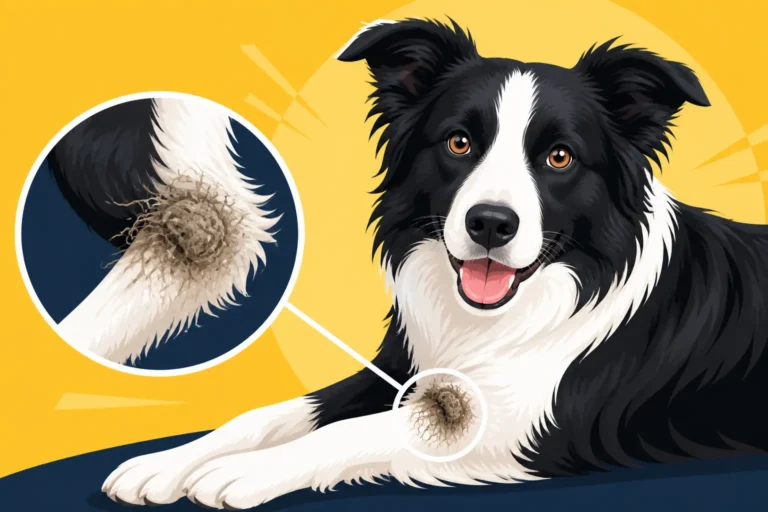
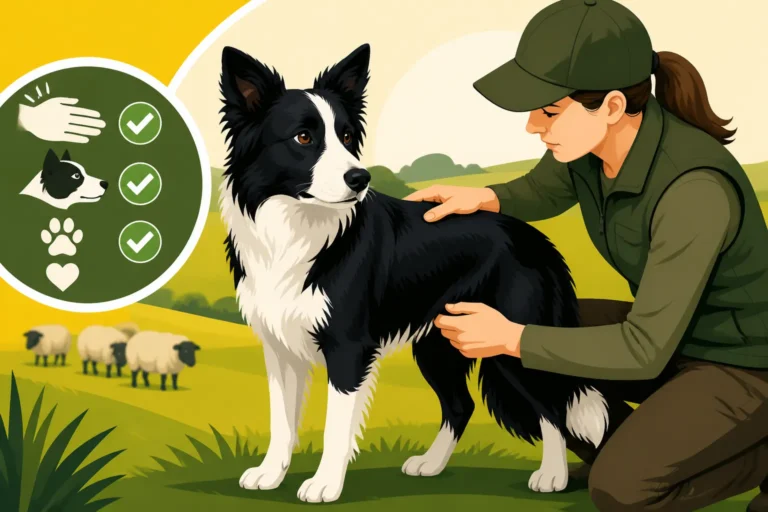
On the other hand, the smooth-coated Border Collie has a much shorter, sleeker coat that lies close to the body. They still have an undercoat, but it's not nearly as profuse, and the feathering is minimal to non-existent. Their overall appearance is much more streamlined and athletic, which many working handlers appreciate because it collects less mud, burrs, and snow, making for easier maintenance in tough conditions. While a rough coat needs regular brushing to prevent mats and keep it looking tidy, especially the "trousers" and Mats Behind a Rough Border Collie's Ears, a smooth coat is generally lower maintenance in terms of tangles. You can really see the muscle definition more clearly on a smooth-coated dog, too. If you want to dive deeper into the grooming needs, check out Grooming a Rough-Coated Border Collie and The Smooth-Coated Border Collie and What Its Coat Needs.
The Possibility of Mixed Coats in a Single Litter
The magic, or perhaps the science, of why a single Border Collie litter can have both rough and smooth puppies all boils down to the genetic makeup of the parents. It’s not a sign of different fathers or anything untoward; it’s simply genetics at play. Understanding the parents' alleles is crucial to predicting the coat types you might see.
When Both Parents Carry the Gene
Here's where it gets interesting. Even if both parent Border Collies are visually rough-coated, they can still produce smooth-coated puppies. How? Because a rough-coated dog has two 'L' alleles (LL). However, a smooth-coated dog can be either SS or SL. If a smooth-coated dog is SL, it "carries" the gene for the long coat without showing it. This is why genetic testing is so invaluable for breeders. You can learn more about this by reading The Border Collie Genetic Panel and What It Screens.
Let's look at a few scenarios:
- Two Rough-Coated Parents (LL x LL): If both parents are rough-coated, they both must be LL (carrying two long coat alleles). In this case, every single puppy in their litter will inherit an 'L' from each parent, resulting in 100% rough-coated (LL) puppies. You won't see any smooth coats here.
- One Rough-Coated Parent (LL) and One Smooth-Coated Parent Who is a Carrier (SL): This is a very common scenario for mixed litters. The rough-coated parent gives an 'L' to every pup. The smooth-coated carrier parent can give either an 'S' or an 'L'. So, roughly half the litter could be SL (smooth-coated) and half could be LL (rough-coated). You'd see a beautiful mix of both coat types!
- Two Smooth-Coated Parents Who Are Both Carriers (SL x SL): This is perhaps the most surprising combination for those unfamiliar with the genetics. Both parents appear smooth, yet they can produce rough-coated puppies! Each parent can pass on an 'S' or an 'L'.
- One parent gives 'S', the other gives 'S' = SS (smooth)
- One parent gives 'S', the other gives 'L' = SL (smooth)
- One parent gives 'L', the other gives 'S' = LS (smooth)
- One parent gives 'L', the other gives 'L' = LL (rough)
In this pairing, you would typically expect approximately 25% rough-coated puppies (LL) and 75% smooth-coated puppies (SS or SL). This perfectly explains how two sleek-looking dogs can have a fluffy pup or two in their litter, which always delights new owners. If a breeder is serious about predicting outcomes, Which DNA Tests a Border Collie Breeder Should Have Run is an excellent resource.
Visual Differences in Puppies
When you're looking at a brand-new litter, it might not be immediately obvious which puppy will be rough and which will be smooth. However, as they grow, usually by a few weeks old, you can start to see subtle clues. Rough-coated puppies will typically begin to show signs of longer hair, especially around their ears, on their legs (the beginnings of feathering), and around their neck. Their coats might look a bit "fluffier" overall compared to their smooth-coated siblings.
Smooth-coated puppies, on the other hand, will retain that sleek, short coat that lies flat. They might not have the same immediate "cuddle factor" fluffiness that draws many people to the rough coats, but their compact, tidy appearance is equally charming. It's often a case of comparing the littermates – the differences become more apparent when you have both types side-by-side. Sometimes, even the "rough" puppies don't truly show their full coat potential until they are several months old, but the distinction between rough and smooth is usually clear relatively early on. If you're wondering if Coat Type Is Visible in a Border Collie Puppy right away, the answer is usually not immediately at birth, but soon after.
Implications for Breeders and Owners
Understanding the genetics of coat types has real-world implications, not just for the curiosity of seeing a mixed litter, but for responsible breeding practices and for owners preparing for the specific needs of their new puppy. It's about being informed and ready for whatever beautiful variation your Border Collie companion brings to your home.
Breeder Responsibility and Genetic Testing
For ethical breeders, knowing the genetic makeup of their breeding stock is paramount. They’re not just looking at physical traits; they're delving into the genetic blueprint to ensure healthy, predictable litters. DNA tests are readily available that can identify whether a dog carries the short or long coat allele. By testing their parent dogs, breeders can accurately predict the coat types their litters might produce. This level of transparency is incredibly important. A responsible breeder will be able to tell you exactly what coats to expect and why, rather than being surprised themselves.
For instance, if a breeder has a beautiful smooth-coated female (SL) and pairs her with a rough-coated male (LL), they know precisely that they'll get a mix of smooth and rough pups, roughly 50/50. This foresight helps them manage expectations for potential buyers and ensures they’re not unknowingly breeding for certain traits that might surprise future owners. It’s part of the comprehensive approach to canine health and genetics that also includes screening for conditions like Collie Eye Anomaly (CEA) or hip and elbow dysplasia. Knowledge truly is power in responsible breeding, and it's a topic that dedicated breeders discuss at length. The Cost of Border Collie Genetic Testing is an investment that pays off for both the breeder and the future owners.
Grooming and Care Considerations for Both Coats
Once you bring a puppy home, whether it's a rough or a smooth coat, you'll find there are some differences in their daily care, particularly around grooming. This is where those coat characteristics move from theory into practice.
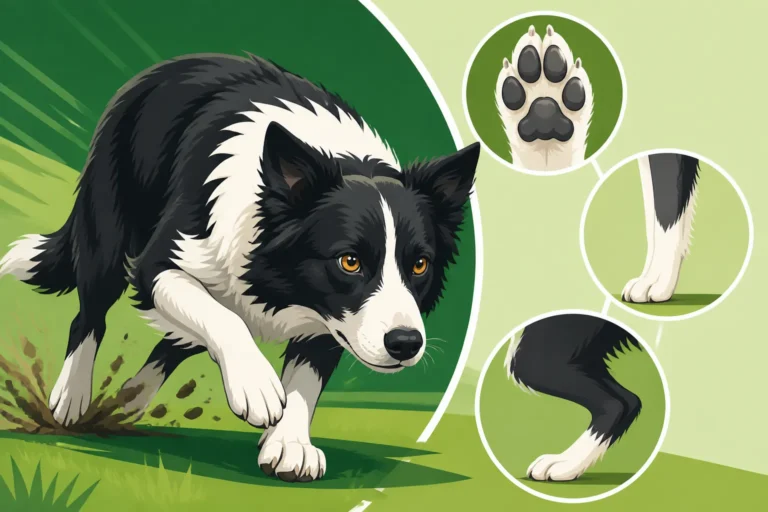
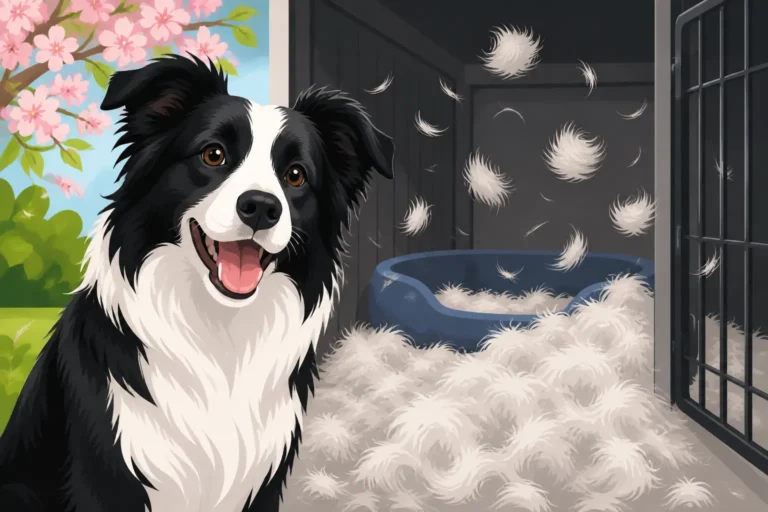
A rough-coated Border Collie will require more regular grooming attention. Their longer hair and dense undercoat are fantastic for insulation in cold weather but can become a magnet for burrs, mud, and tangles. Weekly brushing, sometimes more frequently during shedding season, is essential to prevent mats, especially behind the ears, under the legs, and on the "trousers." Tools like a good slicker brush and a metal comb (you can find excellent options on Chewy or Amazon) will become your best friends. It’s also crucial to check their feet regularly for debris like grass seeds that can burrow into the skin.
For a smooth-coated Border Collie, while still needing regular care, the grooming routine is generally less intensive. Their short coats shed, of course, but are much less prone to tangles and collecting debris. A quick brush a few times a week with a rubber curry comb or a bristle brush is often sufficient to remove loose hair and keep their coat shiny. While they might be easier to clean up after a muddy adventure, their shorter coats do offer slightly less protection against extreme cold or prolonged exposure to harsh elements, so extra consideration might be needed for very cold climates or extensive outdoor work. Regardless of coat type, keeping your Border Collie healthy and well-fed, perhaps with a high-quality food from a brand like Ollie, contributes to a healthy, shiny coat.
Beyond Coat Length: Other Border Collie Coat Variations
While the rough and smooth coat types are the most talked about when it comes to length, the Border Collie breed offers a dazzling array of other coat variations that combine with these lengths to create truly unique individuals. It’s not just about the hair’s reach; it’s about its hue and pattern too!
Color and Markings
Beyond the texture and length, Border Collies come in a stunning spectrum of colors and markings. While the classic black and white is iconic, you'll find them in red, blue, slate, sable, tricolor (black, white, and tan), blue merle, red merle, and even solid colors, though solid colors are less common and often have some hidden white markings. These colors are all genetically determined independently of coat length. So, you could have a black and white rough-coat, a red smooth-coat, a blue merle rough-coat, or any other combination you can imagine.
Merle is a particularly interesting pattern, creating mottled patches of diluted color on a darker base. For example, a blue merle will have black patches on a grey background, often with blue eyes or heterochromia (one blue eye, one brown). These color genes interact in complex ways, leading to the incredible diversity seen in the breed. For example, a rough-coated, tricolor Border Collie puppy and a smooth-coated, black and white sibling are both perfectly normal outcomes from the same litter, given the right parental genetics. This visual diversity is part of what makes the breed so captivating. You might be interested in The Colors a Border Collie May Be to learn more about the full range.
The "Broken" Coat: A Less Common Variation
Occasionally, you might encounter a Border Collie with what is sometimes referred to as a "broken" coat. This type falls somewhere between the smooth and rough coats. It's not as short and sleek as a true smooth coat, but it lacks the extensive feathering and fullness typically seen in a rough coat. A broken coat might have some slight feathering on the legs or tail, but it won't be as pronounced. The hair might also be a bit wiry in texture compared to the softer, flowing rough coat.
This "broken" coat is less common and often causes a bit of confusion for new owners trying to categorize their dog. Genetically, it's still related to the Fgf5 gene, but potentially influenced by other modifying genes or simply representing a less extreme expression of the 'L' allele in heterozygous (SL) individuals. Regardless of its exact genetic nuance, it's another testament to the natural variation within the Border Collie breed, showcasing that not every dog fits neatly into one of two boxes. It's one of the lesser-discussed aspects of The Rough and Smooth Border Collie Coats.
Border Collie Coat Genetics at a Glance
To help summarize how these coat types can appear in a single litter, here's a quick reference table:
| Parent 1 Genetic Code | Parent 2 Genetic Code | Parent 1 Apparent Coat | Parent 2 Apparent Coat | Possible Puppy Genetic Codes | Possible Puppy Apparent Coats | % Chance of Rough Coat | % Chance of Smooth Coat |
|---|---|---|---|---|---|---|---|
| LL | LL | Rough | Rough | LL | Rough | 100% | 0% |
| SL | LL | Smooth (Carrier) | Rough | SL, LL | Smooth, Rough | 50% | 50% |
| SL | SL | Smooth (Carrier) | Smooth (Carrier) | SS, SL, LL | Smooth, Rough | 25% | 75% |
| SS | LL | Smooth | Rough | SL | Smooth | 0% | 100% |
| SS | SL | Smooth | Smooth (Carrier) | SS, SL | Smooth | 0% | 100% |
| SS | SS | Smooth | Smooth | SS | Smooth | 0% | 100% |
As you can see, the key to having both coat types in a single litter lies in at least one parent (or both) carrying the recessive 'L' allele while being visually smooth, or one parent being rough-coated and the other being a smooth-coated carrier. This genetic dance creates the beautiful and sometimes surprising diversity we cherish in our Border Collies. It shows that even with all the talk of Whether a Rough Coat Is More Common in Border Collies, both types are very much a part of the breed's natural expression.
Disclaimer
This article is for general informational purposes only and does not constitute professional advice. Laws, prices and regulations vary by location and change over time. Consult a qualified professional for guidance on your specific situation.