Bathing a Border Collie That Works in Mud
Anyone who shares their life with a working Border Collie knows that "mud" isn't just a season; it's a way of life. From the moment they hit the field, whether it's working stock, tearing through an agility course, or simply reveling in a vigorous fetch session in the park, mud clings with a determination that can feel almost personal. The frustration of trying to get a beautifully intelligent, highly active dog truly clean after a deep dive into the muck is real, and often, it feels like you're fighting a losing battle. This comprehensive guide is here to walk you through the entire process, from pre-bath de-mudding to drying and aftercare, ensuring your Border Collie is not just clean, but comfortable and healthy.
The Unique Challenge of a Mud-Loving Border Collie's Coat
Border Collies, whether rough or smooth-coated, possess a double coat designed for protection against the elements. This fantastic feature, while excellent for keeping them warm and dry during work, becomes a significant challenge when saturated with mud. The mud doesn't just sit on the surface; it penetrates the outer guard hairs and becomes deeply embedded in the dense, soft undercoat.
How Mud Embraces the Double Coat
Imagine the thousands of fine, crimped hairs that make up your Border Collie's undercoat. These hairs are brilliant insulators, trapping air to provide warmth. When wet mud gets into this layer, it becomes trapped, turning into a heavy, clumpy mess. The outer guard hairs, typically longer and coarser, can then matt over this mud-laden undercoat, creating a protective barrier that makes it incredibly difficult to rinse out. It’s not just about getting wet; it's about the mud physically bonding with that dense fuzz, forming a kind of muddy felt. This is particularly true for those beautiful, flowing Feathering on a Border Collie's Front Legs and the "trousers" on their hindquarters, which seem to act like natural mud traps.
Rough vs. Smooth Coats: Different Muddy Battles
While both coat types collect mud, they present different cleaning challenges. A rough-coated Border Collie, with its longer hair and prominent feathering, will accumulate more mud, which can lead to significant matting if not addressed promptly. Picture a rough-coated dog after a particularly wet run through a pasture – the mud hangs in thick, heavy dreadlocks from its belly, legs, and tail. This can pull on the skin, cause discomfort, and, if left to dry, create cement-like clumps that are painful to remove.
Smooth-coated Border Collies, on the other hand, might appear less muddy initially because the mud doesn't cling in large, visible clumps. However, the mud still penetrates their shorter, dense undercoat, sitting closer to the skin. This can be deceptive; while easier to wipe off the surface, the fine, silty mud can still be deeply embedded, leading to skin irritation or a lingering muddy smell if not thoroughly washed. For both types, the goal is always a deep, thorough clean.
Essential Pre-Bath Preparations for a Mud-Caked Dog
Diving straight into the bath with a deeply muddy Border Collie is a recipe for a clogged drain, a smeared bathroom, and a frustrated owner. The key to success lies in meticulous preparation. This step isn't just about making the bath easier; it's about making it more effective and less stressful for your dog.
The Art of Pre-Drying and De-Clumping
Before a single drop of water touches your Border Collie, your primary mission is to remove as much dry mud as possible. If the mud is still wet, resist the urge to immediately hose them down unless you have a dedicated outdoor washing station. Wet mud turns into a sludgy, sticky mess that's harder to work with and spreads everywhere. Instead, let the mud dry. A surprisingly effective trick is to contain your muddy dog in a crate or a small, easily cleaned area (like a tiled mudroom or laundry room) for an hour or two. As the mud dries, it becomes brittle and much easier to break off.
Once the mud is dry, equip yourself with a sturdy slicker brush and a wide-toothed comb. Start gently brushing against the direction of hair growth to loosen large clumps. Many owners find a "curry comb" or a rubber grooming mitt designed for removing loose hair and dirt incredibly useful for this initial pass. Work in sections, paying close attention to the legs, belly, and tail. You'll be amazed at how much dirt can be removed before wetting them, significantly reducing the amount of muddy water you'll have to deal with in the tub. This pre-drying and de-clumping also helps identify any hidden burrs, grass awns, or even ticks that might be trapped in the muddy coat, allowing you to remove them safely before they get wet and harder to see.
Gathering Your Grooming Arsenal
Having all your supplies within arm's reach before the bath begins is crucial. There’s nothing worse than having a soaking wet, muddy dog in the tub and realizing you forgot the shampoo. Here’s a list of essentials:
- Non-slip mat: For the tub or shower base, to prevent slips and make your dog feel more secure.
- Dog-specific shampoo: Choose a high-quality, gentle shampoo designed for dogs. For heavily soiled coats, a clarifying or deep-cleaning shampoo can be very effective. Some owners prefer a shampoo that doesn't strip natural oils, to maintain coat health.
- Conditioner (optional but recommended): Especially for rough coats prone to matting, a conditioner can help detangle and keep the coat healthy.
- Brushes and combs: A slicker brush, a wide-toothed comb, and possibly a de-shedding tool or rake for removing stubborn undercoat.
- Plenty of towels: Have at least 2-3 large, absorbent towels ready. Microfiber towels are excellent for wicking away moisture quickly.
- Cotton balls: To place gently in your dog's ears to prevent water from entering the ear canal, which can lead to infections.
- Drying tools: A high-velocity pet dryer (if you have one and your dog tolerates it), or a good quality human hairdryer on a cool setting.
- Treats: High-value treats for positive reinforcement throughout the process.
- Old clothes: You will get wet and muddy. Embrace it!
Many of these items can be found readily online through retailers like Chewy or Amazon, allowing you to stock up on reliable brands and specialized grooming tools. You might also want to have a specialized paw cleaner ready for those particularly stubborn muddy paws.
The Bathing Process: Step-by-Step for a Sparkling Border Collie
Once your Border Collie has been thoroughly pre-brushed and your supplies are ready, it's time to tackle the actual bath. This needs to be a calm, methodical process to ensure thorough cleaning without causing undue stress.
Wetting Down the Heavily Soiled Coat
The first step is to thoroughly wet your dog's coat. Use lukewarm water – not too hot, not too cold. A spray nozzle attachment is incredibly helpful for directing water and penetrating the dense coat. Start from the neck and work your way back, ensuring the water saturates right down to the skin. This can take longer than you expect, especially for a rough-coated Border Collie. Focus on working the water through the thickest areas, like the ruff, haunches, and feathering. Many people start with the body, leaving the face and ears for last to minimize stress, as water around the head can be startling. Remember those cotton balls in the ears to protect against water infiltration.
One common mistake is not wetting the coat enough, leaving dry patches where shampoo cannot properly lather or rinse. Keep the water running until every single hair, down to the skin, is completely drenched. You'll literally see the mud start to loosen and run off as the water penetrates.
Shampooing and Rinsing: The Double-Cleanse Method
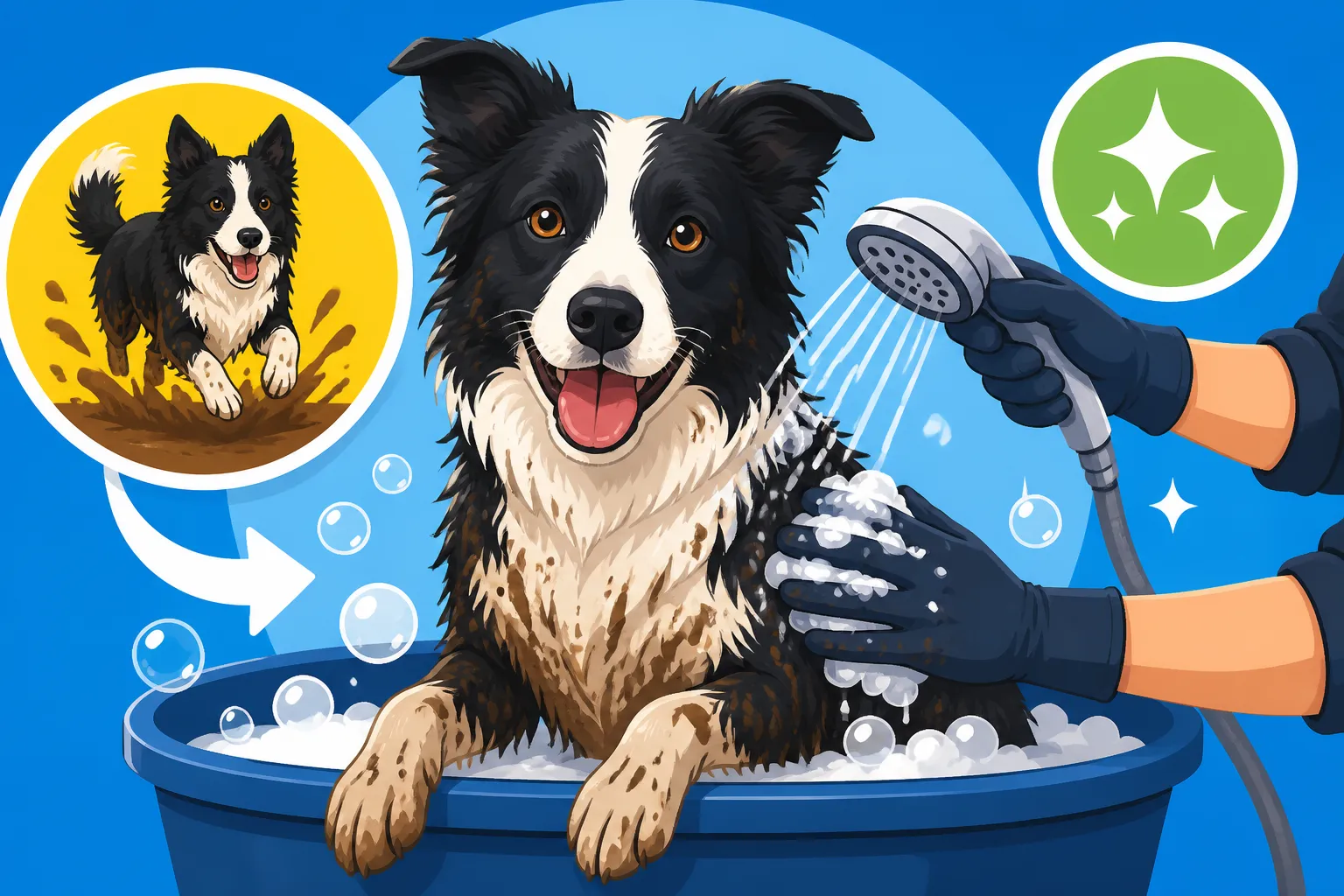
For a truly muddy Border Collie, a "double cleanse" is often necessary. The first shampooing aims to break down and lift the bulk of the mud and grime. Apply a generous amount of dog shampoo and work it into a rich lather, again starting from the neck and moving backward. Pay special attention to heavily soiled areas like the legs, paws, and belly. Use your fingers to really massage the shampoo into the undercoat. Don't be shy about scrubbing gently but thoroughly. For particularly thick areas, you might need to dilute your shampoo slightly to help it spread and penetrate.
After the initial shampoo, rinse thoroughly. This first rinse will be quite muddy. Keep rinsing until the water runs clearer, then repeat the shampooing process. The second lather will typically be much richer and cleaner, signifying that you're getting down to truly clean hair. This is when the shampoo can do its best work, cleaning the hair shafts themselves. For rough-coated dogs, applying a dog-specific conditioner after the second shampoo and letting it sit for a few minutes can work wonders for detangling and restoring moisture to the coat. Rinse again until absolutely no suds or residue remain. Any leftover shampoo can cause skin irritation or make the coat feel sticky and attract dirt faster. Shampoo That Does Not Strip a Border Collie's Oils is a good choice to prevent skin dryness.
Specific Attention to Paws, Face, and Tail
These areas are often the muddiest and require extra care. For paws, really work the shampoo between the pads and toes, as mud and grit often get packed in there. Gently spread the toes apart to ensure a thorough clean. The tail, especially if feathered, can hold a surprising amount of mud; lather and rinse it several times. When cleaning the face, use a washcloth or your hands rather than the spray nozzle directly, to avoid getting water or shampoo in their eyes or nose. Many owners use a tearless puppy shampoo for the face, even on adult dogs, to be extra gentle. After rinsing, remember to remove the cotton balls from their ears.
Consider the whole experience from your dog's perspective. Some Border Collies might tolerate the bath itself but hate the spray of water around their sensitive faces. Keep a positive, calm demeanor, offer praise, and reinforce with treats. This helps build a positive association with bathing, making future mud cleanups a bit easier for both of you.
Drying Your Border Collie Effectively: More Than Just Toweling
Proper drying after a bath is just as important as the washing itself, especially for a Border Collie's dense coat. Incomplete drying can lead to hot spots, skin irritation, and that notorious "wet dog" smell that just won't quit.
The Towel Dry and Initial Water Removal
As soon as the rinsing is complete, let your Border Collie shake! It's their natural way to remove excess water, and it's best to let them do it in the tub or a contained area rather than shaking water all over your clean home. Then, grab those absorbent towels. Pat and squeeze the coat rather than rubbing vigorously, which can create tangles, especially in rough coats. Microfiber towels are excellent for drawing out a lot of moisture quickly. You'll probably go through a couple of towels during this stage. Focus on getting as much surface water off as possible before moving to more intensive drying methods. Pay particular attention to the feathering on the legs and tail, as these areas hold a lot of water.
The Power of the Forced Air Dryer
For Border Collies, especially rough-coated ones, a high-velocity forced air dryer designed for pets is a game-changer. These dryers blow warm (not hot) air at a high speed, effectively blasting water out of the coat rather than just evaporating it. This not only significantly reduces drying time but also helps to de-shed and fluff the coat, preventing matting and ensuring thorough dryness down to the skin. If your dog is new to a forced air dryer, introduce it gradually and with lots of positive reinforcement. Start on a low setting, focusing on less sensitive areas first, and reward generously.
If you don't have a dedicated pet dryer, a regular human hairdryer on a cool or low-heat setting can work, but be very careful to keep it moving and avoid concentrating heat in one spot, which can burn their skin. This method will take much longer, and you'll need to brush as you go to help air circulate. Always ensure good ventilation in the drying area.
| Drying Method | Pros | Cons | Best For |
|---|---|---|---|
| Air Dry | No equipment needed, natural | Very slow, risk of matting, hot spots, damp smell, chills | Only suitable for very short-coated dogs in warm weather |
| Towel Dry | Inexpensive, quick initial water removal | Doesn't get coat fully dry, can tangle coat | All coat types, as a first step |
| Human Hairdryer | Accessible, relatively fast (with care) | Risk of overheating/burning skin, can be noisy, slower than pet dryer | Smaller dogs or specific areas with low/cool heat only |
| High-Velocity Pet Dryer | Fastest, most thorough, de-sheds, prevents matting | Can be expensive, noisy, requires dog desensitization | All Border Collies, especially rough-coated and working dogs |
Post-Bath Care and Keeping Your Border Collie Clean (Longer!)
The bath isn't truly over until your Border Collie's coat is completely dry and you've taken steps to keep them looking and feeling great. This includes finishing touches and strategies to minimize future mud accumulation.
Brushing Out and Final Inspection
Once your Border Collie is completely dry – and I mean completely dry – give their coat a final thorough brushing. This helps to distribute natural oils, remove any remaining loose hairs, and check for any missed mats or skin irritations. For rough-coated dogs, this is especially important to ensure no tangles form as the coat settles. Use a slicker brush followed by a wide-toothed comb to glide through the fur smoothly. This final brushing leaves their coat soft, shiny, and ready for whatever adventure comes next.
While you're brushing, take the opportunity to perform a quick head-to-tail inspection. Check their ears for redness or discharge (even if you used cotton balls, a little moisture can sometimes get in). Look at their paws for any Pad Damage on a Border Collie Working Stubble or irritation between the toes. A clean coat also makes it easier to spot any skin issues, bumps, or external parasites that might have been hidden by mud.
Managing Mud Between Baths
Let's be realistic: a Border Collie that works or plays outdoors will get muddy again. The goal isn't necessarily to prevent all mud, but to manage it between full baths.
- Designated De-Mudding Zone: Set up an area, perhaps near your back door or garage, with old towels, a bucket of warm water, and a few grooming mitts. When your dog comes in muddy, you can do a quick wipe-down of paws and lower legs. Many dedicated working dog owners swear by a warm water rinse-off with just plain water right after coming in from the field, especially for their Border Collie That Works in Mud.
- Protective Gear: For certain activities or particularly wet conditions, consider dog boots to protect paws from mud and ice. While not always practical for full-body coverage, they can significantly reduce paw cleaning time.
- Regular Brushing: Frequent brushing, even daily, can dislodge dry mud and dirt before it becomes deeply embedded. This also helps maintain coat health and reduces the need for frequent full baths.
- Strategic Hosing: If your Border Collie is truly caked in mud but not needing a full shampoo bath, a quick hose-down with plain water from a garden hose can sometimes be enough. Just make sure to dry them thoroughly afterward, especially if the weather is cool.
Remember, a Border Collie’s coat is designed for protection. While we want to keep them clean, over-bathing with harsh shampoos can strip natural oils, leading to dry skin and a dull coat. Aim for full baths only when genuinely needed, relying on your pre-bath de-mudding and in-between-bath quick cleans whenever possible. You can find excellent shampoos and conditioners for managing a Border Collie's coat health on platforms like Chewy or Amazon, making it easy to keep your grooming kit fully stocked.
Troubleshooting Common Bathing Challenges
Even with the best intentions and preparations, bathing a Border Collie, especially one that regularly encounters mud, can present its own set of unique hurdles. It's not always a smooth process, but with a bit of patience and understanding, you can navigate most of these issues.
My Border Collie Hates Baths!
This is a common refrain among dog owners, and Border Collies, with their sensitive natures, can be particularly resistant if not introduced carefully. The key here is positive association and gradual desensitization. If your dog truly despises the bath, don't force it. Start small:
- Introduce the space: Get them comfortable just being in the bathroom or next to the tub without water. Offer treats and praise.
- Introduce the water: Start with just a little warm water in the tub, letting them stand in it. Again, treats and praise. Gradually work up to turning on the faucet, then the spray nozzle.
- Use lick mats: Applying a dollop of peanut butter (xylitol-free!) or a favorite wet treat to a lick mat stuck to the side of the tub can be a fantastic distraction, keeping them occupied and associating the bath with something positive.
- Maintain calm energy: Dogs pick up on our stress. If you're anxious about the bath, they will be too. Speak in a calm, soothing voice, and move deliberately.
- Consider a professional groomer: If home baths are simply too stressful for both of you, a professional groomer has the tools and expertise to handle even the most reluctant bathers.
Remember, consistency is key. Even if it's just a few minutes of positive interaction in the bathroom each week, it helps build confidence.
Dealing with Matting and Tangled Fur
Matting is a significant concern, especially for rough-coated Border Collies who regularly work in mud. Mud, when it dries, can pull hairs together into dense, painful clumps that trap moisture and dirt, potentially leading to skin infections.
- Prevention is best: Regular brushing (daily for rough coats) is your first line of defense. The pre-bath de-clumping we discussed is crucial for breaking up mud-induced mats before they get wet.
- Never wet a mat: This is the golden rule. Water causes mats to tighten and become virtually impossible to brush out without causing severe pain or resorting to shaving.
- De-matting tools: Invest in a good quality de-matting comb or rake. Work slowly and gently, holding the hair at the base near the skin to minimize pulling. Use a de-tangling spray if needed.
- When to shave: For severe, tight mats close to the skin, sometimes the only humane solution is to carefully shave them out. This is often best done by a professional groomer or veterinarian to avoid injuring the skin. Don't feel guilty; your dog's comfort comes first. Keep an eye out for Mats Behind a Rough Border Collie's Ears or in their "armpits," which are common trouble spots.
The Lingering "Wet Dog" Smell
Even after a thorough bath, some Border Collie owners report a persistent "wet dog" smell, especially after getting caught in the rain. This isn't usually a sign of an unclean dog, but rather a combination of natural doggie oils, yeast, and bacteria that thrive in damp conditions.
- Ensure thorough drying: The most common culprit for a lingering smell is incomplete drying. Make sure your dog is absolutely bone-dry, especially the undercoat, which can take hours without a forced air dryer.
- High-quality shampoo: Using a good quality, deep-cleaning dog shampoo can make a difference. Some shampoos contain deodorizing agents specifically formulated to tackle dog odors.
- Address underlying issues: If the smell is constant and strong, even when dry, and accompanied by itchy skin, redness, or flaky patches, it might indicate an underlying skin condition, allergy, or yeast infection. In such cases, a vet visit is warranted. They may recommend a medicated shampoo to address the issue.
- Environmental factors: Ensure your dog's bedding is clean and dry. A smelly bed can quickly transfer odors back to a freshly bathed dog.
Bathing a Border Collie that works in mud doesn't have to be an overwhelming chore. With the right tools, a methodical approach, and a lot of patience, you can keep your active companion clean, comfortable, and ready for their next muddy adventure.
Disclaimer
This article is for general informational purposes only and does not constitute professional advice. Laws, prices and regulations vary by location and change over time. Consult a qualified professional for guidance on your specific situation.