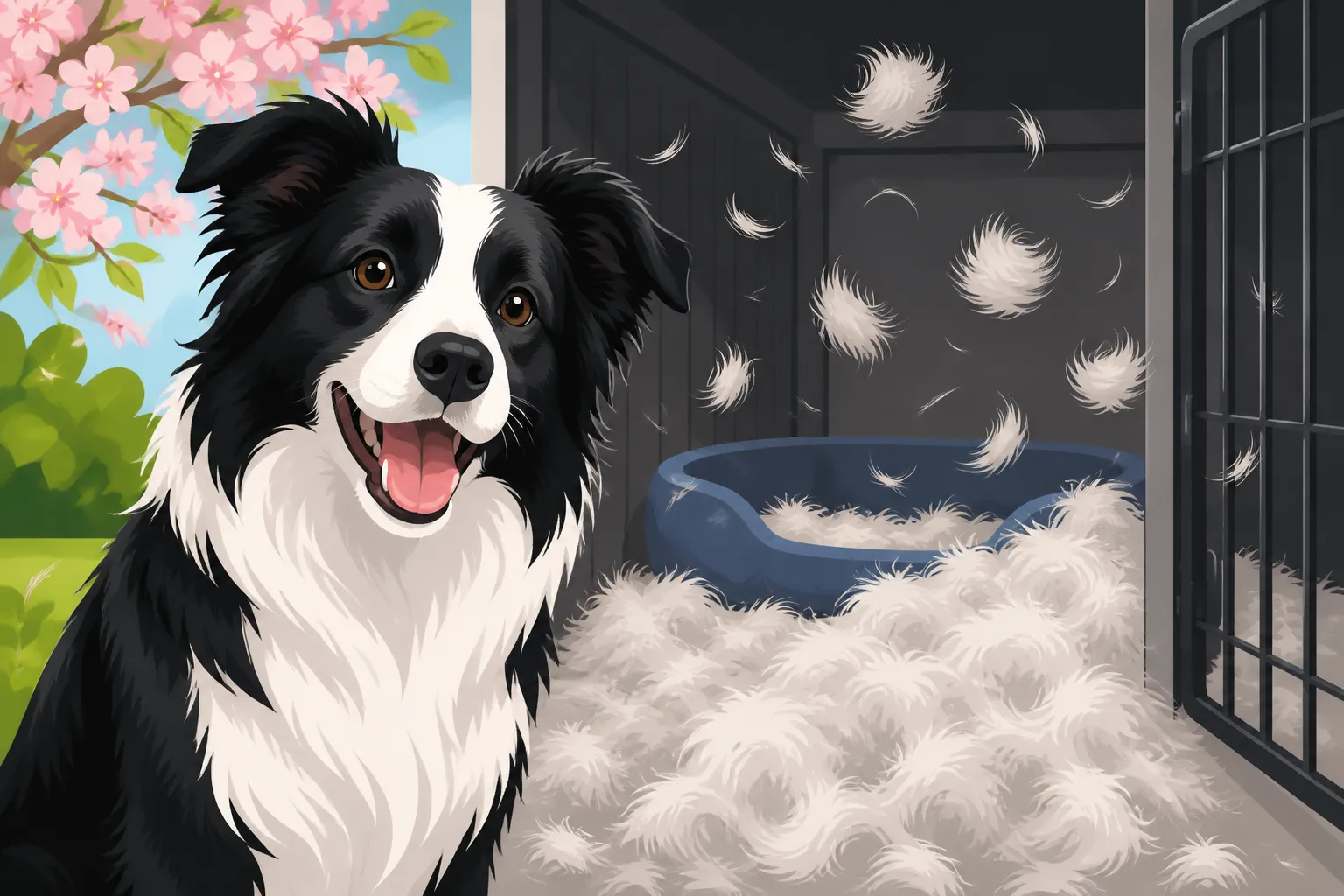
The Spring Molt That Fills a Border Collie’s Kennel
Ah, spring! The season of new growth, longer days, and for us Border Collie owners, a truly astonishing amount of dog hair. If you've ever felt like your entire house is suddenly upholstered in a fine layer of black, white, or merle fluff, or that your dog's bed has transformed into a furry nest practically overnight, you're not alone. The "spring molt" is a very real, very intense phenomenon for these double-coated dogs, and it can quickly feel overwhelming. This guide is here to walk you through exactly why your Border Collie suddenly seems to be shedding enough hair to knit a new dog, and how you can manage the tidal wave of fur with practical strategies and a bit of patience.
Understanding the Border Collie Coat Cycle
Border Collies, whether they're working hard on the farm or tearing it up in agility, are equipped with a magnificent double coat designed for protection. This isn't just about looking handsome; it's a vital part of their thermoregulation, keeping them warm in winter and surprisingly cool in summer. But that effectiveness comes with a seasonal cost: the infamous molt.
Why the Seasonal Shedding Happens
Think of your Border Collie's coat as a natural, self-adjusting thermostat. They have a dense, soft undercoat that provides insulation, and a coarser, longer outer coat (or guard hairs) that protects against elements like rain, snow, and brambles. When the days get shorter and temperatures drop in autumn, their bodies signal the undercoat to thicken, preparing them for winter's chill. They'll shed a bit then, too, making way for that denser layer.
But come spring, as the daylight hours stretch and the warmth returns, their internal clocks trigger the reverse process. That thick, insulating winter undercoat is no longer needed, and if left in place, it would make them overheat. So, nature dictates it must go. This is the big "blow" – the spring molt. It's not just a few stray hairs; it's a deliberate, substantial shedding of that entire inner layer. Your dog isn't losing hair because something is wrong; they're doing exactly what their breed is designed to do. It can feel like an endless parade of tumbleweeds rolling through your home, but it's a completely normal, healthy physiological response to the changing seasons. The duration and intensity can vary from dog to dog, but generally, you're looking at a few weeks of concentrated effort.
The Difference Between Rough and Smooth Coats During a Molt
While all Border Collies have that protective double coat, the visual impact of their shedding can differ quite a bit between the rough-coated and smooth-coated varieties. For those of us with a rough-coated Border Collie, the spring molt can feel particularly dramatic. The longer guard hairs trap the shedding undercoat, creating dense mats and clumps of loose fur that seem to detach in impressive quantities. You might find "tumbleweeds" of fur floating across your floor, or discover large, soft wads of fluff clinging to furniture, especially where your dog loves to nap. This trapped undercoat needs active removal through brushing to prevent uncomfortable matting, particularly in areas like behind the ears, armpits, and on their "trousers" (the longer hair on their hind legs). Without regular grooming, these trapped hairs can quickly form painful knots, pulling at the skin. If you want to know more about keeping that beautiful coat healthy, check out Grooming a Rough-Coated Border Collie.
Smooth-coated Border Collies, on the other hand, often present a different kind of shedding challenge. While their outer coat is shorter and sleeker, they still possess that dense undercoat. When they molt, these shorter hairs tend to shed out more continuously and are less likely to get caught in the longer outer coat or form large mats. However, this doesn't mean less hair overall! Instead, you might find a constant sprinkle of fine, needle-like hairs everywhere. These hairs have a unique ability to weave themselves into carpets, upholstery, and clothing, making them deceptively difficult to remove. While you might not see the dramatic clumps of a rough coat, the persistent presence of individual hairs can be just as, if not more, frustrating. Regardless of coat type, the goal is the same: regular, diligent grooming to manage the shed. The Smooth-Coated Border Collie and What Its Coat Needs goes into more detail about their specific grooming requirements.
Surviving the Spring Molt: Grooming Strategies
Conquering the spring molt isn't about stopping the shedding – that's impossible and unhealthy for your dog – but about managing it proactively and effectively. It takes dedication, but the reward is a healthier coat for your Border Collie and less fur covering every surface of your home.
Essential Tools for Tackling the Shed
Having the right tools is half the battle when facing a Border Collie's spring molt. Forget flimsy brushes; you'll need serious hardware to get through that thick undercoat.
First up, a slicker brush is a staple. These brushes have fine, wire bristles angled on a flat or curved surface, and they're excellent for general detangling and removing loose topcoat hairs. However, for the serious undercoat blow, you'll need to dig deeper.
An undercoat rake is your best friend. These tools have widely spaced, strong teeth that are designed to penetrate the topcoat and gently pull out the dead, loose undercoat without damaging the healthy guard hairs. Look for one with rotating teeth, as these can be less harsh on the skin. Which Brush Suits a Rough Border Collie's Coat delves into specific recommendations.
For extreme shedding, some owners find a de-shedding tool like a Furminator or similar brand invaluable. These tools are designed to grab and remove a significant amount of undercoat. However, they must be used with extreme care and not too frequently, as overuse can damage the guard hairs or irritate the skin. Follow instructions precisely and use a light touch.
Finally, a high-velocity dog dryer (often called a forced air dryer) can be a game-changer. These aren't like human hair dryers; they blow cool or warm air at a powerful speed, literally forcing the loose undercoat out of the coat. This is an incredibly effective way to remove masses of dead hair before it ends up all over your house, and it can also help to dry your dog quickly after a bath. If you've ever battled with trying to get all the moisture out of a thick Border Collie coat, you'll appreciate the power of one of these. You can often find these at pet supply stores or online retailers like Chewy or Amazon.
A Step-by-Step Grooming Routine
During the peak of the spring molt, you'll want to commit to a serious grooming schedule. For many Border Collies, this means brushing daily or every other day.
- Start with a thorough raking: Begin with your undercoat rake. Work in sections, starting from the head and moving towards the tail, and from top to bottom. Use long, gentle strokes, making sure the teeth reach down into the undercoat. You'll be amazed at the amount of fluff that comes out. Pay extra attention to areas prone to matting like the "armpits," behind the ears, and around the tail. The goal is to remove as much of that dead undercoat as possible. This process is called "stripping the undercoat" and it can be incredibly effective. Read more about it here: Stripping a Border Collie's Undercoat Out by Hand.
- Follow with a slicker brush: Once the bulk of the undercoat is removed, use a slicker brush to smooth out the topcoat, catch any remaining loose hairs, and check for any smaller tangles you might have missed.
- Consider a bath (optional but helpful): A bath can help loosen dead hair, but only if you have a way to thoroughly dry your dog afterward. The high-velocity dryer mentioned earlier is crucial here. After shampooing and conditioning, blast the coat with the dryer. You'll literally see clouds of hair flying off. This is a fantastic way to expedite the shedding process and get a lot of hair out at once. Ensure your dog is completely dry to prevent skin issues.
- Finish with a final comb-through: A wide-toothed comb can be used to ensure there are no hidden tangles, especially on rough-coated Border Collies.
Remember, patience is key. Your Border Collie might not love long grooming sessions, so break them up if needed, and always reward them for their cooperation. The more consistent you are, the faster you'll get through the worst of the shedding season. The Two Weeks a Border Collie Blows Its Coat describes this intense period perfectly.
Managing the Mess Indoors
Despite your best grooming efforts, some Border Collie hair is inevitably going to make its way into your living space. Managing the mess indoors is about minimizing its impact and making cleanup as efficient as possible.
One of the most effective tools for indoor hair management is a good quality vacuum cleaner, ideally one designed for pet hair. These often have specialized attachments and stronger suction to pick up embedded fur from carpets and upholstery. Regular vacuuming, often daily during the peak molt, will be your new normal. You might even find yourself investing in a robotic vacuum to help with the daily maintenance, setting it to run while you're out.
For furniture, throws and washable covers are a lifesaver. Designate a few comfy blankets for your Border Collie's favorite spots on the couch or bed, and simply toss them in the wash regularly. A damp cloth or rubber gloves can also be surprisingly effective for wiping hair off upholstery before vacuuming. Static electricity plays a big role in how hair clings to surfaces, so consider using dryer sheets to wipe down furniture or even your dog's bedding after washing to reduce static and repel hair.
Finally, having specific 'dog zones' where shedding is more concentrated can help. Perhaps a particular bed in a corner, or a crate lined with an easy-to-clean pad. Embracing the fact that you live with a shedding dog means finding clever ways to contain and manage the fur, rather than fighting an unwinnable battle against every single strand.
Nutritional Support and Environmental Factors
While grooming is your primary defense during the molt, don't underestimate the foundational role of your Border Collie's overall health, which is heavily influenced by diet and environment. A healthy dog often has a healthier coat, making the shedding process slightly more manageable.
The Role of Diet in Coat Health
What goes into your Border Collie's bowl has a direct impact on the quality and health of their coat. A diet rich in high-quality protein and essential fatty acids, particularly Omega-3s and Omega-6s, can contribute to a strong, lustrous coat and healthy skin. When the skin and coat are healthy, the shedding process, though inevitable, can be less prone to issues like excessive dryness or dullness.
Look for dog foods where a named meat source (like chicken, lamb, or beef) is the first ingredient. Beyond protein, ensure the food contains a good balance of fatty acids. Many premium dog foods, including those you might find on Ollie or Chewy, explicitly state their Omega content. You can also supplement your dog's diet with fish oil (salmon oil, cod liver oil, krill oil) if their food doesn't provide enough. These supplements are often recommended for their skin and coat benefits, promoting a healthy sheen and potentially reducing excessive dryness or flakiness that can exacerbate shedding. However, always consult your vet before adding any supplements, especially to ensure correct dosage for your dog's size and activity level. Feeding a Border Collie on a Performance Diet touches on similar considerations for active dogs.
A well-nourished coat means healthy hair follicles, which can help ensure that when hairs do shed, they do so cleanly, without clinging excessively or leading to skin irritation. It's not a magic bullet to stop shedding, but it ensures the hair that is there is as healthy as possible.
Hydration and Environmental Comfort
Just like humans, adequate hydration is crucial for your Border Collie's overall health, including their skin and coat. Dehydrated skin can become dry and itchy, potentially leading to more scratching and, in turn, more hair loss than just the natural molt. Always ensure your Border Collie has access to fresh, clean water, especially if they are highly active or during warmer weather. If your dog isn't a big drinker, consider adding a little water or low-sodium broth to their food, or invest in a pet drinking fountain, which can entice some dogs to drink more due to the circulating water.
Environmental comfort also plays a subtle but important role. While you can't stop the biological process of shedding, minimizing stress and maintaining a comfortable living environment can support overall health. This means providing a comfortable, clean bed, appropriate shelter from extreme weather, and a stable routine. Excessive heat or cold, especially if your dog is transitioning from indoors to outdoors frequently, can influence their coat's conditioning. While Border Collies are generally robust, a sudden change in environment or prolonged exposure to uncomfortable conditions could subtly impact their coat health. While a healthy coat won't stop the seasonal shed, it means the hair that is shedding is replaced by strong, healthy new growth, supporting their natural protective layer.
When to Worry: Beyond Normal Shedding
While shedding is a completely normal part of owning a Border Collie, there's a difference between a healthy seasonal molt and a shedding pattern that might signal an underlying health issue. It's important to know the signs that warrant a closer look or a trip to the vet.
Spotting Red Flags
A normal spring molt, though abundant, should result in healthy new hair growth. The skin underneath should appear normal – not red, inflamed, flaky, or bumpy. If you notice bald patches, thinning hair that isn't replaced, or areas where your Border Collie is constantly scratching, licking, or chewing, these are red flags. This isn't just routine shedding; it could indicate skin allergies, parasites like fleas or mites, fungal infections, or even deeper hormonal imbalances. For instance, Coat Loss in a Border Collie With Thyroid Trouble explains how thyroid issues can manifest in changes to the coat.
Also pay attention to the quality of the hair itself. Is it brittle, greasy, or excessively dry? Does it smell unusual? A healthy coat, even during shedding, should generally retain its natural texture and appear relatively clean. If the shedding is accompanied by excessive dander (flakes of skin), open sores, scabs, or a sudden, dramatic change in coat quality outside of the seasonal molt, it's time to investigate. Hot Spots on a Border Collie can also be a common problem, especially if irritation leads to excessive licking.
Consulting Your Vet
If you're noticing any of these red flags, or if your Border Collie's shedding seems truly excessive, goes on for an unusually long time, or is accompanied by other symptoms like lethargy, changes in appetite, or behavioral shifts, a visit to your veterinarian is definitely in order. They can perform a thorough examination, including skin scrapings or blood tests, to rule out medical conditions.
Never try to self-diagnose or treat severe skin or coat issues, as some conditions can worsen without proper veterinary care. For example, some skin conditions can be quite painful or itchy, and delaying treatment can cause your dog unnecessary discomfort. Your vet can accurately identify the cause of the problem and prescribe the appropriate treatment, whether it's medication, a specialized shampoo, or a dietary change. It's always better to be safe than sorry when it comes to your beloved Border Collie's health.
Disclaimer
This article is for general informational purposes only and does not constitute professional advice. Laws, prices and regulations vary by location and change over time. Consult a qualified professional for guidance on your specific situation.