Night Vision in a Border Collie
It’s a frustrating thing to notice your ever-alert Border Collie, who usually navigates the world with such confidence, starting to hesitate when the lights dim. Perhaps they’re bumping into furniture that’s never been an issue before, or they seem less keen to venture out into the yard after dusk. This shift can be alarming, making you wonder what’s happening to their keen senses. This guide will delve into how Border Collies see in low light, what can compromise their night vision, and practical steps you can take to help them maintain their zest for life.
Understanding Canine Vision: A Border Collie's Unique Perspective
When we talk about vision in Border Collies, it’s important to remember that their world isn't quite the same as ours. While we humans rely heavily on crisp, colorful daytime vision, dogs, especially working breeds like Border Collies, have evolved to excel in conditions where light is scarce. Their eyes are marvels of adaptation, perfectly suited for tracking movement and navigating diverse terrains, even when the sun has long dipped below the horizon.
The Biological Foundations of a Dog's Eye
At the core of a Border Collie's impressive low-light vision lies a specialized structure within their eyes. Unlike us, who have a high concentration of cone cells in our retinas (responsible for color and fine detail), dogs possess a much higher proportion of rod cells. Rods are superstars when it comes to detecting light and motion, particularly in dim environments. This means while your Border Collie might not see the vibrant array of colors you do – their spectrum is generally believed to be similar to a human with red-green color blindness, favoring blues and yellows – they absolutely dominate in distinguishing shapes and movement in near darkness.
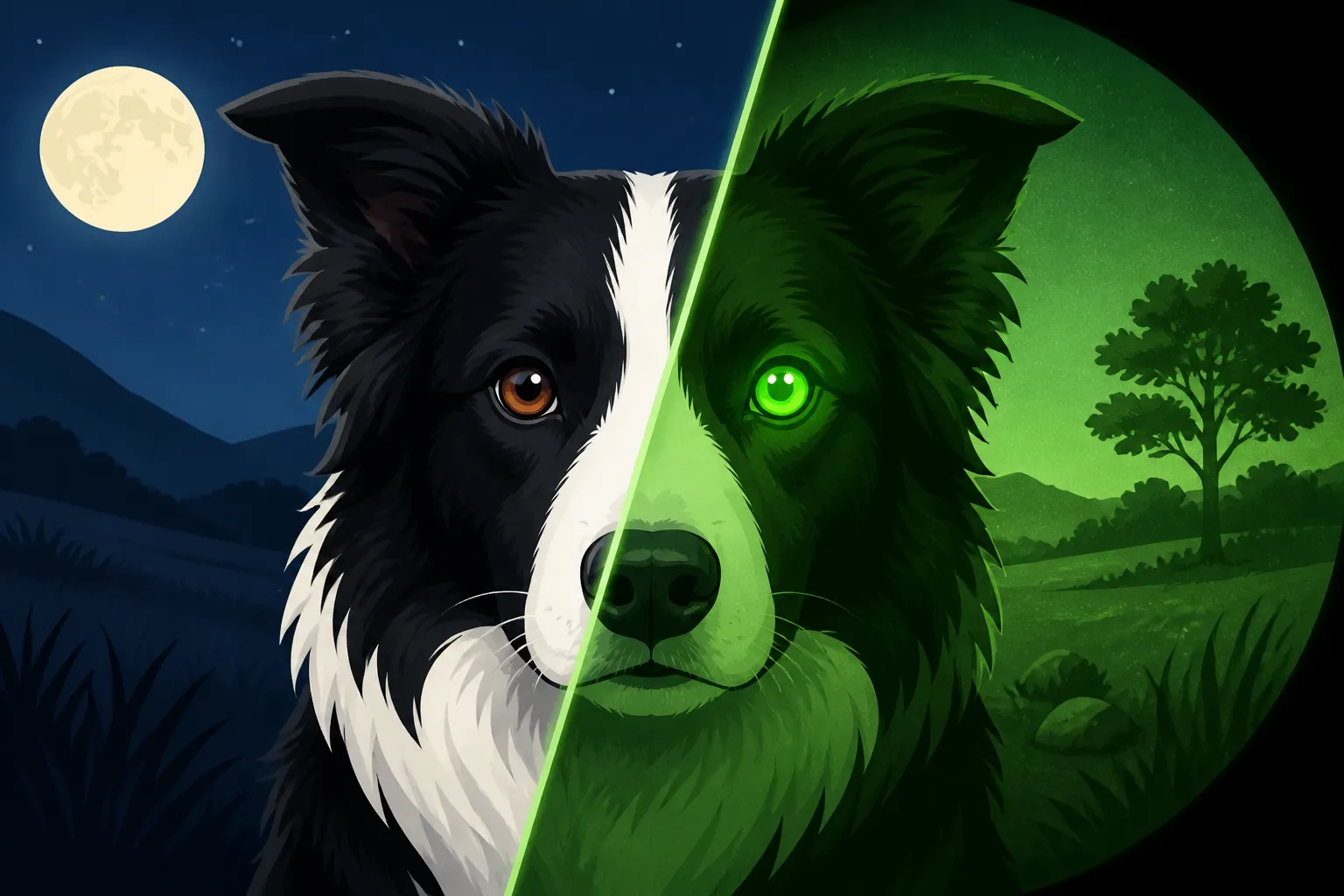
But the real secret weapon in a Border Collie’s night vision arsenal is the tapetum lucidum. This is a reflective layer located behind the retina, essentially acting like a biological mirror. Any light that enters the eye and isn't absorbed by the retina on the first pass is reflected back, giving the rods a second chance to process it. This is why when you shine a light into your dog's eyes at night, you often see that eerie, glowing reflection – that's the tapetum at work, amplifying available light. While it sacrifices some visual acuity and makes their vision a bit "fuzzier" than ours, it’s an incredible adaptation for hunting and working in low-light conditions.
Why Border Collies Excel in Dim Conditions
Think about the traditional role of a Border Collie: herding sheep. This isn't always a nine-to-five job. Shepherds often work their dogs at dawn, dusk, or even during moonlight to move flocks. Over generations, Border Collies have been selectively bred for traits that make them exceptional at this demanding work, and superior night vision is definitely one of them. Their broad field of vision, estimated to be around 240 degrees compared to our 180 degrees, also plays a crucial role. This wider perspective, combined with their incredible ability to detect even the slightest movement, allows them to keep track of an entire flock, or a fast-moving disc, in challenging light.
Their inherent drive and focus, often referred to as "eye," also contribute to their effectiveness. This intense, almost hypnotic stare, allows them to concentrate on their task even when visual conditions are far from ideal. So, while they might not see every blade of grass in vivid detail, their ability to pick up on the subtle shifts of a sheep or the trajectory of a ball in the fading light is unparalleled, a testament to centuries of natural and selective evolution.
Recognizing Signs of Impaired Night Vision in Your Border Collie
It can be heartbreaking to see a change in your Border Collie's abilities, especially something as fundamental as their vision. These dogs thrive on activity and engagement, and a decline in their sight can significantly impact their quality of life. Catching signs of impaired night vision early can make a big difference in managing the condition and supporting your beloved companion.
Subtle Changes in Behavior
Often, the first indications of reduced night vision aren't obvious physical changes in the eyes themselves, but rather shifts in your dog's behavior. You might notice your Border Collie, usually a confident and agile mover, starting to hesitate at dusk or becoming reluctant to go into dimly lit rooms. They might start bumping into furniture that’s always been in the same place, or misjudging steps, particularly if there’s a shadow or low light.
Another common sign is increased anxiety or reliance on you in low-light situations. A dog who once happily explored the yard after dark might now stick close to your side, or even refuse to go out without a leash. They might seem more easily startled by sounds, as their other senses compensate for their failing sight. If your Border Collie, who once happily played fetch in the fading light, now seems to lose the ball instantly or gives up searching for it, that's a strong indicator. They might also become less engaged in activities they once loved that require good visual tracking, like catching a frisbee or navigating an agility course after sunset.
Observable Physical Indicators
While behavioral changes are often the first alert, eventually, physical signs might become apparent as well. It’s crucial to pay close attention during your regular The Annual Exam a Border Collie Needs or even during your weekly grooming sessions. Look for cloudiness or opacity in their eyes, which can be a sign of cataracts. Their pupils might appear abnormally dilated, even in moderately lit environments, as the eye tries to let in more light to compensate for failing vision. Sometimes, the reflectivity of their tapetum lucidum might appear different, or one eye might reflect light differently than the other.
Discharge from the eyes, redness, or signs of discomfort like squinting or pawing at their face could also indicate an underlying issue affecting their vision, even if it's not directly related to night blindness. In some cases, specific conditions might cause changes in the color or texture of the eye itself. For example, glaucoma, which can cause significant pain and vision loss, often presents with a cloudy, bluish cornea and a dilated pupil. If you notice any of these physical changes, it’s always best to consult with your veterinarian promptly.
Here's a quick comparison of visual differences that might help you understand how your Border Collie's world changes if their night vision declines:
| Feature | Healthy Canine Vision (Low Light) | Canine Vision (Impaired Night Vision) | Human Vision (Comparison) |
|---|---|---|---|
| Light Sensitivity | Very high, can see well in dim light | Significantly reduced, struggles in dim light | Moderate, needs substantial light |
| Motion Detection | Excellent, even in low light | Impaired, misses subtle movements in low light | Good, but requires more light |
| Peripheral Vision | Wide (approx. 240 degrees) | Still wide, but objects harder to distinguish | Narrow (approx. 180 degrees) |
| Depth Perception | Good | May be compromised, especially in low light | Excellent |
| Color Perception | Limited (blue/yellow spectrum dominant) | Unchanged, but overall acuity reduced | Full spectrum (red, green, blue) |
| Navigation in Dark | Confident, agile | Hesitant, bumps into objects, anxious | Very difficult without light |
| Pupil Size | Dilates to let in available light | Often overly dilated to compensate | Adjusts to light levels |
| Tapetum Lucidum | Reflects light, enhances night vision | Function may be reduced or unchanged, but less effective due to retinal issues | Absent |
Common Conditions That Affect a Border Collie's Night Vision
Unfortunately, like all living creatures, Border Collies can develop or inherit conditions that impact their eyesight, particularly their ability to see in low light. Understanding these conditions is key to early detection and management.
Progressive Retinal Atrophy (PRA)
One of the most significant and heartbreaking conditions that can affect a Border Collie's night vision is Progressive Retinal Atrophy (PRA). This is a group of degenerative diseases that affect the photoreceptor cells (rods and cones) in the retina. In most forms of PRA, the rod cells are affected first, meaning that night vision is typically the first casualty. Dogs often start showing signs of difficulty seeing in dim light before the condition progresses to affect their daytime vision, eventually leading to complete blindness.
The onset of PRA can vary widely depending on the specific genetic mutation, but often it begins to manifest in middle age. You might notice your otherwise spry Border Collie becoming more hesitant at dusk, or navigating familiar environments with less confidence when the lights are low. Since it's a progressive disease, the signs will gradually worsen. There is no cure for PRA, but genetic testing is available for several forms of the disease, allowing responsible breeders to screen their breeding stock and avoid producing affected puppies. This is why discussing The Border Collie Genetic Panel and What It Screens with a breeder is so important, as is reviewing parental health clearances. For a deeper dive, you can learn more about Progressive Retinal Atrophy in an Older Border Collie.
Cataracts and Glaucoma
Beyond inherited conditions, cataracts and glaucoma are common culprits that can severely impact a Border Collie's vision, including their night vision.
Cataracts occur when the lens of the eye becomes cloudy or opaque, preventing light from reaching the retina clearly. Think of it like looking through a foggy window. While small cataracts might not cause significant vision impairment, large or mature cataracts can cause substantial vision loss, making it incredibly difficult for your dog to see in any light, but especially in dim conditions where less light is available to penetrate the clouded lens. Cataracts can be hereditary, develop with age (just like in humans), or be secondary to other diseases like diabetes. Symptoms often include a bluish-grey opacity in the pupil, and behavioral signs similar to PRA. Fortunately, surgical removal of cataracts can often restore vision, making it important to get a proper diagnosis. If you're observing these changes in your dog, you might want to read more about Cataracts in a Middle-Aged Border Collie.
Glaucoma is a painful condition caused by increased pressure within the eye. This elevated pressure damages the optic nerve and retina, leading to irreversible vision loss. Glaucoma can be primary (inherited) or secondary to other eye diseases. The acute onset of glaucoma can be an emergency, causing severe pain and rapid vision loss. Early signs can include a cloudy or bluish cornea, redness in the white of the eye, a dilated pupil that doesn't react to light, and obvious pain (squinting, pawing at the eye). While glaucoma can affect vision across all light conditions, the overall degradation of retinal and optic nerve function will certainly compromise night vision. Treatment focuses on reducing intraocular pressure and managing pain, and while it can save the eye, vision loss is often permanent.
Collie Eye Anomaly (CEA) and Other Inherited Conditions
While PRA and cataracts are perhaps more broadly known for affecting vision, another important inherited condition in Border Collies is Collie Eye Anomaly (CEA). CEA is a congenital, inherited condition that primarily affects the choroid, an important vascular layer that supplies blood to the retina. The severity can range from very mild (only detectable during a thorough eye exam by a veterinary ophthalmologist) to severe, involving colobomas (holes in the eye structure), retinal detachment, or intraocular hemorrhage.
In its most common, mild forms, CEA often doesn't affect vision significantly, and a dog with a "go-normal" diagnosis (where the choroidal defect is masked by normal retinal pigmentation as the dog matures) might see perfectly well throughout its life. However, in severe cases, especially those involving colobomas affecting the optic nerve or leading to retinal detachments, vision can be severely impaired, including night vision. A puppy born with severe CEA might struggle with vision from a very young age. This is precisely why it’s so critical that breeders have The Eye Exam a Border Collie Puppy Gets at Six Weeks performed, and why understanding What a Choroidal Defect Means in a Border Collie is important. Genetic testing can also identify carriers and affected individuals, helping breeders make informed decisions.
Other, rarer genetic conditions can also impact retinal health and thus night vision, so it's always worth discussing a comprehensive genetic panel with your breeder or veterinarian if you have concerns about your dog's lineage or eye health.
Supporting Your Border Collie with Diminishing Night Vision
Discovering that your Border Collie's night vision is fading can be tough, but it's not the end of the world for your adventurous companion. With some thoughtful adjustments and proactive care, you can help them maintain their independence and joy, even as their world becomes a little dimmer after dark.
Environmental Adjustments at Home
The good news is that many practical steps can be taken right at home to make life easier for a Border Collie with impaired night vision. The first rule of thumb is consistency. Try to avoid moving furniture around frequently, as your dog relies on their memory of their environment to navigate.
- Lighting the Way: Invest in night lights. Placing small, automatic night lights in hallways, near stairs, and in rooms your dog frequents can provide just enough illumination to help them orient themselves. Consider LED strip lights under kitchen counters or along baseboards for a subtle guide.
- Clear Pathways: Keep floors clutter-free. That rogue slipper or misplaced toy can become a tripping hazard for a dog that can't see it clearly. Always ensure pathways to water bowls, food dishes, and their bed are clear and accessible.
- Outdoor Safety: If your dog spends time outdoors in the evening, make sure the yard is well-lit. Solar-powered path lights or motion-sensor lights can be incredibly helpful. Always supervise them closely in the dark, and consider using a long line or keeping them on a leash, especially if your yard isn't fully enclosed or has unfamiliar obstacles. A reflective collar or vest can also make them more visible to you.
Remember, a Border Collie often spends What a Border Collie Does With Its Whole Day engaging with their environment. Making that environment predictable and safe is paramount.
The Importance of Regular Veterinary Care
Early detection and proactive veterinary care are your best allies in managing any vision issue. Regular check-ups with your veterinarian are essential. They can perform routine eye examinations and often spot subtle changes before they become more advanced. If they suspect a serious issue, they might refer you to a veterinary ophthalmologist – a specialist in animal eye health.
An ophthalmologist can conduct more in-depth tests, such as electroretinography (ERG) to assess retinal function, or tonometry to measure intraocular pressure (for glaucoma). They can also accurately diagnose conditions like PRA, cataracts, or severe CEA, and discuss potential treatments or management strategies.
When considering the potential costs of diagnostics and treatments for eye conditions, pet insurance can be an invaluable resource. Companies like Healthy Paws offer comprehensive coverage that can help ease the financial burden of managing chronic conditions or surgical interventions for issues like cataracts. Knowing you have that safety net can allow you to make decisions based on what’s best for your dog, rather than your wallet. Discussing coverage options with a provider like Healthy Paws before a problem arises can offer significant peace of mind as your Border Collie ages.
Training and Communication Strategies
Even with diminishing night vision, your Border Collie can continue to live a fulfilling life with your support and some adjustments to how you communicate.
- Verbal Cues are King: Since their visual cues might be less reliable, rely heavily on verbal commands. Make sure your dog knows "wait," "slow," "step," or "stop" to help them navigate obstacles. Using descriptive words for directions ("left," "right," "straight") can also be very helpful.
- Scent Markers: For particularly challenging areas, you can use unique scents (like a drop of essential oil diluted and placed on a cotton ball, or a commercial scent marker) to mark boundaries or important locations like their water bowl.
- Gentle Guidance: Instead of pulling, use gentle nudges or a hand on their shoulder to guide them. If on a leash, let them explore cautiously rather than dragging them along.
- Maintain Routine and Confidence: Dogs thrive on routine. Sticking to a consistent schedule for feeding, potty breaks, and playtime helps them feel secure. Continue to engage them in activities they love, adapting as necessary. If fetch in the dark is out, try scent games indoors or short, leashed walks during daylight. The goal is to keep their minds active and prevent boredom, which can lead to other behavioral issues. A confident owner can instill confidence in their dog, helping them adapt to their new visual reality and ensuring they can continue to live The Border Collie That Stays Sound Into Its Teens enjoying their life with you.
Disclaimer
The information provided in this guide is for general informational purposes only and does not constitute veterinary advice. Always consult with a qualified veterinarian or veterinary ophthalmologist for any health concerns or before making any decisions related to your Border Collie's health and treatment.