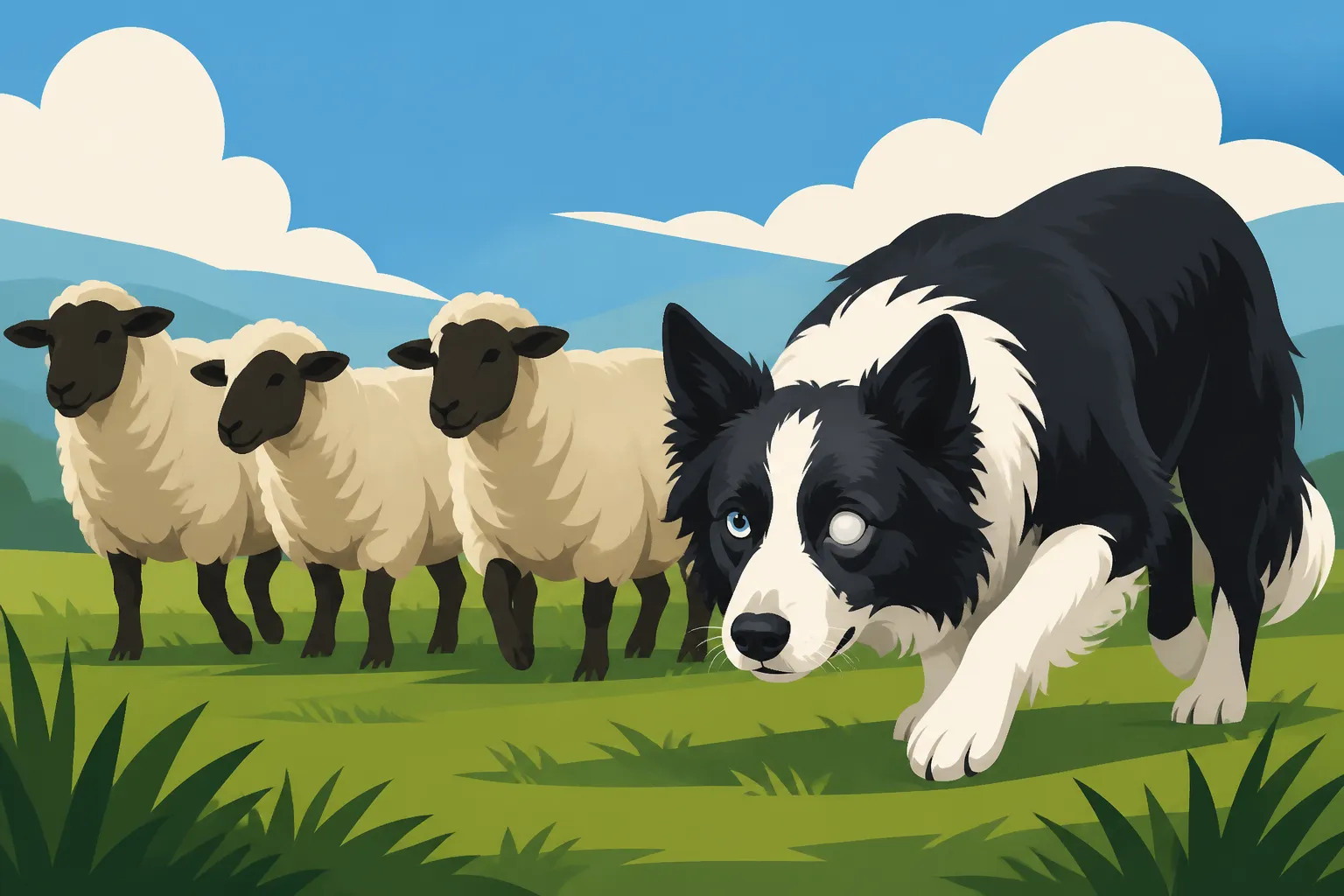
Working Sheep With a Sight-Impaired Border Collie
It's truly heartbreaking when your dedicated working Border Collie starts to struggle with their vision, especially when their entire purpose and joy revolves around seeing and moving sheep. Many of us pour years of training, love, and effort into developing a top-notch herding dog, only to face the devastating reality of sight impairment that threatens their ability to do what they were bred for. This guide aims to walk you through understanding vision loss, adapting your training, and continuing to work with your sight-impaired Border Collie on sheep, helping both of you navigate this challenging journey with grace and practicality.
Understanding Common Causes of Vision Impairment in Working Border Collies
The world can feel like it's crumbling when you notice your otherwise keen working dog is missing cues or hesitating in ways they never did before. Vision impairment in Border Collies can stem from a variety of conditions, some inherited and some acquired, and understanding the potential causes is the first step toward managing the situation. It’s not just about a dog going blind; it's about how they lose vision, as this can dramatically impact their remaining capabilities and how you might adapt their work.
Progressive Conditions Affecting Vision
Many of the most concerning vision issues in Border Collies are progressive, meaning they worsen over time. This slow decline can sometimes be harder to pinpoint early on, as dogs are masters at compensating. You might initially chalk up a missed shed or a wider outrun to an off day, only to realize later it was the early signs of something more serious.
One common inherited condition is Progressive Retinal Atrophy (PRA). This group of genetic diseases causes the cells in the retina to degenerate, leading to night blindness initially, and eventually complete blindness. It’s a slow, insidious process, often starting with subtle signs in low light conditions before affecting daylight vision. For a working dog that relies on split-second decisions and reading stock in varying light, this can be incredibly disruptive. Imagine your dog hesitating to gather sheep in the twilight or struggling to find that one errant lamb hidden in shadow; it might not be a lack of drive, but a literal inability to see. You can delve deeper into this condition by reading about Progressive Retinal Atrophy in an Older Border Collie. Another genetic concern, though often identified much earlier, is Collie Eye Anomaly (CEA). While often mild and non-progressive, severe forms can lead to significant vision impairment or even blindness, especially if there are associated retinal detachments or colobomas. An eye exam a Border Collie puppy gets at six weeks can often catch early signs, but progressive forms can manifest later. You might want to consider The Border Collie Genetic Panel and What It Screens to rule out other inherited conditions.
Acquired Eye Conditions in Mature Dogs
Beyond genetics, working Border Collies, with their active lives, can also develop acquired eye conditions. Just like us, they're not immune to the wear and tear or unexpected health challenges that come with age or injury. A dog that has spent years working sheep in all kinds of terrain might face conditions that affect their sight due to environmental factors or systemic health issues.
Cataracts, for instance, involve the clouding of the lens of the eye, obstructing light from reaching the retina. These can develop due to age, injury, diabetes, or even other underlying eye diseases. A small, non-progressive cataract might not impact a dog's work significantly, but larger or rapidly progressing cataracts can severely impair vision, making the world appear blurry or completely opaque. For a middle-aged Border Collie still in its prime, developing cataracts can be a frustrating and confusing experience for both dog and handler. Other issues like glaucoma, where pressure builds in the eye, can cause pain and irreversible vision loss if not caught and treated quickly. Traumatic injuries from a stray branch in dense brush or a kick from a sheep, though less common, can also lead to acute vision loss in one or both eyes. These acquired conditions often require prompt veterinary attention to preserve any remaining vision and manage pain. Many owners find peace of mind with pet insurance providers like Healthy Paws, which can help cover specialist consultations and medications as vision loss progresses.
Assessing the Degree of Vision Loss and Its Impact on Herding
Once you suspect vision impairment, the critical next step is to accurately assess its extent and how it specifically impacts your dog’s ability to work stock. This isn't just about a "yes" or "no" to blindness; it's about understanding what vision remains, how your dog is compensating, and what this means for their performance in the field. This can be a challenging period, filled with worry and uncertainty, but a thorough assessment will guide your future actions.
Observing Changes in Herding Behavior
The first clues often come from your dog's behavior during actual work. You know your dog better than anyone, especially in their working environment. Are they bumping into gates they used to clear with ease? Are their outruns wider or less accurate? Do they struggle with judging distance to a single lamb, perhaps overshooting or undershooting their approach? These subtle shifts in familiar behaviors are often the earliest indicators.
Pay close attention to how they respond to your commands, particularly those requiring visual cues. If your dog relies heavily on your body language for nuanced commands like a 'steady' or 'walk up,' and suddenly seems less responsive, it might be that they simply can't see your hand signals clearly anymore. You might notice them using their nose more, sniffing the air to locate sheep, or relying more on the sound of the flock. A Border Collie that typically uses strong eye to control stock might start to break their stare, or seem less focused, simply because the visual input isn't as clear. This isn't a sign of disinterest or defiance; it's a desperate attempt to adapt to a changing world. Tracking these changes, perhaps even noting them down, can be incredibly helpful when you speak to your veterinarian.
Veterinary Assessment and Specialist Consultation
When you've observed these changes, a trip to your primary veterinarian is essential. They can perform a general physical exam and an initial ophthalmic exam, looking for obvious issues like cataracts, corneal ulcers, or signs of inflammation. However, for a detailed diagnosis and prognosis, a referral to a veterinary ophthalmologist is often necessary.
A specialist has the equipment and expertise to conduct comprehensive eye exams, including indirect ophthalmoscopy, slit-lamp biomicroscopy, tonometry (to check eye pressure), and electroretinography (ERG) to assess retinal function. These tests can identify the specific condition, determine its severity, and sometimes even predict its progression. They can tell you if your dog has significant peripheral vision loss, or if their central vision is most affected, which makes a huge difference in how they perceive their working environment. For example, a dog with severe tunnel vision might struggle more with broad outruns but might still be able to manage close-up work with precision. Understanding these specifics is paramount for making informed decisions about their future in herding. When facing expensive diagnostic tests for conditions like PRA, having pet insurance from companies such as Healthy Paws can be a real lifesaver, allowing you to focus on your dog's care rather than the bill.
The table below offers a general overview of how different types of vision impairment might manifest in a working Border Collie:
| Vision Impairment Type | Potential Cause(s) | Impact on Herding Behavior |
|---|---|---|
| Night Blindness | Progressive Retinal Atrophy (early stages), retinal degeneration | Difficulty gathering/driving in low light, hesitation at dusk/dawn |
| Blurry/Cloudy Vision | Cataracts, corneal edema, anterior uveitis | Poor distance judgment, missed objects, hesitation, bumping into obstacles |
| Peripheral Vision Loss | Glaucoma, retinal detachment, advanced PRA | Wide outruns, difficulty tracking sheep out of direct line of sight, reduced awareness of surroundings |
| Central Vision Loss | Optic nerve disease, maculopathies (rare in dogs) | Difficulty focusing on individual sheep, poor fine detail work, may rely on head movements to see |
| General Overall Dimness | Advanced PRA, diffuse retinal degeneration | General hesitation, reluctance to work, reduced speed and confidence in all light conditions |
| Sudden/Acute Blindness | Trauma, SARDs (Sudden Acquired Retinal Degeneration Syndrome), glaucoma attack | Complete disorientation, bumping into everything, immediate cessation of work |
Adjusting Training and Handling Techniques for a Sight-Impaired Border Collie
Once you have a clear picture of your Border Collie's vision, the real work of adaptation begins. This stage requires immense patience, creativity, and a willingness to rethink everything you thought you knew about herding. It’s not about lowering expectations entirely, but rather adjusting them to your dog’s new reality and helping them find joy and purpose in a modified way. Your relationship with your dog will become even more crucial as you become their eyes and guide.
Emphasizing Auditory and Scent Cues
When visual cues start to fail, your dog's other senses must step up. Border Collies already possess incredible hearing and scenting abilities, and now is the time to consciously capitalize on these. If you haven't already, now is the perfect time to solidify and expand your whistle commands for a Border Collie. A clear, distinct whistle for "come bye," "away to me," "walk up," and "lie down" becomes absolutely paramount.
Practice these commands diligently off-sheep first, using high-value rewards to build rock-solid reliability. Make sure your whistles are consistent and easily distinguishable. For verbal commands, use a clear, calm, and consistent tone. For instance, when asking your dog to move a particular sheep, instead of pointing, you might use a combination of directional whistle and a verbal cue like "that one, Lassie, come bye." Scent can also play a role, especially in close-quarter work or shedding. While not as direct as vision, a dog can often tell fresh sheep scent from stale, or even distinguish individual sheep by smell, aiding them in specific tasks. Think about how you can use wind direction to your advantage, or allow your dog to get a clearer scent picture before asking for a precise maneuver.
Modifying Working Distances and Environments
A dog with compromised vision cannot work at the same distances or in the same chaotic environments as a fully sighted dog. This is where you, as the handler, become their most important asset, bringing them closer, guiding them more directly, and simplifying the workspace.
For instance, those sweeping outruns that were once a thing of beauty might need to be significantly shortened. Instead of sending your dog on a huge outrun to gather sheep from a distant field, you might start with the sheep already closer to you or work in a smaller, more enclosed area like a paddock or a working pen. The goal is to reduce the amount of visual information your dog needs to process while increasing their confidence that you are guiding them safely and accurately. When gathering, you might need to move with your dog more, acting as a living boundary. For shedding or penning, you'll need to work much closer, using clear whistle commands and possibly even a touch from your crook to guide them to the correct split. The key is consistency in the environment; avoid sudden changes in lighting or footing that could disorient them. Practicing The Look Back Command on a Border Collie will be more critical than ever, ensuring they check in with you regularly.
Building and Maintaining Confidence
Perhaps the biggest challenge for a sight-impaired working Border Collie isn't just the physical limitation, but the psychological impact. A dog that has always been confident, quick, and precise can become hesitant, anxious, or even frustrated when they can no longer perform at their usual level. Your job is to rebuild and maintain their confidence by celebrating every small success and setting them up for wins.
Start with tasks where they can succeed easily. If they loved gathering before, try it in a smaller paddock with a very cooperative group of sheep. If they are struggling with directional commands, break them down into simpler steps and reward heavily for any movement in the right direction. Positive reinforcement is paramount here. Avoid frustration, as your dog will pick up on it, further eroding their confidence. Remember, their world has changed, and they are doing their best to navigate it. Some handlers find that giving their dog a consistent "home base" or start-point on the field, a familiar patch of ground they can always return to, can help them feel more secure. You might find that teaching a Border Collie the herding commands takes on a new layer of meaning and precision in this phase, requiring you to be even clearer and more consistent than before. Even though their career might look different, a Border Collie still needs purpose, and helping them find it, even in a modified way, is vital for their mental well-being.
Supporting Your Sight-Impaired Working Border Collie Beyond the Field
The support you provide extends far beyond the working arena. A Border Collie whose vision is failing needs a stable, predictable home environment, specialized care, and a consistent routine to thrive. This isn't just about managing a disability; it's about nurturing a beloved companion through a significant life change, ensuring their quality of life remains high.
Creating a Predictable and Safe Home Environment
Just like humans who lose their sight, dogs benefit immensely from a consistent environment. Furniture that always stays in the same place, a predictable path to their food and water bowls, and easily identifiable resting spots become crucial. Avoid rearranging your house unnecessarily. If you must move something, guide your dog around the new obstruction several times, verbally reassuring them.
Consider adding tactile markers, such as different textured mats, near doorways or steps to help them navigate. Baby gates can become invaluable for preventing falls down stairs or limiting access to areas where they might get disoriented or injured. Keeping paths clear of clutter is also vital. For dogs with complete or severe blindness, a "halo" device can sometimes be worn to help prevent them from bumping their head into objects. Remember, your voice is a beacon for them now. Talk to them as you move around the house, letting them know where you are. A dog with vision loss relies heavily on their other senses, and a stable, familiar environment reduces anxiety and allows them to move with greater confidence.
Specialized Care, Nutrition, and Emotional Well-being
Vision impairment often comes with other health considerations. Regular veterinary check-ups are more important than ever. Your vet can monitor the progression of the eye condition, manage any associated pain, and adjust medications as needed. For conditions like glaucoma, ongoing treatment is often required to preserve remaining vision and keep the dog comfortable. It's also a good idea to discuss whether any dietary adjustments or supplements might support their overall eye health, even if they won't cure the underlying condition. When thinking about future vet bills, especially with progressive conditions, having comprehensive pet insurance, like plans offered by Healthy Paws, can certainly alleviate financial stress.
Beyond the physical, focus on your dog's emotional well-being. A working Border Collie thrives on mental stimulation and purpose. While their herding work might be modified, they still need engaging activities. Scent work games, where they use their powerful nose to find treats or toys, can be incredibly rewarding. Puzzle feeders keep their minds active, and consistent, positive training sessions reinforce your bond and give them a sense of accomplishment. Short, frequent walks on a leash in familiar, safe areas can provide exercise and olfactory enrichment. Remember that The Age a Border Collie Starts to Slow might bring other health concerns, making comprehensive care even more vital. Their sense of hearing also becomes sharper, so be mindful of loud, sudden noises that might startle them. Your calm presence and consistent affection will be their anchor through these changes.
Considering Future Work and Quality of Life
This is often the hardest conversation: when to scale back, or even retire, a working Border Collie. The decision to retire a dog from active herding work is deeply personal and depends on the individual dog, the nature of their vision loss, and the handler's ability to adapt. Some dogs, with significant modifications and very understanding handlers, can continue to do light work for years, finding immense satisfaction in the familiar routines. Others might find the stress and confusion of trying to work too overwhelming, and their quality of life is better served by a full retirement.
Be honest with yourself and observe your dog closely. Are they happy on the field, even with limited vision, or do they seem stressed, bumping into sheep, or disengaging? The goal is to ensure they live a life of joy and fulfillment. If active herding becomes too much, explore other avenues for their keen Border Collie minds. Rally obedience (with adjusted visual cues), advanced trick training, or even becoming a therapeutic comfort dog can provide mental engagement and a new purpose. The core of a Border Collie is their intelligence and desire to work alongside their human, and that connection can be maintained and cherished, regardless of how many sheep they can see.
Disclaimer
Please note that this article is intended for informational purposes only and does not constitute veterinary advice. If your Border Collie is showing signs of vision impairment or any other health concerns, it is crucial to consult with a qualified veterinarian or a veterinary ophthalmologist for an accurate diagnosis and a personalized treatment plan.