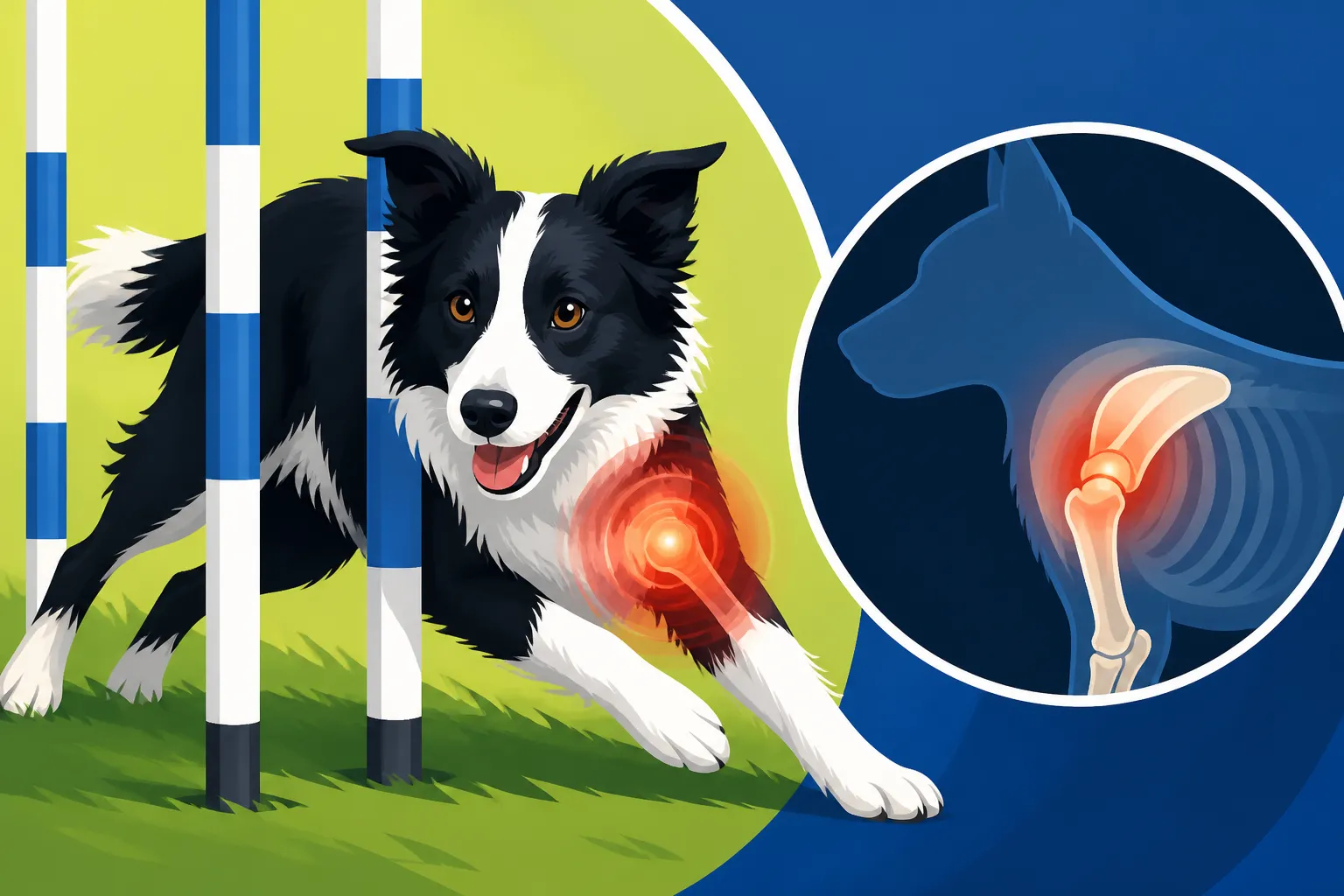
Shoulder Lameness in a Border Collie That Weaves
It’s heartbreaking to watch your super-charged Border Collie, the one who lives for the weave poles, suddenly hesitate, or worse, develop a subtle limp that just won’t shake. You know your dog's gait inside and out, and when something is off, it feels like a punch to the gut. This comprehensive guide is here to shed light on shoulder lameness in Border Collies, especially those dedicated agility dogs, helping you understand its causes, how it's diagnosed, and the best ways to get your canine athlete back to full stride.
The Unique Stress of Weaving on a Border Collie's Shoulders
Border Collies are born athletes, designed for explosive speed, tight turns, and incredible agility. But this very genetic predisposition, coupled with the intense demands of sports like agility, can put immense strain on their finely tuned bodies. Weaving, in particular, is a high-impact, repetitive motion that repeatedly challenges the front end, making shoulder lameness a common concern.
How Agility and Weaving Strain the Shoulder Joint
Imagine your Border Collie powering through a sequence of weave poles. It’s not just a straight run; it’s a constant series of quick lateral movements, braking, turning, and pushing off the ground, all while maintaining balance and speed. Each "entry" and "exit" from a weave pole requires rapid deceleration and acceleration, pivoting on the forelimbs. The shoulder joint, a complex structure of bones, muscles, tendons, and ligaments, bears the brunt of these forces. The sheer torque and repetitive twisting motion can lead to microscopic tears, inflammation, or even more significant injuries over time. It’s like a human sprinter repeatedly performing sharp, explosive pivots – eventually, something has to give if not properly conditioned and cared for.
Common Causes of Shoulder Lameness in Active Dogs
When your Border Collie starts showing signs of lameness in the shoulder, it’s usually due to one of several well-known culprits. These issues often stem from the wear and tear of an active life, but sometimes genetics can play a role too.
- Bicipital Tenosynovitis: This is a fancy way of saying inflammation of the biceps tendon and its surrounding sheath. The biceps tendon runs over the front of the shoulder joint, and its job is to flex the elbow and extend the shoulder. With the constant pushing and pulling involved in weaving and other agility movements, this tendon can become irritated and inflamed. Dogs with bicipital tenosynovitis often have a short, stiff gait and pain when the shoulder is extended or flexed. It’s a classic overuse injury that can really sideline an agility dog.
- Supraspinatus Tendinopathy: Similar to bicipital tenosynovitis, this involves inflammation or degeneration of the supraspinatus tendon, which helps to stabilize the shoulder and extend it forward. Again, the repetitive forward motion and impact from landing and turning can inflame this tendon. You might notice your dog "pointing" their front leg or taking shorter strides.
- Shoulder Osteochondrosis Dissecans (OCD): This is a developmental orthopedic disease where the cartilage in the shoulder joint doesn't form correctly. A flap of cartilage can detach, causing pain, inflammation, and lameness. While often diagnosed in younger, rapidly growing dogs, the symptoms can sometimes become more apparent or exacerbated by intense activity in a dog who has a predisposed weakness. If your young Border Collie is showing signs of lameness, especially after impact work before they turn two, this is something your vet will want to rule out.
- Soft Tissue Strains and Sprains: Just like us, dogs can pull muscles or sprain ligaments. A sudden misstep during a tight turn, an awkward landing, or even just cumulative microtrauma can lead to a strain of the muscles surrounding the shoulder blade (like the infraspinatus or subscapularis) or a sprain of the ligaments that stabilize the joint. These can be incredibly painful and often present as acute, sudden lameness. These types of injuries might be the first thing you suspect when you notice the limp that shows up after a Border Collie works.
The Subtle Signs You Might Miss
Border Collies are incredibly stoic. They're wired to work, and they'll often try to push through pain, especially if it means getting to do their favorite activity. This means you, their attentive owner, need to be a detective, looking for the quiet cues that something is amiss. A full-blown, obvious limp is often a sign that the problem has been brewing for a while.
Beyond a clear head bob or three-legged hop, pay attention to:
- Changes in Performance: Is your dog suddenly knocking weave poles they used to nail? Are their turns slower or wider? Do they hesitate at contacts or seem less enthusiastic about starting a run? This might not look like lameness, but it’s often a dog compensating for discomfort.
- Reluctance or Hesitation: Does your dog take a moment before jumping into the car or going up stairs? Do they seem less eager to play fetch or engage in their usual high-energy games? These small shifts can be significant.
- Favoring a Side or Shifting Weight: When standing, do they subtly shift their weight away from one front leg? Do they lie down differently, perhaps tucking a leg under them more often?
- Behavioral Changes: Pain can manifest as irritability, a desire for less interaction, or even growling when touched in certain areas. Conversely, some dogs might seek more comfort and attention.
- Muscle Atrophy: Over time, if a leg isn't being used properly, the muscles can start to waste away. Compare the muscle mass on both shoulders; any noticeable difference could indicate a long-standing issue.
- Changes in Coat or Licking: Sometimes, obsessive licking or chewing at a particular joint can indicate discomfort. Also, changes in coat quality (roughness, shedding) over an area of pain can sometimes be observed, though this is less common for subtle lameness.
By recognizing these subtle signs, you can often catch issues much earlier, leading to faster diagnosis and more effective treatment.
Diagnosing and Pinpointing the Problem
Once you suspect shoulder lameness, the next crucial step is getting a professional diagnosis. This isn't just about confirming a problem, but identifying its exact nature, which dictates the treatment plan. It’s a journey that often involves multiple steps, starting with your trusted veterinarian.
Initial Veterinary Examination and Lameness Workup
When you first bring your Border Collie to the vet for suspected shoulder lameness, expect a thorough physical examination. This is more than just a quick look; it's a detective mission.
Your vet will likely start by observing your dog's gait. They'll ask you to walk your dog in a straight line, perhaps trot them, and even turn them in circles. They're looking for subtle head bobs (where the head goes up when the painful leg hits the ground), asymmetry in limb movement, or any hesitation. This is a crucial part of the lameness workup to confirm where the pain is localized.
Next comes palpation – feeling the leg. Your vet will systematically palpate the shoulder muscles, tendons, and joint capsule, looking for swelling, heat, or pain response. They'll also perform range of motion exercises, flexing and extending the shoulder joint, and manipulating it in various ways to see if a specific movement elicits pain or if there's reduced flexibility. They might check other joints like the elbow or wrist to rule out referred pain or concurrent issues, especially since Hip and Elbow Scores in a Border Collie are important for overall orthopedic health. Your history of the lameness – when it started, what makes it worse, what activities your dog does – is vital here. Don't forget to mention that your dog "weaves" or engages in other high-impact activities.
Advanced Diagnostics: Getting a Clearer Picture
Sometimes, the initial physical exam points strongly to a shoulder issue but doesn't pinpoint the exact cause or severity. That's when your vet might recommend advanced imaging.
- X-rays (Radiographs): These are often the first step in advanced diagnostics. While they excel at showing bone abnormalities like fractures, arthritis, or changes associated with OCD, they're not great for soft tissues (muscles, tendons, ligaments). However, they can rule out many things and sometimes show secondary signs of soft tissue problems like calcification within a tendon.
- Ultrasound: This is a fantastic tool for soft tissue injuries. A diagnostic ultrasound can visualize tendons (like the biceps or supraspinatus), ligaments, and muscle fibers, revealing inflammation, tears, or thickening that wouldn't show up on an X-ray. It's often used to confirm bicipital tenosynovitis or supraspinatus tendinopathy.
- Magnetic Resonance Imaging (MRI) / Computed Tomography (CT) Scans: These are the gold standard for detailed imaging of both soft tissues and bone. An MRI provides incredibly detailed images of tendons, ligaments, cartilage, and bone marrow, making it excellent for diagnosing subtle tears, nerve impingement, or early stages of cartilage degeneration. CT scans provide superb bony detail. They are more expensive and often require sedation or general anesthesia, but for complex or persistent lameness, they offer an unparalleled view.
- Arthroscopy: This is a minimally invasive surgical procedure where a tiny camera is inserted into the joint. It allows the vet to directly visualize the inside of the shoulder joint, assess cartilage, tendons, and ligaments, and even perform minor repairs. It’s both a diagnostic and sometimes a therapeutic tool, offering definitive diagnosis for conditions like OCD or certain tendon tears.
Differentiating Shoulder Issues from Other Forelimb Lameness
It's easy to assume a limp in the front leg is always a shoulder problem, but the forelimb is a complex structure. Vets are skilled at trying to differentiate where the pain is originating. For instance, Elbow Dysplasia and the Border Collie Forelimb is another common cause of front leg lameness, especially in active dogs, and its symptoms can sometimes overlap with shoulder issues. Similarly, problems originating in the carpus (wrist) or even Toe and Pad Injuries on a Working Border Collie can present as general front leg discomfort.
A skilled veterinarian will meticulously examine the entire limb, isolating each joint and muscle group to pinpoint the source of pain. This comprehensive approach ensures that you're not treating the wrong problem, which is vital for your Border Collie's recovery and long-term soundness. Sometimes, they might even perform nerve blocks to temporarily numb specific areas, confirming the exact location of the pain before proceeding with more invasive diagnostics.
Treatment Options and Rehabilitation for Shoulder Injuries
Once your Border Collie has a clear diagnosis for their shoulder lameness, the focus shifts to treatment and a structured rehabilitation plan. The approach will depend heavily on the specific injury, its severity, and your dog's age and activity level. Remember, patience is a virtue, especially with these highly driven dogs.
Conservative Management Strategies
For many shoulder injuries, particularly strains, mild tendinopathies, or early-stage arthritis, conservative management is the first line of defense. The goal is to reduce pain and inflammation, allowing the tissues to heal, and then gradually restore function.
- Rest: This is often the hardest pill to swallow for a Border Collie owner. "Strict rest" doesn't mean just less agility; it means leash walks only, no running, jumping, or playing with other dogs. This allows the injured tissues to begin healing without being constantly re-aggravated. The duration of rest can vary from a few weeks to several months, depending on the injury.
- Anti-inflammatory Medications: Non-steroidal anti-inflammatory drugs (NSAIDs) like carprofen (Rimadyl), meloxicam (Metacam), or firocoxib (Previcox) are commonly prescribed to reduce pain and inflammation. Your vet will monitor your dog closely for any side effects. In some cases, steroids might be used for their powerful anti-inflammatory effects, often in short courses or as injections directly into the joint or tendon sheath (though this can carry risks).
- Cold/Heat Therapy: Applying cold packs (cryotherapy) to the shoulder immediately after activity or during acute inflammation can help reduce swelling and pain. Heat therapy (warm compresses) can be beneficial for chronic stiffness and to increase blood flow before physical therapy exercises.
- Physical Therapy/Rehabilitation: This is absolutely critical for a full recovery and preventing re-injury. A certified canine rehabilitation therapist will design a program tailored to your dog. This can include passive range of motion exercises (where the therapist moves the joint), therapeutic exercises to build strength and stability, balance exercises, and eventually, controlled activity. This is where Physiotherapy Costs for a Sport Border Collie really pay off, as expert guidance is invaluable.
- Laser Therapy (Photobiomodulation): Low-level laser therapy can help reduce pain and inflammation and stimulate cellular repair in damaged tissues. It's a non-invasive treatment that many vets and rehabilitation centers offer.
- Acupuncture: For some dogs, acupuncture can provide significant pain relief and support the healing process, especially when combined with other therapies.
Surgical Interventions When Necessary
While conservative management is often tried first, some shoulder conditions require surgical correction to achieve long-term soundness.
- Osteochondrosis Dissecans (OCD): If a cartilage flap is present and causing pain, surgery to remove the flap and clean up the joint surface is often recommended. This can be done arthroscopically, which is less invasive and allows for faster recovery.
- Chronic Bicipital Tenosynovitis: If conservative management fails to resolve the inflammation and pain, surgery may be considered. Techniques include tenodesis (cutting the tendon and reattaching it in a new location to reduce stress) or tenotomy (releasing the tendon).
- Severe Tendon/Ligament Tears: Complete ruptures or very significant tears of tendons or ligaments might require surgical repair to restore stability and function to the joint.
- Shoulder Arthrodesis: In rare, severe cases where the joint is completely unstable or irreversibly damaged by chronic arthritis and pain is unmanageable, shoulder fusion (arthrodesis) may be considered as a salvage procedure. This permanently stabilizes the joint but eliminates its range of motion.
For dogs with Sport Injuries a Border Collie Picks Up, surgery can often be the best route to get them back to their active lives, albeit after a significant recovery period.
The Road to Recovery: Rehabilitation and Conditioning
After any shoulder injury, whether managed conservatively or surgically, rehabilitation is the cornerstone of recovery. Without it, the risk of re-injury is high, and your Border Collie might never regain their full athleticism.
- Controlled Exercise Progression: This is a slow, methodical process. It starts with very short, controlled leash walks, gradually increasing duration and intensity. The rehab therapist will guide you on when to introduce inclines, declines, or uneven surfaces.
- Hydrotherapy: Underwater treadmill or swimming is fantastic for building muscle strength and endurance without putting impact stress on the healing joint. The buoyancy supports the dog, allowing them to move their limbs through a full range of motion.
- Strengthening Exercises: Specific exercises target the muscles around the shoulder, core, and hindquarters. This includes things like cavaletti poles, controlled sits-to-stands, weight shifts, and wobble board exercises. Building core strength and good rear-end awareness actually helps to take some of the load off the front end.
- Stretching and Massage: Gentle stretching helps maintain flexibility and prevent stiffness, while massage can improve circulation and reduce muscle soreness.
- Gradual Return to Activity: This is perhaps the most critical and challenging phase for a Border Collie. You cannot rush it. Your rehab therapist will help you create a plan for slowly reintroducing components of agility, like low jumps, then tunnels, then eventually weave poles, but with modifications. For example, starting with channel weaves or 2×2 weaves before moving to full 6-pole weaves. The goal is to build up strength and confidence without overdoing it.
- Long-Term Management: Even after recovery, many Border Collies benefit from a consistent maintenance program of conditioning exercises, regular vet check-ups (including their The Annual Exam a Border Collie Needs), and potentially joint supplements. Pet insurance plans like Healthy Paws can be incredibly helpful in covering the often substantial costs of diagnostics, surgery, and long-term rehabilitation, making these crucial treatments more accessible.
The entire process demands immense patience and commitment. It’s not just about fixing the physical injury but also rebuilding your dog’s confidence and ensuring their body is truly ready for the demands you'll place on it.
| Shoulder Condition | Primary Symptoms | Typical Diagnosis Methods | Common Treatment Approaches |
|---|---|---|---|
| Bicipital Tenosynovitis | Front leg lameness, pain on shoulder extension | Physical exam, ultrasound, MRI | Rest, NSAIDs, physical therapy, sometimes surgery |
| Supraspinatus Tendinopathy | Forelimb lameness, "pointing" affected leg | Physical exam, ultrasound, MRI | Rest, NSAIDs, physical therapy, cold therapy |
| Shoulder Osteochondrosis (OCD) | Lameness in young, growing dogs, joint pain, stiffness | X-rays, CT scan, MRI, arthroscopy | Rest (mild), surgery to remove cartilage flap (severe) |
| Soft Tissue Strain/Sprain | Acute lameness, swelling, pain on palpation | Physical exam, sometimes ultrasound, X-rays (to rule out fracture) | Rest, NSAIDs, cold/heat therapy, gradual return to activity |
| Arthritis (Chronic) | Stiffness, lameness, worse after rest/activity | X-rays, physical exam | NSAIDs, joint supplements, physical therapy, weight management |
Preventing Shoulder Strain and Supporting Your Agility Dog
Prevention is always better than cure, especially with highly driven dogs like Border Collies. While some injuries are unavoidable, there's a lot you can do to minimize the risk of shoulder lameness, particularly if your dog is an agility enthusiast who loves to weave. It's about building a robust, resilient athlete, not just a fast one.
Proper Warm-up and Cool-down Routines
Just like human athletes, Border Collies need proper preparation before intense activity and a gradual wind-down afterward. Skipping these crucial steps is a recipe for injury.
- Dynamic Warm-up (5-10 minutes): Before any training session or competition, engage in light, active movements to get blood flowing to the muscles and increase flexibility. This isn't just a leisurely walk. Think about:
- Loose leash walking: Start with a brisk walk for a few minutes.
- Gentle stretches: Active stretches like play bows, walking over low cavaletti poles, or figure-eights at a trot.
- Proprioceptive exercises: Walking on uneven surfaces or doing a few slow weaves (if already proficient) to activate core muscles and prepare the joints.
- Avoid static stretching (holding a stretch) before activity, as it can reduce muscle power.
- Cool-down (5-10 minutes): After intense work, it’s vital to bring your dog’s heart rate down and allow muscles to recover.
- Slow, relaxed leash walking: Gradually decrease the intensity of movement.
- Gentle massage: Focus on major muscle groups, especially the shoulders and back, to promote blood flow and reduce stiffness.
- Passive stretching: Gently stretching the limbs through their full range of motion can help maintain flexibility and prevent muscle shortening.
A consistent routine helps prepare the body for the demands ahead and aids in recovery, reducing the chance of those minor tweaks escalating into something more serious.
Conditioning and Cross-Training
A Border Collie that excels at weaving isn't just fast; they're strong and balanced. Focusing solely on agility skills without addressing overall fitness can create muscular imbalances and weaknesses that predispose them to injury.
- Building Core Strength: A strong core is the foundation of canine athleticism. Exercises like specific balance ball work, planks, and controlled sits-to-stands help strengthen the abdominal and back muscles, which support the spine and transfer power effectively, reducing strain on the limbs.
- Rear-End Awareness: Many agility dogs are very front-end dominant. Incorporating exercises that engage the hindquarters – walking over poles, backing up, or specific target work – helps balance muscle development and ensures the rear is contributing equally to power and propulsion.
- Diverse Physical Activity: Don't let agility be your dog's only form of exercise. Incorporate varied activities that work different muscle groups and movement patterns. Swimming, hiking on varied terrain (but be careful not to overdo Running a Young Border Collie on Concrete), and even canine parkour (climbing on safe, low obstacles) can build overall fitness and proprioception. Just be mindful of Impact Work Before a Border Collie Turns Two to protect growing joints.
Smart Training Practices for Weaving
While you want your Border Collie to master the weaves, how you train and practice them can significantly impact shoulder health.
- Focus on Technique Over Speed (Initially): Ensure your dog has solid, smooth weaving technique before pushing for speed. A dog crashing through the poles or making jerky movements is at higher risk for injury. Use channel weaves or 2×2 training methods to build muscle memory and fluidity.
- Limit Repetitions: Weaving is highly repetitive. Instead of endless repetitions in one session, do shorter sets with breaks, and vary your training. Mix in other obstacles or take breaks for mental games. Over-drilling can lead to overuse injuries.
- Vary Entry and Exit Points: Don't always train the same weave entry and exit. Change up the angles and approaches to work different muscle groups and prevent creating habits that could lead to unilateral stress.
- Listen to Your Dog: If your dog seems tired, sluggish, or less enthusiastic, end the session. Pushing a fatigued dog is a recipe for injury. Sometimes, they just need to Settling a Border Collie on a Mat and recharge.
The Role of Nutrition and Supplements
What goes into your Border Collie’s bowl also plays a significant role in their overall health and resilience.
- High-Quality Diet: A diet formulated for active dogs provides the necessary protein for muscle repair and maintenance, healthy fats for energy and joint lubrication, and essential vitamins and minerals. Think about Feeding a Border Collie on a Performance Diet if your dog is in full work.
- Joint Supplements: Many active Border Collies benefit from joint supplements containing ingredients like glucosamine, chondroitin, MSM, and omega-3 fatty acids. These can help support cartilage health, reduce inflammation, and improve joint fluid quality. While not a magic bullet, they can be a valuable part of a preventative strategy.
- Maintaining Healthy Weight: Keeping your Border Collie lean and fit reduces unnecessary stress on all their joints, including their shoulders. Even a few extra pounds can significantly increase the load. Regularly check their body condition; you should easily feel their ribs but not see them prominently.
The Importance of Regular Vet Checks
Don't wait for a limp to appear. Regular veterinary check-ups are essential for catching subtle issues early. Your vet can perform a comprehensive orthopedic examination, assess gait, and identify any early signs of stiffness or discomfort that you might miss. This proactive approach can lead to early intervention and prevent a minor issue from becoming a debilitating injury that could impact How Long a Border Collie Lives a full, active life. Be sure to ask your vet about the value of Yearly Bloodwork for a Border Collie to monitor overall health.
By integrating these preventative measures into your Border Collie’s routine, you’re not just training an agility champion; you’re building a strong, healthy companion ready for whatever challenges – or weave poles – come their way.
Disclaimer
This article is intended for informational purposes only and does not constitute professional veterinary advice. Always consult with a qualified veterinarian for any health concerns or before making any decisions related to your Border Collie's health or treatment plan.