The Border Collie Stare and Where It Comes From
You've probably felt it – that intense, unblinking gaze from your Border Collie, locking onto you, a toy, or even just a shadow on the wall. It can be unnerving, utterly captivating, or sometimes, downright puzzling, leaving you wondering if they're trying to read your mind or just preparing to launch into a full-speed chase. This guide is here to demystify "the stare," breaking down its deep-rooted origins and offering practical insights into what it truly means for your Border Collie and how you can work with this powerful trait in your everyday life.
Understanding the Border Collie Stare: More Than Just "Eye"
When we talk about the Border Collie stare, we're really diving into one of the most defining characteristics of the breed, often referred to by shepherds as "the eye." It's not just a casual glance; it's a deep, unwavering focus, almost as if your dog is trying to hypnotize its target. For many new Border Collie owners, this intense gaze can be a bit startling, especially if they’ve only ever had breeds with a more laid-back demeanor. But for those of us who live and work with these incredible dogs, we understand it’s the very essence of their working heritage.
The Instinctive Core: A Legacy of Herding
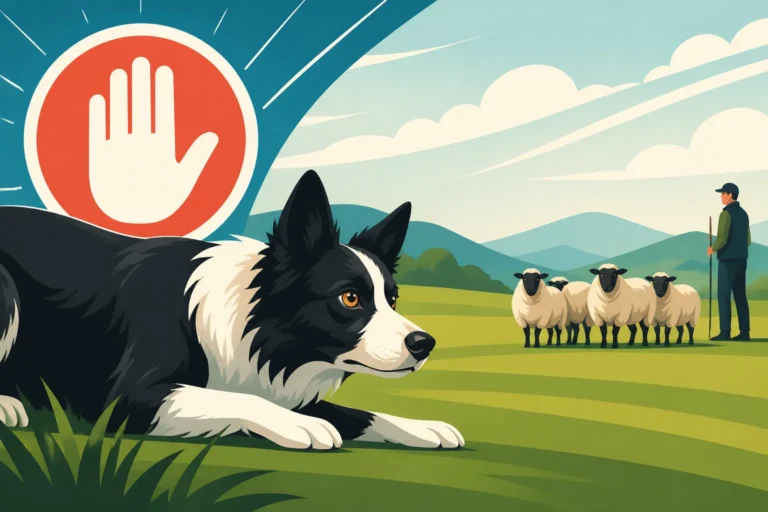
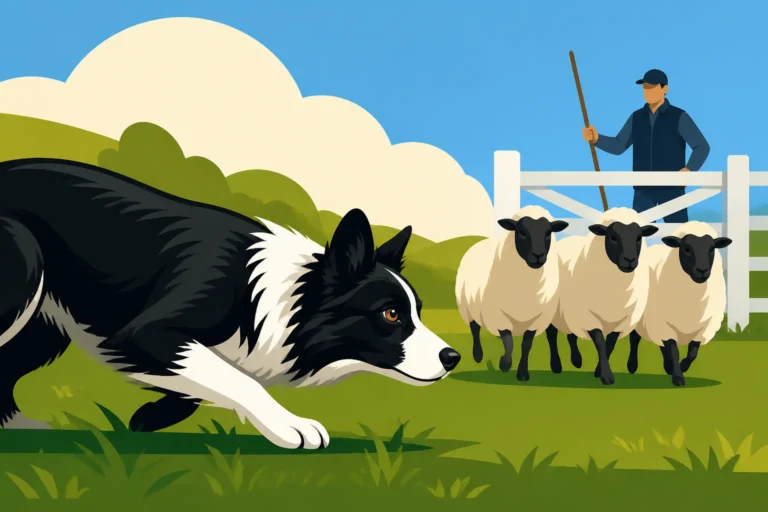
To truly grasp the Border Collie stare, you have to go back to its roots in the Anglo-Scottish Borderlands. These dogs were selectively bred for centuries to gather and control livestock, particularly sheep, in vast, open, often challenging terrain. Unlike some other herding breeds that use barking or nipping to move stock, the Border Collie's primary tool became its intense, silent stare. This "eye" allowed a single dog to command a flock, dictating movement with nothing more than its gaze, often with a low, predatory crouch that emphasized the focus without escalating to a full chase. It's a marvel of canine instinct and training, all rolled into one. If you want to dive deeper into the history, you might find Old Hemp and Every Border Collie Alive Today a fascinating read.
Imagine a shepherd out on a desolate hillside, needing to move a stubborn ewe away from the flock or guide them through a narrow gate. A loud bark might scatter them further, or an aggressive nip could injure them. The stare, however, is a psychological pressure, a silent communication that says, "I see you, and you will move." This genetic predisposition is so strong that even a Border Collie puppy, never having seen a sheep in its life, might instinctively drop into a crouch and fixate on a rolling ball or a fluttering leaf. It’s part of their innate programming, a survival mechanism honed over generations to make them supremely effective working partners.
The Purposeful Gaze: Control and Manipulation
At its core, the stare is a tool of control and manipulation. For a working Border Collie, it’s about positioning sheep, influencing their direction, and keeping them together. It allows the dog to gauge the sheep’s intent, anticipate their movements, and exert a psychological dominance that keeps the flock moving where the shepherd directs. This isn't about aggression; it's about subtle power and immense concentration.
Think about it from the sheep's perspective. A dog with "eye" isn't rushing in wildly; it's holding itself, coiling its energy, and applying mental pressure. The sheep feel this pressure and respond by moving away from the gaze. It's an incredibly efficient and calm way to manage stock, minimizing stress on the animals and maximizing the dog's effectiveness. This ability to control with a look is precisely what made the Border Collie the premier sheepdog, a reputation it still holds today.
The Anatomy of "Eye": What It Looks Like
The Border Collie stare isn't just one thing; it manifests in various ways, each signaling a slightly different intensity or intention. Understanding these nuances can help you better read your dog and respond appropriately. It's not always an aggressive look, nor is it always purely playful. Sometimes it's deep thought, other times pure focus, and occasionally, it signals something more concerning.
The Classic Working Stare: Low and Intent
The most iconic manifestation of "the eye" is the classic working stare. This is often accompanied by a low, almost snake-like crouch, with the head lowered, ears pricked forward or slightly flattened, and the tail usually tucked low or held perfectly still. The dog's body language is entirely geared towards minimal movement, conserving energy while maximizing its visual impact. The eyes themselves are usually wide, fixed, and unblinking, tracking every minute movement of the target.
You'll see this most clearly if your Border Collie has access to stock or participates in herding trials. The dog will approach the sheep, drop into this low crouch, and then use its eyes to influence the flock's movement. It's a beautiful dance of instinct and control. Even if your dog has never seen sheep, you might observe a similar posture when they're utterly engrossed in watching a squirrel, a ball, or even a leaf skittering across the yard. This deep immersion in the moment is a hallmark of the breed’s intensity, and it’s a direct link to their ancestors who worked the hillsides with the shepherds. If you're curious about their initial reactions to sheep, The First Time a Border Collie Meets Sheep might be worth exploring.
Variations in Intensity: From Soft to Hard Eye
While the classic working stare is usually intense, there are variations in what handlers call "soft eye" and "hard eye." A dog with "soft eye" might still be focused, but their body language appears more relaxed. Their gaze might be intense, but their overall posture isn't quite as rigid or predatory. This can be desirable in a working dog, as it allows for more subtle communication and less intimidation, fostering trust with the stock.
"Hard eye," on the other hand, is the full-on, unyielding stare, often accompanied by a very low, stiff crouch, sometimes even a slight trembling with suppressed excitement. This level of intensity can be very effective in moving stubborn stock, but it can also be intimidating. In a pet setting, too much "hard eye" can sometimes lead to obsessive behaviors or even conflict if directed inappropriately at people or other animals. Recognizing the difference is crucial. A Border Collie with too much hard eye might struggle to "turn off" its herding instinct, making it harder to live with in a non-working environment.
The Stare That Isn't Herding: Focus or Concern?
Not every stare from your Border Collie is rooted in herding. Sometimes, their intense gaze is simply a sign of deep concentration on a task, like figuring out a puzzle toy or anticipating your next command during training. It can also be a sign of genuine concern, such as when they are trying to understand your mood or when they notice something amiss in their environment.
For example, if you're upset, your Border Collie might stare at you with an almost empathetic look, trying to gauge your emotions and figure out how to respond. This is where their intelligence and sensitivity shine through. Or, if there's a strange noise outside, they might fixate on the window, gathering information before reacting. These stares are less about control and more about processing information and connection. They are trying to communicate or understand, rather than actively herd. Understanding the context is key to deciphering the meaning of the stare.
Why They Stare: The Instinctive Drive
The core reason Border Collies stare is deeply embedded in their genetic makeup. It's not just a cute quirk; it's a fundamental part of who they are and how they interact with the world. This instinctive drive, honed over centuries, dictates much of their behavior and makes them such exceptional working dogs.
The Herding Sequence: Eye, Stalk, Chase, Grip
The Border Collie stare is the opening act of what's known as the herding sequence, an abbreviated version of a predator-prey interaction. In the wild, a predator would spot prey, then "eye" it intensely, followed by a low "stalk" to get closer, a "chase" to bring it down, and finally, a "grip" or kill bite. Border Collies, through selective breeding, have had the latter parts of this sequence largely suppressed or redirected.
What remains strongly intact are the "eye" and "stalk." The stare allows them to engage the prey drive without actually harming the stock. It's a powerful tool that enables them to control movement without resorting to physical force. This inherent sequence explains why they can be so intense; for them, it's a profound instinctual expression. This focus makes them incredible athletes, but it also means they need appropriate outlets for this drive. Why a Border Collie Cannot Stop on Its Own delves into this need for an "off-switch."
Prey Drive and Its Manifestations
While directly linked to herding, the underlying engine of the stare is a strong prey drive. Border Collies possess an incredibly keen awareness of movement and a powerful desire to control it. Anything that moves — a ball, a remote-control car, a child, even a dust bunny rolling across the floor — can trigger this instinct. The stare is their initial response, their way of fixing on the object before deciding their next move.
This intense prey drive is what makes them so good at dog sports like agility, flyball, and disc dog. Their ability to lock onto a thrown object and explode into action is unparalleled. However, it’s also what can make them challenging pets if this drive isn't managed or redirected appropriately. A Border Collie staring intently at your cat, or at a child running across the park, isn't necessarily being aggressive, but it is engaging its herding/prey instinct, and without proper training, this can escalate into undesirable behaviors like nipping or chasing.
Heightened Focus and Concentration
Beyond prey drive, the stare is also a testament to the Border Collie's exceptional capacity for focus and concentration. They are problem-solvers, deeply engaged with their environment and the tasks presented to them. When they stare, they are often processing information, planning their next move, or trying to understand what you want from them.
This mental intensity is a double-edged sword. On one hand, it makes them incredibly trainable and eager to learn, capable of mastering complex commands and problem-solving tasks. On the other, it means they can become fixated on things, sometimes to an unhealthy degree. This is why mental stimulation is just as crucial as physical exercise for a Border Collie. A dog that is constantly staring at shadows or reflections, for example, is a dog whose intense focus has been misdirected and is likely becoming compulsive, which we'll discuss more later. Why a Border Collie Is Really the Smartest Breed explores their intelligence in more detail.
Beyond the Sheep: The Stare in a Pet Home
It's one thing for a Border Collie to stare down a flock of sheep in a field, but what happens when that powerful instinct is brought into a suburban home or an apartment? The stare doesn't disappear; it simply finds new targets. Understanding how this manifests in a pet environment is key to managing your Border Collie's behavior and ensuring a harmonious household.
Redirected Stare: Objects, Shadows, and Lights
In a home without sheep, the Border Collie's natural herding instinct often redirects itself onto anything that moves or creates patterns. This is where you see dogs staring intensely at reflections, shadows dancing on walls, the glint of sunlight off a watch, or even the beam of a laser pointer. What starts as an innocent game can quickly spiral into a compulsive obsession, consuming the dog's focus and causing significant anxiety.
I've seen so many owners inadvertently reinforce this by playing with laser pointers, thinking it's a harmless way to exercise their dog indoors. While a quick burst might be okay occasionally, prolonged laser play can be detrimental. The dog gets to "chase" but never "catches," leaving the herding sequence incomplete and building immense frustration. This can lead to shadow-chasing, snapping at air, or becoming hyper-vigilant to any light or movement. If your dog is showing signs of this, it's vital to break the cycle and redirect their focus to tangible toys they can catch and "kill" (chew). You might find The Border Collie That Chases the Sun Off Walls a useful read.
Staring at People and Other Animals
Perhaps the most common and often misunderstood manifestation of the stare in a pet home is when a Border Collie fixates on people, especially children, or other animals. To the dog, a running child or a darting cat can look just like a sheep trying to break from the flock. The stare is their initial attempt to "gather" or "control" this moving target.
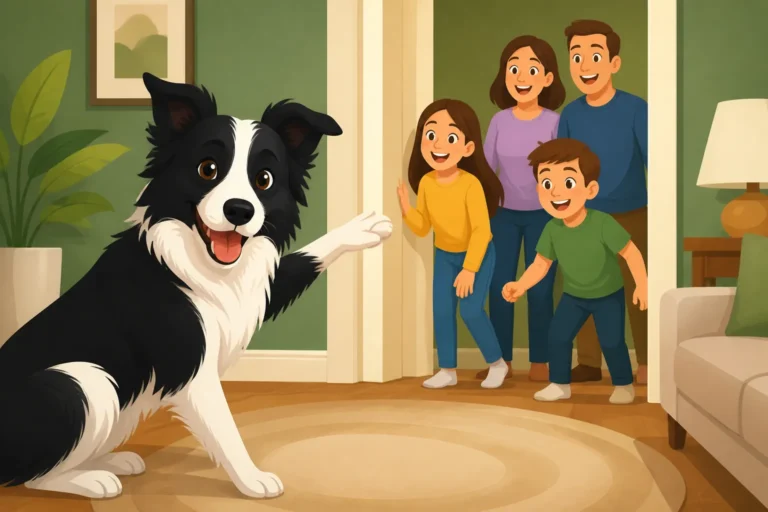
This can be incredibly intimidating for children, who might interpret the intense gaze and low crouch as aggression. While it's usually not malicious, it can lead to nipping at heels or trying to physically block movement, which is obviously unacceptable and potentially dangerous. The same goes for other pets; a Border Collie might stare down and "herd" a resident cat, or even another dog. It’s crucial for owners to teach their Border Collie that people and pets are not stock to be herded. This requires consistent training, management, and clear boundaries from day one. A Border Collie Circling Children in the Yard offers more insights on this.
The Stare as a Communication Tool
Sometimes, the stare isn't about herding at all, but rather a profound form of communication. Border Collies are incredibly sensitive and intelligent, often trying to anticipate your needs or desires. They might stare at you when they want something – a walk, food, a game of fetch – or when they're trying to figure out what you're asking of them. This is often accompanied by a slightly softer eye, perhaps a head tilt, as they process information.
They might also use the stare to try and influence you. Many Border Collies have trained their owners quite effectively to throw the ball "just one more time" with an unwavering gaze. It's important to differentiate between this communicative stare and a truly obsessive or predatory stare. The communicative stare usually breaks when you engage them directly, whereas the obsessive stare is harder to interrupt and can seem almost trance-like. Learning to read these subtle differences is a huge part of living successfully with a Border Collie.
Managing the Stare: When It Becomes a Problem
While the Border Collie stare is a natural and impressive trait, there are times when it can become problematic. When the intensity crosses over into obsession, anxiety, or inappropriate behavior, it's crucial for owners to step in and manage it effectively. Ignoring these signs can lead to more serious behavioral issues down the line.
Compulsive Staring and Fixation
The biggest concern with the Border Collie stare in a pet environment is when it evolves into compulsive staring and fixation. This happens when the dog becomes overly focused on non-herding targets, often to the exclusion of everything else. It can manifest as:
- Shadow and Light Chasing: As mentioned, this can become a serious problem where the dog spends hours fixated on light reflections, shadows, or even just patches of sun on the floor. This behavior is often self-reinforcing and extremely difficult to break once established. It can lead to anxiety, pacing, and an inability to settle.
- Object Fixation: Some Border Collies become obsessed with a particular toy, like a ball, staring at it for hours, refusing to eat or relax until it's thrown. This isn't healthy play; it's an unhealthy fixation that prevents the dog from engaging in other activities or resting properly.
- Environmental Hyper-vigilance: An anxious Border Collie might stare intently at perceived threats or triggers in its environment – the window, the door, a specific sound. This hyper-vigilance is a sign of underlying stress and can make the dog constantly on edge, unable to relax.
If you notice your Border Collie exhibiting these kinds of compulsive behaviors, it's a strong indicator that their mental and physical needs aren't being met in a balanced way, or that their innate drives are running unchecked. This is where professional guidance can be invaluable.
Predatory Stare and Inappropriate Herding
While most Border Collies are bred to suppress the final stages of the predatory sequence, the intense stare can still be perceived as threatening by other animals or people, particularly if accompanied by a low, stiff body. If a Border Collie directs this predatory-like stare at another dog, a child, or a small pet, it can escalate into inappropriate herding, chasing, or even nipping.
It’s vital to distinguish between a dog playing a game of chase with an appropriate playmate and a dog trying to "control" another individual with its gaze. If your Border Collie consistently stares down and attempts to herd children, guests, or other animals, immediate intervention is necessary. This isn't just an annoyance; it can be dangerous. Teaching strong impulse control and a reliable "leave it" or "that'll do" command is paramount in these situations. Whether a Border Collie Nips Ankles discusses some of these behaviors.
The Stare Born of Anxiety or Boredom
Sometimes the intense stare isn't about herding or predatory instinct at all, but a symptom of underlying anxiety or profound boredom. A Border Collie that isn't receiving enough mental stimulation or appropriate physical exercise can become frustrated and channel that energy into obsessive behaviors, including staring. This is often seen in dogs left alone for long periods in a quiet environment with little to do.
An anxious dog might use the stare as a coping mechanism, fixating on a perceived trigger or even just on empty space as a way to self-soothe or process overwhelming stimuli. This often looks like a very "empty" stare, where the dog appears disengaged from reality. If you suspect anxiety is behind your dog's staring, consult with a veterinarian or a certified professional dog trainer. Addressing the root cause of the anxiety is far more effective than just trying to stop the staring behavior itself.
Teaching the "Off Switch": Controlling the Intensity
Living with a Border Collie means accepting and appreciating their intense focus, but it also means teaching them an "off switch." They are naturally driven dogs, and without guidance, their instincts can lead to overwhelm or inappropriate behaviors. Providing them with the tools to disengage and relax is one of the most important lessons you can teach your Border Collie.
Breaking Focus with "That'll Do"
For working Border Collies, "That'll Do" is a crucial command, signaling the end of a herding session and the immediate disengagement from the stock. This command tells the dog to break its focus, stand down, and return to the handler. In a pet home, this command is equally valuable, helping your Border Collie learn to release its intense focus on a toy, a person, or an environmental trigger. You might find That'll Do and Ending a Border Collie's Work helpful for more detail.
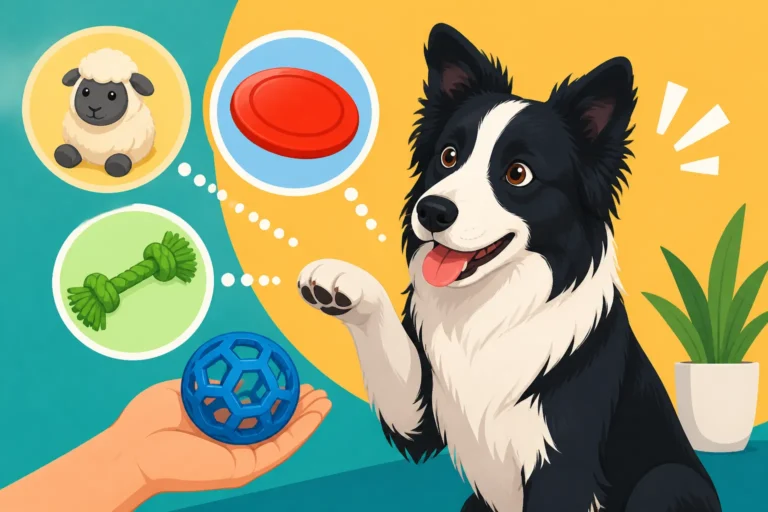
Start practicing "That'll Do" in low-distraction environments. Engage your dog with a toy they love, letting them get a good stare and a few enthusiastic retrieves. Then, calmly say "That'll Do," present a high-value treat near their nose (to break the visual focus on the toy), and walk away with the toy. The key is to make disengaging more rewarding than continuing the stare. With consistent practice, your Border Collie will learn that "That'll Do" means it's time to relax and that good things happen when they break their focus. This is a foundational skill for managing their intensity.
Redirection and Mental Engagement
Instead of letting your Border Collie fixate on shadows or passing cars, redirect their energy into productive mental engagement. Puzzle feeders are fantastic for this, making them think and problem-solve to get their food. Brands like Amazon offer a wide array of interactive puzzle toys that can keep a Border Collie mentally engaged for a good amount of time, preventing boredom from morphing into obsessive staring.
Scent work is another incredibly powerful tool for redirection. Teaching your Border Collie to use its nose to find hidden treats or specific scents burns mental energy in a way that plain fetch simply cannot. It requires deep concentration, but in a calm, focused manner, rather than the high-arousal stare of herding. Regular training sessions, even short ones, that involve learning new tricks or practicing obedience commands in novel environments also help satisfy their need for mental stimulation and give their brain productive outlets for their intense focus. Scentwork for a Border Collie Between Trial Seasons is a great resource here.
Structured Play and Clear Boundaries
For Border Collies, play needs structure. Endless games of fetch without an "off switch" can inadvertently reinforce the compulsive staring behavior. Instead, introduce clear rules for play:
- Start and Stop Cues: Always use a specific cue to start playtime (e.g., "Ready?") and a clear "all done" or "that'll do" to end it.
- Trade-offs: Teach your dog to "drop" or "give" a toy willingly in exchange for another toy or a treat. This teaches them that letting go of the object leads to good things, preventing possessive staring.
- Varied Activities: Don't just play fetch. Incorporate hide-and-seek, tug (with rules), or flirt pole games that mimic predatory chase but still have a clear end.
- Time Limits: Keep play sessions short and sweet, ending before your dog becomes over-aroused and fixated.
It’s also crucial to set clear boundaries around people and other pets. If your Border Collie starts to stare down a child, immediately interrupt and redirect with a calm voice and a toy they are allowed to herd. Never allow them to practice herding behaviors on humans or other household animals. Consistent application of these rules will teach your Border Collie what is appropriate and what is not.
Living with the Stare: Appreciation and Boundaries
Living with a Border Collie means embracing their unique traits, and the stare is certainly one of them. While it requires careful management, it's also a source of their incredible intelligence, focus, and connection. With understanding and appropriate training, you can turn this powerful instinct into a positive aspect of your relationship.
Appreciating the Breed's Heritage
Instead of viewing the stare as a problem, try to appreciate it as a window into your Border Collie's incredible heritage. When you see that intense gaze, remember the generations of dogs that used this precise skill to assist shepherds and make a living. It’s a testament to their intelligence, their drive, and their unparalleled ability to work in partnership with humans. This perspective can help you approach training with more patience and empathy.
Understanding The Border Country That Produced the Border Collie and its demands on these dogs can foster a deeper appreciation. It reminds us that these aren't just pets; they are highly specialized working animals whose instincts run deep. This understanding is the first step toward building a fulfilling relationship with a Border Collie, recognizing that their needs are different from many other breeds.
Embracing Their Focus in Training
The Border Collie's stare, when properly channeled, is an asset in training. Their ability to focus intensely on a task makes them quick learners and eager participants in almost any activity you choose to teach them. Whether it's obedience, agility, trick training, or even advanced scent detection, that laser-like focus helps them absorb information and perform with precision.
Utilize their intense "eye" during training by ensuring you have their full attention before giving commands. Their ability to lock onto you means they’ll be processing every subtle cue. This is where their intelligence truly shines. Online puppy training programs, like those offered by BAXTER & Bella, often emphasize engagement and focus, which are perfect for a young Border Collie learning to channel its innate drive productively. They provide structured lessons that can help you harness that powerful focus for good, creating a highly responsive and well-mannered companion.
Setting Expectations and Providing Outlets
The most crucial aspect of living with a Border Collie stare is to set realistic expectations and provide appropriate outlets for their energy and instincts. They need a "job," whether that's herding, dog sports, advanced obedience, or even just complex daily training games. A bored Border Collie, especially one whose intense stare isn't channeled, is a recipe for behavioral issues.
Consider the following for healthy management:
| Stare Type | Characteristics | Appropriate Management | Potential Issues (if unmanaged) |
|---|---|---|---|
| Working/Herding Eye | Low crouch, unblinking gaze, body still, focused on movement | Herding lessons, dog sports (agility, disc, flyball), strong "That'll Do" cue | Inappropriate herding of people/pets, compulsive chasing |
| Communicative Eye | Softer gaze, head tilt, usually breaks contact easily | Respond to needs, acknowledge, engage in conversation/training | Can become demanding, "training" the owner |
| Obsessive/Compulsive | Hyper-focused on reflections/shadows, frantic, hard to break | Interrupt, redirect to tangible toy, increase mental stimulation, avoid laser pointers | Anxiety, neurosis, self-mutilation (rare) |
| Anxious Eye | Wide, sometimes darting eyes, body tense, scanning environment | Identify triggers, create safe space, desensitization/counter-conditioning, professional help | Fear aggression, stress-related illness |
The right outlet can make all the difference. For some, it's Working an Epileptic Border Collie on Stock, for others, it's becoming a champion agility dog. Without a purpose for that intense gaze and mental energy, it will find its own, often in ways that are destructive or frustrating for the owner. A tired Border Collie, both physically and mentally, is a happy Border Collie, and one whose stare is less likely to cause problems. They thrive on engagement, and that intense focus is an invitation to work with them, not against them.
Disclaimer
This article is for general informational purposes only and does not constitute professional advice. Laws, prices and regulations vary by location and change over time. Consult a qualified professional for guidance on your specific situation.