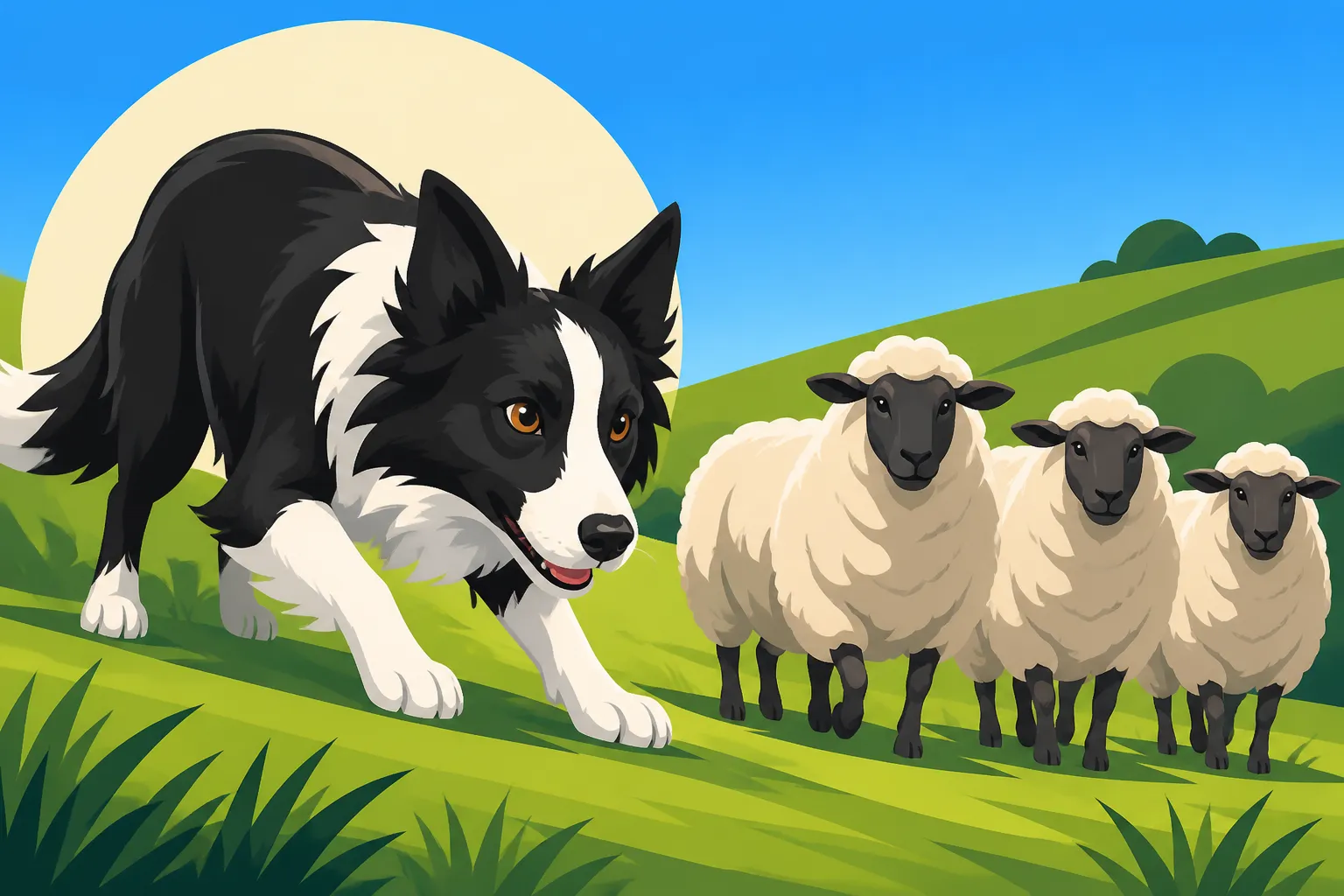
Giving a Border Collie Something to Gather
One of the biggest challenges for Border Collie owners, especially those without livestock, is understanding and channeling that incredibly powerful, innate drive to gather. It’s not just about running; it’s a deep-seated desire to collect and control, and if left undirected, it can lead to frustrated dogs herding everything from toddlers to vacuum cleaners, or even shadows. This guide is here to help you tap into that instinct constructively, giving your intelligent companion a fulfilling outlet that benefits everyone in the household.
Understanding the Border Collie's Gathering Instinct
You know that intense look, the low crouch, the purposeful movement? That’s not just your Border Collie being focused; that's generations of selective breeding for a very specific job: gathering sheep. This instinct is what makes them such unparalleled working partners, but it's also the source of much confusion and misdirected energy in a pet home.
The Deep Roots of the Herding Drive
The Border Collie's very essence is intertwined with its history as a sheepdog in the Anglo-Scottish borders. Their ancestors were bred specifically to gather and move livestock, a task requiring incredible intelligence, agility, and a profound understanding of their handler's commands. Dogs like Old Hemp and Every Border Collie Alive Today cemented the traits we see today: the "eye," the crouch, the ability to control a flock with presence rather than force. When you see your Border Collie staring intently at a squirrel, or gently nudging a stray sock into a pile, you're witnessing this ancient instinct at play. It's not a choice for them; it's a fundamental part of who they are, woven into their genetic code. This drive manifests as a deep need for purpose and a desire to bring things together, to organize, to control movement.
In a modern home, without a flock of sheep, this instinct doesn't just disappear. Instead, it looks for alternative outlets. Your Border Collie might try to "herd" your children when they run, circling them and nipping at heels, or they might become obsessed with the movements of cars or bicycles outside the window. They're not being naughty; they're simply trying to do the job they were born to do, in the only way they know how. Understanding this fundamental truth is the first step toward building a harmonious relationship and providing appropriate outlets for their talents.
Why They Need to Gather Something
Imagine being programmed to do a job you are exceptionally good at, but then never being allowed to perform it. That's often the reality for Border Collies living in homes without a specific "job." When this powerful gathering instinct isn't fulfilled, it doesn't just lead to boredom; it leads to deep-seated frustration and can manifest in a range of undesirable behaviors. We often see dogs who become anxious, destructive, or develop compulsive habits like spinning or shadow chasing. These aren't signs of a "bad" dog, but rather a dog whose profound needs aren't being met.
The need to gather provides mental stimulation, physical exercise, and a sense of purpose. It allows them to engage their minds in problem-solving and strategic movement, which is just as tiring, if not more so, than a long walk. Without a constructive outlet, a Border Collie might create their own "work," which can include nipping at ankles, incessant barking at perceived "strays" (like neighborhood cats), or intensely fixating on lights and reflections, behaviors that are often misunderstood as mere naughtiness. By consciously giving them appropriate things to gather, we redirect this potent energy into positive, rewarding activities, fostering a happier, more balanced dog and a more peaceful home. It's about recognizing their inherent talents and giving them a stage, rather than trying to suppress what makes them unique.
Safe and Satisfying Ways to Channel the Gathering Drive
The good news is you don't need a flock of sheep or acres of land to satisfy your Border Collie's gathering instinct. There are plenty of creative, safe, and incredibly fun ways to channel this energy right in your backyard or even indoors. The key is to provide a structured activity that mimics the mental and physical demands of herding.
Introduction to Object Herding (Big Balls)
One of the most effective and widely enjoyed ways to let a Border Collie fulfill its gathering drive is through object herding, specifically with large, sturdy balls. These aren't your typical tennis balls; we're talking about robust herding balls, often made of thick plastic, or even large fitness balls designed for human exercise. The size and weight of these balls mean the dog has to push and maneuver them, replicating the control and strategic thinking involved in moving livestock, rather than just fetching and retrieving.
The benefits are huge: it's incredibly safe, as the dog isn't making direct contact with anything living, and it provides immense mental and physical stimulation. Your dog learns to control an object, to push it in a particular direction, and to respond to your cues to keep it moving or bring it to a specific spot. When choosing a ball, look for something durable and appropriately sized for your dog – it should be large enough that they can't pick it up in their mouth, forcing them to use their nose and body to push it. You can find excellent options on Amazon, often listed as "herding balls" or "horse balls," and they come in various sizes and materials. Starting with a slightly softer, larger fitness ball can be good for beginners before moving to harder, more durable plastic ones. Remember, it's about the movement and control of the object, not just retrieving. These Big-Ball Herding Games for a Border Collie are a fantastic way to engage their natural talents.
Teaching Basic Commands for Object Gathering
Once you have your big ball, it's time to introduce some structure. You don't just throw the ball out and hope for the best; you teach your Border Collie to "herd" it. Start simple, in a confined area, even a large room or a fenced yard. Introduce the ball and let your dog investigate it. When they nose it, push it, or show interest, praise them enthusiastically. The goal here isn't speed, but controlled movement.
You can begin by teaching basic directional commands, just like a sheepdog trial handler would use. "Come bye" (go clockwise around the sheep/object) and "Away to me" (go counter-clockwise) are excellent starting points. Gently guide your dog, perhaps with a long line, to move the ball in these directions. Reward heavily for even small successes. Use your body language and consistent vocal cues. Over time, your dog will learn to associate these commands with moving the ball. Another crucial command is "Lie down" or "Stop," taught at a distance. This teaches your dog to halt the action and look to you for direction, a fundamental aspect of working stock. These exercises build on their natural herding language and provide incredible mental satisfaction, far beyond what simple fetch could ever offer. Consistency and patience are key, making each session short, positive, and fun.
Organizing a "Flock" of Toys
Beyond a single large ball, you can extend the gathering concept to a "flock" of toys. This is particularly engaging because it adds a layer of complexity and mimicry to real-life herding, where a dog needs to manage multiple individual animals. Start by gathering a collection of soft, durable toys – think plush animals, soft rubber toys, or even crumpled towels. Designate a "pen" or "holding area" for these toys, such as a laundry basket, a dog bed, or a specific corner of a room.
The goal is to teach your Border Collie to gather these scattered toys and bring them into the designated area. Start with just one or two toys, encouraging your dog to push or carry them towards the "pen." You can use commands like "gather," "bring it," or "put away." As they get the hang of it, gradually increase the number of toys and scatter them further apart. This activity requires significant problem-solving and strategic thinking. Your dog has to decide which toy to go for first, how to maneuver it, and how to keep the "flock" together. It's a fantastic mental workout that engages their innate desire to organize and control, leaving them mentally tired and content. This focused activity can also help redirect behaviors like A Border Collie Gathering the Family Into One Room by giving them a proper outlet.
Beyond Objects: Advanced Gathering and Mental Engagement
While object herding with balls and toys is a brilliant start, the Border Collie's intelligence means they crave varied and complex challenges. Their minds are constantly seeking patterns, puzzles, and purpose. Expanding your gathering games to include scent work, advanced directional tasks, and reinforcing an "off-switch" will create an even more well-rounded and satisfied companion.
Learning "Find It" and Scent Games
The Border Collie's incredible nose and problem-solving abilities are a huge asset, and scent work offers a fantastic way to engage their minds in a "gathering" context that doesn't involve moving objects. Instead of gathering a visible flock, they're gathering invisible scent information to locate a target. This taps into the predatory sequence (search, stalk, chase, grab, bite – minus the last two, thankfully!) in a safe and controlled manner.
Start with simple "find it" games: hide a high-value treat or a favorite toy in plain sight and encourage your dog to "find it." Praise and reward heavily when they do. Gradually increase the difficulty by hiding the item in more challenging spots – under a cushion, behind a door, or buried shallowly in a designated sandpit in the yard. As your dog becomes more proficient, you can introduce specific scents, teaching them to locate a particular herb or essential oil. This kind of work is incredibly mentally tiring and fulfilling for a Border Collie. Many online resources and training programs, like those offered by BAXTER & Bella, provide structured guidance for teaching scent work, offering a valuable resource for owners looking to deepen their dog's engagement. Remember, a mentally stimulated Border Collie is a happy Border Collie, and this kind of work truly engages Whether a Border Collie Is Really the Smartest Breed.
Advanced Directional Games and Puzzles
Once your Border Collie has mastered basic object herding, it's time to level up with advanced directional games. This is where you really challenge their strategic thinking and their ability to follow complex instructions. Imagine setting up a mini-obstacle course in your yard or even across several rooms in your house. Instead of just gathering toys into one basket, you might ask them to gather specific toys into different baskets, or to move a ball around cones before bringing it to you.
You can introduce multiple objects and assign them names, then ask your dog to gather "the red ball" and bring it to "the blue basket." This requires not just physical execution but memory and discernment. Incorporate puzzle feeders and interactive toys that require manipulation to release treats – these aren't traditional "gathering," but they fulfill the same cognitive needs by asking the dog to "work" for a reward, much like a herding dog works for the satisfaction of a job well done. You can use Puzzle Feeders That Hold a Border Collie to make mealtime a brain game, demanding focus and problem-solving skills. These activities are excellent for working off excess mental energy and reinforcing your bond through teamwork.
The Importance of a Structured "Off-Switch"
For all the talk about channeling their drive, it's equally, if not more, important to teach a Border Collie an "off-switch." These dogs are so driven and intense that they can easily become overstimulated or obsessive if not taught how to calm down and relax. After an intense gathering session, whether it's object herding or scent work, it's crucial to transition your dog into a state of relaxation.
Teach a solid "place" or "mat" command, where your dog learns to go to a designated spot and settle quietly. This isn't a punishment; it's a learned behavior that helps them regulate their arousal levels. Practice this consistently, rewarding calm behavior with gentle praise or a long-lasting chew. Many trainers also recommend teaching a structured "down-stay" for extended periods. This teaches impulse control and reinforces the idea that work has a beginning and an end. Without a proper off-switch, your Border Collie might struggle with settling in the house, constantly seeking the next "job," or developing obsessive behaviors. Cultivating this ability to relax is vital for their overall well-being and for peaceful coexistence in a home, ensuring they are truly balanced, not just tired. This skill starts young, and it's something to reinforce from puppyhood, as discussed in Getting a Border Collie Puppy to Rest on Cue.
Disclaimer
This article is for general informational purposes only and does not constitute professional advice. Laws, prices and regulations vary by location and change over time. Consult a qualified professional for guidance on your specific situation.