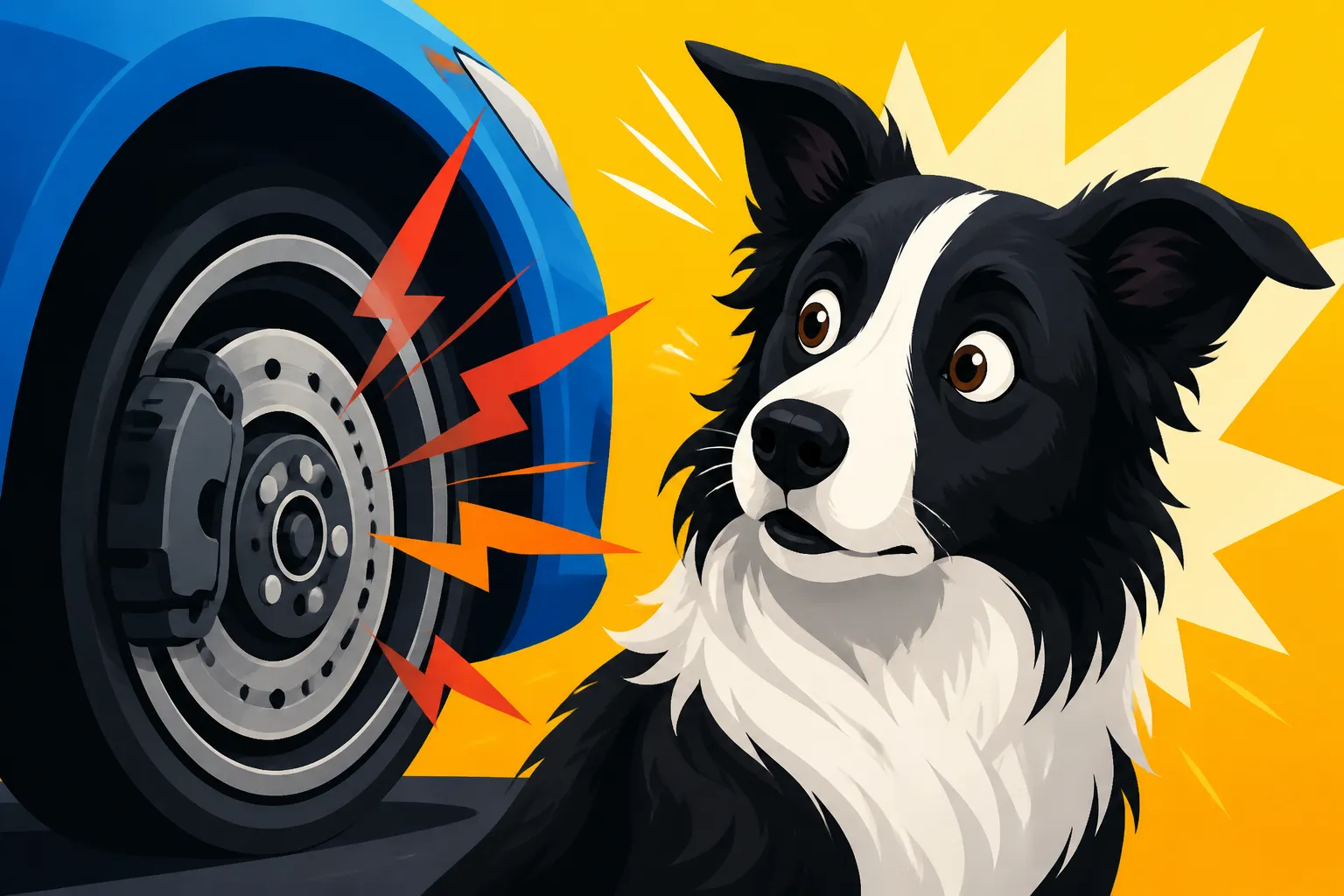
A Border Collie That Reacts to Squeaky Brakes
It's incredibly frustrating when your otherwise brilliant Border Collie suddenly lunges, barks, or otherwise reacts intensely to something as common as squeaky brakes. You're just trying to enjoy a peaceful walk or a quiet moment, and then squeeeeeeeek! Your dog transforms into a frantic ball of energy, pulling against the leash, barking, or even spinning in circles. It's not just annoying; it can be embarrassing, physically demanding, and even dangerous if they pull you into traffic or cause a disturbance. This guide will delve into why your Border Collie might be reacting this way and offer practical, empathetic strategies to help manage and ultimately reduce these intense responses, bringing a bit more calm back into your daily life.
Understanding the Root Cause of Your Border Collie's Brake Reaction
To truly tackle this issue, we need to understand why your Border Collie is reacting to squeaky brakes in the first place. It’s rarely about malice or stubbornness; it’s almost always deeply rooted in their genetics and environmental experiences. These dogs are finely tuned working machines, and their brains are wired to perceive the world in a way that can make everyday sounds feel like a five-alarm fire.
The Border Collie's Natural Instincts at Play
Border Collies are renowned for their intense focus, incredible prey drive, and innate herding instincts. While we often associate these traits with sheep, they don't just switch off when there isn't livestock around. These instincts are constantly at play, influencing how they perceive and react to their environment.
Think about it: a sudden, high-pitched squeak is an unusual sound, often mimicking something unexpected or a high-alert signal in nature. For a dog with a strong prey drive, any sudden sound or movement can trigger an alert response. That squeaky brake might sound like a distressed small animal, a bird taking flight, or even a sudden shift in the flock that needs immediate attention. Their intense "eye"—that piercing stare they give to control stock—is a manifestation of their focus, and when that focus is suddenly diverted or overwhelmed by an unexpected stimulus like a loud, sharp noise, it can lead to an explosive reaction. They're not being naughty; they're responding instinctually to what their ancient brain is telling them might be a threat or something that needs to be "controlled." It’s an involuntary surge of adrenaline and a deeply ingrained behavioral pattern that's hard to override without careful work. This is part of What Separates a Border Collie From Every Other Herder.
The Role of Sound Sensitivity and Startle Response
Beyond instinct, Border Collies often possess a heightened sense of hearing and can be more sensitive to sounds than many other breeds. What might be a minor annoyance to us can be genuinely jarring or even painful to their sensitive ears. A squeaky brake isn't just a sound; it's a high-frequency assault on their auditory system.
Consider how we react to a sudden, piercing noise – we might flinch, jump, or feel a surge of unease. Now amplify that for a dog with far superior hearing. This can lead to a startle response. Over time, if this sound is consistently paired with an unpleasant sensation (like the dog being startled, or even the subtle tension you might inadvertently transmit through the leash), it can lead to classical conditioning. The dog learns: "Squeaky brake sound = something bad/unpleasant/startling is about to happen." This creates an anticipatory anxiety or reactive burst. It’s not just the sound itself anymore; it's the expectation of that unpleasantness. This is a common aspect of Noise Fear in a Border Collie and can manifest in various ways, from fear to frustration. They might begin to associate the entire context – the car, the street, the walk – with that sudden, jarring noise, making walks a minefield of potential triggers.
Strategies to Manage and Modify Brake-Related Reactions
Once we understand the why, we can start working on the how. Managing a Border Collie's reaction to squeaky brakes involves a multi-pronged approach: careful management of their environment to prevent repeated negative experiences, and dedicated training to change their emotional response to the trigger. This isn't a quick fix; it's a journey of patience, consistency, and understanding your dog's unique sensitivities.
Desensitization and Counter-Conditioning Techniques
The goal here is to gradually expose your Border Collie to the trigger (the squeaky brake sound) at a level where they don't react, and then pair it with something wonderful, changing their emotional association from negative to positive.
- Start Small, Stay Below Threshold: You can't start by walking them next to a busy intersection. Begin at home, or in a very quiet area where squeaky brakes are rare. Record the sound of squeaky brakes (or find a sound clip online). Play it at an extremely low volume, so quiet your dog barely registers it, or just gives a mild ear flick.
- Pair with Positives: The moment your dog hears the low-volume squeak, immediately offer a super high-value treat (like boiled chicken, cheese, or their absolute favorite toy). The timing is crucial: the sound happens, then the treat appears. The dog should think, "Oh, that sound means deliciousness is coming!"
- Gradual Increase: Over days and weeks, very slowly increase the volume of the sound. Only increase it if your dog remains calm and focused on you for the treat. If they start to react (even a slight tense-up), you've gone too far, too fast. Go back to a lower volume where they were comfortable. The idea is never to let them practice reacting.
- Introduce Real-World Scenarios: Once they are calm with the recorded sound at a reasonable volume, you can start applying this outside. Choose a very quiet street with minimal traffic. Stand far away from where cars might brake. When a car brakes (ideally, a car with slightly squeaky brakes, if you can predict it), immediately reward your dog. You might even enlist a friend to drive a car with squeaky brakes past you at a distance. Gradually decrease the distance and increase the "realness" of the scenario, always rewarding calmness.
- Utilize Calming Aids: For some dogs, a little extra help can go a long way, especially during the initial stages. Calming pheromone collars or diffusers, or even vet-approved calming supplements, might help take the edge off their anxiety, making them more receptive to training. You can find a range of these products easily on Amazon.
Remember, this process can take weeks or even months. Consistency is key. Every time your dog hears the squeak and doesn't react, and instead gets a reward, you're building a new, positive association.
Environmental Management and Gear Solutions
While you're working on desensitization, it's vital to manage your dog's environment to prevent accidental exposures that could set back your training. Every time they react negatively, it reinforces the unwanted behavior.
- Strategic Walking Routes: Avoid busy streets, especially at peak times, initially. Choose quieter residential areas, parks, or trails where sudden car noises are less frequent. If you know a particular intersection is bad, try to cross at a different point or avoid it entirely.
- Control with Leash and Harness: A standard flat collar can put pressure on your dog's trachea if they lunge, and it offers little control. A front-clip harness (like the Ruffwear Front Range harness) or a head halter can give you much better control over your dog's body, making it harder for them to pull with full force. This allows you to redirect their attention more easily. Always ensure any gear fits properly and comfortably.
- Distraction is Your Friend: Keep high-value treats or a favorite toy on you during walks. If you anticipate a squeaky brake (e.g., a car slowing down ahead), preemptively engage your dog with a treat Scatter or a quick game of "find it" on the grass. The goal is to redirect their focus before they even register the sound.
- Car Travel Considerations: If the reactivity happens in the car, ensure your dog is safely secured in a crash-tested crate or with a safety harness. This prevents them from launching themselves around the vehicle. You can also play calming music or white noise in the car to help mask external sounds. Consider darkening the windows slightly or using window shades to reduce visual triggers if those are also a factor.
- Secure Yard and Supervision: If your Border Collie reacts to sounds from within your yard, ensure your Fencing a Yard a Border Collie Cannot Leave is secure and offers some visual or sound buffer if possible. Supervising them when they are outside can help you intervene before a reaction becomes ingrained.
This isn't about avoiding the problem forever, but about setting your dog up for success during the training phase. The less they practice the reactive behavior, the easier it is to change.
Training for Calmness and Focus in High-Stimulus Environments
Beyond specifically addressing the brake noise, building a strong foundation of general obedience and focus is paramount. A dog that can readily shift its attention to you, even amidst distractions, is much better equipped to handle unexpected triggers.
Building a Strong "Look at Me" or "Focus" Command
This command teaches your Border Collie to make eye contact with you on cue, essentially "checking in" and tuning out the environment for a moment. It's a lifesaver for redirecting attention away from a looming trigger.
- Start in a Quiet Place: Begin indoors, with no distractions. Hold a treat near your nose. When your dog looks at your eyes, immediately mark the behavior (with a word like "Yes!" or a clicker) and give them the treat. Repeat this many times.
- Add the Cue: Once they consistently look at your eyes, add your verbal cue: "Look at me" or "Focus." Say the cue, then bring the treat to your nose. Mark and reward when they look.
- Duration and Distance: Gradually increase the time they have to hold eye contact before getting the treat. Then, start asking for it at a slight distance from you.
- Introduce Distractions Slowly: Just like with desensitization, introduce distractions incrementally. Start with mild distractions in your home, then move to your yard, then a quiet street corner. Always reward heavily for success. If they fail, reduce the distraction level.
- Real-World Application: When you're out walking and anticipate a potential trigger (like approaching a corner where cars often brake), use your "Look at me" command before the trigger appears. Reward them for maintaining eye contact as the trigger passes. This builds a positive association with ignoring the trigger and focusing on you. This command is critical for developing a reliable Recall on a Border Collie That Has Locked On when they are highly stimulated.
Teaching a "Place" or "Settle" Command
A "Place" command teaches your dog to go to a designated spot (like a mat or a dog bed) and calmly remain there until released. This is incredibly useful for managing reactivity in various situations, whether in the car, at home when guests arrive, or even at a trial if you need them to relax ringside.
- Choose Your "Place": Use a clearly defined mat or bed.
- Lure to Place: Lure your dog onto the mat with a treat. As soon as all four paws are on the mat, mark and reward. Repeat.
- Add the Cue: Once they understand, add your verbal cue "Place" as you lure them.
- Duration: Start rewarding them for just a few seconds on the mat. Gradually extend the time, treating frequently for staying.
- Release Cue: Teach a release cue ("Okay!" or "Free!") so they know when they can leave the mat.
- Distance and Distractions: Slowly increase the distance you are from the mat while they remain on it. Introduce mild distractions, always rewarding heavily for staying calm and in place. This can be fantastic for getting your dog to settle in the car or at a busy park.
For structured, step-by-step guidance on these and other essential commands, many online training platforms offer excellent resources. BAXTER & Bella, for example, provides comprehensive online puppy and dog training programs that walk owners through these fundamental behaviors with clear video tutorials and support. These programs can be invaluable for owners looking for a consistent, positive reinforcement approach to training.
When to Seek Professional Help and What to Expect
Sometimes, despite your best efforts, your Border Collie's reactivity to squeaky brakes (or any other sound) just doesn't improve, or it even escalates. This is not a reflection of your failure as an owner, but rather an indication that your dog might need more specialized support.
Recognizing When You Need More Support
There are clear signs that it might be time to bring in a professional:
- Escalating Behavior: If your dog's reactions are becoming more intense – moving from barking and pulling to lunging, snapping, or growling.
- Impact on Quality of Life: If you're avoiding walks altogether, or your dog is constantly stressed and anxious, it's impacting both your lives negatively.
- Lack of Progress: If you've diligently applied desensitization and counter-conditioning techniques for several weeks or months without seeing any improvement, or if things seem to be getting worse.
- Safety Concerns: If you feel unsafe walking your dog, or if their reactions pose a risk to themselves or others.
- Generalized Anxiety: If the sound reactivity seems to be spilling over into other areas of their life, causing general anxiety or fearfulness. This could indicate a deeper underlying issue that requires expert assessment, perhaps even medication to help your dog cope.
It's important to differentiate between a dog that is simply excited and one that is genuinely fearful or anxious. Fear-based reactivity often has a different physiological and behavioral presentation, and it requires a different approach than simple over-excitement.
Finding the Right Professional
When seeking help, it's crucial to find a qualified professional who uses humane, positive reinforcement methods. Avoid anyone who suggests harsh corrections, punitive tools (like shock collars), or techniques that might increase your dog's fear or pain.
Here are the types of professionals to consider:
- Certified Professional Dog Trainer (CPDT-KA, CDBC): These trainers specialize in behavior modification using positive methods. They can provide hands-on guidance, help you implement desensitization protocols, and refine your training techniques. Look for certifications from reputable organizations like the Certification Council for Professional Dog Trainers (CCPDT) or the International Association of Animal Behavior Consultants (IAABC).
- Veterinary Behaviorist (DACVB): A veterinary behaviorist is a veterinarian who has completed additional specialized training and certification in animal behavior. They are uniquely qualified to diagnose and treat behavioral issues, considering both medical and behavioral factors. They can prescribe medication if necessary, which can be a critical component for dogs with severe anxiety or phobias, making them more receptive to behavioral training. If you suspect an underlying medical component to your dog's sensitivity (perhaps their hearing is too good, or they have some pain that's making them irritable), a vet behaviorist can rule this out. They can also advise on potential drug sensitivities, like the Drug Sensitivity and the Border Collie MDR1 Rate.
- Positive Reinforcement Instructors: Many local dog training facilities offer classes or private lessons focusing on real-world skills and reactivity. These can provide a supportive environment and professional guidance.
Before hiring anyone, ask about their philosophy, methods, and experience specifically with reactivity and Border Collies. Ask for references and observe a session if possible. The right professional will empower you with the tools and knowledge to help your Border Collie, not just "fix" the problem for you.
| Strategy Type | Primary Goal | Key Techniques | Benefits | Considerations |
|---|---|---|---|---|
| Environmental Management | Prevent negative exposures, reduce immediate stress | Avoid triggers (busy streets), use appropriate gear (harness), distraction (treats, toys), secure confinement. | Immediate relief, prevents reinforcement of unwanted behavior, safer walks. | Doesn't "fix" the underlying issue, requires constant vigilance. |
| Desensitization & Counter-Conditioning | Change emotional response to trigger | Gradual exposure to trigger (low volume/distance), pairing with high-value rewards, systematic progression. | Changes dog's internal feeling, builds positive associations. | Time-consuming, requires consistency, can be set back by accidental over-exposure. |
| Foundation Training | Build general calmness, focus & impulse control | "Look at Me," "Place," "Settle," Teaching a Border Collie to Lie Down at Distance, positive reinforcement games. | Equips dog with coping skills, makes them more responsive to handler, applicable to many scenarios. | Requires dedication, regular practice in varied environments. |
| Professional Help | Expert diagnosis, tailored treatment plans | Behavioral assessment, medication (if needed), personalized training protocols, handler coaching. | Addresses severe or complex cases, speeds up progress, ensures safety. | Financial investment, finding the right professional. |
Ultimately, helping your Border Collie with their reaction to squeaky brakes is about patience, understanding, and a willingness to work through the challenge together. Your Border Collie wants to please you, but sometimes their instincts and sensitivities get the better of them. With the right approach, you can help them navigate the world with more confidence and less stress.
Disclaimer
This article is for general informational purposes only and does not constitute professional advice. Laws, prices and regulations vary by location and change over time. Consult a qualified professional for guidance on your specific situation.