Collie Eye Anomaly in a Border Collie Puppy
It’s a moment no new Border Collie owner ever wants to hear: your sweet, energetic puppy might have a lifelong eye condition. The thought of your vibrant companion struggling with vision issues can be incredibly disheartening and frankly, quite scary. This comprehensive guide will walk you through everything you need to know about Collie Eye Anomaly (CEA) in your Border Collie puppy, from what it is and how it’s inherited to managing the condition and understanding the crucial steps breeders and owners can take to safeguard future generations.
What Exactly is Collie Eye Anomaly (CEA)?
Collie Eye Anomaly, often simply called CEA, is a congenital, inherited eye disease that affects the choroid, a layer of tissue beneath the retina that supplies it with blood and nutrients. While it's particularly prevalent in breeds like Border Collies, Collies (both Rough and Smooth), Australian Shepherds, and Shetland Sheepdogs, the "Collie" in its name certainly points to its historical identification with these herding breeds. It’s not something your puppy develops later in life due to injury or diet; it's something they are born with, a direct result of their genetic makeup.
It's a Developmental Condition
At its core, CEA is a developmental disorder. This means that during the puppy's development in the womb, specific structures within the eye don't form correctly. The choroid is particularly affected, but the problem can also involve the retina and the sclera (the white outer layer of the eyeball). This abnormal development occurs before the puppy is even visible to the world, and once these structures are formed incorrectly, there's no way to 'fix' them back to normal. That’s why early diagnosis is so critical, as it informs responsible breeding decisions and allows owners to understand potential challenges right from the start.
The Choroid, Sclera, and Retina's Role
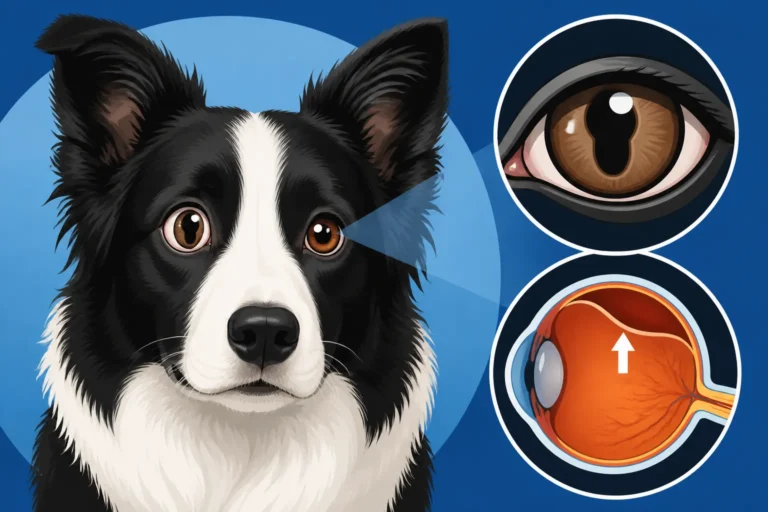
To understand CEA, it helps to know a bit about the eye's anatomy. The choroid is like the lifeblood of the retina; it's a vascular layer located between the retina and the sclera, providing oxygen and nourishment to the outer layers of the retina. The retina itself is the light-sensitive tissue at the back of the eye that converts light into electrical signals, which are then sent to the brain. The sclera is the tough, protective outer coat. In a Border Collie puppy with CEA, the cells of the choroid are underdeveloped or malformed, a condition known as choroidal hypoplasia (CH). This is the most common and mildest manifestation of CEA, but it can pave the way for more serious issues. Sometimes, the sclera might be abnormally thin, creating what's called a scleral ectasia, or there might be an abnormal indentation in the optic disc, known as a coloboma.
The Spectrum of CEA: From Mild to Severe
CEA isn't a one-size-fits-all condition; it exists on a spectrum, ranging from barely noticeable to profoundly debilitating. Most affected Border Collies have the mildest form, choroidal hypoplasia, which often doesn't impact their vision at all. These dogs can live full, active lives, working sheep or excelling in dog sports without ever showing a hint of visual impairment. However, at the more severe end of the spectrum, CEA can manifest as colobomas (cysts or defects) of the optic disc, which can sometimes be quite large, or even lead to retinal detachment, which can cause partial or complete blindness. It’s this unpredictable nature that makes CEA such a concern for breeders and owners alike, as a seemingly mild case can still carry the genes for more severe forms in future generations.
How Does CEA Affect a Border Collie Puppy?
The impact of CEA on a Border Collie puppy varies dramatically depending on the severity of the condition. For many, it's a silent passenger, never causing a day of visual trouble. For others, it can be a significant hurdle, requiring careful management or leading to profound changes in their world. The key is understanding that "CEA" isn't just one thing; it's a umbrella term for a range of eye defects.
Mild Forms and Normal Vision
The vast majority of Border Collies diagnosed with CEA fall into the "mildly affected" category, exhibiting only choroidal hypoplasia. This means their choroid layer is thinner or less developed than it should be, but it doesn't typically compromise their day-to-day vision. You might have a Border Collie that is working stock, competing in agility, or simply being a beloved family pet, and you'd never know they had CEA without a specific eye exam. Many of these dogs will live their entire lives with perfectly normal sight, capable of spotting a squirrel across the park or navigating a complex agility course with ease. It's often only through genetic testing or a comprehensive ophthalmic exam that this mild form is even discovered. This is often where the initial shock for owners comes in – realizing their seemingly perfect puppy has a "condition" that might not actually affect them. It’s important to remember that for these dogs, their quality of life is not diminished. You can learn more about this by reading about The Mildly Affected Border Collie That Sees Normally.
Colobomas and Their Impact
Moving up the severity scale, some Border Collies with CEA will present with colobomas. These are essentially "holes" or pits in the optic nerve head, which is where the optic nerve connects to the retina. Imagine a small indentation or crater where there should be smooth tissue. The size and location of these colobomas dictate their impact. A small coloboma might have little to no effect on vision, similar to mild choroidal hypoplasia. However, larger colobomas can be more problematic. They can lead to blind spots in a puppy's field of vision, causing them to stumble or misjudge distances. More severely, colobomas can sometimes lead to localized retinal detachments or even hemorrhage, which can significantly impair vision or even cause blindness in the affected eye. For working Border Collies, a significant coloboma could mean they are not safe or effective in their tasks, although many can adapt if the impairment is not too severe. Further details on this specific issue can be found in our article on Coloboma and Retinal Detachment in a Border Collie.
Retinal Detachment: The Most Severe Outcome
The most serious and unfortunately, vision-threatening manifestation of CEA is retinal detachment. This occurs when the retina separates from its underlying choroid layer. When the retina detaches, it loses its blood supply and quickly ceases to function, leading to partial or complete blindness in the affected eye. Retinal detachment can happen spontaneously in puppies with severe CEA, sometimes even before they leave the breeder, or it can occur later in life due to trauma or other eye complications associated with severe colobomas. A Border Collie puppy experiencing retinal detachment might suddenly appear disoriented, bump into objects, or show a noticeable lack of interest in toys it once loved. While it is less common than mild CH, the possibility of retinal detachment is why CEA testing and careful breeding are so vital. Sadly, once a retina has detached, especially if it's been detached for some time, the prognosis for restoring vision is often poor, leaving the dog with permanent blindness in that eye. This can be devastating for an owner, particularly if their Border Collie was destined for a working life. Our comprehensive piece on Whether a Border Collie With CEA Goes Blind offers more insight into this difficult outcome.
Diagnosing CEA: The Crucial Eye Exam
Detecting Collie Eye Anomaly early is paramount, not only for the individual puppy's well-being but also for informed breeding decisions. Unlike some conditions that can hide for years, CEA can and should be identified in puppyhood through specific veterinary ophthalmology exams and confirmed through DNA testing. These tools work hand-in-hand to provide the clearest picture.
The Six-Week Puppy Eye Exam
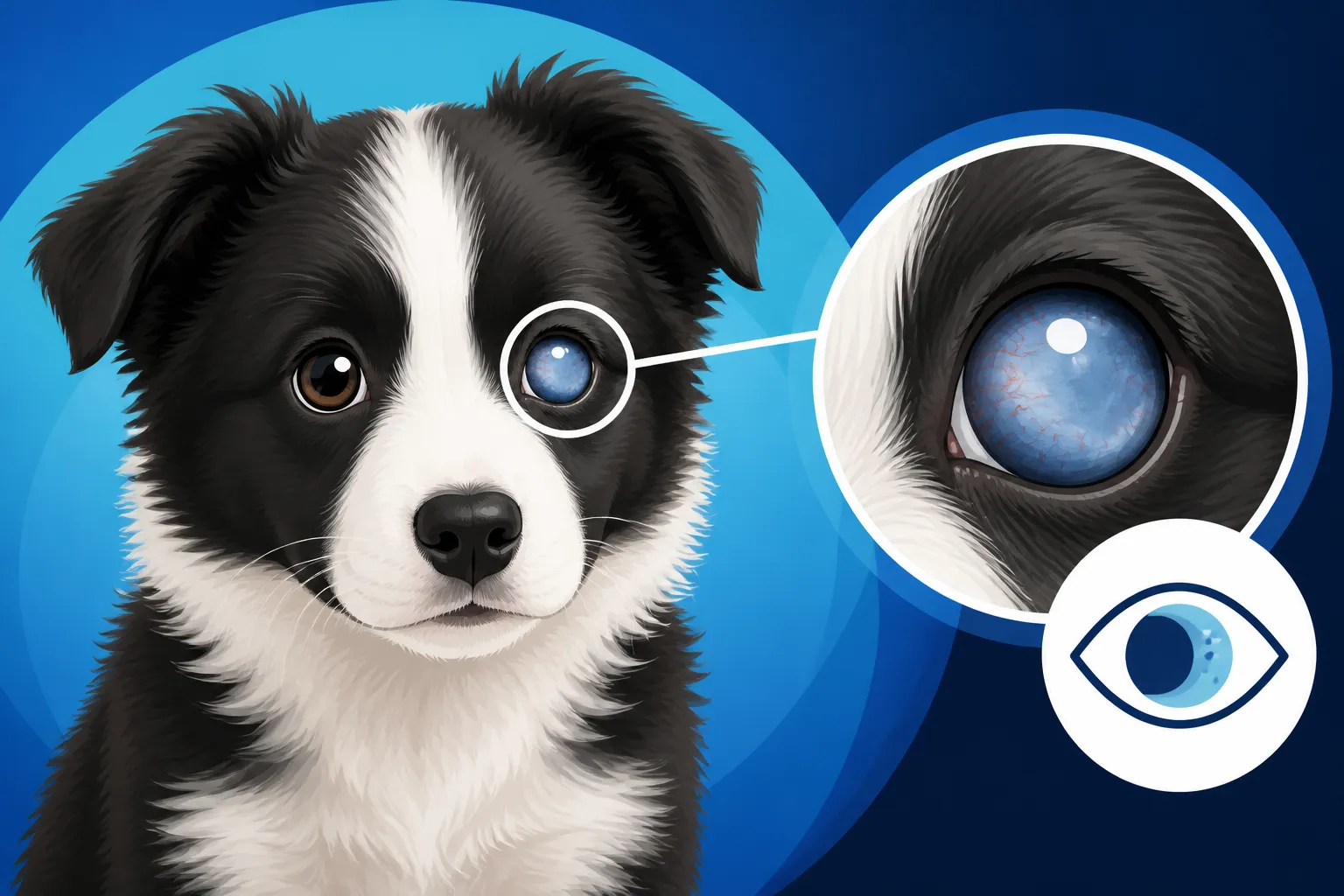
For Border Collie puppies, there is a very specific window for a crucial eye exam: between six and eight weeks of age. This exam, typically performed by a board-certified veterinary ophthalmologist, involves dilating the puppy's pupils and carefully examining the structures at the back of the eye, particularly the choroid. At this young age, the puppy's retina is not yet fully pigmented, making the choroid more visible and easier to assess for signs of choroidal hypoplasia or colobomas. This is why many responsible breeders will insist that their entire litter undergoes The Eye Exam a Border Collie Puppy Gets at Six Weeks before they go to their new homes. Missing this window can make diagnosis much harder because as the retina pigments, it can mask the subtle signs of mild CEA, leading to what's known as a "go-normal" diagnosis. This is not a diagnosis from a regular vet but from a specialist. Many breeders also advise asking for these eye exam results when considering a puppy.
Go-Normal Cases and Why They Matter
The concept of "go-normal" in CEA can be quite confusing for new owners. A "go-normal" Border Collie is a puppy that showed mild signs of choroidal hypoplasia at its six-week eye exam but whose eyes appear completely normal after the retina has fully pigmented. The pigment fills in, effectively obscuring the underlying choroidal defect. While these dogs will likely never experience vision impairment, they are still genetically affected with CEA. This means that if they are bred, they can pass on the CEA gene to their offspring, potentially producing puppies with more severe forms of the disease. This phenomenon is precisely why the six-week eye exam is so vital; it catches these "go-normal" cases before their signs become undetectable by ophthalmic examination alone. Without this early screening, a dog that appears completely clear could unknowingly contribute to the propagation of CEA. Understanding Go-Normal Border Collies and Why the Exam Misses Them is crucial for anyone involved in the breed.
The Role of DNA Testing
While the ophthalmic exam is critical, it's the advent of DNA testing that has truly revolutionized our ability to combat CEA. A simple cheek swab can determine a Border Collie's genetic status for CEA at any age, whether they are affected, a carrier, or completely clear. The specific test looks for a mutation in the NHEJ1 gene. A positive DNA test for CEA confirms that a dog is affected, even if their eyes appear normal on examination (as in a go-normal case). This is an invaluable tool for breeders, allowing them to make informed decisions to avoid producing affected puppies. Even for pet owners, knowing your dog's CEA status through DNA testing provides peace of mind or helps you understand potential risks. We have a detailed article dedicated to The NHEJ1 Test for Collie Eye Anomaly that delves deeper into this scientific breakthrough. For breeders, running a full panel of genetic tests, including for CEA, is now considered standard practice to ensure the health of their lines. You can learn more about this in Which DNA Tests a Border Collie Breeder Should Have Run.
Understanding CEA Inheritance: Genetics and Breeding Decisions
The genetic basis of Collie Eye Anomaly is well-understood, which gives us a powerful tool in controlling its prevalence. It follows a straightforward autosomal recessive inheritance pattern, meaning both parents must contribute a copy of the specific mutated gene for a puppy to be affected. This knowledge empowers responsible breeders to make choices that gradually reduce the incidence of CEA within the Border Collie population.
The Autosomal Recessive Gene
CEA is inherited in an autosomal recessive manner. What does this mean in plain English? It means that for a Border Collie puppy to be "affected" with CEA, it must inherit two copies of the mutated gene – one from its mother and one from its father. Dogs that inherit only one copy of the mutated gene are called "carriers." Carriers themselves will not typically show any signs of CEA (though they may appear mildly affected on eye exam, or be "go-normal"), but they carry the potential to pass the gene on to their offspring. Dogs that inherit two normal copies of the gene are "clear" and cannot pass the gene on. This genetic model highlights why breeding two carriers together, even if both appear perfectly healthy, can lead to affected puppies. Understanding this fundamental principle is the first step in making educated breeding choices.
Carriers, Affected, and Clear Puppies
The possibilities for offspring from different parent pairings can be summarized in a Punnett square, a simple genetic tool. If you breed two "clear" Border Collies, all their puppies will be clear. If you breed a "clear" dog to a "carrier," you can expect roughly 50% clear and 50% carrier puppies, with no affected puppies. The critical pairing to avoid, if your goal is to prevent affected puppies, is breeding two "carriers" together. In this scenario, statistically, 25% of the puppies will be clear, 50% will be carriers, and 25% will be affected. This is where the importance of genetic testing comes into play, as it allows breeders to know the status of their breeding dogs and choose pairings that avoid producing affected pups. When you are looking for a puppy, always ask the breeder about the genetic panel results of the parents. Our guide on Carriers, Affected and Clear on a Border Collie Panel offers a deeper dive into these classifications and their implications.
| Parent 1 / Parent 2 | Clear (N/N) | Carrier (N/CEA) | Affected (CEA/CEA) |
|---|---|---|---|
| Clear (N/N) | 100% Clear | 50% Clear, 50% Carrier | 100% Carrier |
| Carrier (N/CEA) | 50% Clear, 50% Carrier | 25% Clear, 50% Carrier, 25% Affected | 50% Carrier, 50% Affected |
| Affected (CEA/CEA) | 100% Carrier | 50% Carrier, 50% Affected | 100% Affected |
Responsible Breeding Practices
For responsible Border Collie breeders, genetic testing for CEA, coupled with the early ophthalmic exams, is an indispensable part of their program. By DNA testing all potential breeding stock, they can make informed decisions to ensure they are never breeding two carriers together, thus guaranteeing that no affected puppies are produced. While it's generally recommended to breed away from affected dogs, some breeders might choose to use a carrier in their program if that dog possesses exceptional working ability or other valuable traits, as long as they pair that carrier with a dog that is genetically clear. This ensures that no affected puppies are born, though some may still be carriers. The goal is to incrementally reduce the carrier rate in the population over generations without sacrificing genetic diversity or important working characteristics of the breed. If you are ever looking for a puppy, it is your right to be Asking a Border Collie Breeder for Test Results for both parents.
Living with a Border Collie Puppy Diagnosed with CEA
Receiving a diagnosis of CEA for your Border Collie puppy can feel overwhelming, but it doesn't have to be a death knell for their quality of life. For most, the condition will be a non-issue. For those more severely affected, however, thoughtful adaptations and ongoing veterinary care can ensure they live happy, fulfilling lives. It’s all about understanding the specifics of your dog’s condition and working closely with your vet.
Managing Mildly Affected Dogs
If your Border Collie puppy is diagnosed with the mild form of CEA, choroidal hypoplasia (CH), and especially if they are a "go-normal" case, the truth is, you likely won't need to do much different at all. Their vision will almost certainly be unaffected, and they can participate in all the same activities as any other Border Collie. They can run, jump, chase balls, learn complex tricks, and herd sheep without a hitch. The most important thing is simply knowing about the diagnosis for two reasons: firstly, for your own peace of mind and understanding, and secondly, to ensure that if you ever considered breeding your dog (which is highly discouraged if they are affected, even mildly), you would understand the genetic implications. Regular annual eye check-ups are always a good idea for any dog, but specifically for a mildly affected Border Collie, your veterinarian or ophthalmologist might recommend monitoring for any changes, though significant progression is rare with CH. Many owners find peace in knowing that their dog’s future isn’t clouded by this diagnosis. Healthy Paws, for instance, offers pet insurance plans that, if taken out before diagnosis, could help cover unexpected veterinary care, which is always a consideration for any dog, regardless of health status.
Supporting Vision-Impaired Border Collies
For the rare Border Collie puppy born with severe CEA, such as large colobomas that cause significant blind spots or, tragically, retinal detachment leading to blindness, life will require more careful management. These dogs can still thrive and be wonderful companions, but their environment and training may need to be adapted. It's crucial to establish consistent routines and keep their living space uncluttered and familiar. Avoid rearranging furniture frequently, and use verbal cues and touch to guide them. Scent work, puzzle toys, and audible toys (like those with bells) can become fantastic enrichment activities, engaging their other senses. For a dog with limited or no vision, a consistent handler is key – someone they trust to guide them safely. Leash training becomes even more important, and off-leash excursions should be limited to very secure, familiar areas. While it’s heart-wrenching, it’s truly amazing how resilient dogs are and how well they adapt to vision loss with a loving and understanding owner. If your dog has significant vision impairment, discussing with your vet about specialists or rehabilitation techniques can be incredibly helpful.
Regular Monitoring and Vet Care
Regardless of the severity of CEA, ongoing veterinary care is always essential. Even mildly affected dogs benefit from routine eye checks, especially if you ever notice them bumping into things or seeming hesitant in new environments. For those with colobomas, monitoring for any signs of progression, such as further retinal detachment or vision changes, becomes even more critical. Your vet might recommend more frequent ophthalmological exams to track the stability of the condition. While there's no cure for the structural defects of CEA, managing any secondary complications or ensuring your dog is comfortable is paramount. This might involve medication for discomfort if an eye becomes irritated, or simply creating a safe environment. Keeping accurate records of your dog's health, including their CEA diagnosis and any subsequent check-ups, is important for their long-term care and can also be helpful if you ever consider pet insurance options. Insurance providers like Healthy Paws can be a lifeline for covering unexpected costs, especially if your dog's CEA leads to complications not covered under pre-existing conditions clauses, though CEA itself is often considered hereditary.
The Future of CEA Research and Prevention
While CEA has been a known quantity in Border Collies for many years, the journey toward understanding it more deeply and ultimately eradicating it from the breed is ongoing. Thanks to dedicated researchers, breeders, and advances in veterinary science, the future looks brighter for Border Collie puppies. Prevention is truly the best medicine, and genetics hold the key.
Advances in Genetic Testing
The development of the DNA test for CEA was a monumental leap forward for Border Collies and other affected breeds. Before its widespread availability, breeders relied solely on ophthalmic exams, which, as we discussed with "go-normal" cases, could be misleading. Now, with a simple, non-invasive cheek swab, a breeder can determine the genetic status of any dog at any age. This test is highly accurate and provides definitive answers about whether a dog is clear, a carrier, or affected. This precision means breeders no longer have to guess or inadvertently perpetuate the gene. The continued affordability and accessibility of these tests, offered by various reputable labs, make it easier than ever for breeders to screen their stock. Organizations like the Orthopedic Foundation for Animals (OFA) maintain a public database of these test results, adding transparency and accountability to breeding practices. This commitment to testing ensures that prospective owners can confidently ask a Border Collie breeder for test results on both parents before committing to a puppy.
The Impact of Responsible Breeding on the Breed Pool
With the power of genetic testing in hand, responsible Border Collie breeders have been making incredible strides in reducing the incidence of CEA. By understanding the autosomal recessive inheritance pattern, breeders can meticulously plan pairings to ensure no affected puppies are born. This means avoiding breeding two carriers together. Many breeders opt to only breed clear dogs, or to breed carriers only to clear dogs, ensuring that while carriers might still be produced, affected puppies are not. Over time, as more breeders implement these practices, the frequency of the CEA gene in the overall Border Collie population decreases. This collective effort is vital for the long-term health of the breed. It underscores why choosing a breeder who prioritizes genetic health and transparently shares test results is one of the most important decisions a future Border Collie owner can make. This proactive approach helps to preserve the integrity and health of the Border Collie.
Support and Resources for Owners
Even with the best breeding practices, occasional cases of CEA will arise, and support for owners is plentiful. If you find yourself with a Border Collie puppy diagnosed with CEA, remember you're not alone. Your veterinary ophthalmologist is your primary resource for understanding the specific severity of your dog's condition and for guiding ongoing care. Beyond that, numerous online communities and breed-specific rescue organizations offer invaluable peer support, practical advice, and a network of shared experiences. Organizations like the American Border Collie Association (ABCA) and other breed clubs often provide resources on genetic health and can point you towards reputable veterinary specialists. Pet insurance providers such as Healthy Paws also offer different plans, and understanding what hereditary conditions are covered, and when, is always a smart move for any Border Collie owner, especially with potential health concerns like CEA.
Disclaimer
The information provided in this article is for general informational purposes only and does not constitute veterinary advice. Always consult with a qualified veterinary professional for diagnosis and treatment of any medical condition or before making any decisions related to your pet's health.