Cleaning a Border Collie’s Ears Without Overdoing It
One common worry for us Border Collie parents is keeping those incredibly busy ears clean, especially when our dogs are constantly on the go, running through fields, plunging into water, or just enjoying life to the fullest. It's easy to fall into the trap of thinking more cleaning is always better, but actually, overdoing it can cause more harm than good. This guide is all about finding that sweet spot for Border Collie ear care, helping you maintain healthy ears without irritating them or disrupting their natural balance.
Why Border Collie Ears Need Attention But Not Obsession
Let's be honest, Border Collies aren't exactly known for being couch potatoes. Their ears, whether they're pricked up like an antenna, floppy, or somewhere in between, are constantly exposed to the elements. This active lifestyle means they're more likely to pick up debris, get wet, and generally need a little more oversight than, say, a less active breed. But that doesn't mean we need to be scrubbing them out daily. Understanding the natural state of a healthy ear is key to knowing when to step in and when to leave well enough alone.
Understanding the Border Collie Ear Environment
A Border Collie's ear canal is a marvel of natural design, built to protect the delicate inner structures while still allowing for excellent hearing. Some Border Collies sport those lovely, upright prick ears, which allow for a lot of air circulation. Others have classic semi-pricked ears that fold over slightly, or even completely dropped ears. Each ear type has its own pros and cons when it comes to air flow and moisture retention. For instance, a floppier ear might trap a bit more humidity, creating a warmer, darker environment that, while still natural, needs a watchful eye.
Earwax, believe it or not, isn't inherently bad. It's a natural protective substance, acting like a self-cleaning agent for the ear canal. It traps dirt, dust, and tiny foreign particles, moving them out of the ear over time. It also contains antibacterial and antifungal properties, providing a defense against common invaders. When we over-clean, we can strip away these essential natural defenses, leaving the ear canal vulnerable. So, the goal isn't to eliminate earwax entirely, but to manage its accumulation and remove anything that shouldn't be there, like excessive dirt or moisture.
Given their penchant for adventure, whether it's working stock, tearing through an agility course, or simply exploring the back forty, Border Collies are often in situations where their ears can collect all sorts of things. Mud, dust from dry fields, pollen, burrs, and even water from swimming can find their way into the ear canal. This is where a little intervention can be necessary, but it's important to differentiate between general grime and an actual problem. Keeping an eye on what your dog is getting into helps you anticipate when a gentle ear check might be needed.
Common Ear Issues You Might Encounter
Despite our best efforts, sometimes things go awry. Border Collies, like any dog, can develop ear issues. One of the most common problems is an ear infection, often caused by bacteria or yeast taking advantage of a warm, moist environment. Symptoms can include excessive scratching, head shaking, redness inside the ear flap, a foul odor, or discharge that might be yellow, brown, or black. It's truly heartbreaking to see your usually bright and active Border Collie looking miserable because of a painful ear.
Beyond infections, foreign bodies are a big concern, especially for active dogs. Those pesky grass seeds, thorns, or even small insects can work their way deep into the ear canal, causing immense irritation and potentially severe damage. If you notice your Border Collie suddenly shaking its head violently, pawing at an ear, or tilting its head persistently after a romp outside, it’s definitely time to investigate. Sometimes, an ear problem can also be a symptom of a broader issue, like allergies. If your dog is constantly itchy, not just in their ears but elsewhere too, a vet visit is in order to get to the root cause. This is especially true if you suspect something like Ear Infections Under a Border Collie's Folded Ear.
The key here is prevention and early detection, not aggressive cleaning. Regular, gentle inspections are far more valuable than trying to "sterilize" the ear canal with harsh solutions or too-frequent cleaning. We want to support the ear's natural health, not wage war on every speck of dirt. By knowing what to look for and acting promptly when you see warning signs, you can prevent minor annoyances from escalating into painful, expensive problems for your Border Collie.
The Right Way to Clean a Border Collie's Ears Without Overdoing It
When it's time to actually clean your Border Collie's ears, doing it correctly and gently is paramount. The goal is to remove excess wax and debris from the outer ear canal, not to scrub deep or irritate the sensitive skin within. Think of it as tidying up the entrance hall, not deep cleaning the whole house with a pressure washer. A calm approach and the right tools make all the difference, ensuring it’s a positive experience for your dog.
Gathering Your Tools and Creating a Calm Environment
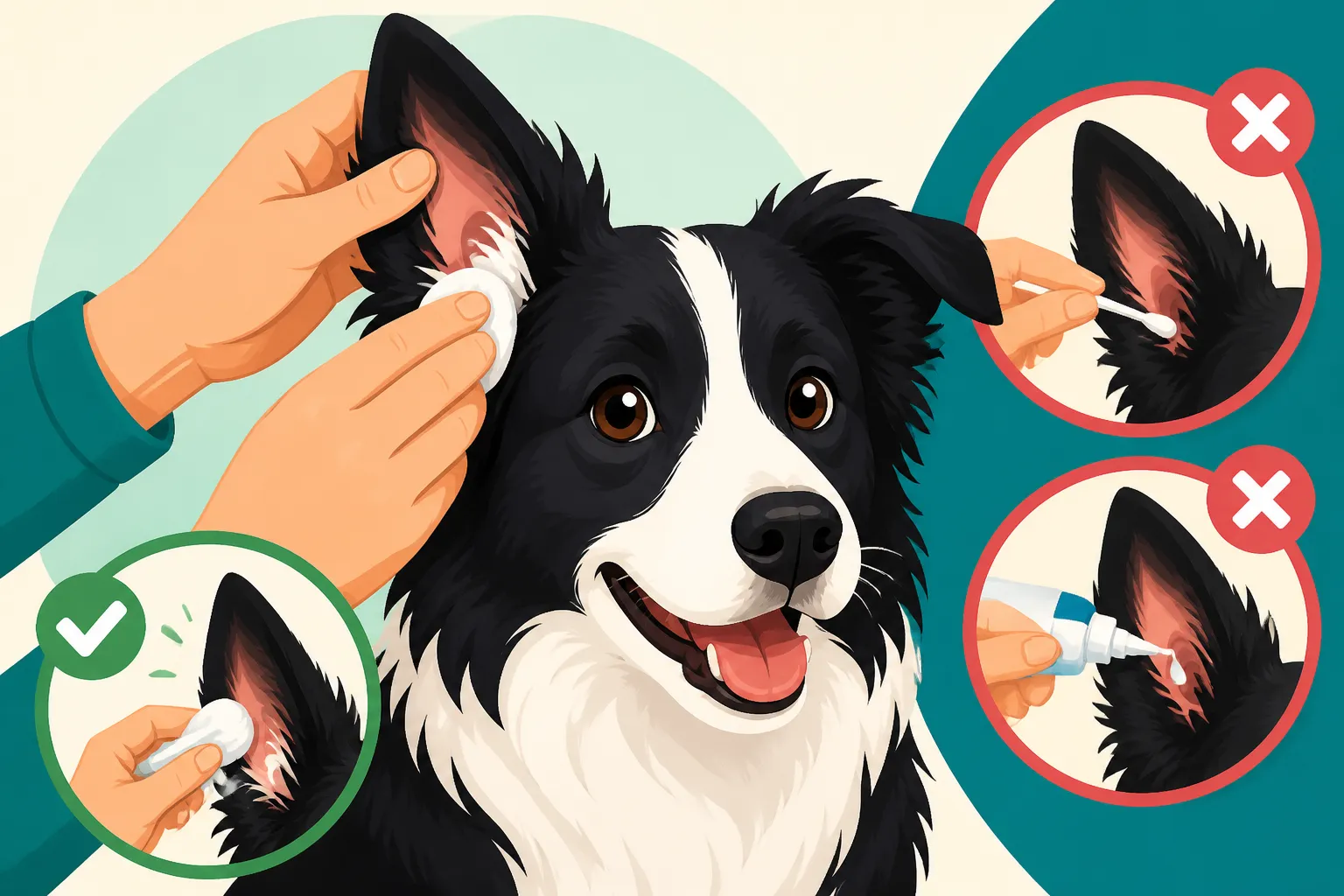
Before you even think about touching your dog's ears, make sure you have everything you need laid out and ready. This helps keep the process smooth and quick, minimizing stress for both of you. You'll want a high-quality, vet-approved ear cleaning solution – avoid anything not specifically designed for canine ears, as human products can be too harsh or contain ingredients that are toxic to dogs. Cotton balls or soft gauze pads are essential; resist the urge to use cotton swabs, which can push debris deeper into the ear canal and potentially damage the eardrum. Have some clean towels on hand for any spills or head shakes, and most importantly, plenty of high-value treats!
Creating a calm, positive association with ear cleaning is crucial, especially for a smart and sensitive breed like the Border Collie. Choose a quiet time when your dog is already relaxed, perhaps after a walk or a good play session. Start by simply handling their ears gently, praising and treating them. Gradually introduce the tools, letting them sniff the cleaner and cotton balls. Make it a routine that ends with a generous reward, like a favorite chew toy or a spoonful of peanut butter. This helps build trust and makes future cleaning sessions much easier. You can find many of these essential supplies, from gentle cleaners to soft cotton pads, readily available on platforms like Chewy or Amazon.
The Step-by-Step Cleaning Process
Once you're both relaxed and ready, here’s how to approach the cleaning:
-
Visual Inspection: Start with a good look. Gently lift your Border Collie's ear flap and peer into the visible part of the ear canal. Is there any redness, swelling, unusual discharge, or a strong odor? If you see any of these signs, or if your dog seems to be in pain when you touch their ear, stop. Do not attempt to clean it yourself, as you could worsen an infection or push a foreign object deeper. This is a job for the vet. Pay close attention for things like Grass Awns and Grit in a Border Collie's Ears.
-
Apply the Cleaner: Hold the ear flap up and carefully squeeze the vet-approved ear cleaner into the ear canal. Don't be shy – you need enough solution to fill the canal. Your vet can show you how much is appropriate.
-
Massage Gently: While still holding the ear flap, gently massage the base of your dog's ear for about 30 seconds. You should hear a squishy sound, which means the cleaner is working its way down and loosening debris. This part is usually quite satisfying for them!
-
Allow the Shake: Let go of the ear. Your Border Collie will almost certainly shake their head vigorously – this is exactly what you want! The shaking helps to bring the loosened wax and debris up and out of the ear canal. Stand clear, or have a towel ready to catch the spray.
-
Wipe Clean: After the head shake, take a fresh cotton ball or gauze pad and gently wipe out the visible parts of the ear. Clean the folds and crevices of the outer ear, removing any remaining cleaner, wax, or gunk. Remember, never insert anything deep into the ear canal. Only clean what you can see and easily reach.
-
Reward! Finish with praise, cuddles, and those high-value treats. Make it clear what a good dog they were!
Frequency is key to not overdoing it. For most healthy Border Collies, ears only need cleaning when you notice accumulation of wax or dirt, typically every few weeks or even months. If your dog swims a lot, you might need to clean them more often (or use a drying solution after swimming), but always assess before you act.
Knowing When Not to Clean and When to See the Vet
It's vital to recognize the difference between routine maintenance and a medical problem. Cleaning an infected ear can be incredibly painful for your dog and can even push the infection deeper, making it harder for the vet to treat. As mentioned earlier, if you notice any of these red flags, put the ear cleaner away and pick up the phone to call your veterinarian:
- Redness or Swelling: The skin inside the ear looks inflamed, hot, or swollen.
- Foul Odor: A strong, yeasty, or otherwise unpleasant smell coming from the ear.
- Excessive Scratching or Head Shaking: Your dog is constantly bothering their ear.
- Discharge: Any brown, yellow, green, or black discharge, especially if it resembles coffee grounds (a sign of ear mites).
- Pain: Your dog cries out, flinches, or tries to bite when you touch their ear.
- Changes in Behavior: Lethargy, loss of appetite, or other signs of discomfort.
Think of it this way: your ear cleaner is for keeping healthy ears healthy, not for treating illness. If there's an active issue, it needs professional diagnosis and appropriate medication from a vet. Trying to self-treat can prolong suffering and complicate recovery. A quick visit to the vet for ear issues is a common and usually straightforward fix, but delaying it can lead to chronic problems.
| Sign of a Healthy Ear | Sign of an Issue Requiring Vet Attention |
|---|---|
| Clean, light pink skin inside | Redness, swelling, or heat |
| Minimal, light brown or clear wax | Excessive, dark, or foul-smelling discharge |
| No strong odor | Strong, yeasty, or pungent odor |
| Dog is comfortable with ear handling | Pain, sensitivity, or aggression |
| No scratching, pawing, or head shaking | Persistent scratching, head shaking, or tilting |
| Good air circulation | Ear canal appears narrowed or closed |
Debunking Ear Cleaning Myths and Misconceptions
There are a lot of old wives' tales and well-meaning but misguided advice floating around about dog ear care. For a breed as sensitive and intelligent as the Border Collie, getting the facts straight is especially important. We want to avoid anything that could inadvertently cause them discomfort or lead to health issues down the line.
"More Cleaning Equals Healthier Ears" The Overdoing It Trap
This is perhaps the biggest misconception out there, and it's the fastest way to create ear problems instead of preventing them. The idea that you need to be constantly cleaning your Border Collie's ears to keep them healthy is simply not true. As we discussed, a certain amount of earwax is normal and beneficial. It acts as a protective barrier, traps debris, and even has antimicrobial properties.
When you over-clean, you strip away these natural oils and waxes, leaving the delicate skin inside the ear canal exposed and vulnerable. This can lead to irritation, dryness, and inflammation. Imagine washing your own hair too frequently with a harsh shampoo – your scalp would get dry, itchy, and might even overcompensate by producing more oil. The same principle applies to your Border Collie's ears. The constant disruption can also upset the natural balance of microorganisms in the ear, creating an environment where yeast or bacteria are more likely to thrive, thus increasing the risk of infection. So, rather than preventing problems, over-cleaning can actually trigger them.
Homemade Solutions and Cotton Swabs – Proceed with Caution
The internet is a vast place, and while it offers a ton of great information, it also has its share of questionable advice. When it comes to ear cleaning, steer clear of homemade remedies like vinegar solutions, alcohol, or hydrogen peroxide unless specifically recommended by your vet. These can be too harsh for a dog's sensitive ear canal, causing irritation, dryness, or even chemical burns. Vinegar, while acidic, can be incredibly painful if there's any broken skin or inflammation, and alcohol is notoriously drying. Always stick with a professional, vet-approved ear cleaner that's pH-balanced and formulated for canine ears.
And please, for the love of all things Border Collie, put away the cotton swabs. Those little sticks are designed for human ears, which have a different shape and size than a dog's. When you insert a cotton swab into a dog's ear canal, you risk pushing wax and debris further down, compacting it against the eardrum. This can lead to blockages, discomfort, and even damage to the eardrum itself. The cotton tip can also easily irritate the delicate skin lining the ear canal, causing micro-abrasions that become entry points for infection. Stick to cotton balls or gauze pads that only clean the visible parts of the ear. You can find excellent, safe ear cleaning solutions and appropriate cotton pads from reputable pet supply retailers like Chewy or on Amazon.
Understanding Your Border Collie's Unique Ear Needs
Every Border Collie is an individual, and their ear care needs can vary. A Border Collie who spends its days working on a dusty farm or frequently swims in lakes might need more frequent checks and occasional cleaning than a companion dog who primarily enjoys walks in the park. Factors like ear conformation (pricked vs. dropped), allergies, or even certain coat types (some dogs just seem to produce more wax!) can all play a role.
If your Border Collie suffers from allergies, whether environmental or food-related, their ears might be one of the first places to show symptoms. Chronic ear infections can often be a tell-tale sign of an underlying allergy that needs to be addressed. In these cases, simply cleaning the ears won't solve the problem; you need to treat the root cause. A dog prone to allergies, for example, might need a different ear cleaning regimen or even specific ear medications. Don't hesitate to discuss these individual needs with your veterinarian to develop a tailored ear care plan. Keeping on top of these things can make a huge difference, particularly if your dog struggles with Allergies in a Border Collie.
Integrating Ear Care into a Holistic Border Collie Routine
Ear care isn't a standalone task; it's part of a larger picture of keeping your Border Collie happy, healthy, and ready for anything. By integrating careful ear checks and appropriate cleaning into your regular routine, you can prevent many common issues and ensure any problems are caught early.
Regular Checks: The Best Prevention
The absolute best thing you can do for your Border Collie's ear health is to make regular visual and olfactory (smell!) checks a part of your routine. I like to do a quick ear check as part of my "weekly once-over" when I'm generally checking my dog's paws, coat, and teeth. Gently lift the ear flap and take a good look inside the visible canal. Is it pink and clean? Is there any redness, swelling, or discharge? Give it a sniff – a healthy ear should have a very mild, neutral scent, or no scent at all. If you detect anything yeasty, sweet, or foul, that’s your cue to investigate further.
Building a positive routine around these checks is key. Make it a relaxing moment, perhaps when you're just snuggling on the couch or after a grooming session. Associate it with praise and a small treat. The more comfortable your Border Collie is with you handling their ears, the easier it will be to spot problems and intervene when necessary. This regular, low-stress inspection is far more effective than infrequent, deep cleaning sessions that might only happen once a problem has already taken hold. For a more comprehensive approach to your dog's well-being, consider establishing a routine for The Weekly Once-Over a Working Border Collie Gets.
Beyond Cleaning: Lifestyle Factors for Ear Health
True ear health extends beyond just what you put (or don't put) into the ear canal. Your Border Collie's overall lifestyle and general health play a huge role. For example, dogs who swim frequently will naturally have more moisture in their ears, making them more prone to yeast or bacterial growth. If your Border Collie is a water enthusiast, consider using a veterinary-approved ear drying solution after every swim to help prevent issues.
Diet also has a significant impact. A dog on a high-quality, balanced diet will generally have a stronger immune system and healthier skin, which extends to the delicate skin in the ears. Some dogs with food sensitivities might even manifest issues as chronic ear problems. If you're feeding a nutritionally dense food, like those offered by brands such as Ollie, you're setting a good foundation for overall health. Ensuring your Border Collie is well-nourished can help them fend off issues before they even begin. Similarly, good general hygiene practices, like bathing a working dog when they're particularly muddy, can prevent external contaminants from migrating to the ears. You might find more relevant tips in Bathing a Border Collie That Works in Mud.
When to Consult a Professional
Knowing when to call in the experts is one of the most responsible things a Border Collie owner can do. While routine cleaning is something you can handle at home, any signs of pain, persistent discomfort, discharge, strong odor, or an ear that simply doesn't look right, warrant a trip to the vet. Do not delay, as ear infections can be incredibly painful and can become chronic if left untreated.
Your veterinarian has the tools and expertise to properly diagnose the issue. They can look deep into the ear canal with an otoscope, identify foreign bodies, take samples for microscopic analysis (to determine if it's bacteria, yeast, or mites), and prescribe the correct medication. Sometimes, an ear problem is a symptom of a larger, underlying health issue that only a vet can uncover. Regular veterinary check-ups, including an ear examination, are a critical part of maintaining your Border Collie's health. Think of it as part of their The Annual Exam a Border Collie Needs and don't hesitate to seek professional guidance when in doubt. Your dog will thank you for it!
Disclaimer
This article is for general informational purposes only and does not constitute professional advice. Laws, prices and regulations vary by location and change over time. Consult a qualified professional for guidance on your specific situation.