The First Border Collies Brought to America
It can feel like Border Collies have always been a part of the American landscape, tirelessly working alongside farmers or dazzling in dog sports. But the truth is, these incredible dogs had a specific journey to cross the Atlantic and establish themselves here. This guide will walk you through the fascinating history of how the first Border Collies arrived in America, highlighting the dedicated individuals and pivotal moments that shaped their presence today.
The Early Days: Border Collies Before America
Before we talk about Border Collies coming to America, it's really important to understand where they came from. These aren't just any old farm dogs; their history is deeply entwined with the rugged landscapes and pastoral traditions of a very specific part of the world. Understanding their roots helps us appreciate the unique qualities that made them so sought after across the ocean.
Origins in the Borderlands
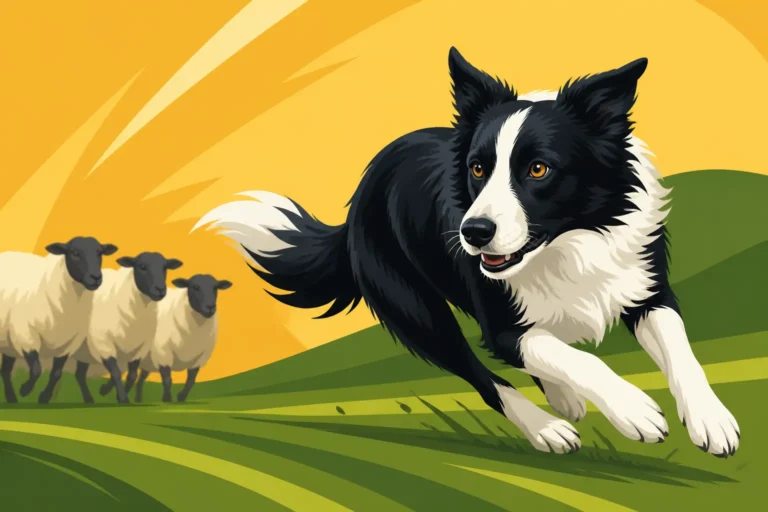
The true birthplace of the Border Collie is the Anglo-Scottish border region, a land of rolling hills, challenging weather, and a long history of sheep farming. Life here demanded a dog that wasn't just a pet, but a vital partner in survival and livelihood. These weren't fancy dogs bred for looks; they were bred purely for their ability to work sheep, often over vast, unforgiving terrain. Their intelligence, stamina, and that iconic "eye" – the intense stare that controls livestock – were honed over centuries by shepherds who selected only the best working dogs for breeding. The name "collie" itself has various proposed origins, often linked to terms for black or working dogs, but the "Border" addition solidified their regional identity. The Border Country That Produced the Border Collie offers a deeper dive into this fascinating background.
The shepherds of this region didn't care much for uniform appearance or pedigrees in the way we think of them today. What mattered was working ability, the keenness to gather, drive, and hold sheep quietly and efficiently. This relentless focus on performance rather than aesthetics is a defining characteristic that would later become a point of contention when the breed gained wider recognition. Generations of tough, intelligent, and biddable dogs were created, perfecting a working style that was unmatched.
The Rise of the Working Dog
The formal recognition of the Border Collie as a distinct breed largely stemmed from the burgeoning popularity of sheepdog trials in the late 19th and early 20th centuries. These trials, initially informal competitions between shepherds, quickly grew into organized events that showcased the incredible skill and intelligence of these dogs. It was at one such trial in 1873 that a dog named Old Hemp, a tri-color dog with a powerful, quiet working style, captured the attention of handlers. Old Hemp and Every Border Collie Alive Today tells his incredible story, and it's no exaggeration to say that nearly every Border Collie alive today traces back to him. His influence was profound because he embodied the ideal working qualities that shepherds were striving for: he worked quietly, without unnecessary barking or biting, and could handle sheep with an almost hypnotic "eye."
As the trials grew, so did the desire to register and track these exceptional working dogs. This led to the formation of organizations like the International Sheep Dog Society (ISDS) in 1906. This society was founded with the explicit aim of maintaining the integrity of the working sheepdog, emphasizing ability above all else. The International Sheep Dog Society, Founded 1906 was a monumental step, providing a framework for recording pedigrees based on proven working talent. This distinction – registration based on work, not just lineage or looks – would become a cornerstone of the Border Collie's identity and later influence its journey to America.
The Initial Journey: First Sightings and Imports
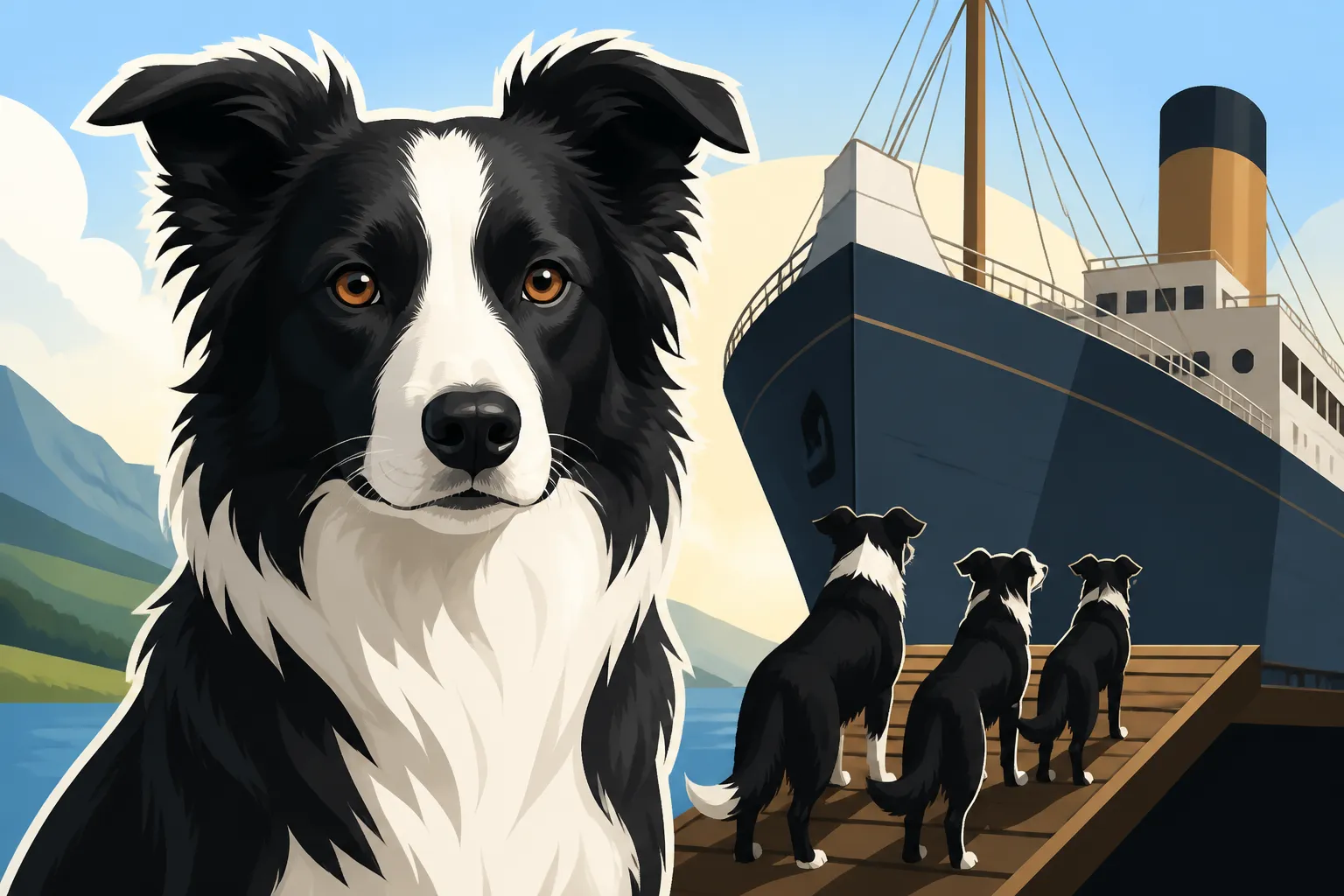
The journey of the Border Collie from the British Isles to American shores wasn't a sudden, grand event. Instead, it was a gradual process driven by a practical need for superior livestock herders in a rapidly expanding agricultural nation. The story involves both chance arrivals and deliberate, strategic imports by those who recognized the unparalleled potential of these dogs.
Sporadic Arrivals and Unofficial Records
While pinpointing the exact "first" Border Collie to set paw on American soil is tricky due to early record-keeping practices (or lack thereof), it's widely accepted that individual dogs arrived sporadically throughout the late 19th and early 20th centuries. These weren't always formal imports by dedicated breeders. Often, they were working dogs brought over by Scottish or English immigrants who were settling in America and needed their trusty canine companions to help establish new farms and ranches. Imagine a shepherd moving his family and his flock, and of course, his invaluable dog would come too! These dogs were likely unpapered by modern standards, valued solely for their practical skills rather than their breed name or lineage.
These early arrivals integrated into American farming communities, often interbreeding with local herding dogs. Their impact might have been subtle at first, improving the working capacity of existing farm dog populations without much fanfare. The sheer efficiency and work ethic of these dogs, however, quickly started to spread by word of mouth among farmers and ranchers who desperately needed help managing their livestock across vast American landscapes.
The Drive for Better Working Stock
The demand for more efficient and intelligent herding dogs in America truly spurred the more deliberate importation of Border Collies. As agriculture expanded, particularly in the western states, ranchers faced the immense challenge of managing huge flocks of sheep and herds of cattle over open ranges. The traditional American farm dogs, while often hardy, couldn't match the sophisticated, tireless, and precise working style of a well-bred Border Collie. This wasn't just about moving stock; it was about preventing losses, saving labor, and ultimately, improving profitability.
Breeders and ranchers in America began to recognize that the dogs winning prestigious sheepdog trials in the UK possessed exactly the qualities they needed. They started actively seeking out these top working lines, making concerted efforts to import proven dogs or their offspring. These were not impulse buys; these were strategic investments in the future of their livestock operations. These imported dogs, often from famous British working kennels, became the foundation stock for many of the working Border Collie lines in America, bringing with them that unparalleled genetic heritage for herding.
Establishing the Breed: Key Figures and Early Organizations
The true establishment of the Border Collie breed in America wasn't just about bringing dogs over; it was about nurturing and preserving their working abilities through dedicated breeding and the formation of specific organizations. This period was marked by passionate individuals who understood the unique value of these dogs and fought to protect their essence.
Dedicated Breeders and Early Bloodlines
The early 20th century saw a growing number of American farmers and ranchers become truly dedicated to breeding pure working Border Collies. They carefully selected imported dogs with proven working pedigrees and sought to replicate the success of the British handlers. These weren't hobby breeders; these were working professionals who understood that the quality of their dogs directly impacted their livelihood. They focused on traits like intelligence, biddability, stamina, and that innate "herding eye." Many of these individuals corresponded directly with breeders in the UK, exchanging information and securing new bloodlines.
Some of these foundational dogs became legendary within American working Border Collie circles. Their names might not be widely known outside of working dog pedigrees, but their genetic contributions were immense. They established the initial American lines, passing on their incredible working instincts and contributing to the growing reputation of the Border Collie as the ultimate herding machine. These early breeders understood the importance of continuous evaluation, often testing their dogs on local farms and informal competitions to ensure that the working ability remained paramount. They were the unsung heroes who ensured the breed's functional integrity.
The Formation of the ABCA
The increasing number of Border Collies in America, coupled with the desire to preserve their working heritage, led to the formation of the American Border Collie Association (ABCA) in 1940. This organization was explicitly founded to register and promote the Border Collie as a working stock dog. Their philosophy was deeply rooted in the ISDS model: working ability was the sole criterion for registration and recognition. Unlike typical kennel clubs that focused on physical appearance standards, the ABCA prioritized performance in the field. This was a critical moment for the breed in America, ensuring that its identity as a working dog remained distinct and protected. The ABCA and Its Working Registry details the rigorous standards and philosophy behind this organization.
The ABCA's formation was a direct response to a burgeoning recognition of the Border Collie's unique qualities and a proactive measure to prevent the breed from being diluted by an emphasis on aesthetics. They understood that if the breed became primarily focused on conformation, its unparalleled working instinct might be lost. This focus meant that ABCA-registered dogs were (and still are) primarily bred from proven working parents, with pedigrees tracing back to dogs that excelled on livestock. This dedication ensured that the Border Collie in America continued to be regarded as a serious working dog, even as its popularity began to grow.
The Great Divide: Working Dog vs. Show Dog
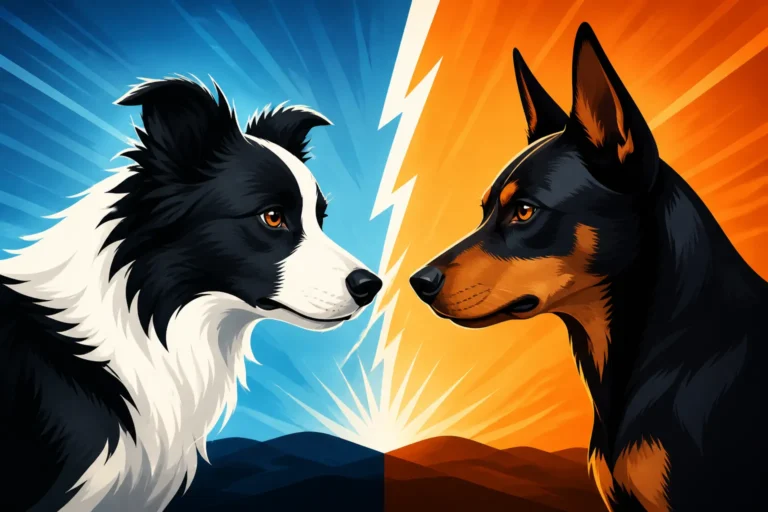
The story of the Border Collie in America takes a pivotal turn with the question of official recognition by major kennel clubs. This wasn't a simple administrative decision; it sparked a passionate, decades-long debate that highlighted the fundamental differences in how people viewed and valued the breed. It truly created a "great divide" that continues to shape the Border Collie world today.
The Battle for Breed Purity
For decades, the ABCA and dedicated working Border Collie handlers resisted attempts by the American Kennel Club (AKC) to recognize the breed. Their concerns were profound and deeply held. They feared that AKC recognition, which typically involves establishing a breed standard based on physical appearance and promoting conformation shows, would inevitably lead to a decline in the Border Collie's working ability. For them, the breed's identity was defined by its work ethic, its intelligence, and its instinct for herding, not by the length of its coat, the set of its ears, or the color of its eyes. They believed that breeding for show points would inadvertently lead to breeders prioritizing looks over talent, potentially creating dogs that looked like Border Collies but lacked the drive and ability to perform their traditional duties. Why Working Breeders Fought AKC Recognition provides a comprehensive look at the arguments and passions behind this resistance.
This battle wasn't just theoretical; they had seen other working breeds, once renowned for their functional skills, become "split" into show lines and working lines, often with a significant divergence in temperament and ability. They were determined to prevent this from happening to the Border Collie, a dog they considered to be at the pinnacle of canine working intelligence. They firmly believed that the working trial was the only true judge of a Border Collie's worth, not a show ring.
The AKC's Decision and Its Impact
Despite significant opposition from the working Border Collie community, the American Kennel Club (AKC) officially recognized the Border Collie as a member of its Herding Group in 1995. This decision was met with mixed reactions and profound consequences. For some, it was a step towards broader recognition and popularity for the breed, potentially opening doors for more people to discover and enjoy Border Collies in various activities beyond traditional herding. They saw it as an opportunity for the breed to gain a more formalized structure within the purebred dog world.
However, for the working community, it was a moment of deep concern and even betrayal. Many felt their fears were realized, that the breed's working essence was now at risk. The AKC established a breed standard that, like all its standards, detailed physical appearance and gait. While it included some mention of herding aptitude, the primary focus for show purposes became conformation. This led to a distinct split within the breed, creating what are often referred to as "working line" Border Collies (registered primarily with the ABCA) and "show line" or "conformation line" Border Collies (registered with the AKC). The 1995 AKC Decision on the Border Collie delves into the specific details of this contentious event. This divergence meant that the traits prioritized in breeding began to differ significantly depending on whether a breeder aimed for the trial field or the show ring, leading to variations in both physical characteristics and temperament over time.
| Aspect | Working Line (ABCA) | Show Line (AKC) |
|---|---|---|
| Primary Focus | Herding ability, intelligence, stamina | Conformation (physical appearance) |
| Breeding Goal | Top working performance, instinct, biddability | Adherence to breed standard, aesthetics |
| Registry | American Border Collie Association (ABCA) | American Kennel Club (AKC) |
| Evaluation | Sheepdog trials, farm work | Conformation shows, judging appearance |
| Temperament | High drive, intense focus, need for mental work | Can be calmer, still intelligent, adaptable to pet homes |
| Physical Traits | Variable, utility-driven, may not be uniform | Conforms to a set standard, uniform appearance |
| Historical View | Preservation of original working dog | Broad recognition, expansion into various dog sports |
Legacy and Evolution: Border Collies in Modern America
The journey of the Border Collie to America didn't end with its establishment or the AKC recognition. It continues to evolve, adapting to new roles while holding onto its core identity. Today, Border Collies enrich American lives in myriad ways, showcasing their incredible versatility and intelligence.
The Enduring Working Dog Ethic
Despite the changes and debates, the heart of the Border Collie in America remains firmly rooted in its working heritage. On farms and ranches across the country, especially in areas with extensive livestock operations, the Border Collie is still an indispensable partner. These dogs are bred and trained for the demanding tasks of herding sheep and cattle, demonstrating the same intelligence, stamina, and instinct that made their ancestors legendary in the Scottish Borders. Handlers continue to compete in sheepdog trials sanctioned by organizations like the ABCA, where the focus is entirely on the dog's ability to control livestock with precision and quiet efficiency. The Border Collie in Sheepdog Trials showcases the incredible skill involved in these competitions.
For owners of working Border Collies, the legacy of their forebears isn't just a historical footnote; it's a living tradition. They understand that these dogs thrive when given a job to do, a purpose that engages both their bodies and their brilliant minds. This dedication to preserving the working ethic ensures that the original qualities that brought the first Border Collies to America are still valued and maintained by a committed community. Even for pet owners, understanding this innate drive is crucial for providing a fulfilling life for their Border Collie, often leading them to activities that simulate herding, even without actual sheep. Finding durable and stimulating toys that stand up to their intelligence can be a quest, and many owners turn to retailers like Chewy for a wide selection of puzzle toys and high-quality chews.
The Pet and Sport Dog Phenomenon
Beyond the farm, Border Collies have truly exploded in popularity as sport and companion dogs in America. Their exceptional intelligence, agility, and eagerness to please make them incredibly successful in a vast array of dog sports. Agility, flyball, obedience, disc dog, dock diving, and scent work are just a few of the arenas where Border Collies routinely dominate. This shift means that many Border Collies in America today live in suburban or urban homes, their "job" being competitive sports or active companionship rather than livestock management.
This expansion into pet and sport homes has undoubtedly introduced the breed to a wider audience, but it also comes with unique challenges. A Border Collie's intensity and intelligence, so perfect for herding, can become problematic in a home that doesn't provide enough mental and physical stimulation. Owners often find themselves needing to learn extensively about canine enrichment and advanced training methods to keep their Border Collies happy and well-behaved. The accessibility of information and products from places like Chewy, offering everything from advanced training tools to interactive feeders, has become a vital resource for these dedicated owners. It's a testament to the breed's adaptability that it can transition from the sheep fields to the agility ring, but it always requires a dedicated, knowledgeable owner who respects its innate drive. What Separates a Border Collie From Every Other Herder helps explain why their unique drive needs careful management.
Disclaimer
This article is for general informational purposes only and does not constitute professional advice. Laws, prices and regulations vary by location and change over time. Consult a qualified professional for guidance on your specific situation.