Go-Normal Border Collies and Why the Exam Misses Them
It’s incredibly frustrating when you’re doing everything right for your Border Collie puppy – getting all the health checks, seeing the vet – only to hear about something called "Go-Normal" later on. This term can be confusing, and even more so when you realize it refers to a specific manifestation of Collie Eye Anomaly (CEA) that often slips right past those routine veterinary eye exams. This guide will meticulously break down what "Go-Normal" truly means, why it’s so tricky to detect, and how modern genetic testing offers a clearer path to understanding your dog's health.
Understanding "Go-Normal" in Border Collies
The phrase "Go-Normal" might sound reassuring, but in the context of Border Collie eye health, it describes a specific and somewhat deceptive presentation of Collie Eye Anomaly (CEA). It’s not that the dog is truly free from the genetic condition; rather, their eyes appear normal upon a routine veterinary ophthalmological exam, despite carrying the genetic mutation for CEA. This can be incredibly misleading for breeders and pet owners alike, creating a false sense of security regarding a puppy's ocular health.
Defining the Term and Its Implications
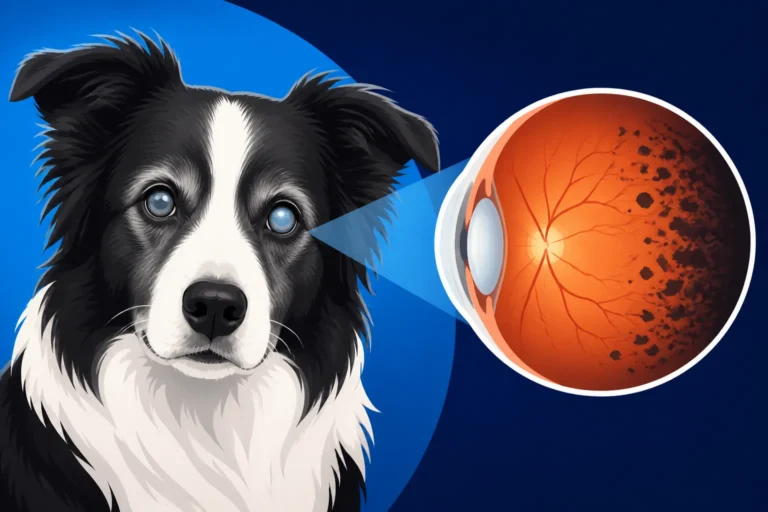
When we talk about a "Go-Normal" Border Collie, we're referring to a dog that is genetically affected with Collie Eye Anomaly but whose choroidal hypoplasia (CH), the primary lesion of CEA, is masked by the development of normal retinal pigment over time. Essentially, the eyes initially have the characteristic thinning of the choroid, which is usually visible in young puppies. However, as the puppy matures, the pigment cells in the retina proliferate and become denser, covering up the underlying choroidal defect. By the time a routine eye exam might be conducted later in life, or even sometimes during the crucial The Eye Exam a Border Collie Puppy Gets at Six Weeks, the eye appears normal, or "goes normal."
This phenomenon presents significant challenges, especially for breeding programs. A breeder might unknowingly use a "Go-Normal" dog for breeding, believing it to be free of CEA based on a visual exam, only for it to pass on the affected gene to its offspring. The implications extend beyond just breeding; understanding a dog's true genetic status is vital for comprehensive health management, even if the visual impact is minimal.
How it Differs from Severely Affected Dogs
"Go-Normal" dogs represent the milder end of the CEA spectrum. In contrast, severely affected Border Collies exhibit much more pronounced ocular abnormalities that are readily apparent during an eye examination, even in young puppies. These severe cases can include significant choroidal hypoplasia, colobomas (funnel-shaped defects in the optic nerve head), and even retinal detachments. A puppy with Coloboma and Retinal Detachment in a Border Collie would show obvious visual impairment or signs of discomfort, whereas a "Go-Normal" dog often has perfect vision and absolutely no outward indication of the condition.
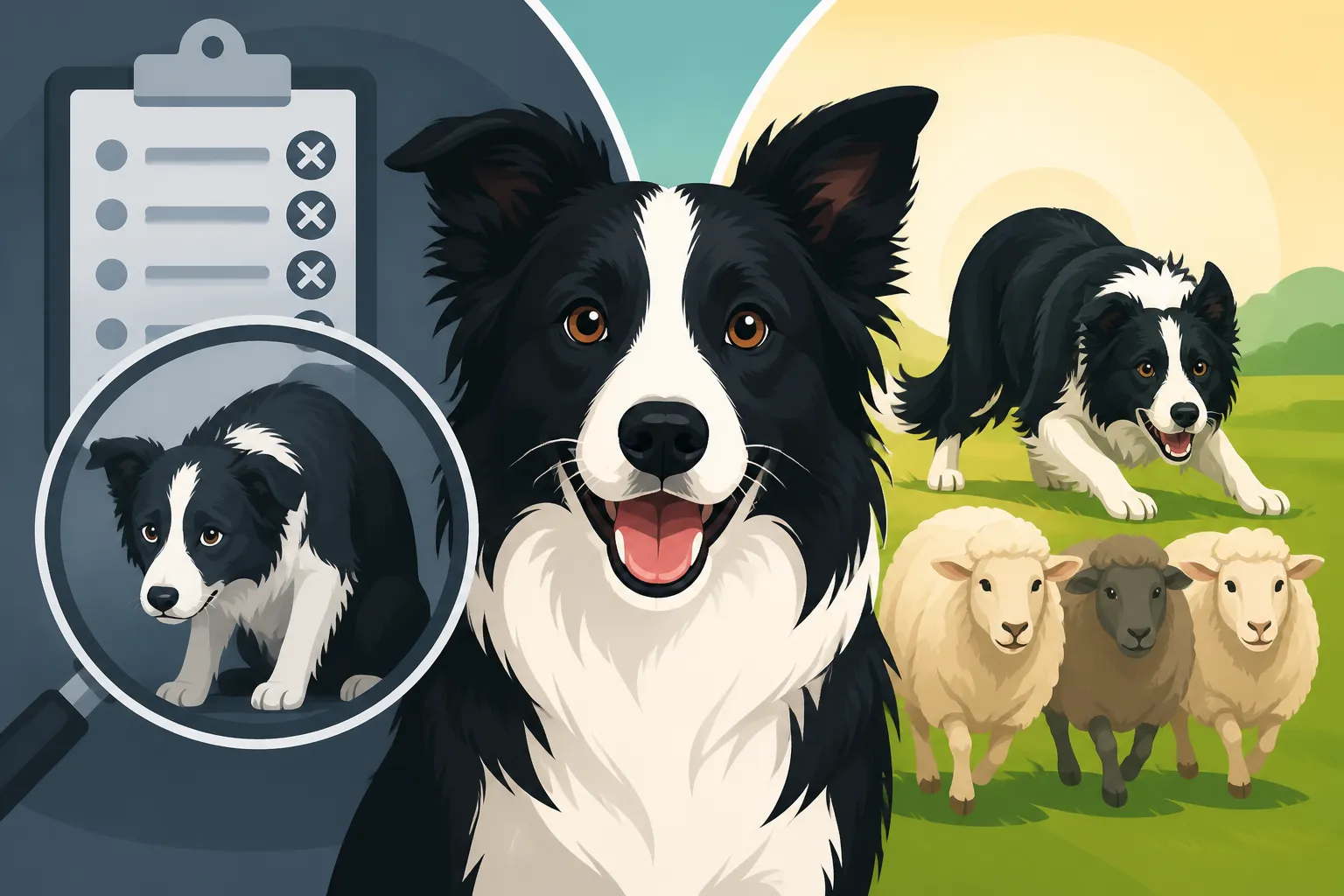
The crucial difference lies in the visible clinical signs. A severely affected dog might struggle with vision, bump into objects, or show a noticeable "cloudiness" or unusual appearance in their eyes. A "Go-Normal" dog, on the other hand, performs just like any other Border Collie, excelling in agility, herding, or as a beloved family companion, completely unaware they carry a hidden genetic secret. This asymptomatic nature is precisely why the term "Go-Normal" can be so problematic; it's a genetic anomaly that outwardly resolves, but the underlying genetic predisposition remains.
The Standard Eye Examination for Border Collie Puppies
For decades, the standard procedure for identifying hereditary eye conditions in puppies has involved a thorough ophthalmological examination by a board-certified veterinary ophthalmologist. This examination is particularly critical for breeds like Border Collies, which are prone to several inherited eye diseases, including Collie Eye Anomaly. While invaluable for detecting many conditions, this traditional method has its inherent limitations, especially when it comes to the "Go-Normal" phenomenon.
The Ophthalmoscopic Examination Process
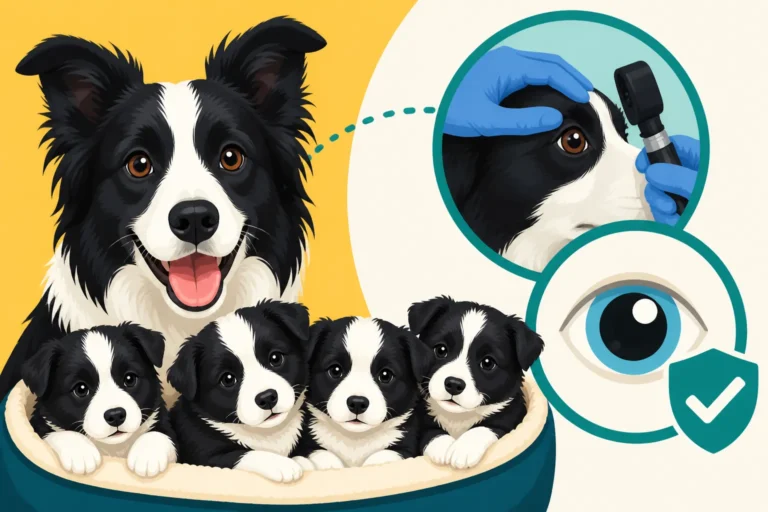
The typical puppy eye exam usually takes place when the puppies are between 6 to 8 weeks of age. This timing is crucial because at this young age, the retinal pigmentation is not yet fully developed, making it easier for the ophthalmologist to visualize the underlying structures of the eye. The examination involves dilating the puppy's pupils with special eye drops, allowing the specialist to get a clear view of the fundus – the back part of the eye, including the retina, optic disc, and choroid. Using an ophthalmoscope, the vet meticulously checks for any abnormalities.
For CEA, the primary focus is on detecting choroidal hypoplasia (CH), which appears as a pale, thinned area in the choroid, often located temporal to the optic disc. This thinning is where the blood vessels and pigment are deficient. The ophthalmologist is specifically looking for these tell-tale signs, as well as any other potential issues like retinal folds, optic nerve colobomas, or retinal detachments. The goal is to catch any significant defects early so that breeders and owners can be informed, and appropriate decisions can be made regarding the puppy's future.
What a Vet Looks For and Why Timing Matters
During the exam, the veterinary ophthalmologist is trained to identify the characteristic lesions of What a Choroidal Defect Means in a Border Collie. In a typical CEA-affected puppy, they would observe areas where the choroid is underdeveloped, leading to a visible lack of pigmentation and blood vessels. These areas can range in size and severity. The timing around 6-8 weeks is paramount because before this age, the eye structures might still be too immature to fully assess, and after this window, the phenomenon of "Go-Normal" can begin to obscure the very defects they are trying to find.
If the pigment begins to develop and mask the choroidal thinning too early, a "Go-Normal" puppy could potentially be misidentified as "clear" during a visual exam. This is a critical point that often causes confusion. The eye exam is a snapshot in time; it assesses what is visibly present. If the visible signs of CEA have receded or been covered by pigment, even the most skilled ophthalmologist can only report what they see: a seemingly normal eye. This is why understanding the nuances of "Go-Normal" is so important for Border Collie enthusiasts.
Why the Routine Eye Exam Can Miss "Go-Normal" Cases
The standard veterinary eye exam is a powerful tool, but it's not foolproof, especially when dealing with the unique presentation of "Go-Normal" Border Collies. The very nature of this condition allows it to camouflage itself, leading to potential misinterpretations based solely on visual inspection. This has been a source of much frustration and genetic propagation of CEA in the past.
Choroidal Hypoplasia in Mild Cases
In its mildest form, choroidal hypoplasia, the hallmark of CEA, might be very subtle. The thinning of the choroid could be minimal, affecting only a small area, or it might not be as pronounced as in more severe cases. When the defect itself is slight, it becomes much easier for the subsequent development of normal retinal pigment to completely obscure it. Imagine trying to see a faint watermark on a piece of paper that then gets completely covered by ink. The watermark is still there, but it's no longer visible.
This mild presentation means that even within the recommended 6-8 week examination window, if the pigmentation is already starting to develop faster than usual, or if the underlying defect is extremely minor, it can be incredibly challenging for the ophthalmologist to definitively diagnose CEA. The diagnosis relies on visual confirmation of these specific choroidal changes, and if they're not overtly present, or are already being hidden, the pup will understandably be passed as clear.
Pigment Masking Over Time
The phenomenon of pigment masking is the core reason why "Go-Normal" dogs are such a conundrum. The choroid itself is the vascular layer that lies between the retina and the sclera, providing nourishment to the outer layers of the retina. In CEA, this layer is underdeveloped. However, the retina, which contains the light-sensitive cells and pigment epithelium, continues to mature. As a Border Collie puppy grows, the retinal pigment epithelial cells naturally become denser and more robust.
When this pigment develops over an area of mild choroidal hypoplasia, it effectively covers the defect, making the fundus appear completely normal upon examination later in life. This "going normal" typically occurs between 8 to 16 weeks of age, but can vary. By the time a dog reaches adulthood, or even just a few months past the optimal puppy exam window, an affected eye may look absolutely perfect. This is a significant point of confusion, leading many owners to believe their dog is free of CEA when, genetically, it is not. This process vividly highlights Why the Border Collie Eye Exam and the DNA Test Differ.
The Challenge of Early Detection and What Can Be Missed
The optimal window for a visual CEA examination is narrow and critical. If a puppy is examined too early, before the eyes are sufficiently developed, the results might be inconclusive. If examined too late, after the retinal pigment has started to mask the choroidal hypoplasia, a "Go-Normal" puppy could easily slip through, receiving a "clear" certificate despite being genetically affected. This creates a difficult situation for breeders aiming for genetic health, as they might inadvertently perpetuate the CEA gene in their lines.
The challenge isn't with the ophthalmologists' skill but with the biological reality of how the condition manifests and then resolves visually. They can only diagnose what is observable. Because "Go-Normal" dogs often have normal vision and no other health problems associated with their mild CEA, they live full, active lives. However, their genetic status remains important for responsible breeding and for understanding the broader health landscape of the Border Collie population. For instance, while CEA itself doesn't typically progress to severe blindness, understanding this genetic underpinning is crucial, particularly when considering other conditions like Progressive Retinal Atrophy in an Older Border Collie.
The Genetic Basis: Understanding Collie Eye Anomaly
To truly grasp "Go-Normal," we need to delve into its genetic roots. "Go-Normal" isn't a separate condition; it's a specific expression of Collie Eye Anomaly (CEA), a hereditary disorder that affects several collie-type breeds, including the Border Collie. Understanding the genetics is key to preventing its spread and ensuring healthy litters.
The NHEJ1 Gene Mutation
Collie Eye Anomaly is caused by a recessive mutation in the NHEJ1 gene. This particular gene plays a role in DNA repair, and when mutated, it disrupts the normal development of the choroid, leading to the characteristic choroidal hypoplasia. The research confirming this specific genetic link has been a game-changer for breeders and veterinarians alike, allowing for precise identification of affected dogs, even those that "Go-Normal."
The mutation means that the instructions for building a healthy choroid aren't quite right. This deficiency results in the thinning or underdevelopment of the choroidal layer, which is what the ophthalmologist is looking for during the visual exam. The severity of the choroidal hypoplasia can vary widely among affected dogs, from very mild, which tends to "Go-Normal," to very severe, which might lead to more significant visual problems. This variability in expression is one of the reasons visual screening alone can be inadequate.
Recessive Inheritance Pattern
CEA follows an autosomal recessive inheritance pattern. What does this mean for your Border Collie? It means that a dog must inherit two copies of the mutated NHEJ1 gene – one from its mother and one from its father – to be "affected" with CEA. Dogs that inherit only one copy of the mutated gene are considered "carriers." Carriers do not typically show any clinical signs of CEA themselves, as their single healthy copy of the gene is usually sufficient for normal choroidal development. However, carriers can pass the mutated gene on to their offspring.
This recessive nature is why CEA can sometimes seem to "skip" generations, only to reappear when two carriers are bred together. If two carriers are mated, statistically, 25% of their offspring will be clear, 50% will be carriers, and 25% will be affected. This explains how a "Go-Normal" dog, appearing phenotypically (outwardly) normal, can still be genetically affected and produce puppies with visible CEA if bred to another carrier or affected dog. Understanding this inheritance is fundamental for responsible breeding practices and helps prevent Collie Eye Anomaly in a Border Collie Puppy.
Link to Collie Eye Anomaly in a Border Collie Puppy
So, how does "Go-Normal" directly link to Collie Eye Anomaly in a Border Collie Puppy? A "Go-Normal" dog is, by definition, genetically affected with CEA. It has inherited two copies of the mutated NHEJ1 gene. The only difference is that the visual signs of its choroidal hypoplasia have become masked by pigment. For a breeder, this means that a "Go-Normal" dog, despite passing a visual eye exam, still carries the full genetic blueprint for CEA. If such a dog is bred, it will pass one copy of the affected gene to all of its offspring.
This means that if a "Go-Normal" affected dog is bred to a carrier, a significant percentage of the litter will be affected by CEA. If bred to another affected dog (even another "Go-Normal"), all puppies will be affected. This highlights the critical importance of genetic testing over relying solely on visual exams, especially for breeding dogs. Without genetic testing, "Go-Normal" dogs become hidden carriers of an affected gene, silently perpetuating the condition in the breed.
The Role of DNA Testing in Identifying "Go-Normal" Cases
Given the limitations of visual eye exams for detecting "Go-Normal" Border Collies, DNA testing has emerged as the gold standard for accurately diagnosing Collie Eye Anomaly. This technological advancement provides definitive answers, allowing breeders and owners to make informed decisions about their dogs' health and breeding potential.
The NHEJ1 Test for Collie Eye Anomaly
The specific DNA test for CEA targets the NHEJ1 gene mutation directly. This test is non-invasive, usually requiring just a cheek swab from the dog. The sample is then sent to a specialized veterinary genetics laboratory for analysis. Unlike a visual exam, which relies on observable physical traits, the DNA test directly analyzes the dog's genetic code. It looks for the presence or absence of the specific mutation known to cause CEA.
The beauty of this test is its accuracy and its ability to provide results regardless of the dog's age or the development of retinal pigment. It can identify if a dog is genetically clear, a carrier, or affected, even if the dog's eyes appear "Go-Normal." This means that breeders no longer have to guess or rely on a time-sensitive visual window. They can obtain a definitive genetic status for their dogs at any point in their lives, providing clarity and confidence in their breeding decisions. Many responsible breeders routinely conduct genetic panels that include this test, along with others from The Border Collie Genetic Panel and What It Screens.
Identifying Carriers and Affected Dogs
The results of the NHEJ1 DNA test will categorize a Border Collie into one of three distinct genetic statuses:
- Clear: The dog has two normal copies of the NHEJ1 gene and will not develop CEA nor pass the mutation to its offspring.
- Carrier: The dog has one normal copy and one mutated copy of the NHEJ1 gene. These dogs typically do not show symptoms of CEA but can pass the mutated gene to 50% of their offspring.
- Affected: The dog has two mutated copies of the NHEJ1 gene. These dogs will develop CEA, although the severity can vary from "Go-Normal" to severe forms with visual impairment. They will pass one mutated gene to 100% of their offspring.
This clear categorization is invaluable. For instance, a dog that "Goes-Normal" would be identified as "Affected" by the DNA test, immediately clarifying its true genetic status, regardless of its normal visual appearance. This direct genetic insight overcomes the limitations of traditional eye exams and helps breeders understand Carriers, Affected and Clear on a Border Collie Panel.
Breeding Decisions and Ethical Considerations
For responsible Border Collie breeders, DNA testing for CEA is an indispensable tool. It allows them to make informed breeding decisions that prioritize the health of future generations. If a dog is identified as "Affected" (even if "Go-Normal") or "Carrier," breeders can choose breeding partners that will minimize the risk of producing affected puppies. For example, an affected dog can be safely bred to a clear dog, as all offspring will be carriers, but none will be affected. These offspring could then be bred to clear dogs to eliminate the gene from the line over generations.
The ethical consideration here is paramount. By utilizing DNA testing, breeders can actively work towards reducing the prevalence of CEA within the Border Collie population. It also provides transparency for prospective puppy buyers, who can Asking a Border Collie Breeder for Test Results and expect to see clear evidence of parental health screenings. This proactive approach ensures that the beautiful and intelligent Border Collie breed remains as healthy as possible. While insurance providers like Healthy Paws may cover hereditary conditions if a dog is enrolled before diagnosis, preventing the condition through responsible breeding is always the best route.
Living with a "Go-Normal" Border Collie
Discovering your Border Collie is "Go-Normal" after a DNA test can be a mixture of relief and concern. Relief that their vision is likely fine, but concern about the implications. For the most part, "Go-Normal" dogs lead perfectly normal, active lives, but understanding the underlying genetic condition allows for better long-term management and awareness.
Monitoring Visual Acuity
One of the most reassuring aspects of a "Go-Normal" diagnosis is that the dog's vision typically remains unaffected. Because the choroidal hypoplasia is mild and becomes masked by retinal pigment, the visual cells of the retina usually function without issue. Dogs with this manifestation of CEA do not typically experience progressive vision loss related to the CEA itself. They can see just as well as any other Border Collie, capable of excelling in complex tasks, agility sports, or herding.
However, even with a "Go-Normal" diagnosis, it’s always wise to maintain regular veterinary check-ups, including routine eye examinations, as your dog ages. While CEA usually doesn't progress, other age-related eye conditions or unrelated issues can still arise. These check-ups provide an opportunity to discuss any changes you might notice in your dog's behavior or vision with your vet. A good pet insurance plan, such as those offered by Healthy Paws, can provide peace of mind for unexpected veterinary costs, including specialist visits if any visual changes were to occur.
Potential Long-Term Implications
For most "Go-Normal" Border Collies, there are no significant long-term health implications beyond their genetic status. The condition is non-progressive in its choroidal hypoplasia aspect, meaning it doesn't worsen over time to cause vision problems. However, it's worth noting that while the primary choroidal defect may be masked, the eyes of CEA-affected dogs can sometimes have a slightly increased predisposition to other, more severe CEA-related issues like colobomas or retinal detachment, especially if the original choroidal defect was on the cusp of mild/moderate.
While rare, a severe coloboma at the optic disc could potentially lead to retinal detachment or hemorrhage. It’s important for owners of "Go-Normal" dogs to be aware of the potential, however small, for these issues, even if their dog’s vision appears perfectly normal. Knowing the genetic status allows for prompt communication with your vet should any unusual eye symptoms appear, though it's usually not a cause for daily worry. Understanding the nuances of this condition helps prepare owners, even for something as severe as Whether a Border Collie With CEA Goes Blind.
Support and Resources for Owners
If you own a "Go-Normal" Border Collie, or any Border Collie affected by CEA, remember you're not alone. There are numerous resources available to support you. Connecting with other Border Collie owners, breeders, and breed-specific clubs can provide a wealth of shared experience and advice. Organizations dedicated to canine genetic health offer information and educational materials that can help you understand the condition more deeply.
Your veterinarian and a board-certified veterinary ophthalmologist are your primary resources for personalized advice and monitoring. They can guide you on any specific management strategies, though for most "Go-Normal" dogs, no special care is needed beyond routine health maintenance. Being proactive with a DNA test and understanding your dog's genetic health is a testament to responsible pet ownership. A robust pet insurance policy like those from Healthy Paws can also be a valuable resource, helping to manage costs should any health issues, related or unrelated to CEA, arise.
Comparing Eye Exam vs. DNA Testing for CEA
The understanding of "Go-Normal" Border Collies clearly illustrates the distinct roles and limitations of traditional eye examinations versus modern DNA testing for detecting Collie Eye Anomaly. This table summarizes their key differences.
| Feature | Traditional Eye Examination (Puppy) | DNA Testing (NHEJ1 Gene) |
|---|---|---|
| Method | Visual inspection of the fundus by an ophthalmologist | Analysis of genetic material (cheek swab) |
| What it Detects | Observable structural abnormalities (choroidal hypoplasia, coloboma) | Presence or absence of the specific NHEJ1 gene mutation |
| Timing | Crucial window: 6-8 weeks of age | Any age, from birth onwards |
| "Go-Normal" Cases | Can miss due to pigment masking | Accurately identifies as genetically "Affected" |
| Identifies Carriers | Cannot identify carriers | Accurately identifies carriers and affected dogs |
| Results | Phenotypic (what is seen), subject to masking | Genotypic (what is genetically present), definitive |
| Purpose | Clinical diagnosis of current visual defects | Genetic screening, informing breeding decisions, confirming genetic status |
As you can see, while the eye exam is vital for immediate clinical assessment, DNA testing offers a definitive, long-term genetic picture, especially for those perplexing "Go-Normal" cases.
Disclaimer
The information provided in this article is for educational purposes only and is not intended to be a substitute for professional veterinary advice. Always consult with a qualified veterinarian or veterinary ophthalmologist for any health concerns or before making any decisions about your Border Collie's health or breeding plan.