Why the Border Collie Eye Exam and the DNA Test Differ
It’s a common point of confusion, and frankly, a bit of a headache for Border Collie owners and breeders alike: you hear about both eye exams and DNA tests for eye conditions, but aren't they just two ways of doing the same thing? The reality is, these two diagnostic tools serve distinctly different purposes, offering unique pieces of the puzzle when it comes to understanding your dog's ocular health and genetic blueprint. This guide will walk you through why they differ and why both are crucial for a comprehensive approach to your Border Collie's vision.
Understanding the Traditional Ophthalmic Eye Exam
When you take your Border Collie to a veterinary ophthalmologist for an eye exam, you're essentially getting a "snapshot" of their current ocular health. This is a hands-on, physical assessment, much like when you go to the eye doctor yourself. The specialist uses various tools and techniques to observe the physical structures of the eye and surrounding tissues.
What the Ophthalmic Exam Covers
A comprehensive ophthalmic exam for a Border Collie goes beyond a quick glance. The veterinary ophthalmologist will meticulously check several aspects of your dog's eyes. They're looking for physical abnormalities, signs of disease, and structural integrity.
Firstly, they'll often start with an examination of the eyelids, eyelashes, and tear ducts, ensuring proper function and ruling out common issues like entropion (inward-rolling eyelids) or ectropion (outward-rolling eyelids) that can irritate the eye. They'll also check tear production, which is crucial for eye lubrication and preventing dry eye syndrome.
Next, the focus moves to the cornea, the clear outer layer of the eye. The vet will look for scratches, ulcers, or any cloudiness that might indicate inflammation or injury. After that, they’ll examine the anterior chamber (the space between the cornea and the iris) for any signs of inflammation or glaucoma, which is characterized by increased pressure within the eye.
A critical part of the exam involves dilating your dog's pupils using special eye drops. This allows the ophthalmologist to get a clear view of the deeper structures, particularly the lens and the retina. They'll be looking for cataracts, which are opacities of the lens that can impair vision, and assessing the overall health of the retina. This is where conditions like retinal detachment or certain forms of degeneration might be observed. For Border Collies, a significant part of this involves carefully checking for signs of Collie Eye Anomaly (CEA). In young puppies, this can reveal choroidal hypoplasia, a characteristic thinning of the choroid. This is why many breeders emphasize The Eye Exam a Border Collie Puppy Gets at Six Weeks.
Limitations of the Physical Exam
While incredibly thorough and essential, the traditional ophthalmic exam does have its limitations. It’s a powerful diagnostic tool for current, observable conditions, but it can't predict the future or reveal genetic predispositions.
One of the primary limitations is that some genetic conditions only manifest physically later in life. For example, some forms of Progressive Retinal Atrophy (PRA) might not show any clinical signs in a young dog, even though the genetic mutation is present. An eye exam at six weeks, while vital for early detection of issues like CEA, wouldn't catch a late-onset PRA without obvious physical signs. You might even find yourself dealing with Progressive Retinal Atrophy in an Older Border Collie that showed no signs when younger.
Another key limitation relates to a fascinating aspect of CEA itself, known as "go-normal" Border Collies. These are dogs that have the genetic mutation for CEA and display the characteristic choroidal hypoplasia as puppies, but as they mature, pigment migrates into the fundus, obscuring the defect. This means an eye exam performed on an adult "go-normal" dog might appear completely normal, even though the dog carries and can pass on the CEA gene. This phenomenon is a major reason why Go-Normal Border Collies and Why the Exam Misses Them is such a critical consideration for breeders. The physical exam, in this case, simply can't see what's hidden by pigment.
Furthermore, the physical exam relies on the expertise and interpretation of the individual performing it, and while veterinary ophthalmologists are highly trained, there can be subtle variations. It's also a snapshot in time; a clear exam today doesn't guarantee a clear exam next year, especially for progressive conditions or those that develop with age.
Delving into DNA Testing for Eye Conditions
DNA testing, in contrast to the physical eye exam, provides a look at your Border Collie's genetic blueprint. It's not about what the eyes look like right now, but what instructions are encoded in their genes. This type of test can identify specific mutations linked to inherited eye diseases, regardless of whether any physical symptoms are currently visible.
How DNA Tests Work
DNA tests for canine genetic diseases typically involve a simple cheek swab or blood sample, collected by your vet or even at home with a kit. This sample is then sent to a specialized laboratory, such as those run by reputable companies like Embark or Optimal Selection. At the lab, technicians extract the DNA from the cells and analyze it for specific genetic markers or mutations known to be associated with certain inherited conditions.
For example, when testing for Collie Eye Anomaly, the lab looks for the specific NHEJ1 mutation on chromosome 37 that causes the condition. If this mutation is present, the test will reveal it, categorizing the dog as "clear," "carrier," or "affected." A "clear" dog does not have the mutation, a "carrier" has one copy and can pass it on but usually isn't affected, and an "affected" dog has two copies and will likely exhibit the condition. Understanding these categories is crucial when reviewing results, especially regarding Carriers, Affected and Clear on a Border Collie Panel.
The beauty of DNA testing is its precision and predictive power. It identifies the root cause of the inherited disease at the genetic level. This means a dog that might appear perfectly healthy on a physical exam could still be a carrier for a genetic condition, or even affected by a late-onset disease that hasn't shown clinical signs yet. This genetic information is invaluable for responsible breeding programs and for anticipating potential health issues in pet Border Collies.
Conditions DNA Tests Pinpoint
DNA tests for Border Collies can identify a range of inherited eye conditions that might otherwise go undetected until symptoms appear, or be masked by physical changes.
One of the most well-known and important for Border Collies is Collie Eye Anomaly (CEA). As mentioned earlier, DNA testing can definitively identify if a dog is clear, a carrier, or affected by CEA, even if they are a "go-normal" dog whose physical exam appears clear. The NHEJ1 Test for Collie Eye Anomaly is the specific test that confirms the presence or absence of this mutation.
Beyond CEA, a comprehensive Border Collie genetic panel typically screens for other eye-related conditions, such as various forms of Progressive Retinal Atrophy (PRA). These are a group of genetic diseases that cause the degeneration of the retina, leading to blindness over time. Different types of PRA are caused by different gene mutations, and DNA tests can identify the specific mutation present. This is vital because, unlike CEA which is present from birth, many PRAs have a later onset, meaning a puppy could have a clear ophthalmic exam but still carry the gene for eventual blindness.
Other conditions, while not solely eye-related, can also be part of a broader genetic panel and impact overall health. For instance, some panels may include tests for Neuronal Ceroid Lipofuscinosis (NCL), a devastating neurological disorder that can also affect vision, or Imerslund-Gräsbeck Syndrome (IGS), also known as Cobalamin Malabsorption, which affects B12 absorption and can have systemic effects. When considering Which DNA Tests a Border Collie Breeder Should Have Run, these broader panels are often recommended for a complete picture of genetic health.
The Crucial Differences and Why Both Matter
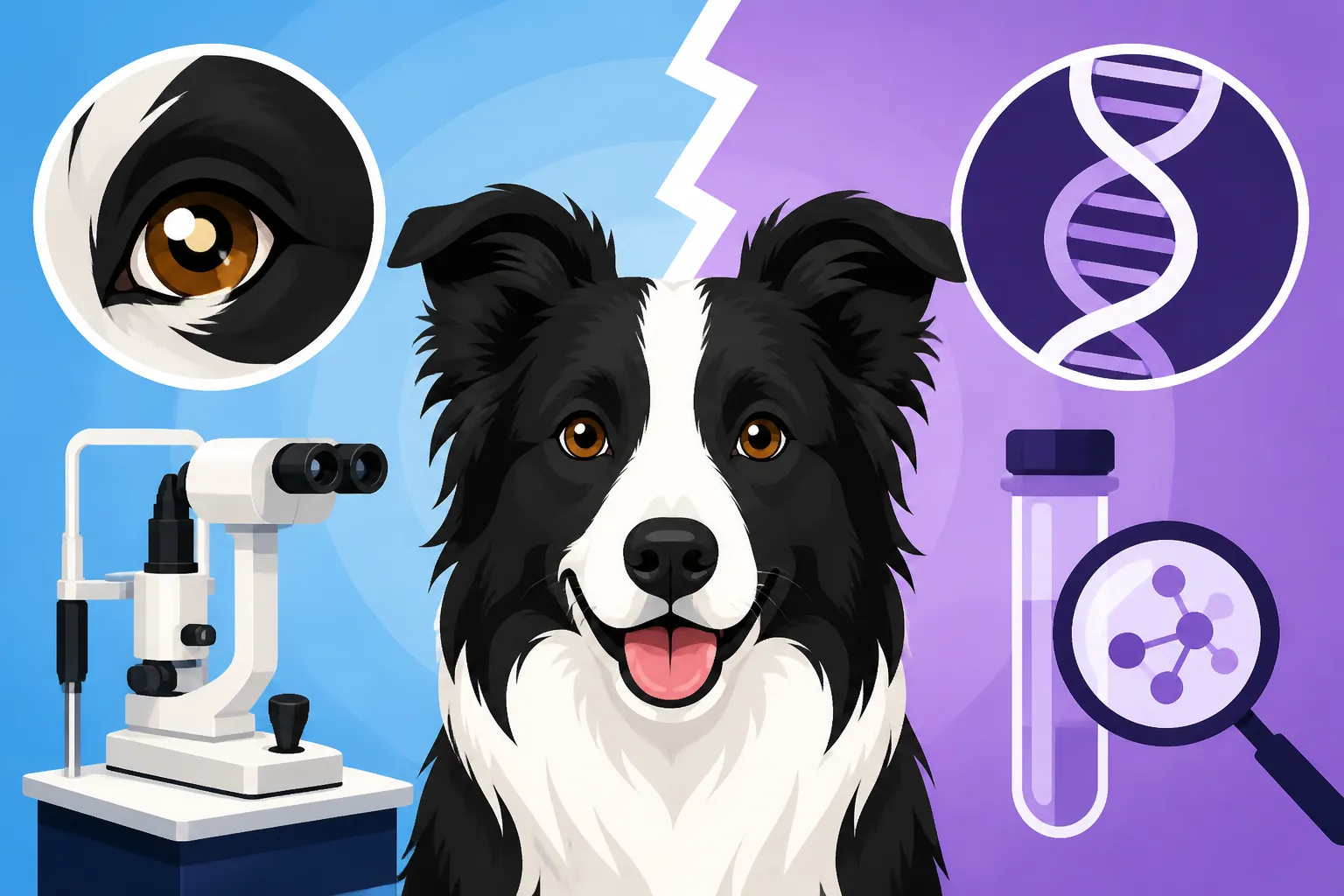
So, if both methods are about eye health, why the need for two different approaches? It boils down to their fundamental nature: one observes the physical present, while the other reveals the genetic potential. Understanding this distinction is key to making informed decisions for your Border Collie.
The 'Snapshot vs. Blueprint' Analogy
Think of it this way: the traditional ophthalmic eye exam is like a "snapshot" of your dog's eyes today. It tells you what the veterinary ophthalmologist can physically see at that moment. Is there a cataract forming? Is the retina healthy right now? Are there any visible signs of inflammation or structural defects? This snapshot is incredibly important for diagnosing existing problems, monitoring progression, and treating immediate concerns. If your Border Collie suddenly develops a painful eye, an exam is the immediate and necessary step to diagnose and address the physical issue.
The DNA test, however, is the "blueprint." It doesn't tell you what the house looks like right now, but rather what designs and instructions are built into its very foundation. It reveals the genetic code that dictates whether your dog has the potential to develop certain inherited conditions, or if they are carriers of genes that could affect their offspring. This blueprint information is constant from birth; it doesn't change over time, even if the physical manifestation of a disease does.
The crucial difference is that the snapshot can be perfectly clear while the blueprint reveals a hidden flaw. Conversely, the blueprint might show a genetic predisposition, but the snapshot could indicate that other factors (like age, environment, or even incomplete penetrance of the gene) mean the dog isn't yet showing symptoms, or perhaps never will to a severe degree. This distinction explains why Why the Border Collie Eye Exam and the DNA Test Differ so profoundly.
When One Catches What the Other Misses
This is where the real power of using both tools comes into play. They are complementary, not mutually exclusive.
A DNA test can catch carriers or dogs affected by recessive genes who appear perfectly normal on a physical exam. For example, a "go-normal" Border Collie will have a clear eye exam as an adult, but their DNA test will still show them as affected by CEA. Without the DNA test, such a dog could unknowingly be bred, passing the CEA gene to its offspring. This is incredibly important for breeders who want to ensure they are producing healthy puppies. Similarly, a young dog with the genetic mutation for a late-onset PRA might have a pristine eye exam, but the DNA test would reveal the impending issue, allowing owners to prepare or make informed breeding choices.
On the other hand, an eye exam can catch non-genetic or acquired conditions that a DNA test would completely miss. Trauma, infection, environmental allergies, or even cataracts that develop due to old age or other health conditions (not inherited ones) would only be detected through a physical ophthalmic exam. A dog might have perfectly clear DNA results for all known inherited eye conditions, but still develop an eye ulcer from a thorn or a cataract as they age.
For breeders, especially, combining these methods is non-negotiable. They should obtain a What a Full Border Collie DNA Panel Covers to screen their breeding stock for all known genetic diseases pertinent to the breed, including those affecting the eyes. Simultaneously, they should ensure their puppies receive The Eye Exam a Border Collie Puppy Gets at Six Weeks to catch any early-onset physical abnormalities, like obvious choroidal defects in CEA-affected pups, or other non-genetic issues.
Here's a quick comparison of what each method offers:
| Feature | Ophthalmic Eye Exam | DNA Test for Eye Conditions |
|---|---|---|
| What it examines | Physical structures of the eye, current health | Genetic code (DNA) for specific mutations |
| Primary focus | Diagnosis of existing conditions, visible signs | Detection of genetic predispositions, carrier status |
| When it's performed | Any age, typically yearly, or when symptoms appear | Once in a lifetime (results are permanent) |
| What it can miss | Hidden genetic conditions (carriers, go-normals), late-onset diseases | Acquired conditions (injuries, infections), non-genetic issues |
| What it can detect | Cataracts, glaucoma, ulcers, retinal detachment, visible CEA defects | CEA (including go-normals), PRA, other specific inherited mutations |
| Information provided | Current ocular health status | Genetic status (clear, carrier, affected) |
Navigating Results and Making Informed Decisions
Receiving results from both eye exams and DNA tests can sometimes feel overwhelming, but it's important to understand how to interpret them and what they mean for your Border Collie's future. If you've opted for a full genetic panel for your pet, or you're a breeder, you'll want to carefully review The Border Collie Genetic Panel and What It Screens.
For an individual pet owner, DNA test results showing "clear" for relevant eye conditions offer immense peace of mind. A "carrier" status means your dog carries one copy of the gene but is unlikely to develop the disease themselves (unless it's a dominant or co-dominant trait, which is less common for many eye conditions). However, a carrier could pass the gene on if bred. If your pet is a carrier, it's generally not a concern unless you plan to breed them, in which case you'd want to avoid pairing them with another carrier. Knowing your dog's status can help you inform your vet, who can then be aware of any potential predispositions when examining your dog. Reputable pet insurance providers like Healthy Paws often cover costs associated with diagnosing and treating inherited conditions, provided the condition isn't pre-existing before policy enrollment, highlighting the value of early screening.
If a DNA test indicates your Border Collie is "affected" by a condition, this means they have two copies of the problematic gene and are likely to develop the disease, or are already affected. This knowledge allows you and your vet to be proactive, monitor for symptoms, and plan for any necessary management or treatment well in advance. For example, if your dog is affected by a form of PRA, you know that vision loss is likely in their future, and you can start preparing your home and adapting to support them.
The ophthalmic eye exam results, conversely, dictate immediate care and ongoing monitoring. If the vet finds cataracts, they might recommend surgery or monitoring. If signs of glaucoma are present, medication would likely be prescribed to manage pressure. Even if the DNA tests are clear, regular eye exams are vital, especially as your Border Collie ages, because acquired conditions can still occur. This multi-faceted approach ensures that both the genetic potential and the current physical reality of your dog's eye health are thoroughly understood and addressed. Pet insurance from companies like Healthy Paws can be a real lifeline when unexpected eye conditions or injuries pop up, helping manage those unforeseen veterinary bills.
The Importance of a Multi-faceted Approach
In conclusion, relying on just one form of testing for your Border Collie's eye health is like only reading half a book. You'll miss critical information. Both the traditional ophthalmic eye exam and genetic DNA testing are indispensable tools, each providing unique insights into your dog's ocular well-being.
For responsible breeders, it’s not a choice between one or the other; it’s about utilizing both effectively to make informed breeding decisions and to ensure the health of future generations. They are responsible for testing their breeding stock and providing clear documentation to potential puppy buyers. Many now require a Running a Genetic Panel on a Pet Border Collie for all their dogs, not just those intended for breeding, to ensure they understand their lines.
For pet owners, understanding these differences empowers you to ask the right questions of your breeder, know what health certifications to expect, and work proactively with your veterinarian. Being aware of your dog's genetic predispositions allows you to monitor for early signs of disease and provide timely intervention, potentially improving their quality of life. Considering pet insurance options, like those offered by Healthy Paws, early in your dog's life can provide a safety net for any future health challenges, whether genetic or acquired. Ultimately, a holistic approach that embraces both the snapshot of the physical exam and the blueprint of the DNA test is the gold standard for safeguarding your Border Collie's precious eyesight.
Disclaimer
Please remember that this article provides general information and guidance. Always consult with a qualified veterinary professional for personalized advice regarding your Border Collie's specific health needs, diagnosis, and treatment. Genetic testing and ophthalmic exams should be conducted by certified professionals.