Steadying a Border Collie That Rushes Stock
It’s a frustration many Border Collie owners experience: you’ve got this incredibly intelligent dog, brimming with instinct, but when they hit the stock, they just rush. Instead of that controlled, thoughtful movement you envision, it’s a burst of speed and pressure that scatters sheep and sends your blood pressure soaring. This guide is here to help you understand why your Border Collie rushes and, more importantly, how to cultivate the patience and steadiness needed for effective, calm herding.
Understanding the "Why" Behind Rushing Stock
Before we can even begin to address the how of steadying a Border Collie, we need to dig into the why. It’s rarely out of malice or disobedience; more often, it's a complex interplay of inherent drives, learned behaviors, and environmental factors. Understanding the root cause is half the battle won, because it allows us to tailor our approach rather than just reacting to the symptom.
Instinct vs. Learned Behavior
Border Collies are bred for generations to move stock. That intense desire to gather and control is hardwired into their DNA. Sometimes, what looks like rushing is simply an overabundance of this raw instinct, an unrefined expression of their natural talent. They see the stock, the prey drive kicks in, and the urge to go overwhelms any nascent impulse control. It's like a finely tuned sports car with a brand new driver – all the power is there, but the finesse hasn't been developed yet.
On the other hand, some rushing can be a learned behavior. Perhaps in early interactions, the dog discovered that a burst of speed achieved a desired outcome, even if it wasn't the right outcome in a herding context. If a dog pushes hard and the sheep move, that’s a self-rewarding cycle. They might not understand the nuance of how they’re supposed to move them, just that moving them works. This is where human intervention is crucial to shape that powerful instinct into something more controlled and productive.
Lack of Foundation or Impatience
Often, rushing stems from an insufficient foundation in basic obedience and impulse control before the dog ever sees stock. If your Border Collie struggles to hold a "stay" for more than a few seconds, or breaks from a "down" when excited, how can we expect them to resist the overwhelming urge to charge when sheep are right in front of them? The principles of control on stock are merely an extension of the control you establish in everyday life. If the groundwork isn't solid, the entire structure of herding manners can crumble.
Impatience can also be a significant factor. Young Border Collies, especially, are often brimming with energy and an eager-to-please attitude that can manifest as over-enthusiasm. They want to work, they want to do something, and waiting for a command can feel like an eternity to their quick minds. This eagerness, while wonderful, needs to be channeled and taught that patience and measured responses are just as valuable, if not more so, than raw speed. This is where careful, deliberate training builds a strong mental framework for their work.
Over-Excitement and Environmental Factors
Think about your dog's state of mind when they're about to engage with stock. Are they bouncing, barking, vibrating with anticipation? This heightened state of arousal can easily lead to rushing. Their brain is flooded with adrenaline, making it harder to process commands calmly or think through their actions. Environmental factors play a huge role too. A small pen might feel more claustrophobic and intense, encouraging a dog to push harder. Skittish sheep that bolt easily can also provoke a stronger, faster response from a dog trying to "catch" them.
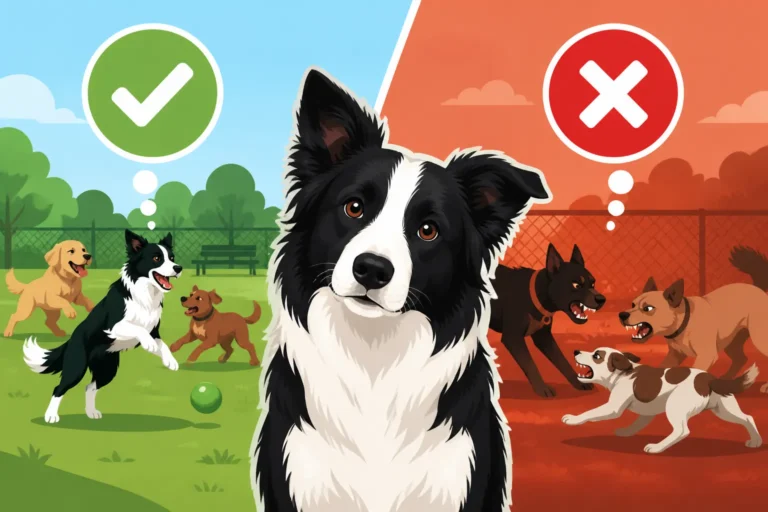
Even the presence of other dogs or people can amp up the excitement. A Border Collie that typically works well alone might rush more in a group setting due to competitive drive or simply the general buzz of activity. It's vital to recognize these triggers and work on managing the dog's arousal levels before they even step into the working area. A calm dog is a thoughtful dog, and a thoughtful dog is far less likely to rush.
Foundation Training for Control and Patience
No matter how strong your Border Collie's herding instinct, it's virtually impossible to achieve real steadiness on stock without a rock-solid foundation of obedience and impulse control. This isn't just about teaching commands; it's about shaping a mindset that values patience and listening to the handler above raw, uncontrolled drive. Without these fundamentals, you'll constantly be battling an uphill struggle when facing live animals.
Building a Solid 'Stop' and 'Down'
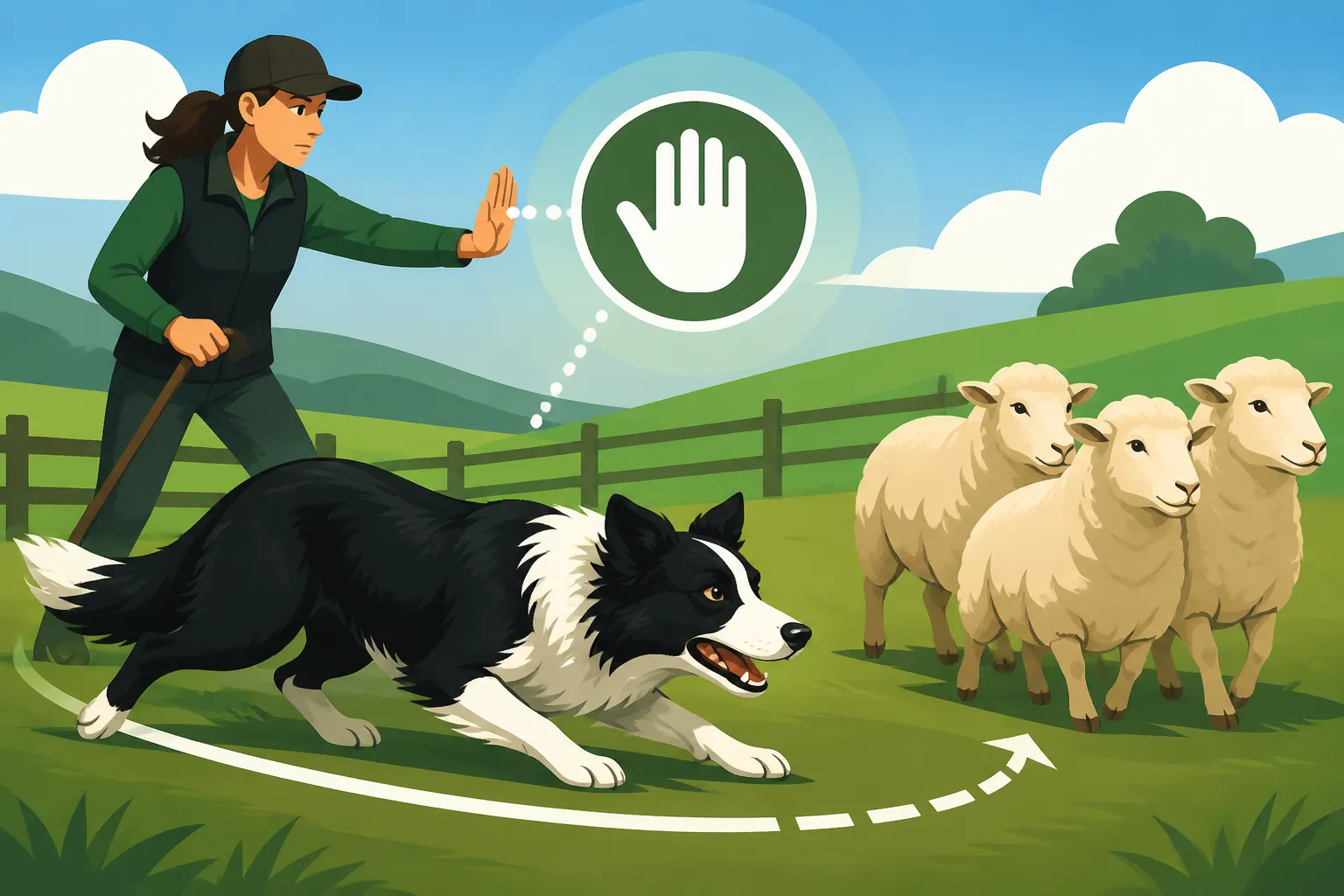
The "stop" and "down" commands are arguably the most crucial for a Border Collie working stock. These aren't just parlor tricks; they are life-saving tools for controlling your dog in a high-drive situation. Begin teaching these commands in a low-distraction environment, like your living room or a quiet yard. Use high-value treats and consistent hand signals and verbal cues. Practice sending your dog away from you a short distance, giving the "stop" or "down" command, and rewarding them for holding it. The goal is an instant, unhesitating response.
As your dog masters these in calm settings, gradually increase the distractions. Try practicing in a busy park, or with another person walking by. If you use a long line, you can practice having them 'stop' or 'down' as they are moving away from you at speed, helping to build that muscle memory for a quick halt. Many handlers find that a good long line, easily found on Amazon, is indispensable for building reliable distance commands before ever introducing stock. This isn't about crushing their spirit; it's about providing clear boundaries and expectations that keep both your dog and the stock safe.
Developing Patience and Impulse Control
Border Collies are renowned for their quick minds, which can sometimes be a double-edged sword. They often anticipate commands, or act on impulse before fully processing what you want. This is where specific exercises designed to build patience and impulse control become invaluable. "Leave it" is a prime example. Start with low-value items, teaching your dog to ignore them until released. Gradually increase the temptation, using favorite toys or even small food rewards. The goal is for your dog to look to you for guidance, rather than automatically pursuing what they want.
Another excellent exercise is duration work with "stays" and "downs." Can your dog hold a "down" for five minutes while you walk away? Can they stay in a "sit" while you prepare their meal, waiting for a release cue? These moments build mental fortitude. Consider structured play, too. Instead of endless fetch where the dog just runs non-stop, incorporate pauses, "stops," and "downs" into the game. Make them wait for the toy, release them, then call them back and ask for another "down" before the next retrieve. This teaches them that control is part of the fun. For advanced training, companies like BAXTER & Bella offer online courses that can provide structured approaches to these critical foundational skills, breaking down complex behaviors into manageable steps.
Effective Leash Handling and Pressure Release
A loose leash is a conduit for communication, not a tool for force. Learning to handle your leash effectively is paramount, especially when working a high-drive dog like a Border Collie. This involves teaching your dog to yield to leash pressure, understanding that a slight pull means to slow down or change direction, and that releasing the pressure is the reward. Start with simple leash manners: walking nicely by your side, stopping when you stop, and turning when you turn. This isn’t just for walks; it directly translates to how you'll communicate when they're on stock.
Practicing a controlled walk around the perimeter of a fence or a field, with consistent check-ins and changes of pace, can improve this. If your dog pulls or rushes forward, a quick, firm correction with the leash (a "pop and release") followed by immediate slack when they comply, teaches them what you want. The release of pressure is the most powerful reinforcer. If you’re constantly dragging your dog around, they’re not learning; they’re just being physically controlled. The goal is a dog that chooses to walk nicely and respond to subtle cues, because they understand the language of the leash.
Introducing Your Border Collie to Stock Correctly
The first interactions your Border Collie has with stock are incredibly formative. Get these wrong, and you can inadvertently reinforce rushing and other undesirable behaviors. The key is to manage the environment and your dog's exposure to ensure they learn calm, controlled engagement, rather than just chasing. This isn't a race; it's about building a solid, respectful working relationship with the sheep.
Choosing the Right Stock and Environment
Not all sheep are created equal when it comes to training a young or inexperienced Border Collie. Flighty, wild sheep that scatter at the slightest pressure can quickly overwhelm a dog and lead to panicked rushing. Instead, look for calm, "dog-broke" sheep or cattle. These animals are accustomed to dogs, move predictably, and won't bolt immediately. They allow your Border Collie to experience the push and pull of herding without the chaos. Overly dominant sheep can also be problematic, as they might challenge a young dog, leading to frustrated nipping or excessive pressure.
The environment is equally important. A small, round pen is often ideal for initial introductions. The circular shape naturally encourages the dog to flank and makes it harder for them to cut off the sheep or corner them aggressively. Avoid large open fields initially, as this gives the dog too much space to chase and makes it incredibly difficult for you to maintain control. Think of it as a controlled laboratory setting where you can observe and shape behavior without the variables of a vast landscape.
The Initial Introduction: Keeping it Calm and Controlled
When your Border Collie first meets the stock, it's crucial to prioritize calm and control above all else. Start on a long line, or even in a harness that allows you to easily manage their physical movement. Don't just open the gate and let them blast in. Walk them calmly around the perimeter of the pen, allowing them to see and smell the sheep without direct interaction. Watch their body language. Are they overly excited? Whining? Barking? If so, take a step back and work on calming them before entering the pen.
Once inside, keep your distance from the stock initially. Allow your dog to simply observe. When you do allow them closer, use the long line to prevent any rushing or gripping. Your goal is to let them feel the stock, to understand the magnetic pull, but always under your strict supervision. If they start to rush, gently check them back with the line and a calm "easy" or "steady" command. Reward quiet observation and slow, deliberate movement. Remember, you're teaching them that you are in control of the interaction, not their raw instinct.
Short Sessions, Positive Reinforcement, and Ending on a Good Note
Long, exhausting sessions are counterproductive, especially when dealing with rushing. Short, focused sessions of 5-10 minutes are far more effective. This prevents your Border Collie from becoming overtired, overstimulated, or frustrated. It also allows you to end each session on a positive note, leaving them wanting more. The moment you see a glimpse of the desired calm, steady movement, praise and reward lavishly. This could be a verbal "good!" or a quick scratch behind the ears.
If your dog has a good moment of steadiness, even if it's just for a few seconds, make that the end of the session. You want them to associate working stock with positive experiences and feeling successful. If you wait until they're rushing and then pull them off, the last thing they learn is that stopping means they're doing something wrong. Always try to set them up for success and end before they make a major mistake. This builds their confidence and reinforces the correct behavior, making them more likely to offer it in the next session.
Strategies for Working with Rushing on Stock
Once your Border Collie has a basic understanding of stock and a solid foundation in obedience, you can begin to actively address rushing behaviors. This requires a keen eye, precise timing, and consistent application of pressure and release. It’s an art as much as a science, and it takes practice for both you and your dog to get it right.
The Importance of the Flank and Keeping Distance
Many novice Border Collies rush straight into the sheep, often from behind, which is a very confrontational and disruptive way to move stock. A well-trained Border Collie uses its "eye" and flanks (circles) to apply pressure from the sides, guiding the sheep calmly. To steady a rusher, you need to teach them to respect the "bubble" around the sheep and to initiate movement from the flank. Use commands like "come bye" (clockwise) and "away to me" (counter-clockwise) from the very first introduction to direct their movement. Teaching a Border Collie the Herding Commands is a great place to start understanding these cues.
When your dog starts to rush straight in, immediately check them back. This might be a firm tug on the long line, a sharp verbal "steady!" or "lie down!" The goal is to interrupt the forward momentum and redirect them to a wider flank. Don't be afraid to take them completely off the stock for a moment if they can't control themselves. Make them stop, breathe, and then try again. The distance they maintain from the stock is crucial; too close, and they'll feel compelled to push hard. Encourage them to work from a respectful distance, using their presence and eye, rather than brute force.
Using the Fence and Natural Boundaries
Fences and natural boundaries are your best friends when teaching a Border Collie steadiness. They provide a physical limitation that helps you control the stock and, by extension, your dog. Instead of allowing your dog to gather sheep in the middle of a large field where they can rush and scatter in any direction, work along a fence line. The fence acts as a natural barrier, preventing the sheep from running away too far and providing a clear path for your dog to work.
You can use the fence to encourage your dog to flank properly. If your dog is rushing in from the front, position yourself so the fence is behind the sheep, creating a natural funnel. Your dog will then have to go around the sheep to push them along the fence, reinforcing the flanking motion. This simplifies the task for your dog and removes some of the decision-making that can lead to rushing. As your dog gets better, you can gradually move away from the fence, but always having a boundary to fall back on can be incredibly helpful. This is also where a good set of training panels or a round pen can be incredibly useful, providing those artificial boundaries in any suitable space.
Correcting Rushing: Timing and Technique
Correcting rushing requires impeccable timing. You want to interrupt the behavior the instant it begins, not after the sheep are already scattered across the field. A correction should be quick, clear, and immediately followed by a release of pressure when the dog complies. If you're on a long line, this might be a sharp, short tug and release, combined with a verbal "steady!" or "easy!". The moment your dog backs off or slows down, even slightly, praise them.
Avoid constant nagging or shouting, as this will only confuse and frustrate your dog. One firm, well-timed correction is far more effective than twenty weak ones. Some handlers use a whistle for commands and corrections, as it cuts through environmental noise and carries over distance. Whistle Commands for a Border Collie explains more about this method. If a dog is particularly persistent in rushing, you might need to take them completely away from the stock, have them lie down for a moment, and then calmly reintroduce them. This teaches them that rushing leads to the removal of the rewarding activity, while calm behavior allows them to continue working.
Common Mistakes and How to Avoid Them
Even with the best intentions, it's easy to fall into common pitfalls when training a Border Collie, especially when dealing with such an instinctive behavior as herding. Recognizing these mistakes early can save you a lot of frustration and set your dog up for greater success.
Pushing Too Fast, Too Soon
One of the biggest mistakes handlers make is trying to move their Border Collie onto complex herding maneuvers or large groups of stock before the foundational control is firmly in place. It's tempting to want to see them "work," but if they haven't mastered basic concepts like steady flanking, stopping, and maintaining distance on a few calm sheep, throwing them into a bigger, faster scenario will almost certainly lead to chaos and reinforcement of rushing. Think of it like trying to teach a child algebra before they've mastered basic addition and subtraction.
Resist the urge to compare your dog to others, or to push them because they seem "ready." Every Border Collie develops at its own pace. Be patient. If your dog is struggling, go back a step. Reinforce the basics in a simpler environment with calmer stock. It's far better to have a dog that progresses slowly but steadily, building a solid understanding and confidence, than one that is constantly pushed past its limits, becoming frustrated and developing bad habits. The Age to Start a Border Collie on Stock discusses appropriate timelines for beginning herding work.
Inconsistent Commands and Expectations
Border Collies thrive on consistency. They are intelligent enough to quickly pick up on patterns, both good and bad. If your "stop" command means one thing sometimes (an immediate halt) and another thing other times (slow down eventually), your dog will become confused and less reliable. Similarly, if you sometimes allow a bit of rushing, and other times correct it harshly, you're sending mixed signals. This inconsistency teaches your dog to gamble, to try the unwanted behavior and see if they get away with it.
Establish clear, unambiguous commands for every action you want your dog to perform on stock. Use the same words, the same tone, and the same hand signals every single time. And critically, follow through with your expectations. If you give a "lie down" command, ensure your dog lies down, even if it means walking over and physically guiding them into position. Your consistency is what builds trust and clarity for your dog, allowing them to confidently understand what you want from them in the heat of the moment.
Letting the Dog Self-Reward Rushing
As mentioned earlier, rushing can be incredibly self-rewarding for a Border Collie. If they push hard and the sheep move, that's a direct, immediate consequence that reinforces their behavior. Every time your dog successfully pushes sheep by rushing, they are essentially getting a "treat" that tells them, "Yes, that worked! Do it again!" This can quickly ingrain the unwanted habit, making it much harder to undo.
The key to avoiding this is to never let the dog "win" by rushing. If they rush and move the sheep, stop the session immediately. Take them away from the stock. This teaches them that rushing ends the fun. Conversely, if they show even a brief moment of steadiness or correct behavior, that's when they get to continue working, which is their ultimate reward. You are controlling the reward system. You dictate when the work continues, and you only allow it to continue when they are displaying the desired calm and control. This deliberate management helps break the self-reinforcing cycle of rushing.
Advanced Control and Maintaining Steadiness
Once your Border Collie has moved beyond the initial rushing phase and is demonstrating better control, the work isn't over. Steadiness is a continuous journey that requires ongoing refinement, especially as you introduce new challenges and environments. The goal is to build a dog that is not only capable but consistently reliable, regardless of the situation.
Adding Distance and Distraction
A truly steady Border Collie isn't just steady when working close to you in a quiet pen; they're steady when working at a distance, with various distractions present. This is the next logical step in training. Start by gradually increasing the distance between yourself and your dog while they are working stock. If you've been working on a long line, slowly increase its length, then transition to off-lead work in a contained area. Your commands, especially "stop" and "down," must be just as effective at 50 yards as they are at 5 feet.
Introduce controlled distractions. This could be another person walking by outside the pen, or another dog calmly observing from a distance. Don't overwhelm your dog, but slowly expose them to scenarios that might challenge their focus. If they break steadiness, calmly bring them back to basics, shortening the distance or reducing distractions until they can succeed. This systematic approach builds their ability to maintain focus and control even when the environment isn't perfectly sterile.
Maintaining Steadiness with Different Stock
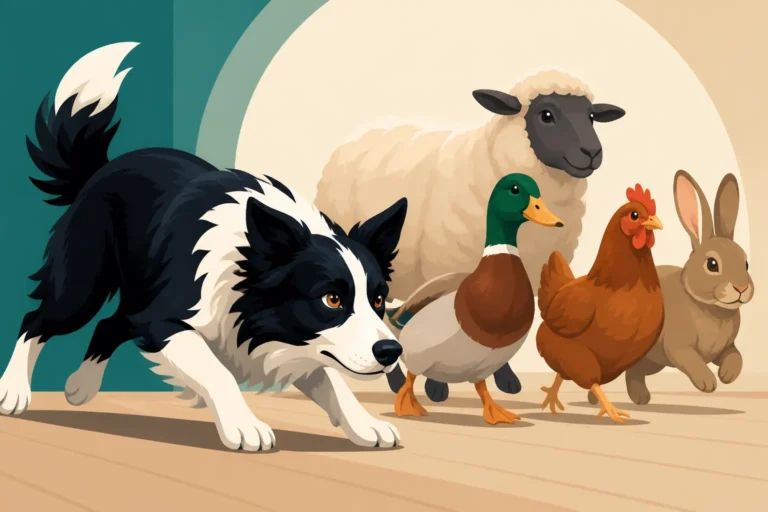
Sheep aren't the only animals a Border Collie might encounter, and different types of stock present different challenges. A dog that is perfectly steady on calm, predictable sheep might struggle with flighty lambs, stubborn cattle, or even poultry. Each type of animal moves differently, responds to pressure in unique ways, and requires a slightly different approach from the dog.
Introduce new types of stock gradually, treating each introduction as a new learning opportunity. Start back in a controlled environment, reinforcing the same principles of calm, steady work. Your dog needs to learn to read different animals and adjust their pressure accordingly. A good working Border Collie learns to adapt its intensity, understanding that a strong surge on skittish lambs might scatter them, while a gentle approach on a stubborn cow might not be enough. This adaptive intelligence is a hallmark of a truly advanced herding dog.
Proofing Commands in High-Drive Situations
Proofing means practicing commands in increasingly challenging, high-stakes environments until they are bomb-proof. For a Border Collie, this means being able to execute a "stop" or "down" instantly, even when their drive is through the roof, and the sheep are moving quickly. This might involve working larger groups of sheep, working in unfamiliar fields, or even simulating trial conditions.
The key is to push your dog just enough to challenge them, but not so much that they consistently fail. If they rush, make sure your correction is clear and effective, and then guide them back to the correct behavior. Always end the session on a positive note, even if it means stepping back to an easier task for the last few minutes. This ongoing practice under varied conditions solidifies their training and ensures that their steadiness isn't just a parlor trick, but a reliable skill they can deploy whenever you ask them to. This takes incredible dedication, but the reward is a truly magnificent working partnership. Working an Epileptic Border Collie on Stock touches on the delicate balance of drive and control even in dogs with specific health considerations, highlighting how crucial careful management is.
Disclaimer
This article is for general informational purposes only and does not constitute professional advice. Laws, prices and regulations vary by location and change over time. Consult a qualified professional for guidance on your specific situation.