A Border Collie That Stalks Visitors
It's incredibly frustrating, and often quite embarrassing, when your otherwise brilliant Border Collie turns into a silent, intense stalker the moment a visitor walks through your door. That piercing "eye," the low crouch, the slow creep – it’s unnerving for guests and leaves you feeling helpless. This comprehensive guide will explain why your Border Collie acts like this, what those behaviors truly mean, and, most importantly, provide actionable strategies to manage and eventually modify this deeply ingrained herding instinct.
Understanding the Border Collie Stare
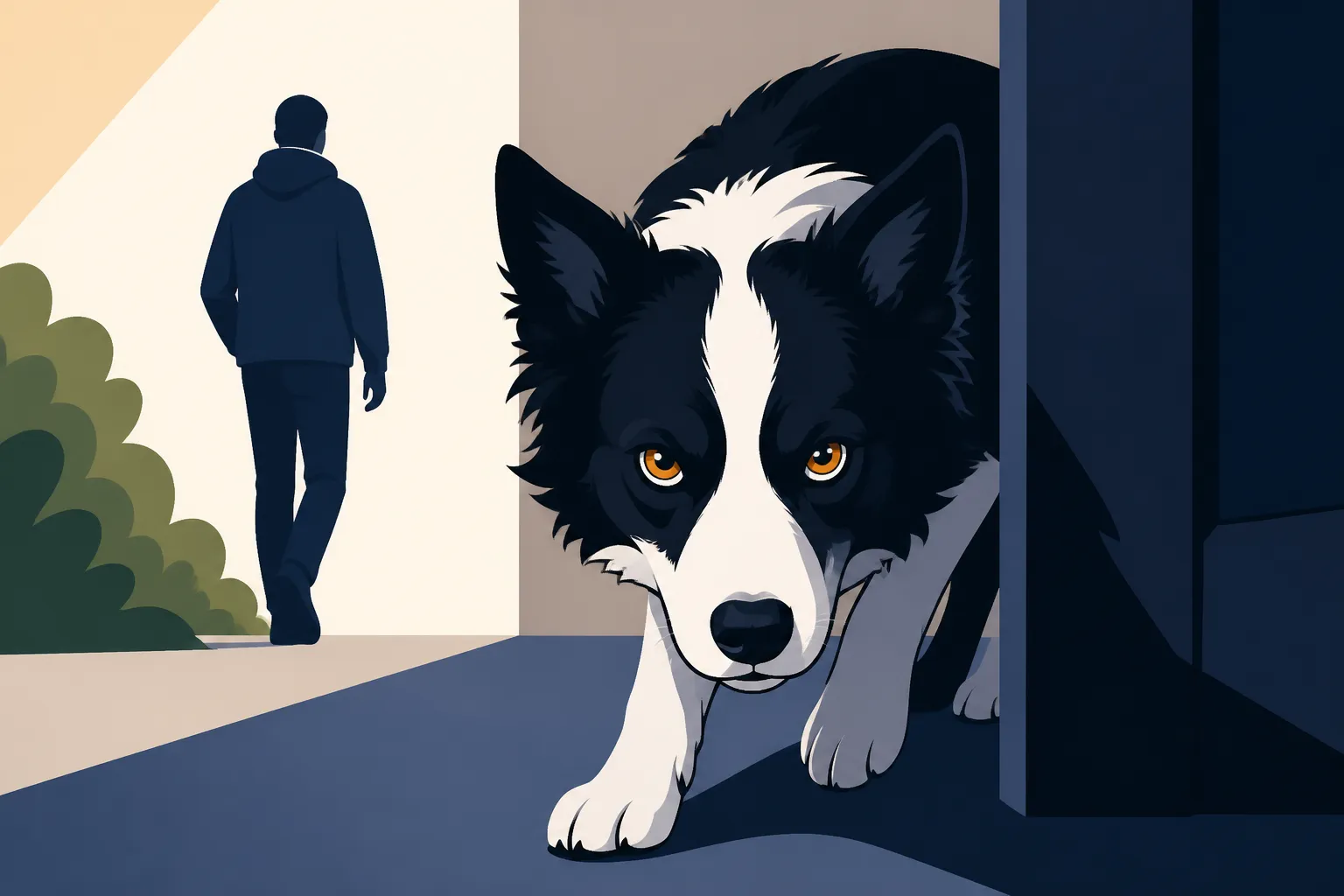
The infamous Border Collie stare, often called "the eye," is a marvel to behold when directed at livestock. It’s a tool of their trade, a non-verbal command that signals to sheep, "I'm in charge, move where I want you to go." This intense focus, combined with a low, predatory crouch and slow, deliberate movement, is what makes them such effective herding dogs. However, when this instinct is misdirected at house guests, it can quickly become problematic and misunderstood.
The Instinct Behind the "Eye"
From generations of selective breeding, Border Collies possess an almost unparalleled drive to gather and control. This isn't just about chasing; it's about positioning, influencing movement, and maintaining order within a group. The "eye" is the cornerstone of this work. It's a highly sophisticated form of non-verbal communication and control. A Border Collie uses its body language, particularly its gaze, to convey intent without barking or physical contact. They are constantly assessing, strategizing, and looking for an opportunity to "work" whatever they perceive as a flock. This deep-seated instinct doesn't just switch off when they're off the farm; it's part of their core programming.
In the quiet of your home, with no sheep in sight, this powerful instinct still seeks an outlet. Your Border Collie is looking for something to organize, something to control, and often, that "something" becomes your bewildered guests. The intensity isn't aggression, but rather a profound, innate drive to manage movement and establish a kind of order within their perceived territory. Understanding this root cause is the first step toward compassionately addressing the behavior.
Why Visitors Become "Sheep"
To a Border Collie whose instincts are constantly humming, a group of people moving, talking, and shifting around can easily be interpreted as a scattering flock in need of gathering. Your guests, especially if they are new, animated, or moving unpredictably, present a perfect target for this misdirected herding drive. They aren't behaving in a predictable, calm manner, which, in a Border Collie's mind, signifies disorder – and disorder needs to be addressed.
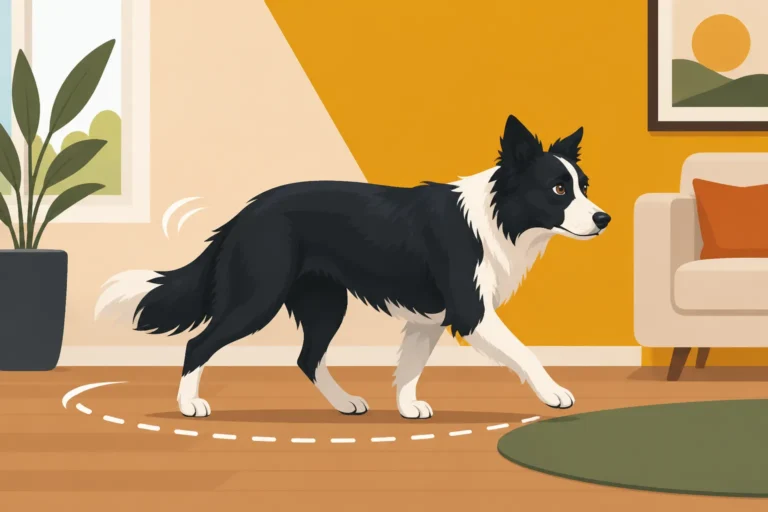
The low crouch, the slow creep, the silent stare – these are all classic herding maneuvers. The dog isn't trying to be rude; it's simply applying its natural working methods to the nearest available "stock." This is why a Border Collie might circle people at parties, or even A Border Collie Gathering the Family Into One Room. It’s an attempt to unify the "flock" and keep them together. For guests who don't understand this, it can feel intimidating, intrusive, or even threatening, leading to uncomfortable situations and strained visits.
Common Triggers for Visitor Stalking
Identifying what sets off your Border Collie's stalking behavior is crucial for effective management. It's rarely just one thing, but often a combination of factors that trigger their innate drive. Pay close attention to the environment, the guest's behavior, and your dog's state of mind leading up to the "stalk."
High Arousal and Lack of Structure
Border Collies thrive on routine and clear expectations. When a new person enters their territory, especially with the associated excitement and disruption, a Border Collie's arousal levels can skyrocket. This heightened state of energy, combined with a lack of clear direction or structure from you, creates a vacuum that their herding instinct is all too happy to fill. If your dog isn't sure what its job is, it will often invent one – and that job might be to "manage" your guests.
Think about the usual chaos when guests arrive: the doorbell rings, people exclaim, jackets come off, hands extend. This flurry of activity, coupled with your attention being divided, can be overwhelming and stimulating for a highly sensitive Border Collie. Without a designated role or a calming activity, they default to their strongest instinct. This is also why some Border Collies start testing you at certain ages, and a lack of clear boundaries around visitors can be a prime example of this. You might even notice this behavior manifesting similarly if you have A Border Collie Circling Children in the Yard, where movement and high energy act as triggers.
Attention-Seeking vs. Herding Behavior
It's important to distinguish between genuine herding behavior and attention-seeking. While the intense stare is a herding trait, sometimes a Border Collie might also be learning that this dramatic display gets a reaction – either from you trying to intervene, or from guests who inadvertently reinforce it by talking to the dog or trying to shoo it away. If your dog gets an emotional response (even a negative one) from its actions, it might be partly motivated by a desire for attention, or at least a desire to control the interaction.
However, true herding behavior will often include the characteristic low crouch, the slow, deliberate movement, and the intense "eye." If your dog is simply barking for attention or jumping up, it's a different, though related, problem. The stalking behavior, by its very nature, is a silent, calculated maneuver. It’s a deeper impulse rooted in their genetic blueprint, not just a cry for affection.
Practical Strategies for Managing the Stalking Behavior
Addressing stalking behavior requires a multi-pronged approach that combines immediate management with consistent training. You need strategies to implement before guests arrive, during their visit, and after they leave to reinforce desired behaviors.
Proactive Management Before Guests Arrive
The key to preventing your Border Collie from stalking guests often lies in planning ahead. Don't wait for the doorbell to ring. Before anyone even steps through the door, establish a clear plan for your dog. A designated "place" command is invaluable here. Teach your dog to go to a specific mat or bed and stay there calmly. Brands like BAXTER & Bella offer excellent online courses that can guide you through teaching a solid "place" command, which is fundamental for this type of situation. This gives your dog a job and a clear boundary.
Another effective strategy is using a crate or a sturdy dog gate to create a physical barrier. This isn't a punishment; it's a management tool to set your dog up for success. You can make the crate a positive space by providing a high-value chew toy or a puzzle feeder. If you need a reliable, sturdy crate, look for options on Amazon that fit your Border Collie's size and strength. Consider having your dog on a leash, even in the house, when guests are expected. This provides immediate control and allows you to redirect them if they start to fixate. Think of it as putting them "on lead" for a brief training session. This proactive approach minimizes the chances of your dog feeling the need to "herd" your visitors. For more on teaching this crucial skill, check out Teaching a Border Collie to Stay on Its Bed.
Teaching an Alternative Behavior
Instead of letting your Border Collie engage in the unwanted stalking, teach them what to do instead. The "place" command mentioned earlier is a fantastic alternative. When guests arrive, direct your dog to their mat or crate with a calm, firm command. Reward them generously for staying there, especially when visitors are present. This teaches them that calm, settled behavior earns rewards, rather than the intense, often self-rewarding, act of stalking.
You can also redirect their herding instinct onto appropriate toys or activities. If your dog starts to eye a guest, immediately interrupt with a cheerful tone and offer a favorite fetch toy (if they can play fetch calmly) or a puzzle toy. This needs to be done before the stalking escalates. The goal is to provide an acceptable outlet for their mental energy. This requires you to be highly observant and quick to act, anticipating their instinct before it takes over. For instance, if your dog is showing signs of high arousal, a quick game of "find it" with treats scattered across the room can divert their focus.
Managing Interactions During Visits
Even with proactive measures, you'll need to actively manage interactions throughout the visit. Keep your Border Collie on a long line, even if they're tethered to their "place." This gives you a lifeline to gently guide them back to their spot or interrupt unwanted behavior without having to physically grab them. You can find durable long lines on platforms like Amazon. Enlist your guests' help by asking them to largely ignore your dog until your dog is settled. This avoids inadvertently rewarding the stalking behavior with attention.
Short, structured greetings are often best. Allow your dog to calmly sniff a guest (if appropriate) for a few seconds, then immediately cue them back to their "place." Avoid allowing guests to engage in high-energy play with your Border Collie if it tends to ramp up their excitement. Instead, suggest calm interactions like gentle petting while the dog is in its place. Remember, the goal is to teach your dog that guests mean calm, settled behavior, not an opportunity to "work." If your dog tends to get over-aroused, having a specific "emergency word" or strong recall command can be vital to interrupt and redirect their focus. You can learn more about developing such a command in The Emergency Word a Border Collie Must Know.
Long-Term Training and Behavior Modification
While immediate management is essential, truly modifying the stalking behavior requires consistent, long-term training that addresses your Border Collie's underlying needs and strengthens their impulse control. This isn't a quick fix, but a journey of patience and dedication.
Strengthening Basic Obedience and Impulse Control
A solid foundation in basic obedience is paramount for any Border Collie, but especially for one prone to stalking. Commands like "sit," "stay," "down," and "come" must be rock-solid, even in distracting environments. These commands give you the tools to direct your dog's behavior and provide structure when their instincts might otherwise take over. Focus on teaching impulse control – waiting patiently for food, for the door to open, or for a toy to be released. This helps your Border Collie learn to pause and think before acting on their impulses.
Practice these skills in various environments, gradually increasing distractions. Start in a quiet room, then move to a backyard, then a park, and finally, try practicing with a calm, dog-savvy friend acting as a "visitor." The more consistently you practice these fundamental skills, the better equipped your Border Collie will be to manage their strong herding drive in real-world scenarios. Remember, Border Collies are incredibly intelligent and often The Border Collie That Learns Faster Than You Teach, so consistent, clear training will yield results.
Desensitization and Counter-Conditioning
For more ingrained stalking behavior, you might need to employ desensitization and counter-conditioning. This involves gradually exposing your Border Collie to visitors in a controlled way, while simultaneously changing their emotional response from one of intense focus (stalking) to one of calm relaxation. Start with a very mild trigger – perhaps a family member walking slowly across a room, far away from your dog. As soon as your dog notices them without beginning to stalk, reward them with a high-value treat. The goal is to associate the presence of people (even "visitor-like" people) with positive outcomes, not with the need to herd.
Slowly increase the intensity: bring the person closer, have them move a little faster, or introduce a new person. Always ensure your dog remains under threshold, meaning they are aware of the "visitor" but not reacting with stalking behavior. If they start to stalk, you've gone too fast; back up to an easier step. This process requires patience and keen observation of your dog's body language. It's about changing their deeply ingrained emotional response over time.
The Role of Consistent Mental and Physical Exercise
Never underestimate the immense physical and mental exercise needs of a Border Collie. A bored or under-stimulated Border Collie is far more likely to invent its own "job," which often translates to unwanted behaviors like stalking. While walking a Border Collie is not enough, they do need vigorous physical activity daily – think running, fetching, or structured off-leash play in a safe, fenced area. However, it's the mental work that truly tires out a Border Collie.
Engage their brilliant minds with puzzle feeders, scent work, trick training, or even enrolling in dog sports like agility or obedience. These activities provide a productive outlet for their intelligence and energy, reducing the likelihood they’ll channel their intensity into managing your guests. Many new Border Collie owners get this wrong, often underestimating What New Border Collie Owners Get Wrong About Energy. For creative ways to engage your dog's mind, explore resources on Mental Work That Tires a Border Collie Faster. A truly tired and mentally fulfilled Border Collie is a calm Border Collie, less prone to fixating on visitors.
When to Seek Professional Help
While many Border Collie owners can manage stalking behavior with consistent training and management, there are times when professional intervention is not just helpful, but necessary. Recognizing these signs early can prevent the behavior from escalating and ensure the safety and comfort of everyone involved.
Identifying Escalating Behavior
If your Border Collie's stalking behavior progresses beyond intense staring and creeping to include behaviors like nipping at heels, growling, or even snapping, it's a clear sign that you need professional help. While often still rooted in herding instinct, these behaviors indicate that your dog is feeling highly stressed, overwhelmed, or is becoming truly possessive of its "flock." The intent might still be to control, but the methods are becoming unacceptable and potentially dangerous.
Similarly, if your efforts to manage and train are consistently failing, or if the behavior is causing significant stress for you or your dog, it's time to call in an expert. Don't wait until someone gets hurt or until you feel completely defeated. Early intervention from a qualified professional can make a world of difference. Understanding behaviors like Whether a Border Collie Nips Ankles can help you differentiate between mild herding and something more concerning.
Finding a Qualified Professional
When seeking help, look for a certified professional dog trainer or a veterinary behaviorist who has experience with herding breeds. Avoid trainers who rely on punitive methods, as these can often suppress the behavior temporarily without addressing the underlying cause, potentially leading to more severe issues down the line. A qualified professional will conduct a thorough assessment of your dog's behavior, your home environment, and your training history.
They will then work with you to develop a customized training plan that focuses on positive reinforcement, management strategies, and behavior modification techniques tailored to your Border Collie's specific needs. They can also help you identify any subtle triggers you might be missing and teach you advanced handling skills. Sometimes, it takes an objective, experienced eye to truly understand the nuances of a highly intelligent and driven breed like the Border Collie.
Disclaimer
This article is for general informational purposes only and does not constitute professional advice. Laws, prices and regulations vary by location and change over time. Consult a qualified professional for guidance on your specific situation.