Calling a Border Collie Off Livestock
It's a scene many Border Collie owners dread: your dog spots livestock, or perhaps even just a distant deer, and suddenly, they're gone. That intense focus takes over, and your usually responsive, eager-to-please companion acts as if you're not even there. Breaking that deep-seated instinctual lock-on can feel impossible, and it's not just frustrating; it's a genuine safety concern for both your dog and the animals they might harass. This comprehensive guide will walk you through understanding why your Border Collie struggles to disengage from livestock and, most importantly, provide actionable strategies to teach them to reliably turn away from temptation when you call.
Understanding the Border Collie's Instinct to Herd
To effectively call a Border Collie off livestock, we first have to appreciate the profound depths of their herding instinct. It's not just a hobby for them; it's practically their genetic blueprint, woven into every fiber of their being over centuries of selective breeding. When they lock onto stock, they're not being stubborn or disobedient in the human sense; they're simply following an ancient, powerful urge.
The Deep-Seated Drive
Imagine being born with an innate drive to solve complex puzzles, or to paint, or to compose music – that's what herding is to a Border Collie. For generations, their ancestors were bred specifically to gather, control, and move sheep with precision and minimal human intervention. This isn't just a learned behavior; it's hardwired. From the moment they're puppies, many Border Collies exhibit nascent herding behaviors, whether it's trying to "gather" the family cat, nip at the heels of running children, or stare intently at anything that moves. This drive is what makes them such exceptional working dogs, but it's also what can make them incredibly challenging pets if not properly channeled and managed. When they see sheep, cattle, or even just wild animals, that switch flips, and the world narrows down to one singular focus: the stock. It's a powerful chemical reward system in their brains, a rush of dopamine, every time they get to engage with that instinct.
This means that simply telling them "no" or expecting them to instantly stop is often unrealistic without significant, consistent training that re-wires their response. We're asking them to override something that feels inherently right and deeply satisfying to them. It requires a profound level of trust and an even more profound understanding from us, their handlers, to guide them through it.
The "Eye" and Its Power
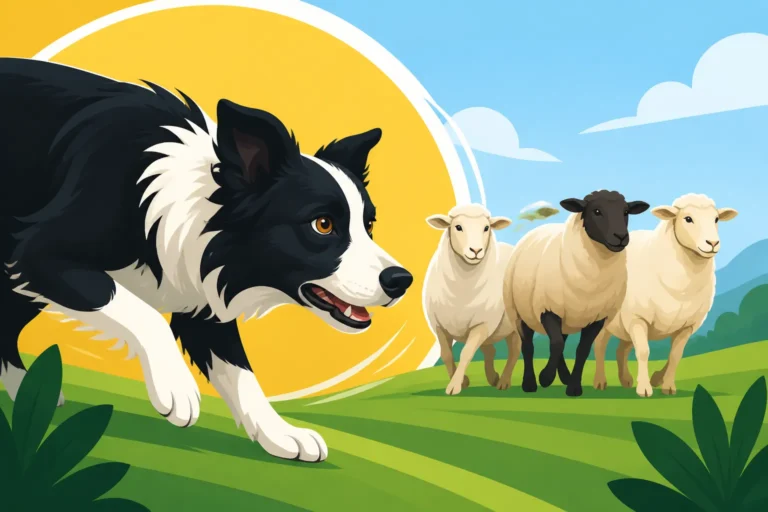
Central to the Border Collie's herding style is what's known as "the eye." This isn't just a casual glance; it's an intense, fixed, predatory-like stare that they use to control and influence livestock. A Border Collie with strong eye can make a flock of sheep move with just a look, exerting a silent, unyielding pressure. It's a truly mesmerizing thing to watch when wielded by a skilled dog on the trial field. Why a Border Collie Crouches and Stares can offer more insight into this fascinating behavior.
The power of the eye lies in its ability to simulate a predator's gaze, but without the actual attack. This subtle intimidation allows the dog to manipulate the sheep's movement. For your Border Collie, when that eye locks onto stock, it's like putting on blinders to everything else. Their hearing might diminish, their awareness of your presence can fade, and their entire being becomes focused on that "prey." They become absorbed in the task, an almost trance-like state where the instinct to control overwhelms all other inputs. Breaking this intense focus requires more than just a casual command; it requires an intervention that is even more compelling or startling than the herding instinct itself.
When Instinct Becomes Obsession
While the herding instinct is a beautiful and functional trait, it can quickly cross the line into obsession or problematic behavior if not properly managed and channeled. A Border Collie that is allowed to constantly "work" anything that moves – cars, bicycles, children, other pets – without direction or a clear "off" switch can develop unhealthy fixations. This isn't productive herding; it's compulsive behavior driven by an unfulfilled or misdirected instinct.
For instance, a dog that consistently chases and nips at a cat might eventually injure it, or a dog that habitually stalks neighborhood joggers could create a dangerous situation. Worse, if they get to practice herding actual livestock without supervision or control, they can develop bad habits like gripping (biting) or worrying the stock, which is not only dangerous for the animals but can also be incredibly hard to un-train. This is why early, consistent training of an "off" switch is so crucial. Without it, the dog learns that engaging its instinct is always its own reward, and your commands become irrelevant in the face of such powerful internal reinforcement. Think of it as a highly intelligent, driven individual who finds a powerful addiction; breaking that addiction takes immense effort and strategic intervention.
Establishing Foundational Obedience Before Livestock Exposure
You wouldn't ask a child to solve advanced calculus before they've mastered basic arithmetic, and the same principle applies to training a Border Collie around livestock. Before you even think about introducing them to sheep, goats, or cattle, your dog needs a rock-solid foundation of obedience in distraction-free environments. These aren't just polite requests; they are life-saving commands when instinct takes over.
The Absolute Necessity of a Bomb-Proof Recall
If there's one command that stands above all others for a Border Collie, especially one with access to open spaces or potential livestock, it's a bomb-proof recall. This means your dog drops everything and comes back to you immediately, no matter the distraction – a squirrel, another dog, or the ultimate temptation: moving animals. Anything less than 100% reliability isn't safe when livestock is involved. A strong recall is your primary tool for safety and control.
To build this, start in a quiet environment, rewarding generously with high-value treats and praise every single time your dog comes. Gradually introduce minor distractions, always ensuring success before upping the ante. Use a long line, perhaps 20 to 30 feet, to allow them freedom while still maintaining a physical connection if they hesitate. Practice in various locations, with different people, and during different times of day. Remember, the goal is for your recall cue to be the most exciting, rewarding thing in your dog's world, eclipsing the allure of anything else. You might find resources like those from BAXTER & Bella, an online puppy school, helpful in building these initial foundational behaviors, as they often emphasize strong recall from the start.
Building a Reliable "Leave It" or "That'll Do"
Beyond coming back, your Border Collie also needs to understand how to disengage from something tempting while remaining where they are. This is where "leave it" or the traditional herding command "that'll do" comes in. "Leave it" is universal for disengaging from any object, while "that'll do" specifically signals the end of herding work or the need to stop interacting with stock.
Start teaching "leave it" with low-value items on the floor, blocking access with your hand if necessary, and then rewarding heavily when they look away or move off. Progress to more enticing items, and then to moving objects. For "that'll do," it's often best introduced in a controlled herding environment, but the concept of disengagement can be practiced by asking them to "that'll do" from a toy or another dog. The key is to make leaving the desired item more rewarding than interacting with it. For example, if they leave a dropped treat, they get an even better treat or a fun game with you. Repetition, consistency, and escalating distractions are crucial here. These commands provide an essential override, giving you a way to communicate "stop focusing on that" even before they've physically moved towards the stock. That'll Do and Ending a Border Collie's Work goes into this command in more detail.
The Power of Impulse Control Games
Border Collies are incredibly intelligent, but their high drive can sometimes override their common sense. Impulse control games are fantastic for teaching them to think before they act and to exercise self-restraint – qualities that are absolutely essential when you're asking them to ignore a strong instinct like herding. These games build frustration tolerance and teach them that waiting and listening to you leads to good things.
Some excellent impulse control games include:
- "Wait" at the door: Teach them to wait calmly before going outside or entering a room.
- "Stay" for meals: Make them wait for their food bowl until you give a release cue.
- Tug with rules: Play tug, but require them to "drop it" on command and wait for permission to restart.
- "It's Yer Choice": Hold a treat in your hand, close it when they try to get it, and open it when they back away. They only get the treat when they make the choice to disengage from trying to snatch it.
- "Go to Your Place": Train them to go to a designated mat or bed and stay there despite household distractions. Settling a Border Collie on a Mat can give you more ideas for this.
These seemingly simple games lay the groundwork for a dog that can control its impulses when faced with the irresistible urge to herd. They learn that waiting, listening, and deferring to your direction ultimately leads to greater rewards. This mental conditioning is as important as the physical commands themselves.
Introducing Your Border Collie to Livestock Safely
Once your Border Collie has a solid foundation in obedience, the real test begins: introducing them to livestock. This phase is critical, and rushing it can undo all your hard work, potentially creating a dog that's impossible to call off stock. Safety, control, and incremental steps are paramount.
Controlled Environments and Experienced Mentors
Never, ever introduce a Border Collie to livestock in an uncontrolled, open environment, especially if you're new to herding. This is a recipe for disaster. The ideal scenario involves a securely fenced area – think a small paddock or a round pen – with calm, "dog-broke" sheep or cattle. These animals are used to dogs and won't panic, which reduces the chance of your dog getting overstimulated or resorting to rougher handling.
Even more important is having an experienced stock dog trainer or handler present. They can read both your dog's subtle body language and the stock's reactions, offering real-time guidance and interventions. They'll know when to let your dog try, when to correct, and crucially, when to call it a day. Trying to teach your Border Collie to herd or to call off stock without this expert guidance is like trying to learn to fly a plane from a textbook – it’s fraught with risk. These mentors can also demonstrate the specific techniques and timing required to teach commands like "come bye" and "away to me" effectively.
Starting on a Long Line or Lead
Even in a controlled environment, your first introductions to livestock should be on a long line. This is your safety net. A 30 to 50-foot long line, or even just a standard lead at first, allows you to physically prevent your dog from making mistakes, like rushing, gripping, or ignoring your commands completely. It provides a crucial means of interruption when their herding drive overwhelms their nascent obedience.
Start by just allowing your dog to observe the stock from a distance on the line. Watch for signs of increasing arousal – stiff body, intense stare, low crouch. The moment you see them about to escalate, gently check them with the line and redirect their attention. Praise and reward heavily for any calm observation or for breaking their focus to look at you. The long line isn't just for control; it's a teaching tool. It allows you to physically enforce your "leave it" or "that'll do" command if they ignore your verbal cue, immediately followed by praise once they comply, even if it was leash-induced. Over time, as their reliability improves, you can gradually loosen your grip and allow more freedom, but always be prepared to step in. You can find durable long lines suitable for this work easily on platforms like Amazon.
Reading Your Dog's Body Language
Your Border Collie will tell you everything you need to know through their body language, especially when around stock. Learning to read these subtle cues is paramount for intervening before they make a mistake, rather than reacting after the fact. Being proactive is always better than being reactive.
| Body Language Sign | Interpretation | Action to Consider |
|---|---|---|
| Low Crouch, Intense Stare | Initiating "eye," strong focus, preparing to move stock. | Give "that'll do" or "come" before they fully engage; shorten line. |
| Stiff Body, Raised Tail | Increasing arousal, possibly frustrated, may indicate gripping tendency. | Interrupt immediately, redirect with a toy or command, move away from stock. |
| Pinpoint Pupils | High focus, almost a tunnel vision. | Strong verbal interruption needed, or physical intervention with the line. |
| Whining or Barking | Frustration, over-arousal, desire to control. | Remove from the situation, re-establish calm, reduce stimulation. |
| Mouth Open, Panting, Yawning (not hot) | Stress, anxiety, or internal conflict. | Lower expectations, end session, offer a drink and a quiet place to decompress. |
| Looking Back at Handler | Checking in, seeking direction, responsive to cues. | Reward heavily, this is the ideal state! |
A good trainer will help you understand these nuances. The goal is to catch your dog at the earliest sign of over-arousal or intent to herd without permission. This allows you to give a command, and for them to respond successfully, reinforcing good habits. If you wait until they're in full herding mode, you've often waited too long.
Strategies for Calling Your Border Collie Off Livestock
So, you're in the moment. Your Border Collie has spotted the sheep, and that intense focus has begun. How do you break through that powerful instinct and get them back to you safely? It's not about yelling louder; it's about being smarter, more strategic, and more consistent than their instinct.
The Emergency Recall: When All Else Fails
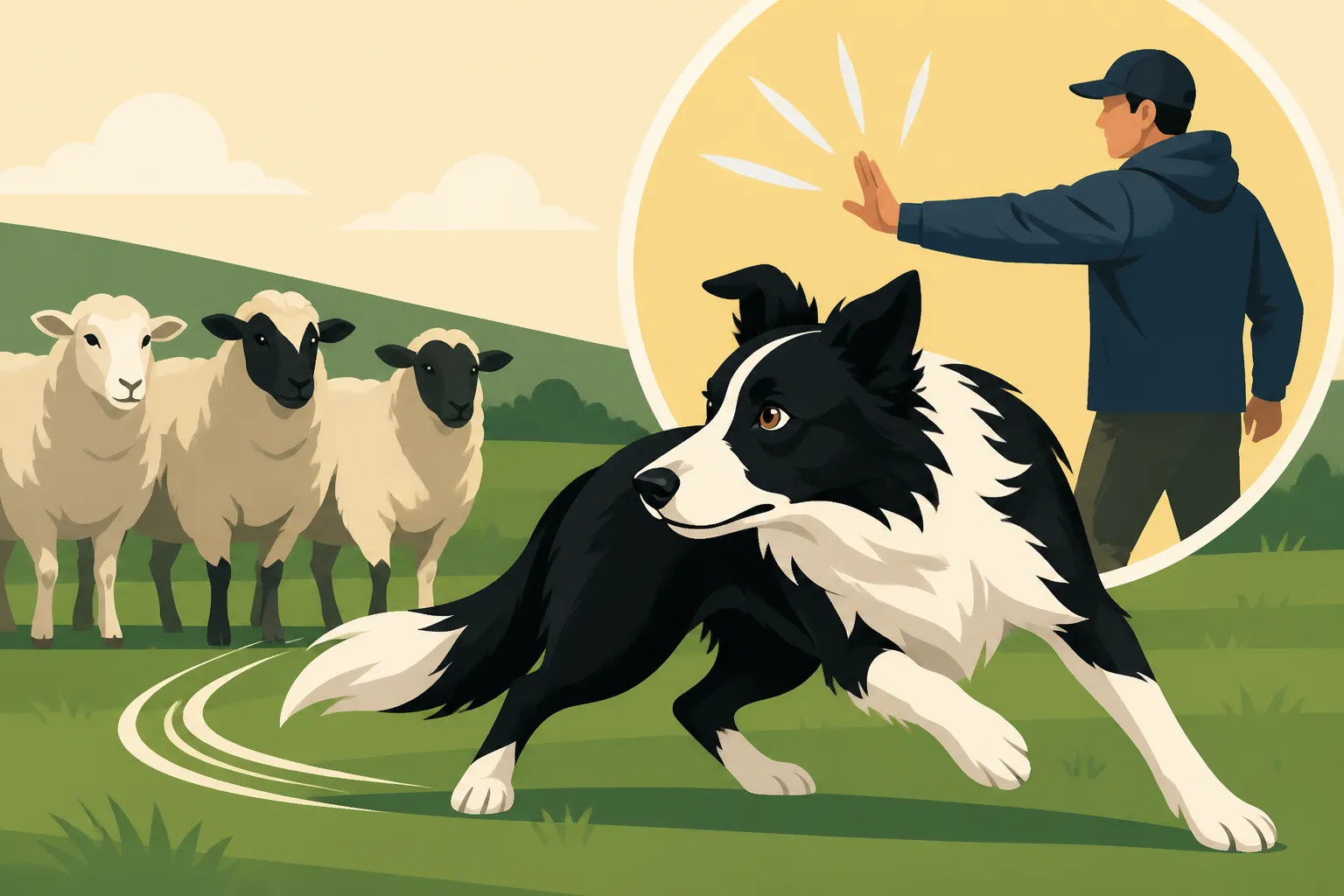
Every Border Collie owner needs an "emergency recall." This isn't your everyday "come" command; it's a specific, high-value, rarely used cue reserved for critical situations. It needs to be conditioned to be utterly irresistible, a promise of the absolute best reward your dog can imagine. For some dogs, it's a specific sound, like a unique whistle blast. For others, it's a word they hear only when something truly spectacular is about to happen – think "Jackpot!" or "Cookie Party!"
To build an emergency recall:
- Choose a unique cue: Something you don't use regularly.
- Associate with mega-rewards: Only use this cue when you can follow it with the absolute highest-value treats (e.g., cooked chicken, cheese, steak) or an incredibly exciting game.
- Practice in low-distraction: Initially, only use it when you're 100% sure your dog will respond. Build that positive association.
- Avoid overuse: The power of the emergency recall lies in its rarity. If you use it for everyday "come" situations, it loses its special meaning.
- Be dramatic and excited: When you use it, make it sound like the most exciting thing in the world. Your enthusiasm is part of the reward.
The idea is that when you deploy your emergency recall around livestock, it triggers such a strong, positive conditioned response that it momentarily overrides even the herding instinct. It becomes a mental "break glass in case of emergency" tool. The Emergency Word a Border Collie Must Know elaborates on creating this critical safety net.
Interruption Techniques and Redirection
Sometimes, a verbal command isn't enough to break the eye. You need an interruption that is sufficiently novel or startling to snap them out of their trance, allowing your command to then register. Redirection then gives them an alternative, acceptable outlet for their energy or focus.
Effective interruption techniques include:
- A sharp, unusual sound: A specific whistle, a shake of a can with pennies, or even a sudden clap can momentarily break their focus. The key is unusual – something they don't hear often.
- Physical barrier: If you're close enough, stepping between your dog and the stock, or physically moving them with the long line, can work.
- Movement: A sudden sprint away from the stock, making yourself more interesting and exciting than the sheep, can sometimes draw their attention back.
- High-value toy: For some Border Collies, a favorite, squeaky toy that only comes out for special occasions can be a powerful redirector. Toss it away from the stock to encourage movement in the right direction.
Once you've achieved that momentary break in focus, immediately follow up with your recall or "that'll do" command, and then redirect their energy. This might mean playing a quick game of fetch with a different toy (away from the stock, of course), practicing some quick obedience commands, or simply walking them away on a loose leash. The goal is to shift their mental state from intense herding drive to engaged interaction with you.
Reinforcing Disengagement, Not Engagement
This is a subtle but critical point. When your Border Collie does come off stock or disengages, you must reward that behavior. Many owners inadvertently reward the wrong thing. For instance, if your dog finally comes to you after chasing sheep, and you sigh with relief and give a treat, are you rewarding coming to you, or are you rewarding the chase that preceded it?
The trick is to reward the moment of disengagement and the act of turning away from the stock.
- Anticipate and reward: As soon as your dog even thinks about looking away from the stock, or starts to shift their weight, mark that with a verbal "yes!" and reward.
- Reward generously away from the stock: When they respond to your recall and come back, don't just give a quick pat. Make it a celebration away from the area of temptation. A game of tug, several high-value treats in a row, or a burst of enthusiastic praise.
- Do not reward the herding: Resist the urge to praise their intense focus or their ability to move stock if it's done without your permission. Save that praise for controlled, directed herding lessons.
By consistently rewarding the act of leaving the stock and returning to you, you are teaching your Border Collie that responding to your commands, even when their instinct screams otherwise, is the most rewarding path. This is a continuous process of re-prioritizing your dog's internal reward system.
Common Challenges and Troubleshooting
Even with the best intentions and consistent training, working with a Border Collie's powerful instincts around livestock presents unique challenges. It's not always a smooth road, and understanding typical hurdles can help you troubleshoot effectively.
The "Deaf Ear" Phenomenon
Ah, the infamous "Border Collie deaf ear." You know the one: your dog is locked onto something, and your voice, which typically brings an immediate response, seems to vanish into thin air. It's not actual deafness, of course. It's a phenomenon where their auditory processing becomes so hyper-focused on the environmental cues related to their herding task (the rustle of sheep, the sound of movement) that your voice effectively gets filtered out. Their brain is simply prioritizing information crucial to their innate drive.
Troubleshooting this requires a multi-pronged approach:
- Increase the value of your voice: Make your recall and interruption cues the most exciting and rewarding sounds your dog hears. If your voice usually means "no" or "stop that," it will be easily ignored.
- Change your vocal tone and pitch: Sometimes a sudden, higher-pitched, or more excited tone can cut through the noise better than your usual speaking voice.
- Add a physical component: As discussed, a long line or a sudden movement from you can physically break their focus, allowing your verbal cue to land.
- Avoid escalation: Don't repeat commands. If they don't respond the first time, repeating it just teaches them they don't have to listen immediately. Instead, switch to an interruption technique or physically intervene.
- Practice in progressively harder environments: Start your recall training in quiet places, then add mild distractions, gradually building up to more tempting scenarios without actual livestock at first. This builds their habit of listening despite increasing environmental noise.
Overcoming Gripping or Nipping Habits
Gripping (biting the wool or legs) or nipping at the heels is a serious problem when a Border Collie interacts with livestock. While some level of "bite" can be part of a working dog's repertoire to turn stubborn stock, uncontrolled gripping can injure animals and quickly escalate. It's often a sign of frustration, lack of control, or an unrefined instinct. It’s also a behavior that, if self-rewarded even once, can become deeply ingrained. Whether a Border Collie Nips Ankles discusses related behaviors in a domestic setting.
To address gripping or nipping:
- Immediate interruption: The absolute moment you see any intent to grip, interrupt it with a sharp "NO" or your emergency interruption sound, followed by removing them from the situation.
- Prevention is key: Work closely with a professional herding trainer who can guide your dog's initial instincts. They will teach the dog how to apply pressure without biting, and how to differentiate between appropriate and inappropriate use of force.
- Increase distance: If your dog is consistently gripping, they are too close to the stock. Increase the distance and slowly reintroduce them, only allowing them to get closer as their self-control improves.
- Mental work and impulse control: Double down on impulse control games and mental stimulation away from the stock. A dog that is mentally tired and understands boundaries is less likely to resort to frustrated physical behaviors.
- Back to basics: If the gripping is severe, you may need to go back to square one, working on a long line, with calm stock, and focusing purely on observation and disengagement, rather than active herding.
Preventing Self-Reinforcement
This is perhaps the biggest pitfall in training a Border Collie around livestock. Every time your dog gets to chase, stalk, or "work" stock without your permission and without being called off, they are self-reinforcing the behavior. It's an incredibly powerful reward for them because it fulfills their deepest instinct. One instance of successful, uncontrolled herding can undo weeks or months of training.
To prevent self-reinforcement:
- Manage the environment: This means secure fencing that your Border Collie cannot jump or dig under. It means keeping them on a leash or long line in any area where livestock might be present. Never assume your verbal commands are strong enough if the opportunity for self-reinforcement is there. Fencing a Yard a Border Collie Cannot Leave provides important considerations.
- Supervision, 100% of the time: Do not leave your Border Collie unsupervised in an area where they could encounter livestock. Even a quick trip to the mailbox is long enough for trouble to start.
- Proactive intervention: Learn to read your dog's early cues (as discussed in the body language section) and intervene before they fully engage. Every time you successfully call them off before they've had a chance to self-reward, you strengthen your training.
- High-value alternatives: Ensure your dog has plenty of appropriate outlets for their energy and intelligence, such as Scentwork for a Border Collie Between Trial Seasons, agility, or advanced obedience. If their core needs are met, they are less likely to seek out inappropriate ways to satisfy their herding drive.
The battle against self-reinforcement is an ongoing one, especially with a breed as driven as the Border Collie. It requires constant vigilance and a commitment to setting your dog up for success, not failure.
Ongoing Training and Management
Calling a Border Collie off livestock isn't a "one and done" training exercise. It's a commitment to a lifetime of consistency, reinforcement, and smart management. These dogs are intelligent, adaptable, and their instincts are always simmering just beneath the surface.
Consistency is Key
I cannot stress this enough: consistency is absolutely paramount. Imagine if sometimes your "come" meant "come now for a treat," and other times it meant "come when you feel like it, maybe." Your dog would quickly learn that your command is optional. The same applies, even more intensely, when dealing with livestock. One lapse in your resolve, one time you let them get away with ignoring you because you're tired or distracted, can set your training back weeks, even months.
Every time you give a command, you must be prepared to follow through, whether it's through a reward for compliance or a gentle but firm correction if they ignore you. This means:
- Always have high-value treats: Keep a pouch of irresistible treats with you, especially when in areas where livestock might be present.
- Be clear with your commands: Use the same words, the same tone, every single time.
- Don't give commands you can't enforce: If you know your dog is likely to blow you off, don't set yourself up for failure. Use a long line, or avoid the situation entirely until your training is stronger.
- Involve everyone: Every person who interacts with your Border Collie needs to be on the same page with commands and expectations. This ensures a unified message for your dog.
It's about building a reputation for yourself as a leader who is fair, consistent, and always worth listening to. Your dog needs to learn that your commands are not suggestions, but non-negotiable directions that always lead to the best outcome for them.
Seeking Professional Help
There comes a point for many Border Collie owners where professional help isn't just a good idea; it's essential. This is especially true if you are new to the breed, new to stock work, or if your dog has developed problematic behaviors like gripping, severe obsession, or a complete disregard for your commands around livestock. A skilled professional can offer insights, techniques, and hands-on guidance that are impossible to replicate from a book or online video.
What to look for in a professional:
- Experience with working Border Collies: Look for someone who understands the nuances of the breed's instincts and has experience training Border Collies specifically for herding or for living calmly around stock.
- Positive, science-based methods: While traditional herding methods can be firm, ensure the trainer uses methods that are humane and focus on building a strong relationship and clear communication, rather than just harsh corrections.
- Access to appropriate stock: A good trainer will have access to calm, dog-broke sheep or other livestock in a safe, controlled environment.
- Mentorship, not just training: The best trainers will not just train your dog; they will teach you how to handle and read your dog.
Don't be afraid or embarrassed to seek help. Working with a professional herding trainer can be one of the best investments you make in your Border Collie's training and your peace of mind. They can help you navigate the tricky waters of redirecting that powerful instinct into productive, safe channels. What Happens at a Sheepdog Trial With a Border Collie might spark interest in formal herding training.
Managing Your Environment
Ultimately, training can only go so far. For a Border Collie, particularly one with a very strong herding instinct that isn't regularly channeled into actual stock work, managing their environment is a critical component of preventing problematic encounters with livestock. Sometimes, the best training is prevention.
Environmental management strategies include:
- Secure Fencing: As mentioned before, ensure your yard is securely fenced, high enough that your Border Collie cannot jump it (many can clear surprisingly high fences!), and without gaps they can squeeze through. Regular checks for wear and tear are important.
- Leash Laws and Awareness: Always adhere to local leash laws, especially in areas where livestock might be present. Be aware of private property lines and keep your dog under control when walking near farms or pastures.
- Avoidance: If you know of a particular area with livestock that your dog struggles to disengage from, simply avoid that area. Choose different walking routes or exercise spots.
- Supervised Off-Leash Time: Any off-leash time should be in a securely fenced area free of livestock, or in a natural environment where you have absolute confidence in your dog's recall. Even then, scan the environment for potential triggers before releasing them.
- Vehicle Safety: When traveling, ensure your Border Collie is securely crated or restrained in your vehicle. An unrestrained dog seeing stock from a moving car can be a dangerous distraction.
By implementing these management strategies alongside consistent training, you create a safer environment for your Border Collie, for any livestock they might encounter, and for your own peace of mind. It’s about being realistic about their instincts and taking proactive steps to channel and manage them responsibly.
Disclaimer
This article is for general informational purposes only and does not constitute professional advice. Laws, prices and regulations vary by location and change over time. Consult a qualified professional for guidance on your specific situation.