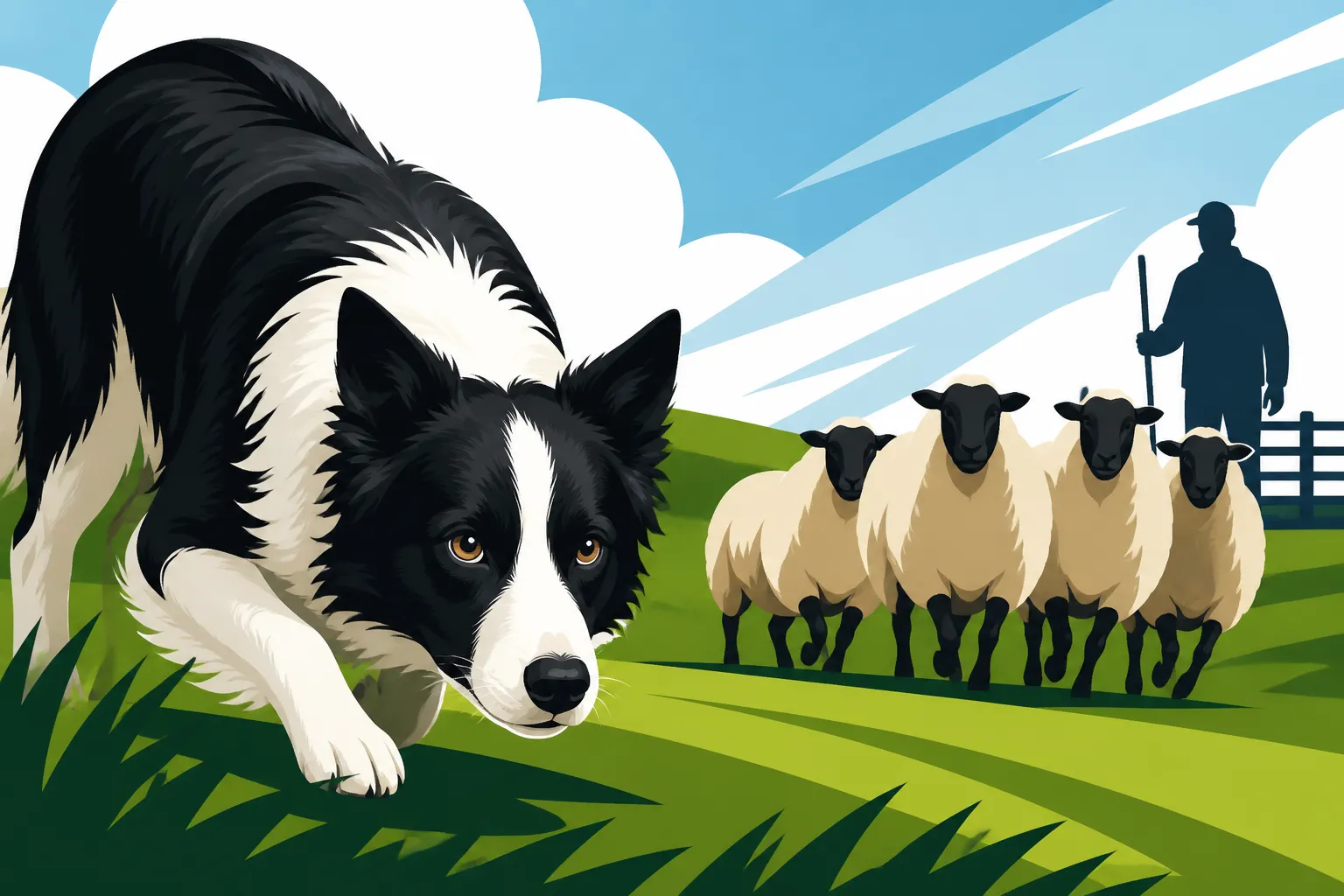
The Border Collie in Sheepdog Trials
Many Border Collie owners dream of seeing their incredibly intelligent and driven dogs put those natural instincts to use, perhaps even on the hallowed grounds of a sheepdog trial. But for many, the world of sheepdog trials can feel intimidating, shrouded in complex rules and an unspoken language between handler and dog. This comprehensive guide aims to demystify the journey, offering a clear understanding of what sheepdog trials entail, how Border Collies excel, and what it takes to participate in this profound partnership sport.
The Allure and History of Sheepdog Trials for Border Collies
There's something truly captivating about watching a Border Collie work sheep. It's an ancient dance, a partnership refined over centuries, and at its peak, it's nothing short of art. Sheepdog trials aren't just quaint competitions; they're a living testament to the breed's purpose and a dynamic showcase of genetic heritage and masterful training. For those of us who live with these energetic, intelligent dogs, understanding their innate drive to herd often starts with appreciating the arena where these abilities are celebrated.
More Than Just a Show: The Purpose of Trials
For a newcomer, a sheepdog trial might look like a dog running around a field, chasing sheep at the behest of its human. But that couldn't be further from the truth. These events are designed to evaluate a dog's natural herding instinct, its trainability, and its ability to manage livestock effectively and calmly, often under challenging conditions. It's about demonstrating intelligent control, not just speed or brute force. The trials simulate real-world tasks a shepherd would perform daily, compressing them into a concise, judged sequence. They're a proving ground, showing whether a dog possesses the necessary "stock sense" and biddability to be a truly useful working companion.
The frustration many experience when their Border Collie tries to herd children, bicycles, or the family cat often stems from this deeply ingrained purpose. The trial environment provides a constructive outlet for this powerful drive, channelling it into a productive and celebrated activity. It offers a glimpse into the incredible legacy of the breed, a legacy born from necessity and honed in the rugged landscapes of the Anglo-Scottish border. These trials are essential for preserving the working qualities that make the Border Collie so unique and preventing them from becoming mere pets without purpose.
A Nod to the Past: Old Hemp and the Evolution of the Sport
The story of the Border Collie and sheepdog trials is inextricably linked to a dog named Old Hemp. Born in Northumberland, England, in 1893, Hemp revolutionized herding with his quiet, intense gaze and natural ability to gather sheep without excessive barking or gripping. Before Hemp, many working collies were much louder and more forceful, often scattering sheep rather than bringing them calmly. Hemp's calm, effective style quickly made him a legend, and his progeny became highly sought after. You can read more about his monumental impact in Old Hemp and Every Border Collie Alive Today. His influence was so profound that virtually every Border Collie alive today can trace its lineage back to him, embodying his calm, intelligent working style.
The International Sheep Dog Society (ISDS), founded in 1906, formalized the rules and structure of sheepdog trials, aiming to standardize the evaluation of working sheepdogs. This allowed breeders to identify and propagate the best working lines, preserving the essential traits that made Border Collies indispensable on farms. You can learn more about its formation in The International Sheep Dog Society, Founded 1906. The trials, therefore, became more than just entertainment; they became a critical tool for selective breeding, ensuring that the Border Collie's incredible working abilities would continue for generations. They honor a tradition where a dog's intelligence and work ethic were paramount to a shepherd's livelihood.
Understanding the Basic Elements of a Sheepdog Trial Run
If you've ever watched a sheepdog trial and felt a little lost, you're not alone! There's a sequence to every run, and understanding each phase helps you appreciate the skill involved. It’s not just about getting the sheep from point A to point B; it’s how they get there, and the seamless communication between dog and handler that truly impresses. Each segment tests a different facet of the Border Collie's abilities, building on the previous one to create a cohesive demonstration of stockmanship.
The Grand Tour: Explaining the Outrun, Lift, and Fetch
Imagine a vast field, a handler standing at a post, and a small group of sheep far in the distance. The trial begins with the outrun. This is arguably the most beautiful and iconic part of a Border Collie's work. The dog is sent out, often several hundred yards, in a wide, sweeping arc to get behind the sheep without disturbing them. The goal is for the dog to approach the sheep from directly opposite the handler, creating a perfect balance point. It's a test of the dog's independence, its ability to take a line, and its understanding of the "feel" of the ground and the sheep. A handler will often give a silent command, pointing or using a specific whistle, and the dog will execute this wide cast, disappearing over humps and hollows, only to reappear precisely where it needs to be.
Once the dog reaches the point behind the sheep, the lift occurs. This is the delicate moment when the dog makes its first contact with the sheep, transitioning from the outrun to moving them forward. A good lift is calm and deliberate; the dog brings the sheep forward smoothly, without rushing or scattering them. It's about gaining their respect and getting them to move as a unit. A hard or rushed lift can cause the sheep to panic, making the rest of the run much more challenging.
Following the lift is the fetch. Here, the dog brings the gathered sheep in a relatively straight line down the field, passing them between two gates, towards the handler. The dog works quietly behind the sheep, applying just enough pressure to keep them moving, but not so much that they break into a run. The handler is often walking backwards, guiding the dog with subtle commands, always aiming for that straight, controlled line. It's a true demonstration of precision and patience, keeping the sheep on the desired path despite distractions or their natural inclination to stray.
Precision and Partnership: The Drive, Shed, and Pen
After the fetch, the real test of a coordinated partnership begins with the drive. The sheep are now in front of the handler, and the dog must push them away from the handler and through a series of gates, often laid out in a "Z" or "U" pattern. This requires the dog to work on command at a distance, turning the sheep left and right, maintaining their forward motion, and guiding them through narrow openings. It’s a complex maneuver, demanding constant communication and anticipation from both dog and handler. The handler must understand the sheep's movement and the dog's capabilities, using their voice or whistle commands to direct every subtle adjustment.
Next comes the shed, which often takes place in a shedding ring or specific area of the field. This is where the handler and dog work together to separate one or more specific sheep from the flock. It's a very fine art, requiring the dog to hold the larger group while the handler isolates a target sheep, or for the dog to calmly split the group itself. The dog must have incredible control, able to advance and retreat on command, applying just enough pressure to keep the sheep divided without causing them undue stress. This segment truly highlights the Border Collie's intelligence and ability to work in close quarters, demonstrating a level of stock sense that goes beyond simple gathering.
Finally, the run culminates with the pen. The dog must gently guide the sheep into a small, usually wooden, enclosure. This is often done with the handler standing at the gate, and the dog pushing the sheep in. It requires immense patience and precise positioning from the dog to coax the sheep into the tight space. Once inside, the gate is closed, and the run is complete. The pen is a testament to the trust between dog and handler, and the dog's ability to complete a difficult task under pressure. It’s a moment of truth, where all the previous work comes to a head.
Scoring and Judging: What Makes a Winning Border Collie Performance
Understanding the flow of a trial run is one thing, but knowing what judges are really looking for can feel like deciphering an ancient code. It’s not just about completing the course; it’s about how it’s done. Judges look for efficiency, control, and a natural, quiet style that respects the livestock. This is where the true nuance of the sport lies, and where a deep bond between handler and dog truly shines.
Points and Penalties: How Runs Are Evaluated
Every sheepdog trial starts with a maximum possible score, typically 100 points, and points are deducted for various mistakes. Each element of the course—the outrun, lift, fetch, drive, shed, and pen—is allocated a certain number of points. For example, the outrun might be worth 20 points, the lift 10, and so on.
Judges are looking for a dog that works with intelligence and independence, but always under the handler's control. A good run minimizes handler intervention, with the dog anticipating and correcting its own errors where possible. Common deductions include:
- Wide or broken outrun: The dog doesn't take a proper arc, or gets too close to the sheep too soon.
- Rough lift: Spooking the sheep at the initial approach.
- Wandering fetch or drive: Sheep veering off the intended line, or missing gates.
- Lack of balance: The dog not maintaining its position relative to the sheep to keep them moving straight.
- Gripping or barking: Excessive force or noise used on the sheep, indicating a lack of control or stock sense.
- Lost sheep: Sheep breaking away from the main group and not being brought back efficiently.
- Handler assistance: Too much whistling, waving, or physically moving to help the dog, indicating the dog isn't working independently enough.
The judge often walks the course beforehand, noting terrain and wind, which can influence how sheep move and how a dog needs to respond. They're assessing the dog's ability to adapt and the handler's skill in guiding them through these variables. It's a demanding task that requires keen observation and a deep understanding of dog and sheep behavior.
Beyond the Scorecard: The Artistry of a Good Run
While points and penalties define the official outcome, there's an undeniable artistry to a truly exceptional run that goes beyond the numbers. This is where the "feel" and "presence" of a dog come into play. A masterful Border Collie doesn't just push sheep; it influences them. You'll see dogs that seem to think with the sheep, anticipating their movements, using their "eye"—that intense, focused stare—to guide them with minimal physical effort.
The best runs are fluid, appearing almost effortless. The dog moves with grace and power, its body language conveying confidence and control. The communication between handler and dog becomes a silent ballet, a series of subtle shifts, glances, and soft whistles. The dog trusts the handler's direction implicitly, and the handler trusts the dog's instinct. This deep understanding, forged through countless hours of training and shared experiences, is what elevates a good run to an unforgettable one. It's that moment when the dog and handler are so perfectly in sync that they appear as one entity, seamlessly navigating the challenges of the course. This profound connection is a major reason why people dedicate their lives to this demanding yet incredibly rewarding sport.
Training Your Border Collie for the Trial Field
The journey from a bouncy Border Collie puppy to a trial-ready sheepdog is a long and dedicated one, but incredibly fulfilling. It demands patience, consistency, and a deep understanding of your dog's natural instincts. It’s not about forcing them, but about harnessing their innate talents and shaping them into a finely tuned working partnership.
Building Blocks: From Instinct to Foundation Skills
The first step is often assessing your Border Collie's natural herding instinct. Not all Border Collies, even from strong working lines, will have the same level of drive or "feel" for stock. Many trainers suggest an instinct test, where a young dog is safely introduced to a small, calm group of sheep in a controlled environment. This initial encounter helps reveal if the dog has the natural "eye" and desire to gather. If your dog shows promising instinct, the real work begins. You can read more about this initial exposure in The First Time a Border Collie Meets Sheep.
Foundation skills are crucial and start long before a dog ever sees sheep. A solid recall, strong obedience commands like sit, stay, and down, and the ability to work off-leash in distracting environments are paramount. Once on sheep, the basic herding commands become the building blocks. "Come Bye" (go clockwise) and "Away to Me" (go counter-clockwise) are fundamental for directing the dog around the stock. "Walk Up" or "Get Back" teaches the dog to move closer to the sheep to increase pressure, or to back off to reduce it. Teaching a Border Collie the Herding Commands goes into more detail on these essential commands. These early lessons are often done in a small round pen, which helps the dog understand its relationship to the sheep and the handler without overwhelming distractions. It's all about positive reinforcement and making the experience fun and rewarding for the dog, building confidence and a desire to work.
Refining the Craft: Advanced Handling and Problem Solving
Once the basics are solid, training progresses to refining control and teaching the dog to work at a distance and handle various situations. Teaching a Border Collie to stop or "lie down" at distance is a critical safety command and a cornerstone of advanced work. Imagine your dog two hundred yards away, driving sheep, and you need it to stop instantly. This takes incredible trust and responsiveness, built through gradual distance increases and consistent practice. You can explore how to achieve this in Getting a Border Collie to Stop at Two Hundred Yards. This level of control allows the handler to adjust the dog's position and speed without physically interfering with the sheep.
As the dog's skills develop, the focus shifts to more complex maneuvers like the drive, shed, and pen. This is where problem-solving comes into play. What if the sheep are "sticky" and won't move? What if they try to break away? The dog learns to read the sheep's behavior and make appropriate adjustments, always with the handler's guidance. Whistle commands become increasingly important for precise communication over long distances and in noisy environments. A specific whistle tone or pattern can convey "Come Bye," "Away to Me," "Stop," or "That'll Do," allowing the handler to direct the dog with minimal effort. Whistle Commands for a Border Collie offers a deeper dive into this specialized communication. Learning to work challenging sheep, dealing with different types of terrain, and understanding how wind affects sheep movement are all part of the advanced curriculum, turning a dog with instinct into a truly versatile and capable partner.
The Life of a Trial Dog: Commitment and Care
Being a trial dog is a lifestyle, not just a hobby. It requires significant physical and mental investment from both the Border Collie and its handler. These aren't dogs that get to lounge on the couch all day; they are athletes who thrive on purposeful work. Understanding and meeting their needs is paramount to their success and overall well-being.
Physical Conditioning: Keeping a Border Collie Sound for Competition
Sheepdog trials are physically demanding. A Border Collie on the trial circuit needs to be in peak athletic condition to perform complex maneuvers, cover long distances, and maintain stamina throughout a run. Just like any athlete, they are prone to Sport Injuries a Border Collie Picks Up if not properly conditioned and cared for. Their muscles need to be strong and flexible, their joints resilient, and their cardiovascular system robust. This means a carefully managed exercise regimen that goes beyond a daily walk. Regular free running, varied terrain work, and specific conditioning exercises help build the necessary strength and endurance.
Nutrition plays a vital role in supporting this athletic lifestyle. A working Border Collie burns a significant number of calories and requires a diet specifically formulated for high-energy dogs. Look for high-quality performance foods that provide ample protein for muscle maintenance and repair, and appropriate fat levels for sustained energy. Brands like Chewy often carry a wide selection of performance dog foods and nutritional supplements that can help meet these demands. Feeding a Border Collie That Works Two Hours a Day discusses the specific dietary needs of working Border Collies in more detail. Hydration is also critical, especially during warmer weather or intense training sessions. Providing fresh water frequently and ensuring they have access to shade is a must. Just like human athletes, trial dogs also benefit from warm-up routines before a run and cool-down periods afterward to prevent injury and aid recovery.
Mental Fortitude: Managing Stress and Maintaining Drive
Beyond the physical, the mental demands on a trial dog are immense. They need to be focused, biddable, and resilient, capable of handling the pressure of competition, the presence of strangers, and the unpredictability of livestock. Managing stress is crucial. Some dogs, despite their natural talent, can become overwhelmed by the trial environment, leading to a drop in performance or even behavioral issues. Handlers must be adept at reading their dog's body language, recognizing signs of stress, and knowing when to give them a break.
Maintaining a Border Collie's drive without allowing it to become obsessive or frantic is a delicate balance. The "off-switch" is just as important as the "on-switch." Off the field, trial dogs benefit from mental enrichment activities that aren't sheep-related, like puzzle toys (many of which are available on Chewy), scent work, or trick training. These activities provide mental stimulation without exacerbating herding drive, helping to create a well-rounded and balanced dog. You can explore more ways to engage their minds in Mental Work That Tires a Border Collie Faster. A dog that is constantly "on" will burn out quickly. Providing adequate rest, a calm home environment, and opportunities to simply be a dog are essential for their long-term mental health and performance in the ring. A happy, well-adjusted dog is always a better working partner.
The Trial Circuit: From Local Novice to National Championship
The world of sheepdog trials is a structured progression, much like any other competitive sport. It offers a path for handlers and dogs to grow together, starting with foundational experiences and building towards the highest levels of competition. It’s a community-driven sport, and regardless of the level, the shared passion for working dogs creates a unique camaraderie among participants.
Starting Small: Nursery and Novice Classes
For newcomers, the journey typically begins in the Nursery or Novice classes. These classes are designed for young, inexperienced dogs (Nursery) or dogs and handlers who are new to trialing (Novice). The courses are generally shorter, the sheep calmer, and the judging often more lenient, focusing on encouraging development rather than absolute perfection. This is where handlers and dogs learn the ropes, gain experience working under pressure, and build confidence. Many local sheepdog clubs host beginner-friendly trials, offering a welcoming environment for those just starting out. The Nursery Class a Young Border Collie Starts In provides more insights into this initial stage of a dog's trial career.
Participating in these entry-level classes is invaluable. It teaches handlers how to manage their nerves, how to read different types of sheep, and how to adapt their handling style on the fly. For the dogs, it's an opportunity to generalize their training to new environments and learn to perform consistently despite distractions. The focus isn't on winning, but on making steady progress and developing a solid foundation. Many handlers find that the most rewarding aspect of these early stages is witnessing their dog's understanding blossom, seeing those innate instincts channelled into controlled, purposeful work. It's a journey of learning, mistakes, and small triumphs that lay the groundwork for future success.
The Pursuit of Excellence: Open and National Levels
As a dog and handler team gain experience and proficiency, they can advance to the Open class. This is the highest level of competition, where the courses are longer, the sheep are often more challenging, and the demands on both dog and handler are significantly increased. Open class trials attract the most experienced handlers and the most skilled dogs, and competition is fierce. The courses often include more complex drives, difficult sheds, and a greater emphasis on precision and efficiency.
Beyond local Open trials, the ultimate goal for many handlers is to compete in national and international championships. These events bring together the best teams from across the country or even the world. The National Sheepdog Finals in many countries are prestigious events, culminating in the crowning of a National Champion. The pinnacle for many is the International Sheepdog Society's Supreme Championship, where the very best working Border Collies and handlers compete for the most coveted title in the sport. You can learn more about its significance in What the Supreme Championship Means for a Border Collie. These events are not just competitions; they are celebrations of the Border Collie breed, showcasing the unparalleled intelligence, athleticism, and partnership that define the breed. The community at these events is passionate and supportive, filled with individuals who share a deep respect for these incredible working dogs. Even if you never compete at the highest levels, the journey of training and trialing offers unparalleled opportunities for bonding and mutual growth.
Beyond Competition: The Enduring Value of Trial Training
While the thrill of competition and the pursuit of a win are certainly motivating, the true value of engaging in sheepdog trial training extends far beyond ribbons and titles. It's about forging an unbreakable bond with your Border Collie, developing skills that are useful in many contexts, and honoring the very essence of what makes this breed so extraordinary.
Real-World Applications: Skills for Farm and Home
The skills honed in trial training are not just for the competition field; they have immense practical value. For those living on farms or ranches, a trial-trained Border Collie is an invaluable asset. The ability to calmly gather, drive, and pen livestock translates directly into efficient and stress-free farm work. A dog that can execute a perfect outrun and fetch can save countless hours of walking and chasing, making tasks like moving flocks or sorting animals much simpler. The precision learned in the shed and pen work means less stress on the animals and greater control for the farmer.
Even for Border Collies not destined for a working farm, the discipline and communication instilled through trial training are incredibly beneficial. The enhanced focus, the rock-solid recall, and the ability to work under direction make for a well-behaved and responsive companion in any setting. This kind of structured work provides an unparalleled outlet for the Border Collie's intense energy and intelligence, preventing many common behavioral issues that arise from boredom or lack of purpose. When a Border Collie's mind is engaged in meaningful work, its capacity for calm and contentment in the home dramatically increases. It validates their very being, giving them the job they were bred to do.
A Deeper Connection: The Unspoken Language of Partnership
Perhaps the most profound benefit of engaging in sheepdog trial training is the unique and powerful bond it creates between handler and dog. It requires absolute trust, clear communication, and a deep understanding of each other's nuances. You learn to read your dog's subtle cues—the flicker of an ear, the shift of weight, the intensity of its eye—and your dog learns to interpret your every command, no matter how quiet or distant. It's an unspoken language developed through countless hours of shared effort, frustration, and triumph.
This partnership is built on mutual respect and a shared purpose. When you watch a seasoned team work, it's clear they are more than just handler and dog; they are collaborators, each relying on the other to complete a complex task. The satisfaction of working in such harmony, of seeing your Border Collie's natural genius unleashed and guided by your shared understanding, is unlike any other experience. It fulfills the Border Collie's intrinsic drive to work alongside its human, creating a connection that transcends mere pet ownership and becomes a truly exceptional, lifelong partnership.
| Trial Element | Description | Key Judging Criteria | Common Penalties |
|---|---|---|---|
| Outrun | Dog circles wide, unseen, to gather sheep from distance. | Wide, even arc; dog stays out of sight of sheep until behind them. | Dog too close to sheep; broken arc; hesitant movement; poor balance point. |
| Lift | First approach to sheep, bringing them forward calmly. | Gentle, controlled approach; no spooking or scattering of sheep. | Rushing, hard eye; disturbing sheep; splitting the flock. |
| Fetch | Bringing sheep in a straight line from the set-out point to the handler. | Straight line; good pace; dog maintains position behind sheep. | Wide turns; sheep veering off line; dog running ahead or losing control. |
| Drive | Moving sheep through obstacles (gates, panels) on a set course. | Smooth, controlled movement through gates; straight lines between obstacles. | Missing gates; sheep scattering; handler having to intervene excessively. |
| Shed | Separating specific sheep from the main flock. | Clean, efficient separation; minimal stress to sheep; dog holds other sheep. | Dog gripping; rejoining of sheep; handler too involved physically. |
| Pen | Guiding sheep into a small enclosure, usually with the handler at the gate. | Calm, efficient penning; sheep enter without force; gate closure. | Rough handling; sheep breaking out; multiple attempts; handler entering pen. |
Disclaimer
This article is for general informational purposes only and does not constitute professional advice. Laws, prices and regulations vary by location and change over time. Consult a qualified professional for guidance on your specific situation.