Feathering on a Border Collie’s Front Legs
That beautiful, flowing hair on your Border Collie's front legs, known as feathering, is one of their most striking features – a testament to their rugged beauty and heritage. But let's be honest, for all its aesthetic appeal, it can also be a magnet for burrs, mud, and maddening tangles that turn grooming into a wrestling match. This guide is here to walk you through everything you need to know about managing that lovely leg feathering, from understanding its purpose to practical grooming tips and preventative measures to keep your active companion comfortable and looking their best.
Understanding Your Border Collie's Feathering
The distinctive coat of a Border Collie isn't just for looks; it's a functional masterpiece designed to protect them in all sorts of weather and terrain. The feathering, in particular, plays a significant role in this natural defense system, though it definitely comes with its own set of grooming challenges.
What is Feathering and Where Does It Grow?
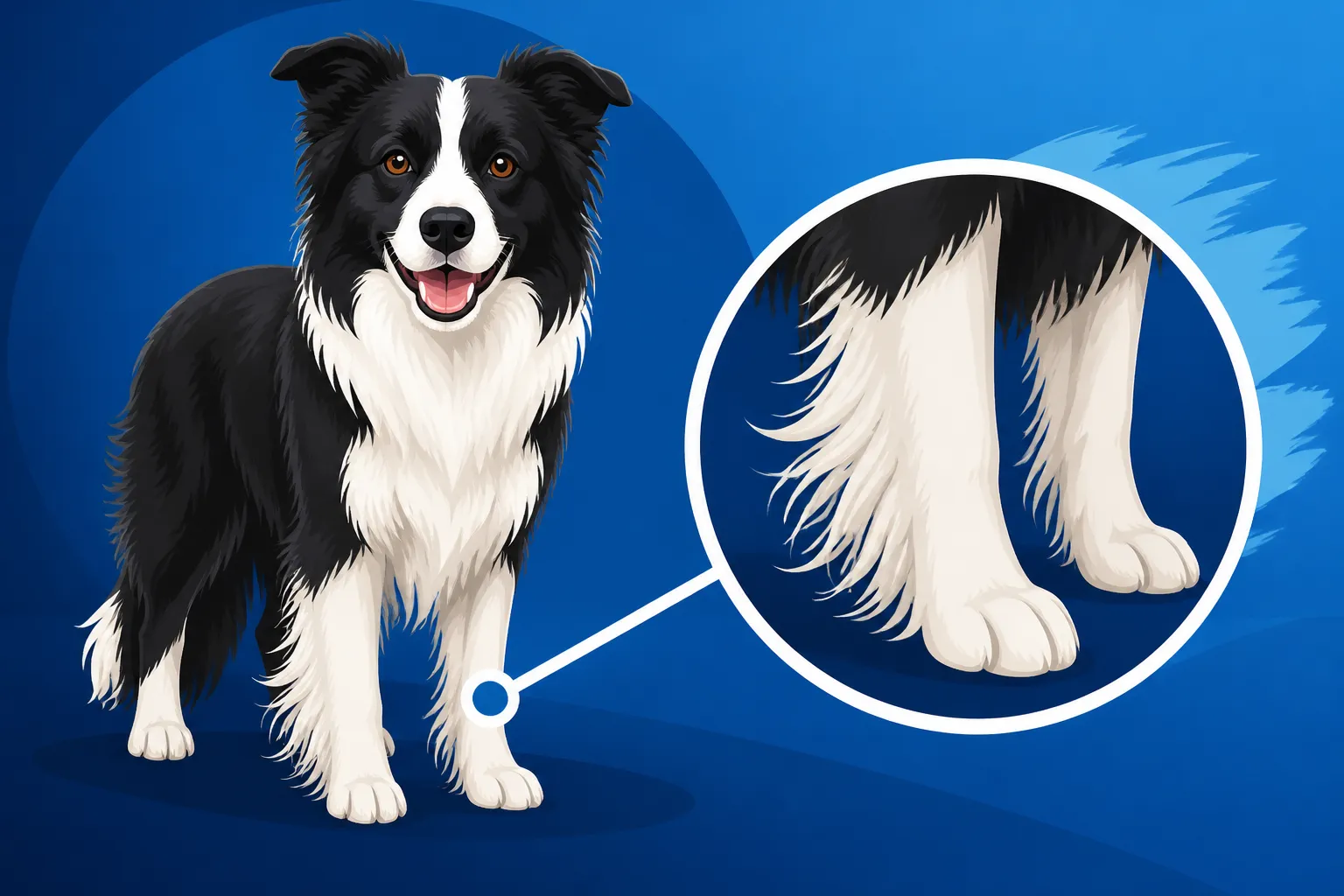
Feathering refers to the longer, sometimes silkier hair that grows in specific areas on a Border Collie's body, creating a fringed or "feathered" appearance. While many people immediately think of the hair on the backs of their front legs, it's also commonly found on the chest, belly, the backs of the hind legs (often called "trousers"), and on the tail. On the front legs, this longer hair typically starts behind the elbow and extends down the back of the leg to the pastern, sometimes even reaching the top of the paw.
The length and density of this feathering can vary significantly, mostly depending on whether your Border Collie is a rough-coated or smooth-coated variety. Rough-coated Border Collies will, naturally, have more prominent and longer feathering, often forming thick fringes that are immediately noticeable. Smooth-coated Border Collies, while generally having a shorter, coarser coat overall, may still develop some lighter feathering, particularly behind the elbows and on the back of their thighs, though it will be far less dramatic. Understanding these differences helps in tailoring your grooming approach. You can learn more about the different coat types in The Rough and Smooth Border Collie Coats.
This longer hair on the legs acts almost like natural gaiters, providing a layer of insulation and protection. Imagine your dog running through fields, brush, or snow – this feathering shields the more sensitive skin underneath from scrapes, scratches, and the elements. It’s a direct link to their working heritage, a protective barrier for a dog constantly on the move in varied environments. However, this protective quality also makes it highly susceptible to picking up everything Mother Nature throws at it.
The Purpose of Feathering in a Working Dog
From a historical and functional perspective, a Border Collie's coat, including its feathering, is primarily about survival and efficiency in a demanding working environment. These dogs were bred to spend long hours outdoors, often in harsh conditions, herding sheep across rugged terrain. The feathering on their legs provides crucial protection against the very real threats of their daily work.
Firstly, it acts as a physical barrier. As a Border Collie navigates through tall grasses, thorny bushes, and rocky ground, the feathering helps to prevent cuts, scrapes, and abrasions to the skin on their legs. Without this longer hair, their skin would be much more exposed to injury, which could easily become infected and sideline a valuable working dog. It’s a natural armor that allows them to move through dense cover with greater ease and less risk of minor trauma.
Secondly, this longer hair provides insulation. In the varied climates of the Anglo-Scottish border country where the breed originated, temperatures can drop significantly, and rain and snow are common. The feathering, along with the dense double coat, traps air close to the body, helping to regulate temperature and keep the dog warm and dry even in inclement weather. While it does trap burrs, it also keeps cold mud and moisture from direct contact with the skin, which is a trade-off many working handlers appreciate.
Common Challenges with Feathering on Front Legs
While beautiful and functional, the feathering on a Border Collie's front legs can be a constant source of frustration for owners, especially those with active, outdoor-loving dogs. The very characteristics that make it protective also make it a magnet for all sorts of unwelcome guests and grooming nightmares.
Mats, Tangles, and Burrs
The most frequent complaint about feathering, particularly on the front legs, is its tendency to mat and tangle. This longer, often finer hair easily knots into dense clumps, especially in high-friction areas like behind the elbows or where the leg meets the chest. Imagine your Border Collie bounding through tall, dry grasses in summer or rolling exuberantly in autumn leaves – each adventure is an invitation for mats to form. These aren't just cosmetic issues; mats pull on the skin, causing discomfort, pain, and even skin irritation or infections if left unattended.
Burrs and sticky seeds are another persistent problem. The feathering acts like a natural Velcro, catching every seed head, thistle, and burr it encounters. I've spent countless evenings patiently picking burs out of my own dogs' leg fringes, sometimes needing a comb and a lot of conditioner to gently work them free. These can quickly become embedded, pulling at the skin and creating painful knots. If you've ever dealt with a Border Collie's tail full of burrs, you know the struggle, and it's no different for their leg feathering. For more on tackling these stubborn bits of nature, you might find tips in Burrs Caught in a Border Collie's Tail.
When mats form, they can be incredibly tough to remove without causing pain. If the mat is tight against the skin, brushing through it becomes impossible, and attempting to do so often just makes it worse, tightening the mat further or tearing out healthy hair. It's a delicate balance of patience, the right tools, and knowing when to call in professional help. The goal is always to prevent them from getting to that severe stage in the first place, which requires diligent daily checks, particularly after any outdoor activity.
Dirt, Mud, and Debris Accumulation
Any owner of an active Border Collie knows that "clean" is a temporary state. The feathering on their front legs is particularly susceptible to collecting dirt, mud, and all sorts of outdoor debris. Picture a muddy puddle on a winter walk: those feathery fringes become instant mud catchers, soaking up grime and tracking it directly into your home, your car, or onto your furniture. It's not just an aesthetic issue; accumulated dirt can weigh down the hair, clump, and contribute to matting.
During winter, if you live in an area with snow and ice, the problem shifts from mud to ice balls. The snow, especially if it's wet and clumpy, adheres to the fine hair of the feathering and compacts into hard, painful ice balls between the toes and along the leg fringes. These can be incredibly uncomfortable for your dog, making it difficult for them to walk properly, and can even cause frostbite or skin irritation if not carefully removed. Dealing with ice balls is a common winter woe for many owners of feathered breeds; for more information, consider reading Ice Balls in a Border Collie's Feathered Feet.
Beyond mud and snow, the feathering can also pick up sand, small twigs, grit, and even various allergens from the environment. This constant accumulation means that while your Border Collie might love exploring, their beautiful leg feathering is almost certainly going to require frequent attention to keep them comfortable and your house clean. It means dedicating time after every adventure to brush out or wipe down those legs, even when you're tired and they just want to collapse on the couch.
Grooming Resistance and Sensitivities
For some Border Collies, the act of grooming their feathering can be met with significant resistance, turning what should be a routine task into a battle of wills. Many dogs, especially those who haven't been consistently handled in a positive way from a young age, can be sensitive about their feet and legs being touched. This sensitivity isn't always about pain; it can be a feeling of vulnerability or simply discomfort with the sensations of brushing and combing.
When you're trying to untangle a stubborn mat or carefully pick out burrs from delicate feathering, a dog that pulls away, snaps, or throws itself to the ground makes the task nearly impossible and can increase the risk of accidental nicks or cuts. Their high drive and intelligence, which make them so wonderful in other aspects, can sometimes make them equally clever at avoiding an unwanted grooming session. It requires immense patience and a consistent, positive approach to overcome this resistance.
Building a positive association with grooming is paramount. It involves starting slowly, using plenty of high-value treats, and keeping sessions short and sweet. If your Border Collie has developed a strong aversion, or if you're dealing with significant mats that are causing pain, seeking guidance from a professional groomer or a force-free trainer experienced in cooperative care can be incredibly beneficial. They can teach you techniques to make grooming a more positive and less stressful experience for both you and your dog.
Practical Grooming Tips for Front Leg Feathering
Keeping your Border Collie's leg feathering in good condition is an ongoing process, but with the right tools and techniques, it doesn't have to be a dreaded chore. Regular, consistent care is key to preventing major issues and making grooming a more pleasant experience for everyone.
Essential Tools for Feathering Care
Having the right tools is half the battle when it comes to managing your Border Collie's feathering. Investing in quality brushes and combs designed for longer coats will make a world of difference.
First, a good slicker brush is indispensable. This brush has fine, wire bristles that are angled, making them excellent for gently removing loose undercoat and surface tangles. For the feathering, use light strokes, working away from the skin. Be very careful not to press too hard, as the wire bristles can cause "brush burn" if misused. This is particularly useful for breaking up smaller tangles before they become full-blown mats.
Next, a pin brush with rounded pins is great for the longer, topcoat hair of the feathering. It's gentler than a slicker and helps to smooth the coat, distribute natural oils, and tease out minor snags without pulling too much. Use it for general grooming and finishing. Many people find a good dual-sided brush that combines a pin brush and a bristle brush useful. You can find many excellent options for both types of brushes on Amazon or Chewy. For a deeper dive into brush types, check out Which Brush Suits a Rough Border Collie's Coat.
Finally, a wide-toothed comb is crucial for checking your work and for carefully dissecting any mats that are starting to form. After brushing, run the comb through the feathering. If the comb glides through, you've done a good job. If it snags, you'll know exactly where to focus your attention. For really stubborn mats, a dematting tool (often with small blades) can be used, but with extreme caution. These tools cut through mats and can easily injure your dog's skin if not used correctly, so always follow instructions and consider professional advice first.
Step-by-Step Grooming Routine
Establishing a consistent grooming routine for your Border Collie's front leg feathering will save you a lot of heartache in the long run. The key is consistency and patience, especially since these dogs thrive on routine.
Start by gently laying your Border Collie on their side or having them stand comfortably, depending on their preference and your training. Begin with a pin brush to go over the surface of the feathering, removing any loose hair and surface debris. Then, take your slicker brush and work on small sections, perhaps only a couple of inches at a time. Always brush away from the skin, starting at the ends of the hair and working your way up to the roots. If you encounter a tangle, don't yank! Instead, hold the hair close to the skin at the base of the tangle with one hand to prevent pulling on your dog's skin, and then use the edge of your slicker or the wide-toothed comb to gently pick apart the mat, strand by strand. A spritz of detangling spray can also be very helpful here, making the hair slicker and easier to separate.
It's important to make these sessions regular, ideally after every major outdoor excursion or at least a few times a week, to prevent small tangles from escalating into painful mats. Always give special attention to areas like behind the elbows and the "armpits" where feathering is prone to matting due to movement. When it comes to bathing, remember that water can tighten existing mats, so always try to brush out any significant tangles before bathing. After a bath, ensure the feathering is thoroughly dried to prevent skin issues and further matting; Drying a Border Collie After a Wet Day's Work offers great advice on this. Regularity also means you'll spend less time on each session and your dog will become more accustomed to the process. For guidance on how often to brush, take a look at How Often a Rough Border Collie Needs Brushing.
When to Trim (and When Not To)
The question of trimming a Border Collie's feathering often arises, and it's a topic with some nuances. Generally, Border Collies should not be shaved or extensively clipped, as their double coat is essential for temperature regulation and protection. Shaving can disrupt this natural system, leading to issues like poor regrowth, sun sensitivity, and a reduced ability to insulate. This is particularly true for the main body coat. Why a Clipped Border Collie's Coat Grows Back Wrong delves into why this can be problematic.
However, there are specific instances where strategic trimming of the feathering on the front legs can be beneficial and even necessary. This usually falls into the category of "hygiene trims" or for practical purposes to enhance comfort and reduce maintenance. For example, the hair around and between the paw pads should be regularly trimmed to prevent slipping on smooth surfaces, reduce the accumulation of debris, and make it easier to inspect for injuries. Similarly, if the feathering on the back of the front legs becomes excessively long and constantly drags in mud or collects an unmanageable amount of burrs, a very light trim to shorten it slightly might be considered.
When performing these trims, the goal is always to maintain the natural look and function of the coat. Never use clippers on the feathering unless advised by a vet for a medical reason or by a professional groomer who understands the breed's coat. Instead, use blunt-nosed scissors to carefully thin or shorten the feathering in specific problem areas. If you're unsure, it's always best to consult with a professional groomer experienced with working breeds. They can demonstrate proper techniques for tidying up the feathering and managing areas like the hocks and feet without compromising the integrity of the coat. For more focused trimming, you might find tips in Tidying a Border Collie's Hocks and Feet Only.
Preventing Future Feathering Fiascos
An ounce of prevention is truly worth a pound of cure when it comes to your Border Collie's feathering. While you can't eliminate every single burr or mud puddle, you can certainly take steps to minimize the common problems and make coat care much easier in the long run.
Proactive Management and Environment
One of the most effective ways to prevent feathering fiascos is through proactive management of your Border Collie's environment and a little bit of foresight. If you know your dog is going to be running through an area notorious for sticky burrs or heavy mud, consider altering your route if possible. Sometimes, even a slight detour can save you a lengthy grooming session later.
Immediately after any outdoor excursion, especially through tall grass, brush, or muddy areas, make it a habit to quickly wipe down your Border Collie's legs and check their feathering. A damp towel or a designated dog grooming mitt can quickly remove surface mud and prevent it from drying and caking into the coat. This simple step takes only a minute or two but can prevent hours of detangling later. For those particularly messy days, a quick rinse of just the legs might be in order, followed by thorough drying. Consider the advice in Bathing a Border Collie That Works in Mud for a deeper clean.
For dogs that are constantly in burr-heavy environments, or during specific seasons when seed heads are prevalent, you might even consider lightweight, breathable protective leg coverings. These aren't always practical for high-intensity work but can be a game-changer for casual walks or specific tasks where excessive burr accumulation is a known issue. Products designed for hunting dogs or trail protection can sometimes be adapted for this purpose. Always ensure any protective gear fits well and doesn't restrict movement or cause chafing.
Nutrition for a Healthy Coat
While external grooming is crucial, what goes into your Border Collie's body plays an equally important role in the health and manageability of their coat, including the feathering. A healthy coat is less prone to excessive dryness, breakage, and matting, making it easier to brush and maintain.
High-quality nutrition forms the foundation of a healthy coat. Ensure your Border Collie is fed a balanced diet rich in essential fatty acids, particularly Omega-3 and Omega-6. These fatty acids contribute to skin health, which in turn leads to a healthier, shinier coat that is more resilient and less prone to brittleness. Look for dog foods that list ingredients like fish oil, flaxseed, or other beneficial oils. Some premium dog food brands, like Ollie, focus on fresh, whole ingredients that support overall health, including coat condition.
Beyond the main diet, some owners choose to supplement with fish oil, which is renowned for its benefits to skin and coat. Before adding any supplements to your dog's diet, it's always wise to consult with your veterinarian to ensure it's appropriate for your individual dog's needs and to get the correct dosage. Proper hydration is also key; a well-hydrated dog will have healthier skin and coat. Always ensure your Border Collie has access to fresh, clean water, especially after vigorous activity. For more insights on supplements and coat health, check out Whether Fish Oil Helps a Border Collie's Coat.
Building a Positive Grooming Experience
Perhaps the most important "preventative" measure is to cultivate a positive and stress-free grooming experience from day one. A dog that tolerates, or even enjoys, being groomed will make your life infinitely easier and ensure that their coat gets the consistent care it needs without a fight.
Start grooming early, ideally when your Border Collie is a puppy. Even if their feathering isn't fully developed, accustom them to being touched all over their body, especially their paws, legs, and behind their ears. Use positive reinforcement: short sessions, plenty of praise, and high-value treats (perhaps from Chewy's extensive selection) during and immediately after the grooming session. The goal is to make them associate grooming with good things. Let them sniff the brushes, gently touch them to their body, and slowly build up to full brushing sessions.
If your Border Collie is already wary of grooming, don't force it. Break down the process into tiny, manageable steps. Start by just touching their leg for a second, then treat. Gradually increase the duration and intensity, introducing the brush for a few strokes, then treating. Keep the sessions brief and always end on a positive note, even if you only managed a small section. Over time, you can desensitize them to the tools and the process, transforming grooming from a dreaded chore into a bonding experience. Patience and consistency are your greatest allies here.
| Grooming Tool | Primary Use for Feathering | Benefits | Considerations |
|---|---|---|---|
| Slicker Brush | Detangling small knots, removing loose undercoat | Effective for dense coats, gets to the root of tangles | Can cause "brush burn" if used too forcefully |
| Pin Brush | General brushing, smoothing topcoat, light detangling | Gentle, good for longer, delicate feathering | Less effective for deeply matted hair |
| Wide-Toothed Comb | Checking for mats, dissecting knots | Helps to work through tangles without damaging hair | Essential for thorough mat detection |
| Dematting Tool | Cutting through severe, tightly matted areas | Can save a matted coat from shaving | Use with extreme caution; easy to cut skin if misused |
| Detangling Spray | Lubricating hair for easier mat removal | Reduces pulling, prevents hair breakage | Choose dog-specific formulas to avoid skin irritation |
Disclaimer
This article is for general informational purposes only and does not constitute professional advice. Laws, prices and regulations vary by location and change over time. Consult a qualified professional for guidance on your specific situation.