Why Working Breeders Fought AKC Recognition
For many of us who adore the Border Collie, it's clear these dogs are incredibly special. But what you might not realize is the deep, passionate debate that has simmered for decades within the Border Collie community, especially concerning the American Kennel Club's recognition of the breed. This guide dives into the heart of that disagreement, exploring why working breeders, those dedicated to preserving the Border Collie's unmatched herding abilities, staunchly resisted the AKC's embrace, and what it means for the breed's future.
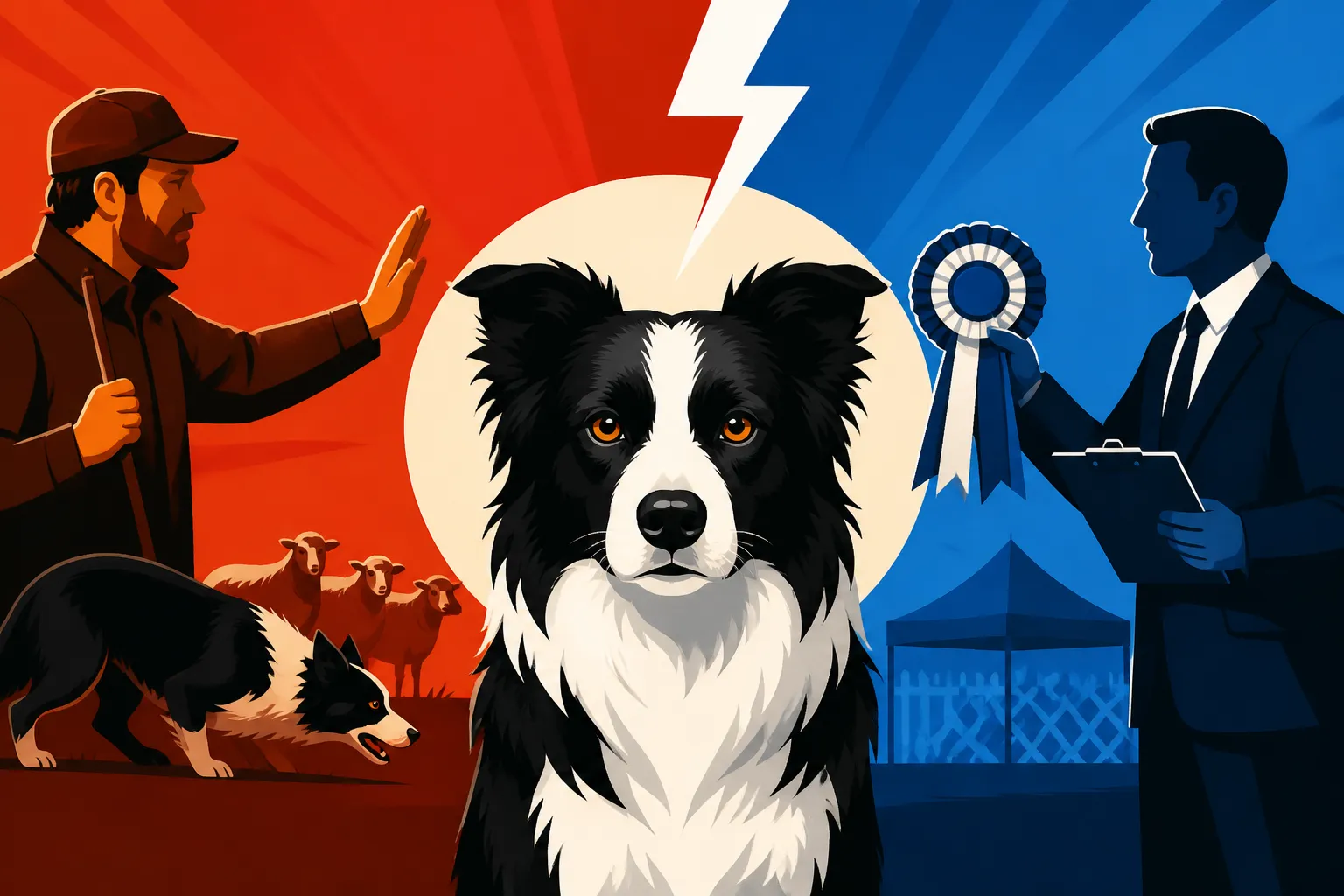
The Core Disagreement: Form Versus Function
At its heart, the conflict between working Border Collie breeders and the American Kennel Club (AKC) recognition boils down to a fundamental philosophical difference: form versus function. For generations, the Border Collie's entire existence has been defined by its ability to work sheep, not by how it looks. This isn't just about a job; it's about an intrinsic drive, intelligence, and a unique set of physical and mental traits honed over centuries specifically for herding.
The Philosophy of the Working Border Collie
Imagine a dog born with an innate understanding of livestock, a creature whose every fiber is tuned to gather, drive, and control a flock. That's the working Border Collie. Their breeding has always been selective, based purely on their working ability. A shepherd didn't care if a dog had a perfectly symmetrical blaze or a specific ear set; they cared if it could bring in the flock from a distant pasture, if it had "eye" (that intense, hypnotic stare used to control sheep), and if it could learn complex commands. This functional selection meant that dogs with outstanding working lineage were prized, and appearance was merely incidental. When you speak to a working breeder, their stories are always about the dogs on the field, the nuances of their herding style, and their problem-solving intelligence, not about their coat color or tail carriage. This focus on performance created a breed renowned for its intelligence, athleticism, and tireless work ethic. It also created a dog that, while beautiful, was not bred to a cosmetic standard.
The Kennel Club's Focus on Appearance
In stark contrast, the tradition of kennel clubs, including the AKC, has historically centered on breeding to a "standard" that emphasizes physical appearance. A breed standard describes the ideal physical traits of a dog: its size, coat color and texture, ear set, eye color, head shape, tail carriage, and gait. Dogs are then judged in conformation shows based on how closely they adhere to this aesthetic ideal. While health and temperament are usually mentioned, the primary goal in the show ring is visual perfection according to the written standard. This system is designed to create uniformity within a breed, ensuring that all dogs carrying that breed's name look predictably similar. The problem arises when this aesthetic focus inadvertently sidelines the very functional traits that define a working breed like the Border Collie. The concern was that breeders, in their pursuit of ribbons and titles in the show ring, might prioritize a dog's markings or ear set over its herding drive or soundness for working an entire day.
How the AKC Standard Diverged from Working Ideals
When the AKC officially recognized the Border Collie in 1995, they, naturally, developed a breed standard. For working breeders, this standard immediately raised red flags because it necessarily codified physical attributes that had never been paramount in working lines. For instance, the working community largely views the Border Collie as a medium-sized dog, but there's a wide range of acceptable sizes and builds among highly successful working dogs, all dictated by the specific needs of their work. The AKC standard, however, defined a much narrower range for height and weight, and specified ideal proportions and angles.
The fear was that breeders would start selecting dogs based on these aesthetic criteria, potentially introducing traits that might actually hinder working ability or health. Imagine a dog bred for its flashy gait in the show ring, only to find that gait is less efficient for covering vast distances on rough terrain. Or a breeder might choose a dog with a specific head shape that looks "correct" but has a more docile temperament, diluting the intense focus known as The Border Collie Stare and Where It Comes From. The working community champions dogs that are "fit for function," meaning their bodies and minds are perfectly suited for the demands of herding, whatever their specific measurements might be. The AKC's move, by establishing an appearance-based criterion, was seen as directly threatening this foundational principle, potentially leading to a bifurcation of the breed where "show Collies" and "working Collies" become increasingly distinct, much like what happened with other working breeds.
A History of Independence: The ISDS and ABCA
The Border Collie didn't just appear one day; its history is deeply intertwined with a commitment to working ability, a commitment fiercely guarded by specific registries long before the AKC entered the picture. These organizations prioritized a dog's deeds over its looks, shaping the very essence of the breed.
The International Sheep Dog Society's Vision
To understand the working breeders' resistance, you have to look across the Atlantic to the breed's origins. The International Sheep Dog Society (ISDS), The International Sheep Dog Society, Founded 1906, was established in Great Britain over a century ago with a singular, unwavering mission: to promote and improve the working sheepdog. Their registry isn't based on physical appearance or lineage alone, but on proven working ability. To be registered with the ISDS, a Border Collie must demonstrate actual herding talent, often by competing in sheepdog trials. This "registration by merit" ensures that only dogs that can genuinely work are included in the breeding pool.
The ISDS holds trials that test a dog's ability to gather sheep from hundreds of yards away, move them through gates, and pen them quietly and efficiently. A dog that fails to perform these tasks, no matter how beautiful or well-bred it appears, simply isn't considered a good candidate for breeding in the ISDS system. This approach has preserved the Border Collie's formidable intelligence, biddability, and unparalleled herding instinct for generations, essentially creating a living breed standard based on practical function, not subjective beauty. Their vision was to keep the Border Collie exactly what it was meant to be: the finest sheepdog in the world.
The American Border Collie Association's Stance
When Border Collies began to gain popularity in North America, a similar sentiment took root, leading to the formation of the American Border Collie Association (ABCA). Much like its British predecessor, The ABCA and Its Working Registry was founded on the principle of preserving the working integrity of the Border Collie. They saw the potential for the breed's unique traits to be diluted by the pressures of conformation showing, which they believed would inevitably lead to dogs being bred for looks rather than ability. The ABCA's core philosophy is that the Border Collie is first and foremost a working animal, and its physical attributes should be secondary to its working brain and drive.
The ABCA registration criteria reflect this ethos. While they do require a verifiable pedigree, their emphasis remains on working ability. They actively encourage their members to test and trial their dogs on livestock. Their commitment to this ideal is so strong that, historically, they have refused to register dogs that are also registered with the AKC if those dogs have achieved conformation championships. This strict stance, outlined further in Why the ABCA Objects to Conformation Showing, was a direct effort to create a firewall between the working lines and the burgeoning show lines, aiming to protect the breed's functional heritage from what they perceived as a significant threat. They believe that introducing a show ring into the equation would fundamentally alter the selection pressures on breeders, inadvertently selecting against the very traits that make a Border Collie a Border Collie.
Maintaining the Purity of the Working Breed
The fierce independence of organizations like the ISDS and ABCA is rooted in a deep understanding of genetics and behavior. They observed what happened to other working breeds – German Shepherds, Great Pyrenees, even some types of Collies – when they were recognized by kennel clubs and became popular show dogs. Often, these breeds saw a divergence between their working lines and their show lines, with the latter sometimes losing much of their original working drive, athleticism, and even intelligence as aesthetic traits became paramount.
Working Border Collie breeders feared the same fate. They believed that allowing AKC recognition would inevitably lead to a situation where potential owners might seek a Border Collie based on its appearance or "pedigree" rather than its working potential and energy requirements. This could result in dogs being placed in homes ill-equipped to handle their intense needs, leading to behavioral problems and ultimately, more dogs ending up in shelters. For them, maintaining the "purity" wasn't about snobbery; it was about genetic integrity. It was about ensuring that future generations of Border Collies would still possess the instinct to herd, the mental acuity to be trained for complex tasks, and the physical endurance to perform grueling work. They wanted to protect the breed from becoming a caricature of its former working self, a fate they had witnessed befall other breeds that gained popularity in the show ring.
Practical Concerns for Working Dogs
Beyond the philosophical disagreements and historical precedent, working Border Collie breeders had very real, practical concerns about what AKC recognition would mean for the dogs themselves. These concerns touched upon health, temperament, and the overall suitability of the breed for its intended purpose.
Health Implications of Conformation Breeding
When a breed is selected primarily for conformation, subtle and sometimes not-so-subtle health issues can creep into the gene pool. The emphasis shifts from "can it work all day without breaking down?" to "does it perfectly match the standard?" Certain aesthetic traits, when pushed to an extreme, can actually be detrimental to a dog's health or working ability. For example, specific angulations or bone structures that might look appealing in a stacked show pose could lead to increased risk of injury or joint problems in an active working dog. Concerns were raised about potential increases in conditions like Hip and Elbow Scores in a Border Collie, which, while present in all breeds, could be exacerbated if breeding choices prioritized superficial traits over structural soundness.
Working breeders spend their lives with dogs that run miles a day over uneven ground, jump fences, and exert themselves physically for extended periods. They need dogs with robust health, excellent stamina, and a conformation that supports their athletic lifestyle, not one that merely looks pretty. A conformation standard, by its very nature, can create a narrow interpretation of "ideal" physical traits, potentially leading to inbreeding on popular show winners who may not be the healthiest or most functionally sound. The working community feared that this aesthetic selection could inadvertently select against the very hardiness and functional health that defines a successful working Border Collie.
Temperament and Drive in Show Lines
Perhaps one of the most significant concerns for working breeders was the potential impact on the Border Collie's unique temperament and drive. A true working Border Collie possesses an almost obsessive focus, intense prey drive (channeled into herding), incredible biddability, and a high level of environmental awareness. These traits, while invaluable on the farm, can be overwhelming in a typical pet home. Working breeders select for these characteristics, knowing that a dog with less "drive" might be easier for an average owner but useless for its intended job.
The worry was that show breeders, catering to a different market, might unconsciously or consciously select for a "softer" or more sedate temperament – a dog that is calmer in the ring, less prone to frantic energy, or easier to handle for a wider range of owners. While a calmer temperament might sound appealing to a pet owner, it fundamentally alters the essence of the working Border Collie. A dog without that intense drive might not only fail on stock but also develop behavioral problems if its genetic predisposition for work isn't met through suitable outlets like agility, flyball, or advanced obedience, which requires significant commitment from owners (and often gear from retailers like Chewy). The possibility of diluting this inherent drive, leading to dogs that are neither effective workers nor truly content pets, was a profound concern, directly impacting the breed's welfare and reputation. Exercise, Work and What Actually Settles a Border Collie highlights the deep need for mental and physical engagement that stems from this inherent drive.
The Challenge of Keeping a Working Dog "Fit for Function"
The phrase "fit for function" is paramount in the working Border Collie world. It means a dog is physically and mentally capable of performing its job without undue stress or injury. This isn't just about raw power; it's about endurance, agility, problem-solving intelligence, and the ability to work under varying conditions. A working Border Collie needs to be able to navigate difficult terrain, read livestock, respond instantly to commands, and maintain focus for hours.
The concern was that the AKC standard, while not explicitly contradicting this, might subtly shift the priorities. For instance, a dog might be bred to have a beautiful, dense coat for the show ring, but such a coat could be a liability in hot working conditions or when covered in burrs and mud. Or, a specific build might look aesthetically pleasing but not be as efficient for the constant stops, starts, and turns required when moving sheep. Working breeders understood that every trait has a purpose in the working dog, and selecting for traits primarily for appearance could unknowingly compromise the dog's functional integrity. They wanted to ensure that the Border Collie remained a supremely capable working animal, bred by those who truly understood the demands of the field, not the demands of the show ring.
The Impact on Breeding Programs and Genetics
The decision to recognize the Border Collie by the AKC didn't just cause a stir in discussions; it had tangible implications for breeding practices and the genetic future of the breed. Working breeders foresaw a fragmentation that would make it harder to maintain the integrity of their lines.
Diluting the Gene Pool
One of the greatest fears among working Border Collie breeders was the dilution of the breed's gene pool. For centuries, selection has been intensely focused on working ability. This meant that genetic traits for intelligence, biddability, herding instinct, and physical soundness for work were continuously reinforced. When an organization like the AKC introduces a conformation standard, it effectively introduces new selection pressures. Breeders aiming for show ring success might start prioritizing a specific head shape, coat color, or angulation over proven working prowess.
The worry was that these aesthetic traits, which have no bearing on herding ability, would then become dominant, potentially pushing out the genes responsible for the Border Collie's unique working characteristics. This isn't about one type of dog being "better" than another, but about preserving the very genes that define what a Border Collie is at its core. If a working breeder, for example, prioritizes a dog that consistently produces outstanding sheepdogs, while a show breeder prioritizes a dog that wins "Best in Show," their breeding goals diverge significantly. Over time, this divergence could create two genetically distinct populations, making it increasingly difficult to find dogs with the full spectrum of working traits. This dilution would mean that the unique gifts that define the Border Collie could become rarer, hidden within a larger pool of dogs bred for different purposes.
The "Split" in the Breed
This fear of genetic dilution directly led to the concern about a "split" in the breed. Historically, when kennel clubs recognized working breeds and introduced conformation shows, it often resulted in two distinct types: working lines and show lines. The German Shepherd Dog is a classic example, where a clear divergence in appearance, temperament, and even health has emerged between dogs bred for working titles (schutzhund, police work) and those bred for the show ring.
Working Border Collie breeders observed this pattern and vehemently opposed it for their own breed. They predicted that the AKC's recognition would lead to The Working and Show Split in Border Collies, where show-bred Border Collies might look aesthetically pleasing according to the standard but lack the intense drive and specific instincts crucial for herding. Conversely, working-bred Border Collies, while exceptional on stock, might not conform to the visual standard and thus would be excluded from show circuits. This split would effectively create two different kinds of Border Collies, weakening the breed as a whole by separating its functional heritage from its public image. Breeders committed to working ability felt it was essential to avoid this bifurcation to ensure the breed's future as a true working dog.
Preserving Critical Working Traits
Ultimately, the entire resistance boiled down to preserving the critical working traits that make a Border Collie unique. These aren't just instincts; they are a complex interplay of physical attributes (athleticism, endurance), mental capacities (intelligence, problem-solving), and behavioral tendencies (eye, biddability, drive). A Border Collie's ability to "read" sheep, to anticipate their movements, to perform an outrun that perfectly positions them behind a flock, and to respond to subtle commands from hundreds of yards away are all finely tuned genetic traits.
Working breeders invest generations in cultivating these traits. They understand that if you start selecting for coat length, ear set, or specific markings, you implicitly reduce the selection pressure on these working attributes. While a single generation might not show a dramatic change, over several generations, these invaluable instincts could weaken or disappear entirely. The passion of working breeders comes from their deep respect for what the Border Collie does, not just what it is. They wanted to prevent a future where the breed's genetic blueprint, painstakingly crafted by generations of shepherds and dogs, would be compromised by a shift in breeding priorities. They knew that once these functional traits are lost, they are incredibly difficult, if not impossible, to recover.
The Path Forward: Dual Registries and Continued Debates
Even decades after the AKC's recognition, the debates within the Border Collie community persist. The breed's trajectory has indeed seen the "split" that working breeders feared, leading to complex choices for owners and a continuous effort to educate the public.
Navigating Registration Choices
For new Border Collie owners, or those looking to become breeders, navigating the world of registration can be confusing. You now have the option of registering a Border Collie with the American Border Collie Association (ABCA), which adheres strictly to working lineage and principles, or with the AKC, which offers both conformation and performance events. Some dogs might even be "dual-registered," holding papers from both organizations, especially if they come from lines that perform well in various sports like agility or obedience, where AKC titles hold prestige.
However, the philosophical divide remains. Many working breeders still steadfastly refuse to register their dogs with the AKC, particularly if those dogs are intended for pure herding work. They believe that doing so would implicitly endorse a system that they feel compromises the breed's working integrity. Other breeders might selectively use AKC registration for dogs intended for performance sports like agility, where a broader appeal is sought and a sturdy, healthy dog is needed (and where reliable products from Chewy often come in handy for training and care). This means that potential owners must do their homework to understand what kind of Border Collie they are getting and what type of registration best aligns with their goals for the dog. Asking a breeder about their registration choices and why they've made them is a crucial step in understanding their priorities and the lineage of their puppies.
Ongoing Efforts to Educate New Owners
A significant consequence of the AKC recognition and the ensuing breed split is the increased need for education for potential Border Collie owners. Many people are drawn to the breed by its reputation for intelligence and stunning looks, often seen in advertisements or on social media. However, they might not fully grasp the profound differences between a Border Collie bred for show or pet purposes and one bred from generations of intensive working stock. A show-line Border Collie, while still intelligent and active, may have a less intense drive than its working counterpart.
Organizations like the ABCA, and countless dedicated working breeders, continue to work tirelessly to educate the public about the true nature of the working Border Collie. They emphasize that these are not simply "active pets" but highly driven, intelligent dogs that require significant mental and physical engagement, often far beyond what the average owner anticipates. This includes detailed discussions about The Kind of Home a Border Collie Settles In and the immense commitment required to channel their energy constructively. Education is key to preventing dogs from ending up in unsuitable homes, which can lead to behavioral issues, frustration for both dog and owner, and ultimately, dogs being rehomed. They advocate for choosing a Border Collie based on its temperament and energy needs, not just its appealing appearance.
The Future of the Working Border Collie
The future of the working Border Collie remains a topic of passionate discussion. While the AKC has brought the breed to a wider audience, it has also solidified the existence of distinct working and show lines. Dedicated working breeders, often associated with organizations like the ABCA, continue to breed for proven ability, ensuring that the ancient lineage of the sheepdog, rooted in the principles of Old Hemp (Old Hemp and Every Border Collie Alive Today), continues. They participate in herding trials, constantly evaluate their dogs on stock, and prioritize the genetic traits that create a truly exceptional working partner.
Meanwhile, show and sport breeders continue to refine their lines within the AKC framework, often focusing on athleticism for events like agility, flyball, and obedience, alongside conformation. The challenge for both groups, and for the Border Collie community as a whole, is to ensure the health, temperament, and welfare of all Border Collies. It means appreciating the diverse paths the breed has taken while never losing sight of the incredible heritage that defines What Separates a Border Collie From Every Other Herder. The debates will likely continue, but the underlying commitment to this remarkable breed, in all its forms, remains as strong as ever.
| Aspect | Working Breeder's Stance (ABCA/ISDS) | Show Breeder's Stance (AKC) |
|---|---|---|
| Primary Goal | Preserve working ability; functional excellence | Conformity to breed standard; aesthetic excellence |
| Selection Criteria | Proven herding ability, intelligence, drive, physical soundness for work | Appearance (coat, color, structure), temperament for show ring |
| Registration Basis | Merit-based (proven working ability) and working pedigree | Pedigree-based (lineage), emphasis on conformation titles |
| Temperament Focus | Intense drive, high biddability, strong instinct | Milder drive, tractable, suitable for wider pet appeal |
| Physical Traits | Strong, agile, enduring; practical for field work | Specific dimensions, angulations, coat type for aesthetic appeal |
| Main Concern | Dilution of working genes, loss of drive | Maintaining breed type, public perception, popularity |
| Outcome Predicted | "Split" in the breed, compromised working ability | Increased breed visibility, broader appeal, diverse activities |
Disclaimer
This article is for general informational purposes only and does not constitute professional advice. Laws, prices and regulations vary by location and change over time. Consult a qualified professional for guidance on your specific situation.